Nutrition

The Calorie Maximalist's Playbook

Forget macros for a moment. The real question is: how many grams of protein can you extract from every 100 calories? Here are the ten foods that win that brutal optimization game.

Listen
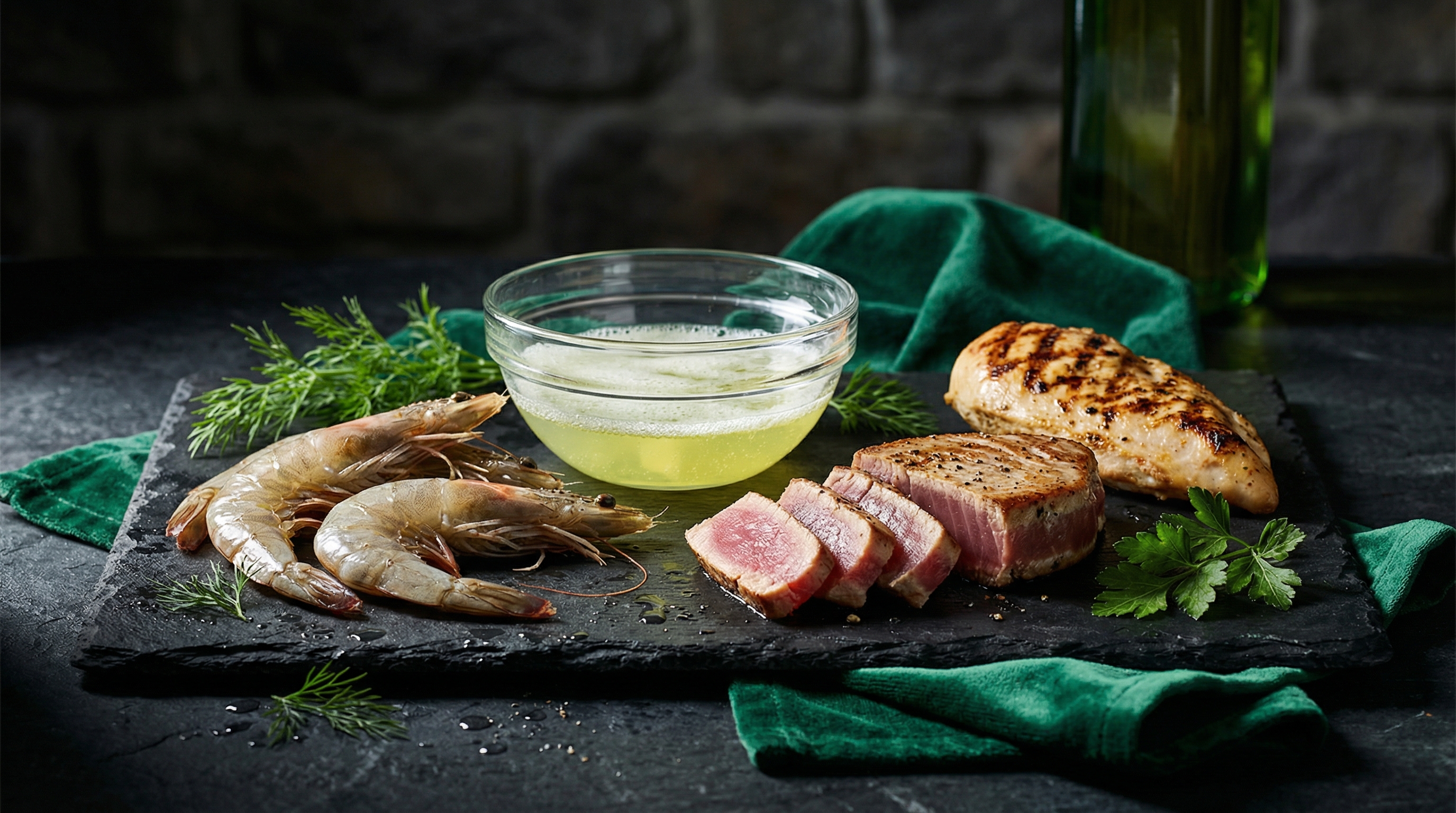
Elegant arrangement of high-protein foods including shrimp, egg whites, tuna, and chicken on a dark slate surface
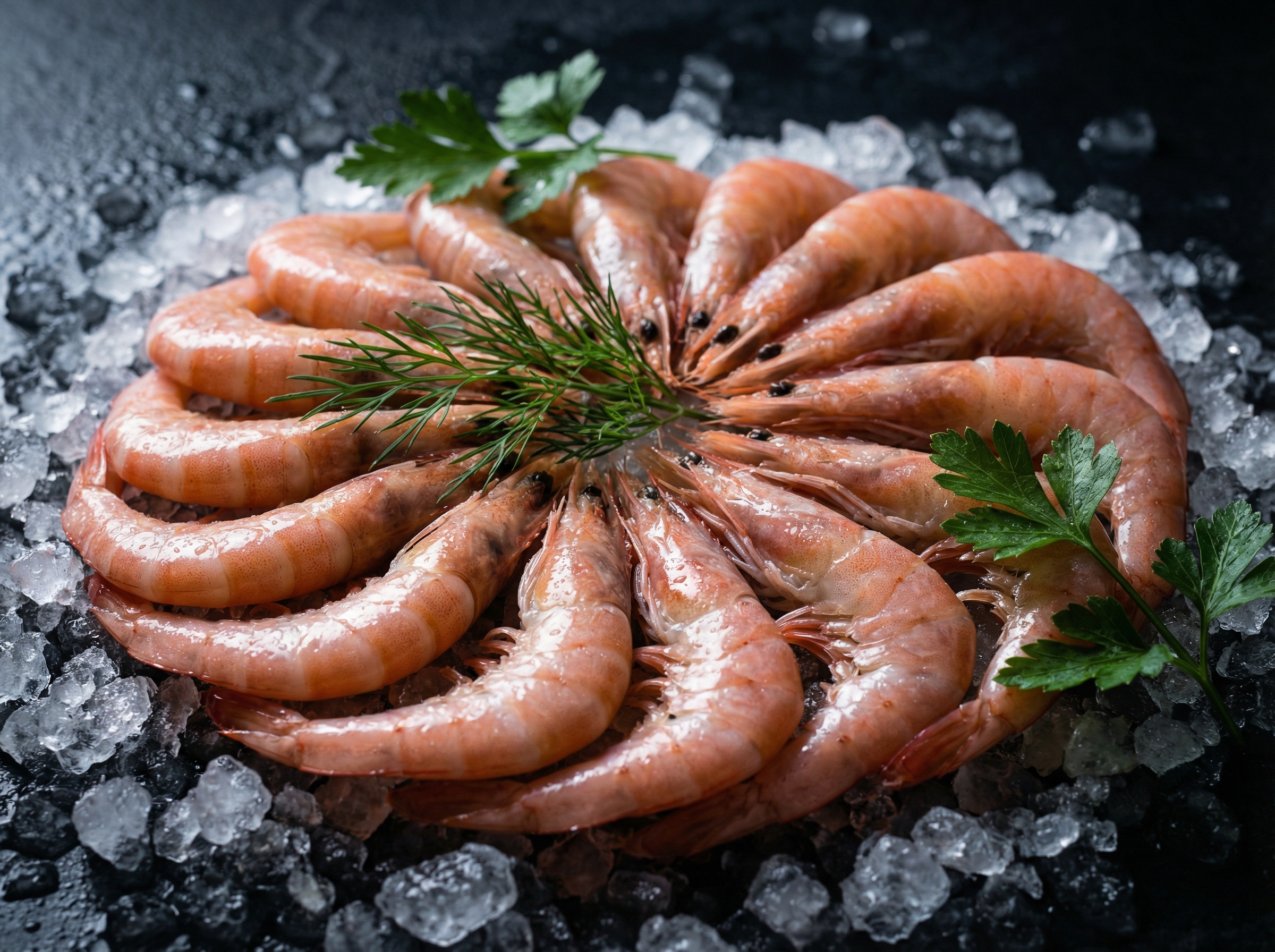
Fresh pink shrimp arranged on crushed ice
01

Shrimp: The Undisputed Density Champion

24.2gprotein per 100 calories

At the top of the leaderboard sits the crustacean that most people relegate to cocktail party status. Raw or steamed shrimp delivers a staggering 20 grams of protein in an 85-calorie serving. That's not a typo. You could eat three servings of shrimp for roughly the same calories as a single chicken thigh and walk away with 60 grams of protein.

The mechanism is simple: shrimp is almost pure protein. Zero carbs, negligible fat when not deep-fried. What you're really paying for nutritionally is iodine (crucial for thyroid function), selenium, and astaxanthin—the antioxidant that gives shrimp their pink hue.

The catch: High cholesterol content. But modern research from Harvard's School of Public Health suggests dietary cholesterol has minimal impact on blood cholesterol for most people. The bigger concern is allergy—shellfish ranks among the top eight food allergens.

Best preparation: Grilled, boiled, or steamed. The moment you bread it, you're adding carbs and torpedoing the density equation.

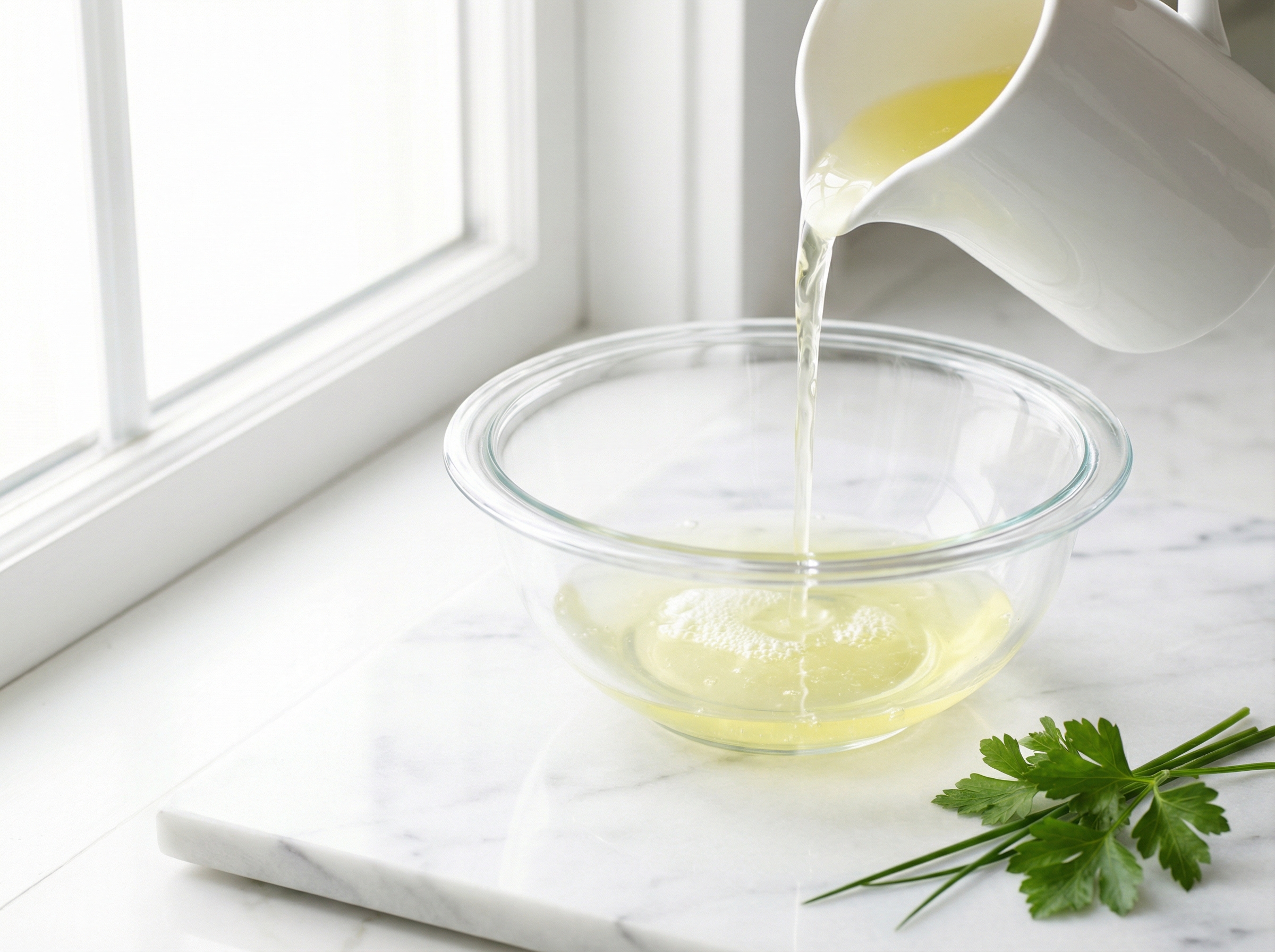
Translucent egg whites being poured into a glass bowl
02

Egg Whites: The Gold Standard Gets Stripped Down

22.7gprotein per 100 calories

The bodybuilder's cliche exists for a reason. Egg whites score a perfect 1.0 on the PDCAAS (Protein Digestibility Corrected Amino Acid Score)—the old gold standard for measuring protein quality. A cup of egg whites delivers 26 grams of protein for just 125 calories, with zero fat.

The trade-off is real: you're leaving most of the egg's nutrition in the yolk. Choline (critical for brain health), vitamin D, B12, omega-3s—all live in the yellow part. Egg whites are a trade: maximum protein efficiency for minimum micronutrient variety.

This is a food for people who know exactly what they want and are willing to get their micronutrients elsewhere. Add them to oatmeal for invisible protein. Whip them into omelets when you need volume without flavor disruption.

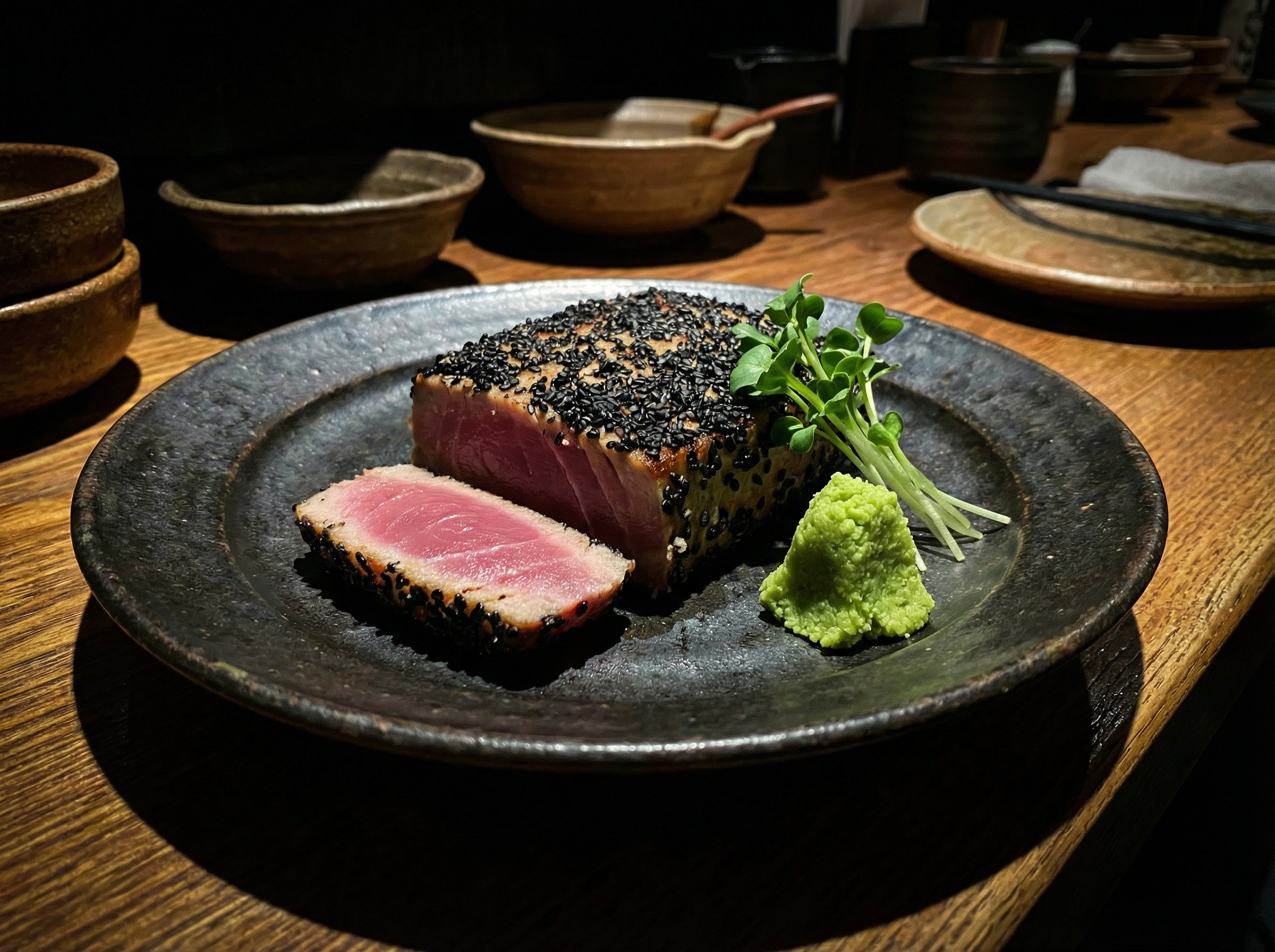
Seared yellowfin tuna steak with sesame crust
03

Yellowfin Tuna: The Pantry Powerhouse

22.3gprotein per 100 calories

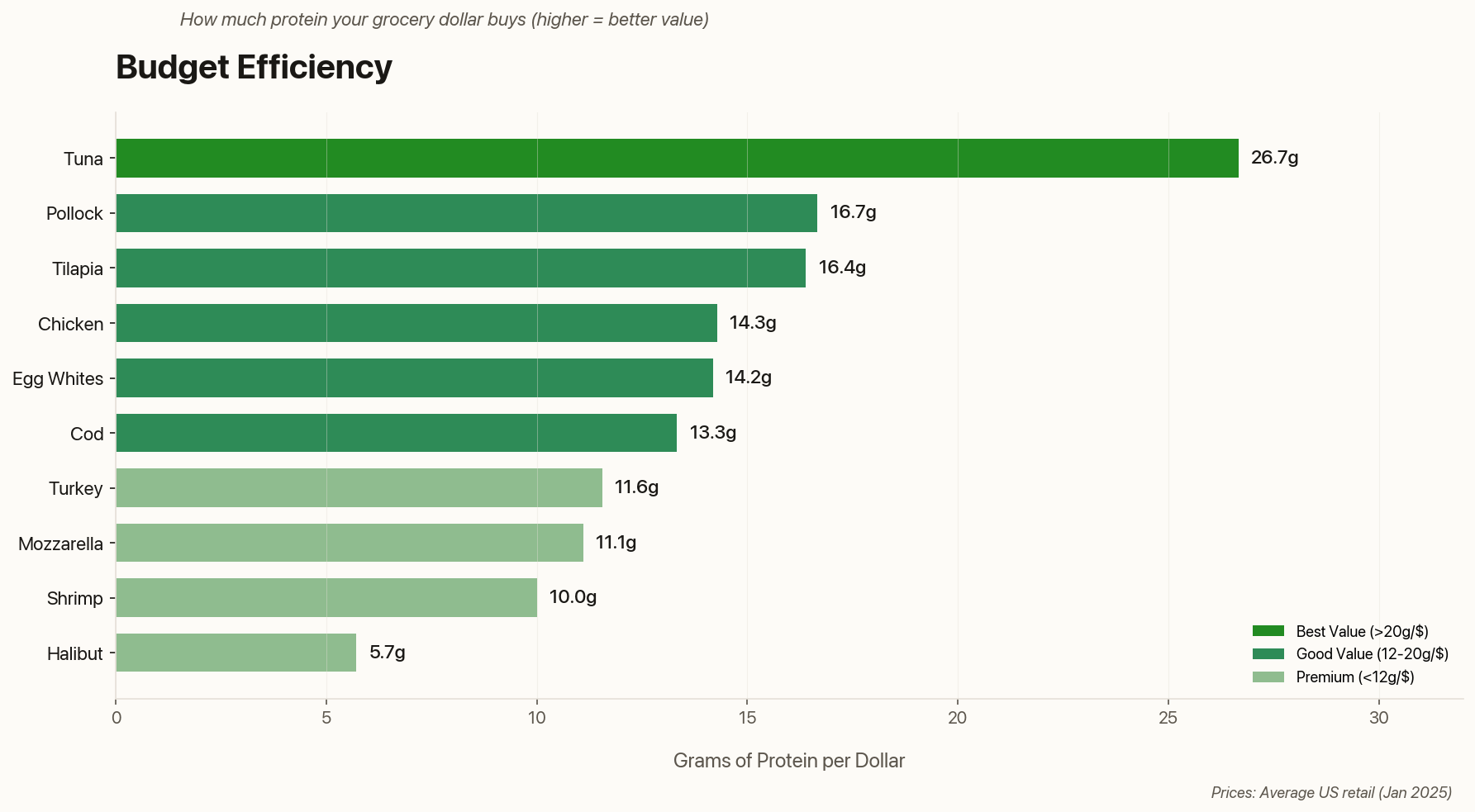
Canned tuna packed in water is the most accessible high-protein food on this list. A single 3-ounce serving delivers 21 grams of protein for 93 calories. It's shelf-stable, requires no cooking, and costs about 75 cents per 20 grams of protein—making it the best value on this entire list.

Bar chart showing protein per dollar across all 10 foods
Budget efficiency: grams of protein per dollar spent. Tuna dominates.

The mercury question looms large. Yellowfin sits in the moderate-mercury category, which means the FDA recommends limiting consumption to 1-2 servings per week. Light tuna (skipjack) has lower mercury but also slightly less protein density.

Pro tip: Skip the mayo. Mix canned tuna with Greek yogurt instead—you'll add protein rather than fat, and the tang works surprisingly well.

Baked cod fillet with lemon and dill
04

Pacific Cod: The Mild Workhorse

22.2gprotein per 100 calories

Cod is the white fish that refuses to announce itself. Its mild flavor makes it the tofu of the sea—a blank canvas that absorbs whatever you throw at it. That neutrality is a feature for protein optimization: you can eat it repeatedly without palate fatigue.

At 17 grams of protein per 75-calorie serving, cod delivers serious density in a tiny caloric package. It's also a good source of phosphorus and B12. The downside: cod is relatively low in omega-3s compared to fatty fish like salmon or mackerel. If you're optimizing for omega-3s, look elsewhere.

The preparation challenge is real. Cod dries out fast when overcooked. Bake at 400°F for 10-12 minutes, or poach in broth for foolproof moisture. Fish tacos with cod work beautifully—the protein density lets you skip the cheese without feeling deprived.

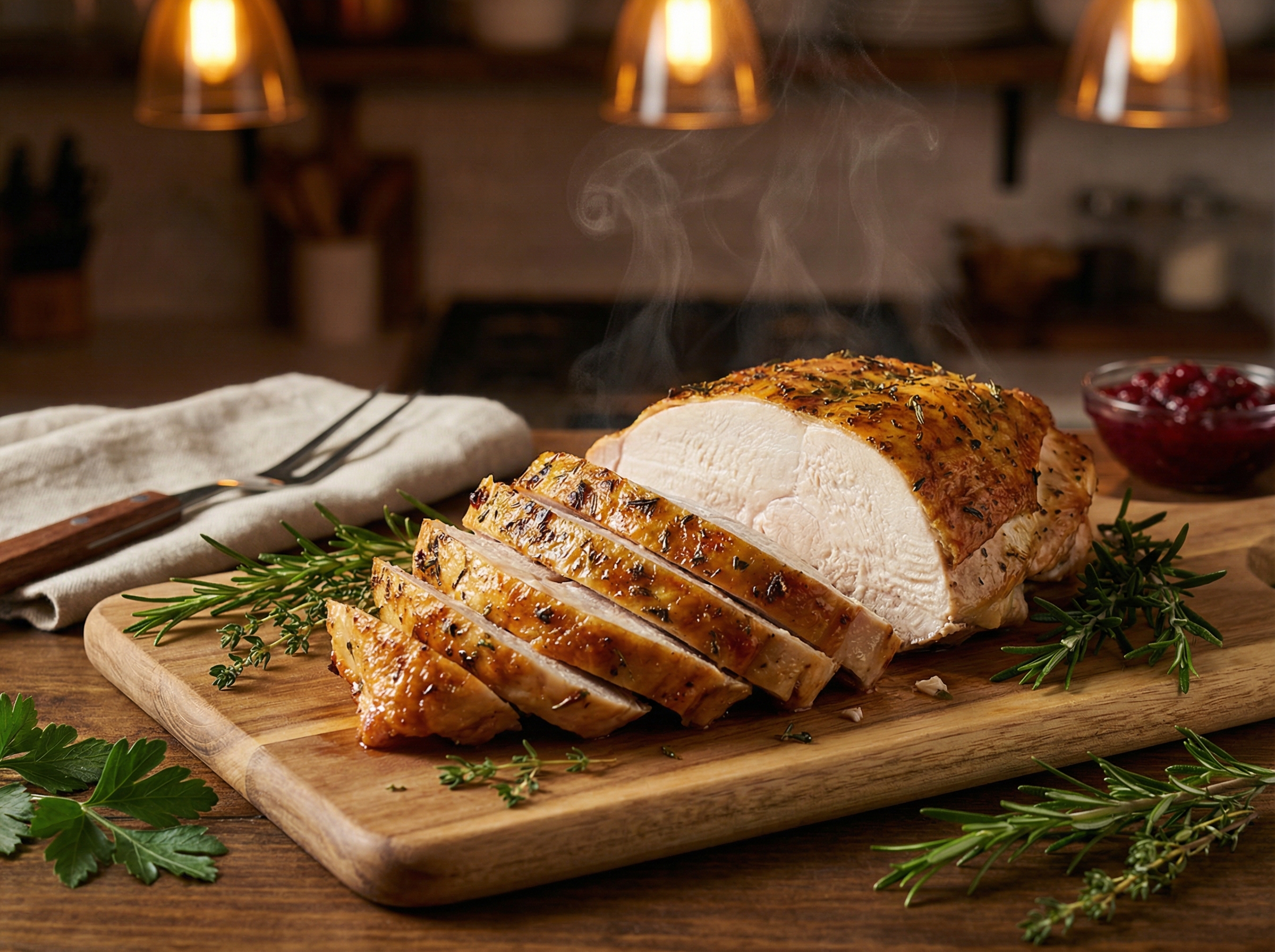
Sliced roasted turkey breast with herbs
05

Turkey Breast: The Underrated Champion

22.2gprotein per 100 calories

Turkey breast outperforms chicken breast on protein density—a fact that surprises most people. Skinless, roasted turkey breast delivers 24 grams of protein per 115-calorie serving. It's also exceptionally high in niacin (vitamin B3) and B6, both critical for energy metabolism.

The catch: most turkey you encounter is processed deli meat, which comes loaded with sodium and preservatives. Those stats above apply to fresh roasted turkey breast—the kind you'd prepare yourself from raw cuts. Deli turkey is a different nutritional animal entirely.

Ground turkey breast makes an excellent chicken substitute in bowl meals and stir-fries. Just verify you're getting breast meat, not a blend that includes darker, fattier cuts.

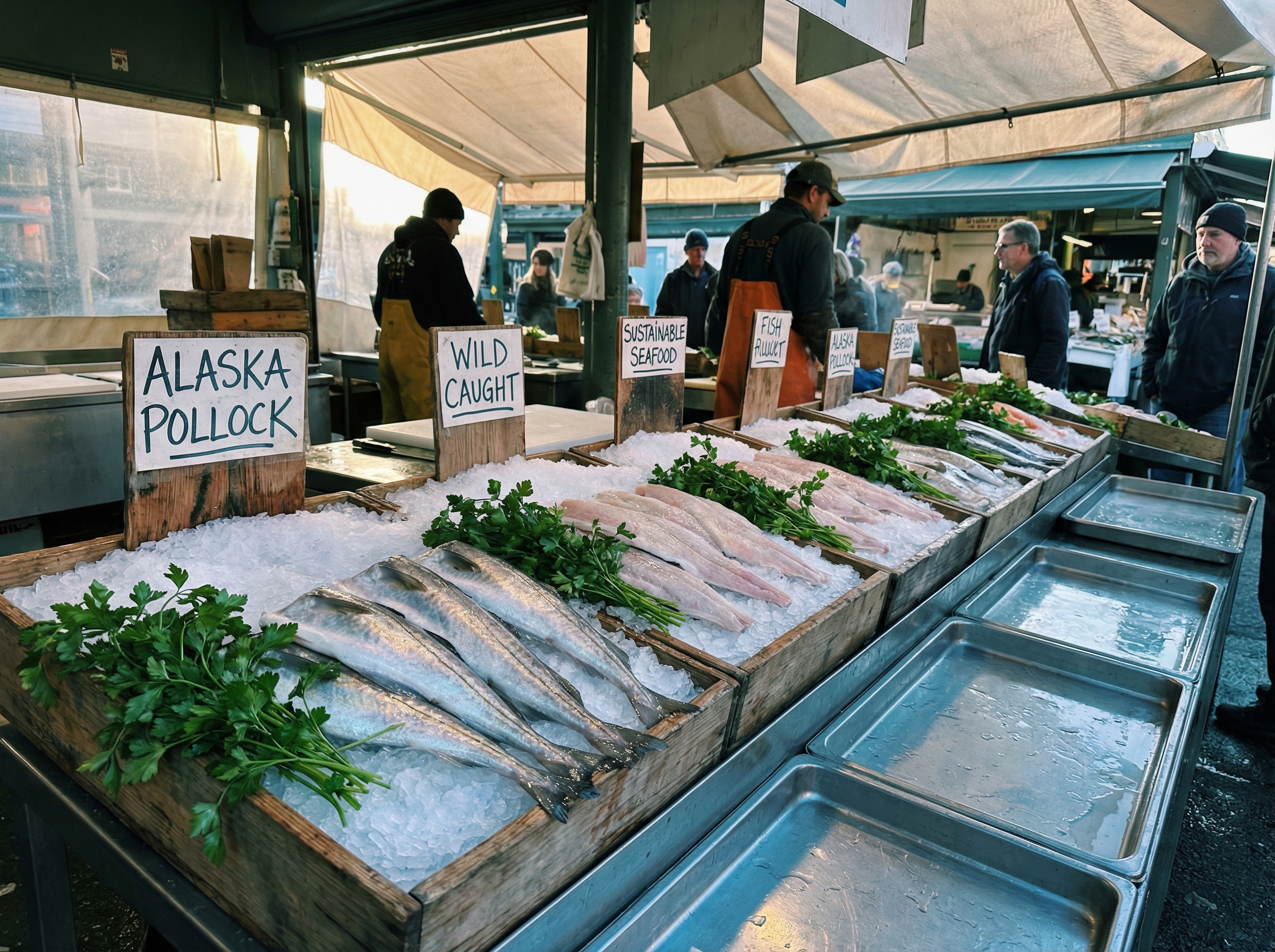
Fresh Alaska pollock fillets on ice
06

Alaska Pollock: The Sustainable Sleeper

21.5gprotein per 100 calories

You've eaten more pollock than you realize. It's the fish in most "imitation crab" (surimi) and a staple of fast-food fish sandwiches. Fresh pollock deserves better than its processed reputation suggests.

At 17 grams of protein per 80-calorie serving, pollock is the sustainability champion of this list. The Marine Stewardship Council certifies Alaska pollock fisheries as well-managed, and mercury levels are extremely low—you can eat it far more frequently than tuna without concern.

The texture is softer than cod, which means it can fall apart during cooking. Poaching or baking in parchment works better than pan-searing. Price-wise, pollock typically costs 20-30% less than cod or halibut, making it the smart budget play for high-protein meal prep.

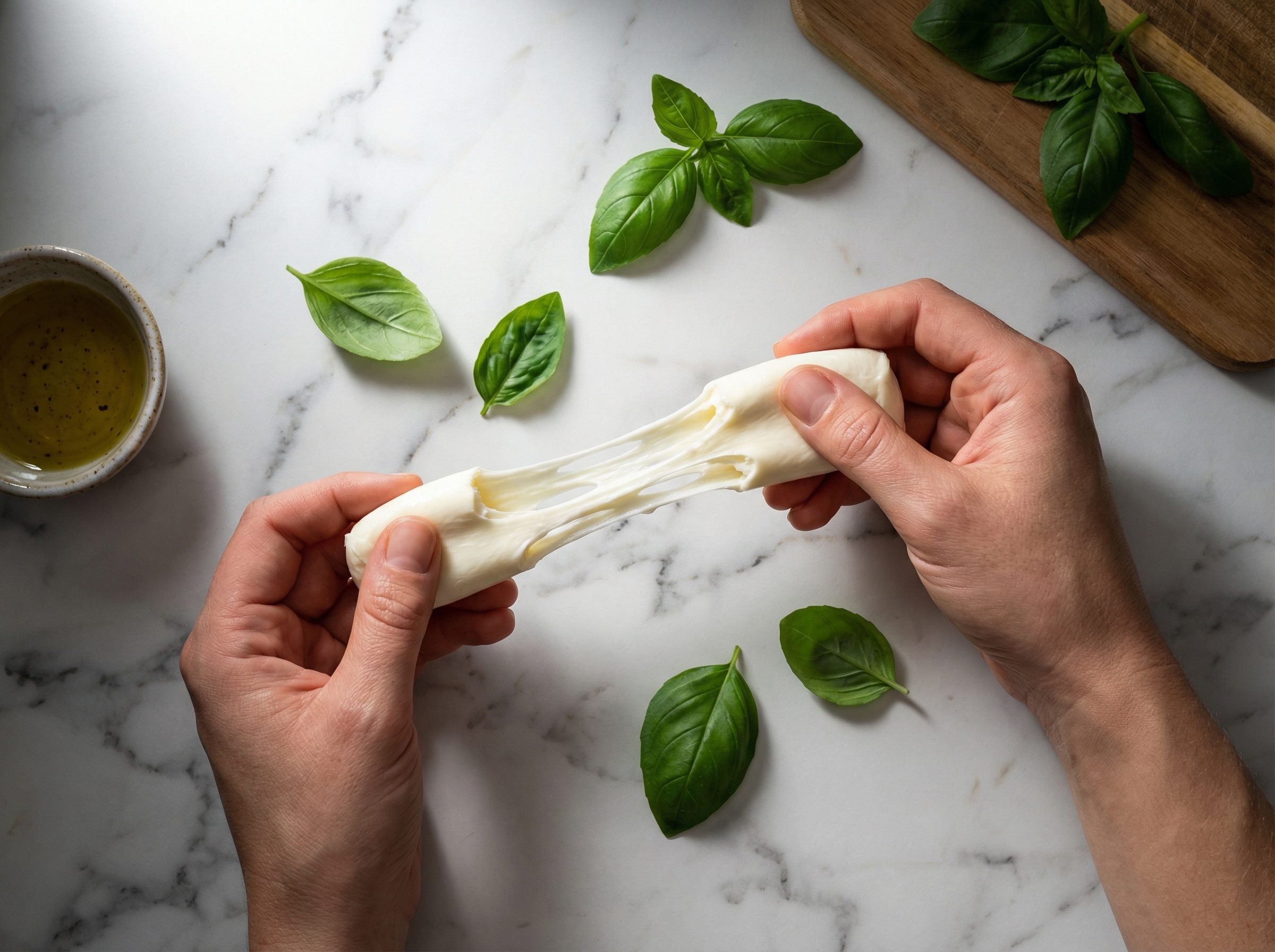
String cheese being pulled apart
07

Non-Fat Mozzarella: The Snack Hack

21.3gprotein per 100 calories

The lone dairy entry on this list earns its spot through aggressive fat reduction. Non-fat mozzarella packs 9 grams of protein into a 42-calorie serving. As string cheese, it's the most portable, no-prep option here—perfect for desk drawers and gym bags.

The trade-off: this is a processed food. Full-fat mozzarella brings better flavor, more satisfying texture, and fat-soluble vitamin absorption. Non-fat mozzarella is an optimization tool, not a culinary experience. The high calcium content (about 200mg per ounce) is a genuine benefit if you're not getting dairy elsewhere.

Use it melted over roasted vegetables when you want protein without dramatically changing a dish's flavor profile. The mild taste disappears into whatever it touches.

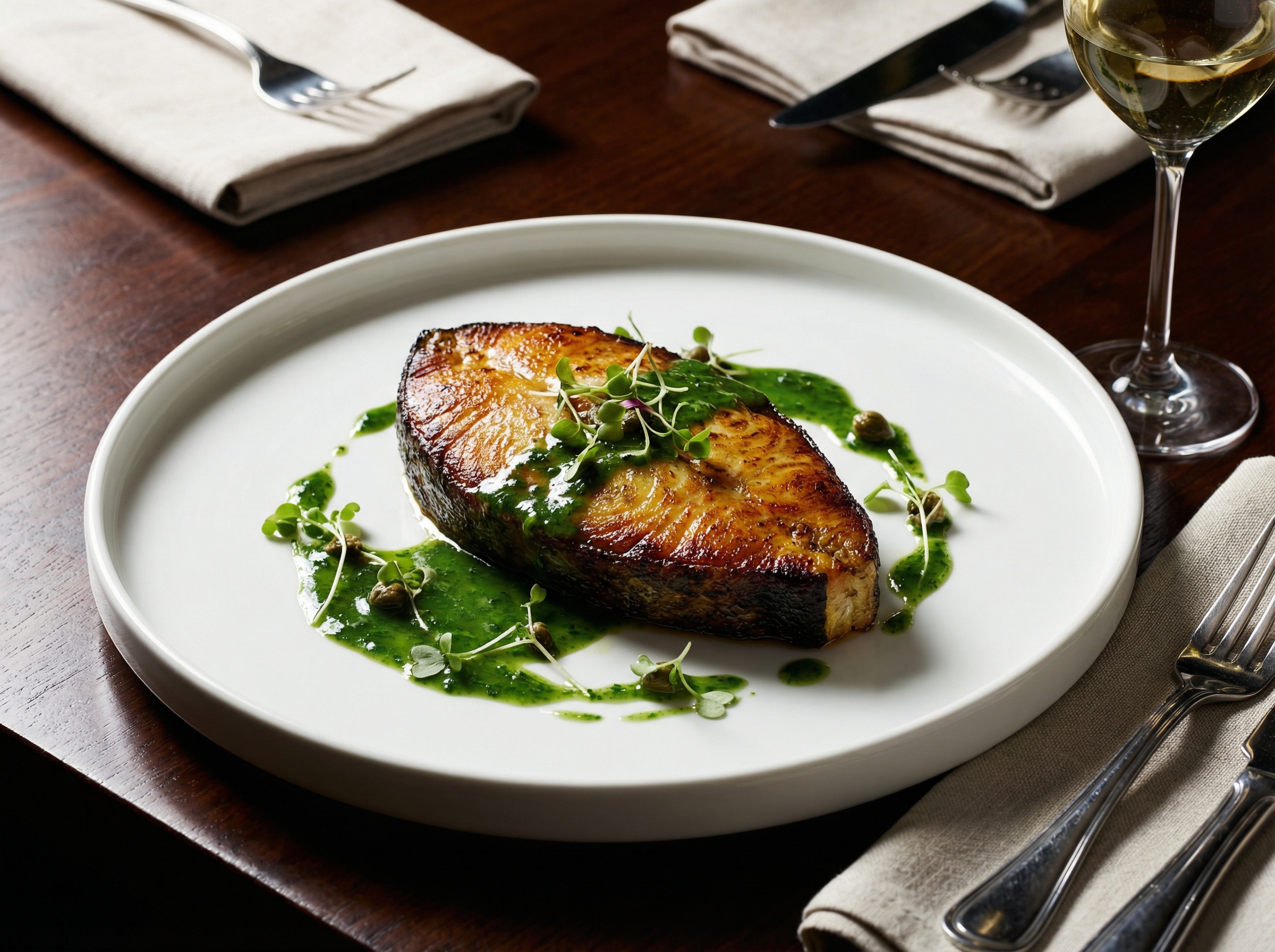
Pan-seared halibut with herb butter
08

Halibut: The Premium Play

20.8gprotein per 100 calories

Halibut is where protein density meets genuine culinary pleasure. Its firm, meaty texture holds up to high-heat cooking methods that would destroy more delicate fish. At 19 grams of protein per 95-calorie serving, it's the steak of the sea for people who find actual steak too calorie-dense.

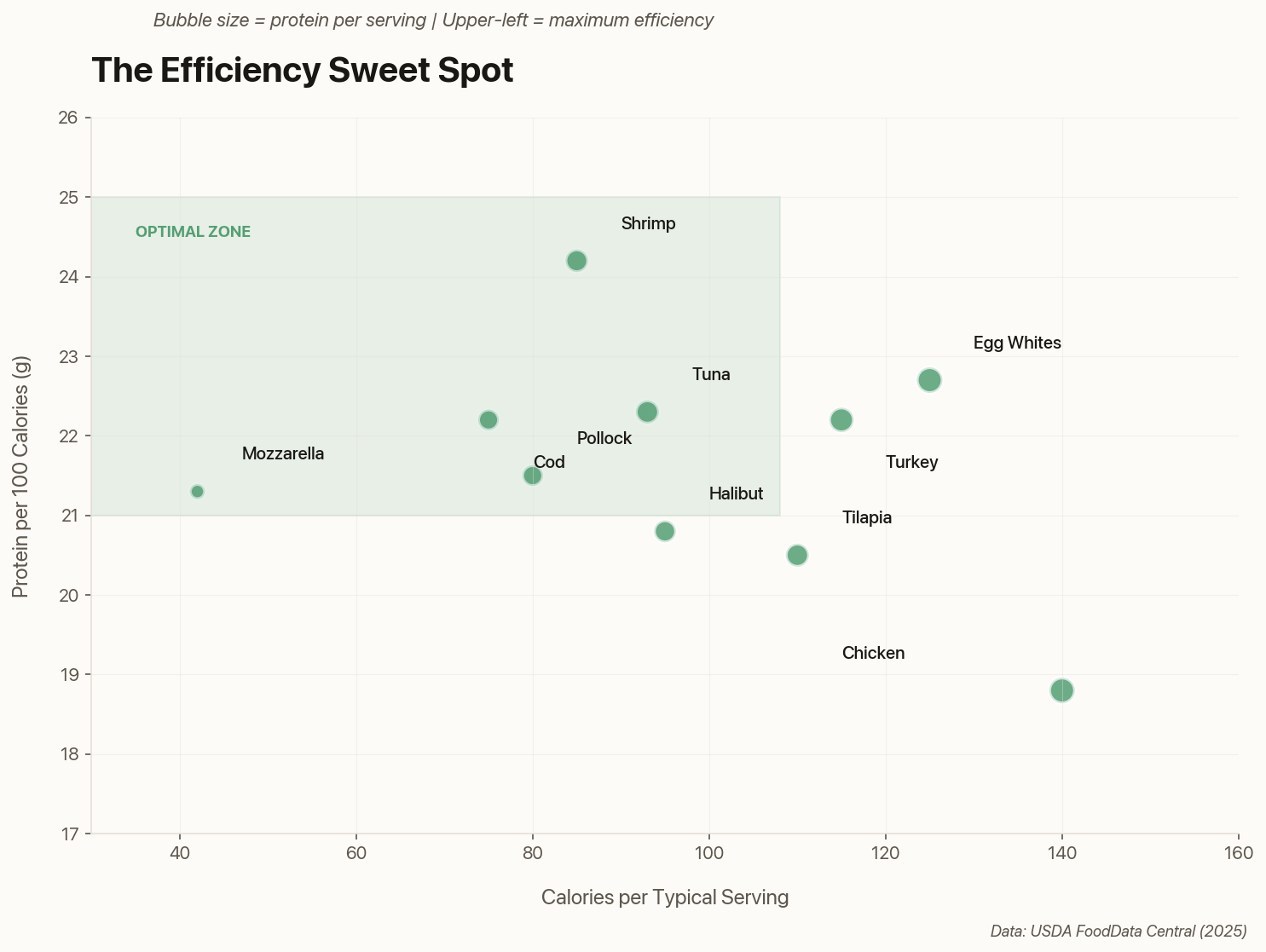
Scatter plot showing protein density vs calories per serving
The efficiency sweet spot: halibut balances density with serving size.

Two concerns: price and mercury. Halibut typically runs $20-30 per pound, making it the most expensive option on this list by a wide margin. Mercury levels are moderate, similar to yellowfin tuna, so weekly consumption rather than daily is the prudent approach.

The magnesium and potassium content make halibut particularly valuable for athletes—both minerals support muscle function and heart health.

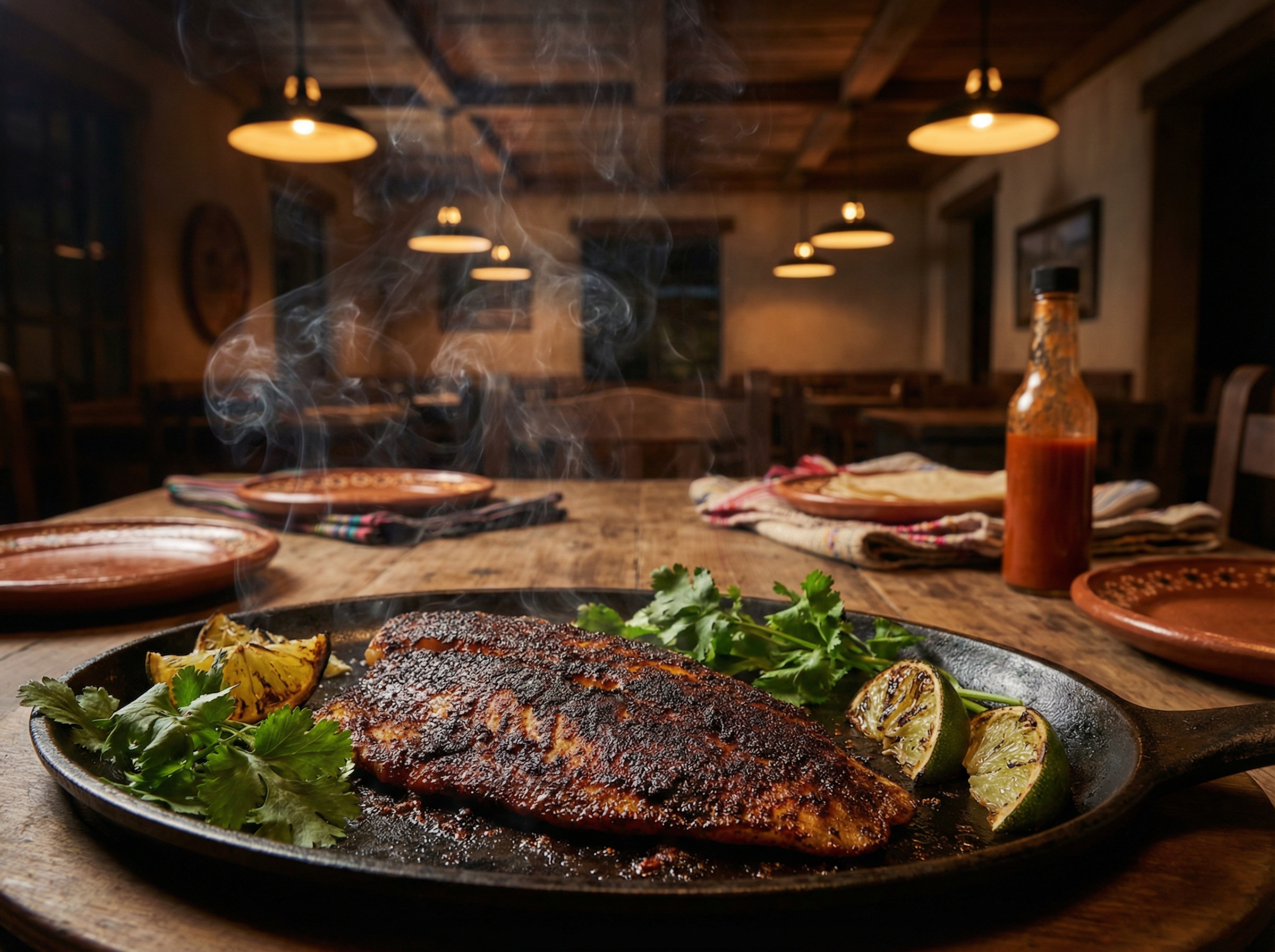
Blackened tilapia with lime and cilantro
09

Tilapia: The Controversial Workhorse

20.5gprotein per 100 calories

Tilapia provokes strong opinions in nutrition circles. The facts: 21 grams of protein per 110-calorie serving, extremely affordable (often under $5/pound), and available at virtually every grocery store in America. It's the Honda Civic of protein—reliable, accessible, unremarkable.

The controversy centers on omega-6 to omega-3 ratios. Tilapia contains more omega-6 fatty acids than omega-3s, which some researchers argue promotes inflammation. The American Heart Association still recommends tilapia as a healthy protein source, but if you're optimizing for omega-3 intake, this isn't your fish.

Farming practices vary wildly by country of origin. U.S.-farmed tilapia generally follows stricter standards than imports. Check the label if sourcing matters to you.

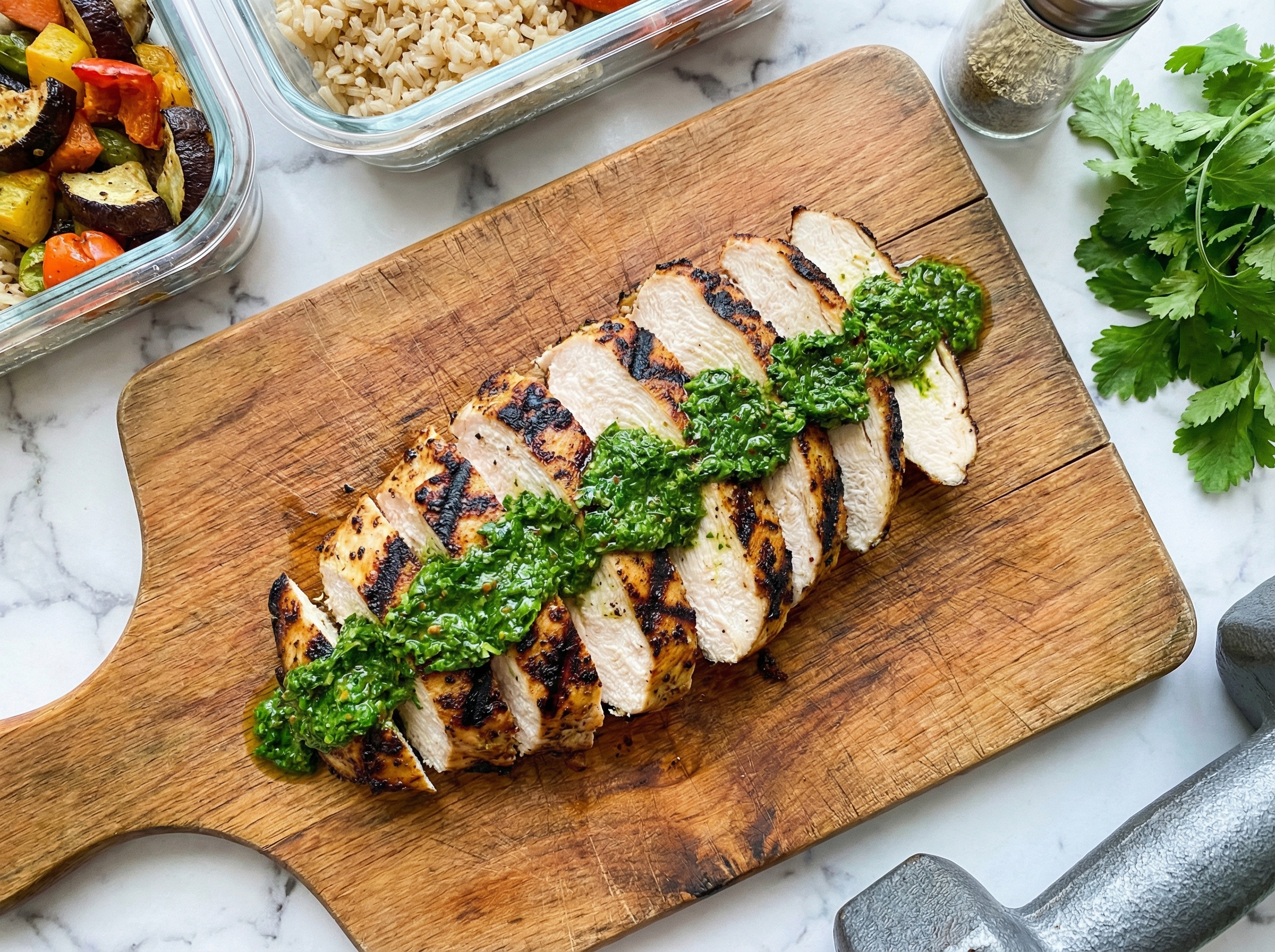
Grilled chicken breast with chimichurri
10

Chicken Breast: The Universal Standard

18.8gprotein per 100 calories

The most consumed protein source in America lands at the bottom of this density ranking. That's not a knock—chicken breast still delivers 26 grams of protein per serving, more absolute protein than most items higher on this list. The 140-calorie serving just means you're paying slightly more in calories for that protein.

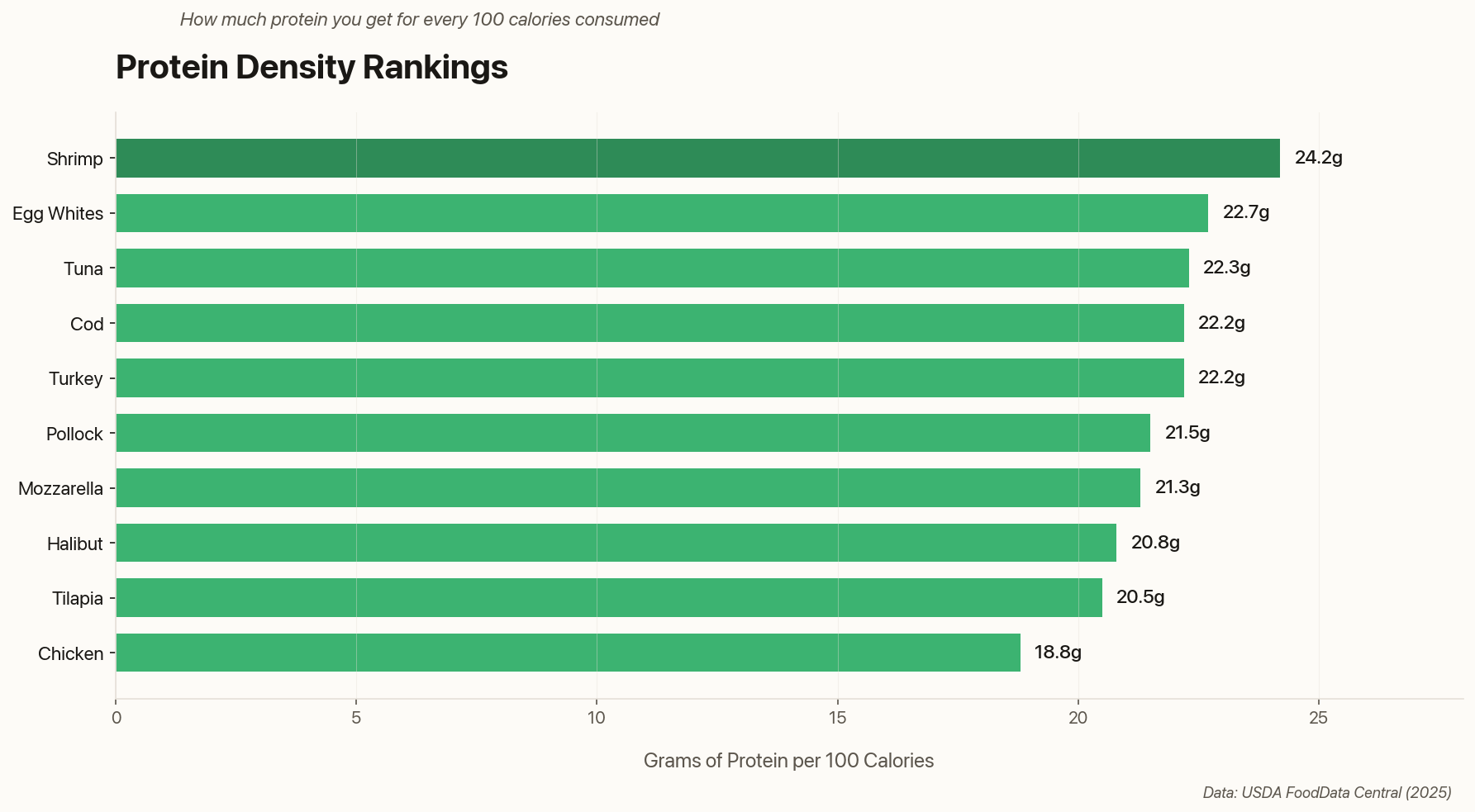
Bar chart ranking all 10 foods by protein density
The complete protein density rankings: chicken is reliable, not remarkable.

Chicken's advantages are practical: universal availability, versatile preparation, relatively low cost, and cultural familiarity. It's high in niacin and selenium. The texture works in virtually any cuisine. For most people optimizing protein intake, chicken breast remains the foundation—even if it's not technically the most efficient choice.

Preparation tip: The dry, rubbery chicken breast problem has a simple solution. Brine for 30 minutes before cooking, or use an Instant Pot to guarantee moisture. Poaching in chicken broth produces consistently tender results.

The Pattern That Matters

Nine of the ten most protein-dense foods come from the sea or are animal-derived. That's not ideology—it's chemistry. The newer DIAAS scoring system, which measures amino acid absorption in the small intestine specifically, shows plant proteins need 20-30% higher quantities to achieve equivalent muscle synthesis. The efficiency gap is real. Whether that changes your plate is a personal decision, but the data deserves acknowledgment.