Photography History

The Decisive Moment: Masters of the Street

Six photographers who transformed urban observation into high art. From Parisian geometries to Tokyo chaos, their legacies teach us how to truly see.

Listen
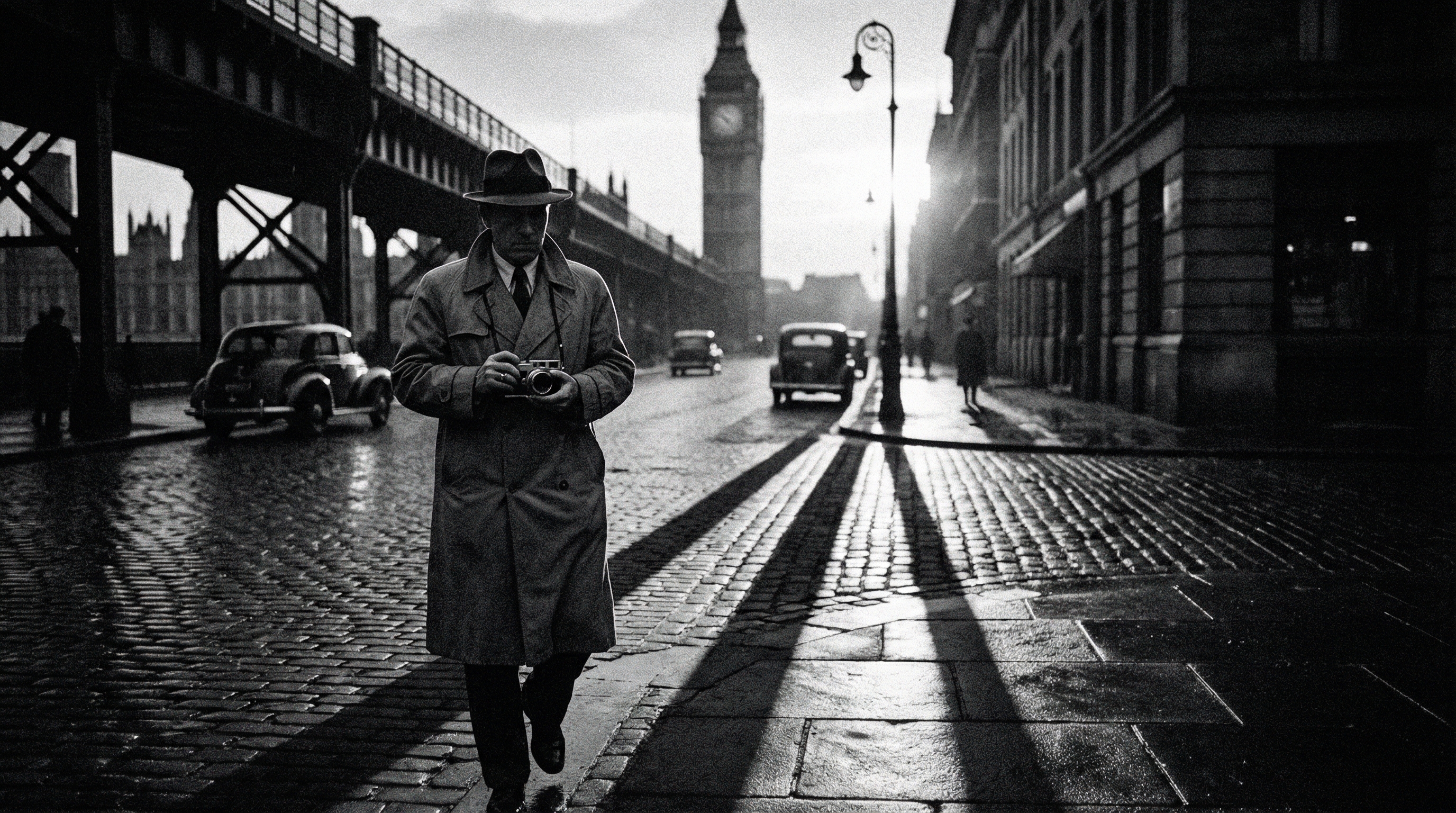
Silhouette of a street photographer walking through dramatic shadows on a city street
01

Henri Cartier-Bresson: The Eye That Invented Street Photography
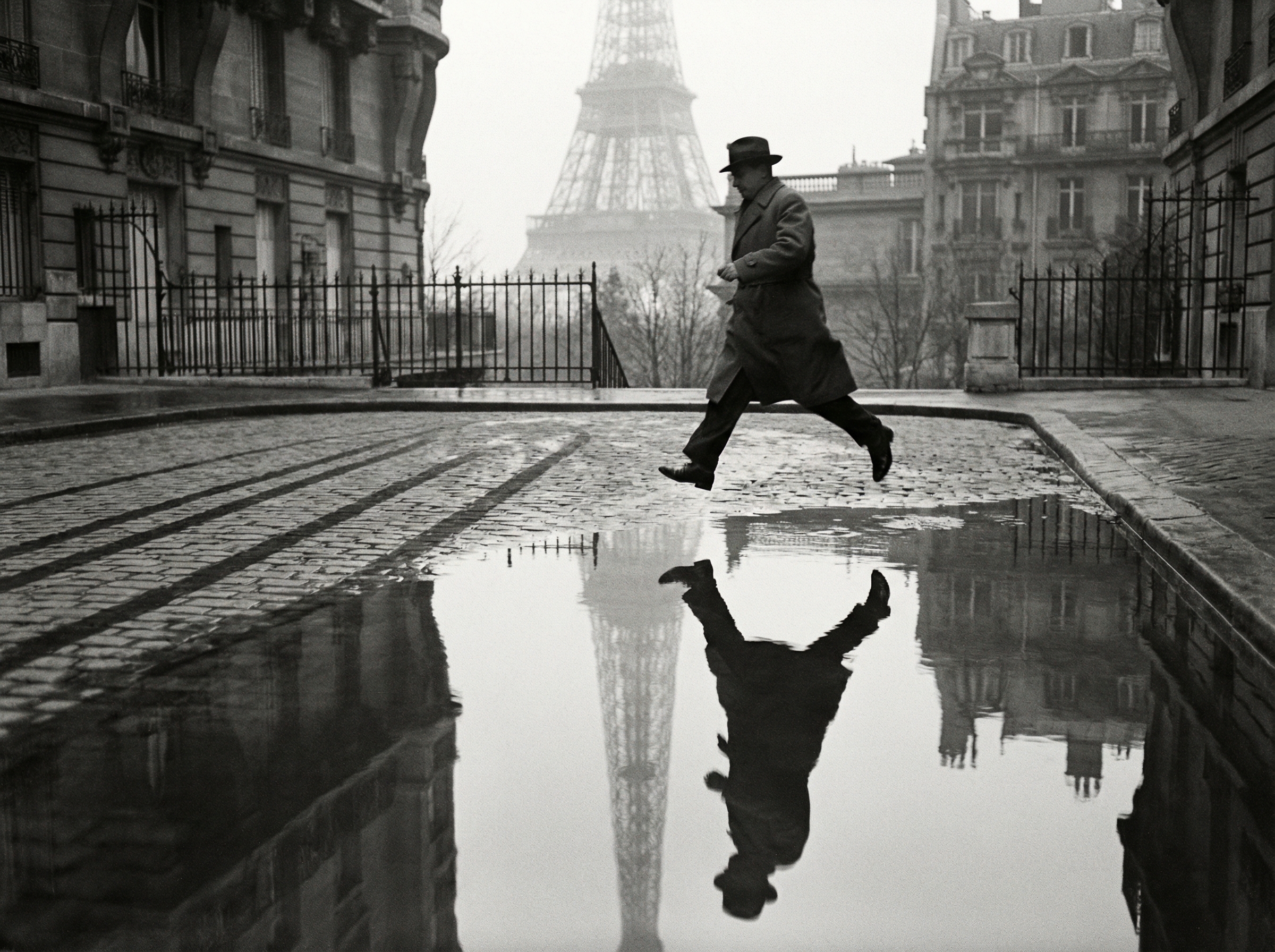
A geometric composition in the style of Cartier-Bresson, with a figure leaping over a puddle

Before Henri Cartier-Bresson, photography was considered a technical craft. After him, it became an art form capable of capturing the human soul in a fraction of a second. His concept of "The Decisive Moment"—that precise instant when visual elements converge into perfect meaning—remains the single most influential idea in photographic history.

Cartier-Bresson's genius lay in geometry. His images are mathematical poems: the diagonal of a staircase intersecting with a cyclist's wheel, the curve of a bridge echoing the arc of a man's leap over a puddle. He trained as a painter under André Lhote and brought surrealist principles to the streets of Paris, treating the city as a canvas of chance encounters.

"To take a photograph is to align the head, the eye and the heart. It's a way of life." — Henri Cartier-Bresson

His weapon of choice: a Leica rangefinder with a 50mm lens, its chrome body wrapped in black tape to render it invisible. He never cropped his images—the frame was sacred, decided in the viewfinder or not at all. In 1947, he co-founded Magnum Photos, establishing the template for the photographer as independent artist-journalist.

The legacy: Virtually every street photographer working today operates in his shadow. Whether they embrace or reject his principles, they must first acknowledge them.
02

Robert Frank: The Outsider Who Saw America's Soul

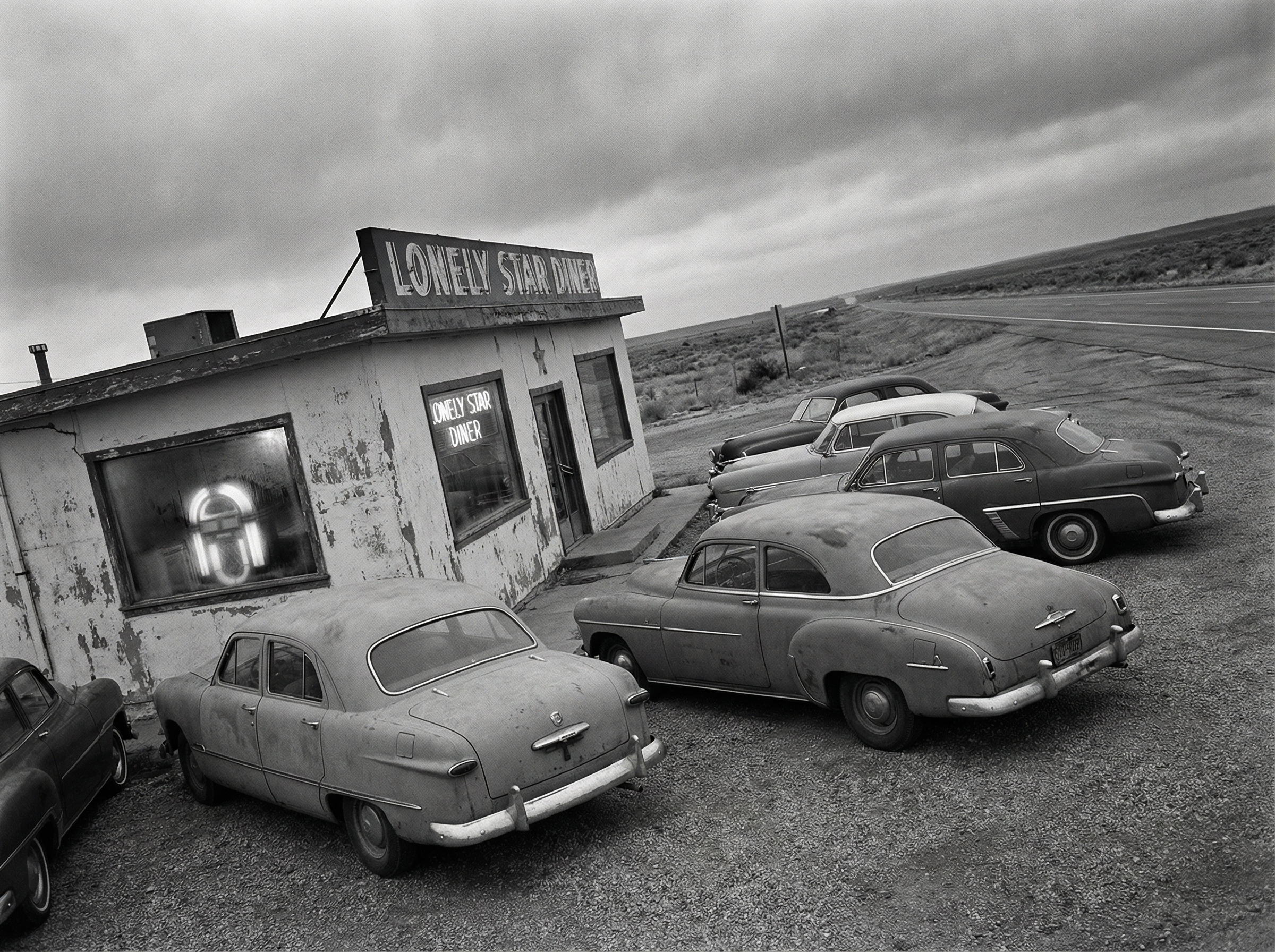
A gritty American roadside scene with lonely diner and vintage cars in high-grain black and white

If Cartier-Bresson was the poet of geometric perfection, Robert Frank was the prophet of beautiful imperfection. His 1958 photobook The Americans shattered the romanticized image of post-war America, revealing instead a nation haunted by loneliness, racial tension, and spiritual exhaustion.

Frank was Swiss by birth, an outsider's eye aimed at a culture that preferred to see itself in Norman Rockwell terms. He drove across America with a Guggenheim grant, shooting 28,000 photographs. From these, 83 images were chosen—arranged not by geography or chronology, but by emotional resonance. The book's stream-of-consciousness sequencing was revolutionary.

Timeline of key moments in street photography history from 1838 to 2010
Key moments in street photography history. Frank's 1958 publication of "The Americans" marked a turning point toward personal expression over objective documentation.

The initial reception was hostile. Popular Photography called it "a sad poem for sick people." But Jack Kerouac—who wrote the introduction—understood: this was Beat Generation photography, as revolutionary in images as On the Road was in prose.

"Black and white are the colors of photography. To me they symbolize the alternatives of hope and despair." — Robert Frank

The legacy: The Americans is now considered the most influential photobook of the 20th century. Frank proved that photography could be personal, subjective, deliberately rough—and all the more truthful for it.

03

Vivian Maier: The Secret Genius in Plain Sight

A mysterious self-portrait reflection in a shop window with vintage mannequins in 1950s Chicago

The strangest story in photography history begins in 2007, when a 26-year-old real estate agent named John Maloof bought a box of negatives at a Chicago auction for $380. Inside were the life's work of a nanny—over 150,000 photographs spanning five decades, never printed, never shown, never discussed. Vivian Maier had died anonymous. She wouldn't stay that way.

Maier's photographs are remarkable for their intimacy and empathy. Working with a Rolleiflex twin-lens reflex held at waist level, she could maintain eye contact with subjects while shooting—a technique that rendered her virtually invisible. Her images capture the overlooked: street vendors, children playing in gutters, the homeless, the immigrants, the working poor of Chicago and New York.

But her most haunting works are her self-portraits, captured in mirrors, shop windows, and shadows. She appears as a dark silhouette, a fragmented reflection, a ghost observing the world she documented so obsessively yet shared with no one.

"We have to make room for other people. It's a wheel—you get on, you go to the end, and someone else has the same opportunity to go to the end." — Vivian Maier (from a rare audio recording)

The legacy: Maier's posthumous fame sparked debates about privacy, artistic intent, and the definition of a photographer. If she never intended to share her work, is it ethical to exhibit it? What matters more: the artist's wishes or the art's value to the world? These questions remain unresolved.

04

Saul Leiter: The Painter Who Discovered Color Photography

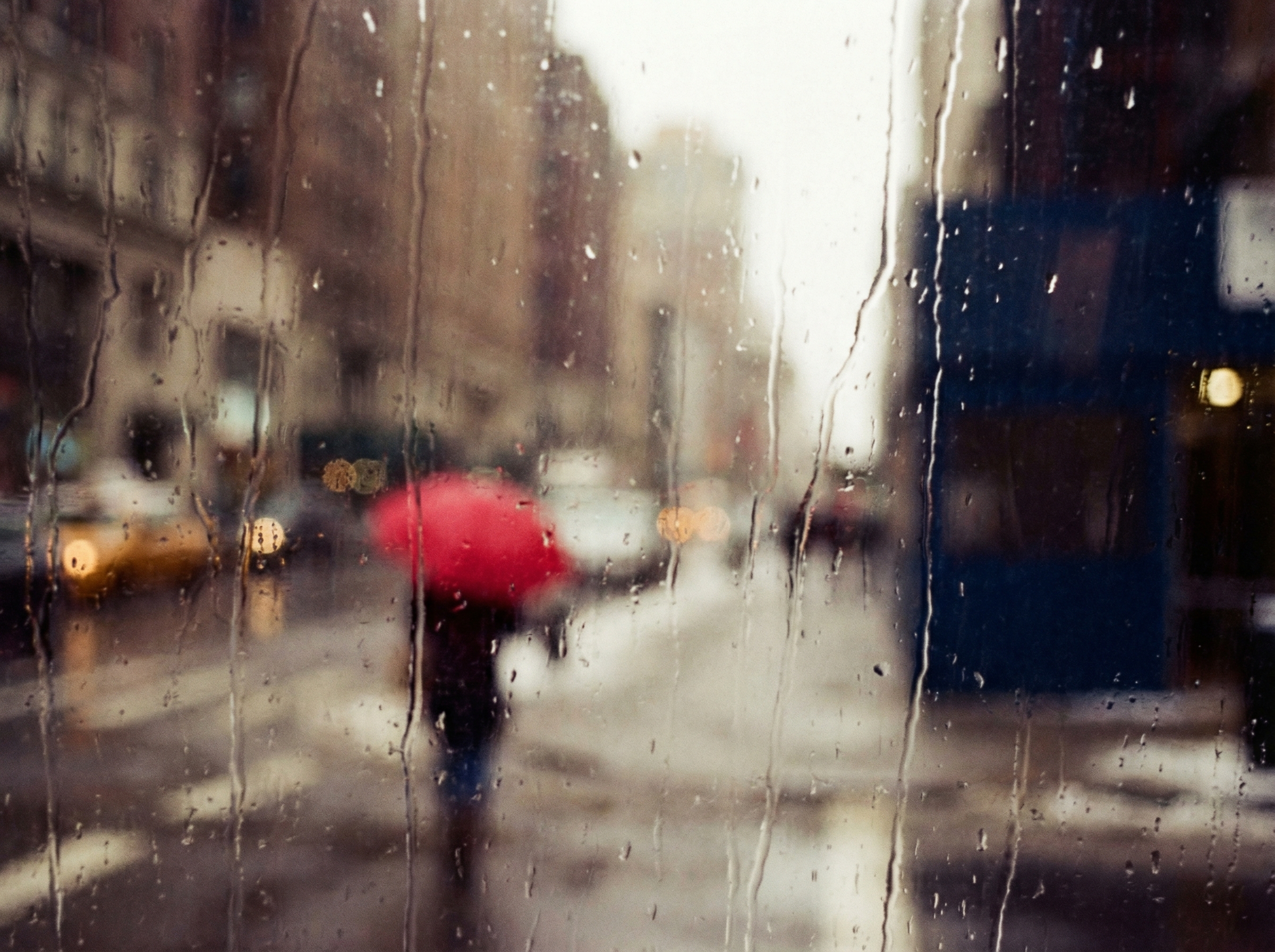
An abstract painterly street scene through rain-streaked window with vibrant red umbrella

Saul Leiter was shooting color street photography in the 1940s and 50s—decades before the art world would accept color as legitimate. While William Eggleston is credited with the color revolution, Leiter was there first, quietly making images that treated Manhattan as an impressionist canvas.

His technique was radically different from his contemporaries. Where others used wide-angle lenses to capture the chaos of the street, Leiter used telephoto lenses (90mm and 150mm) to compress space into abstraction. He shot through rain-streaked windows, dirty glass, and reflections, using negative space and obscured subjects to create photographs that feel like paintings.

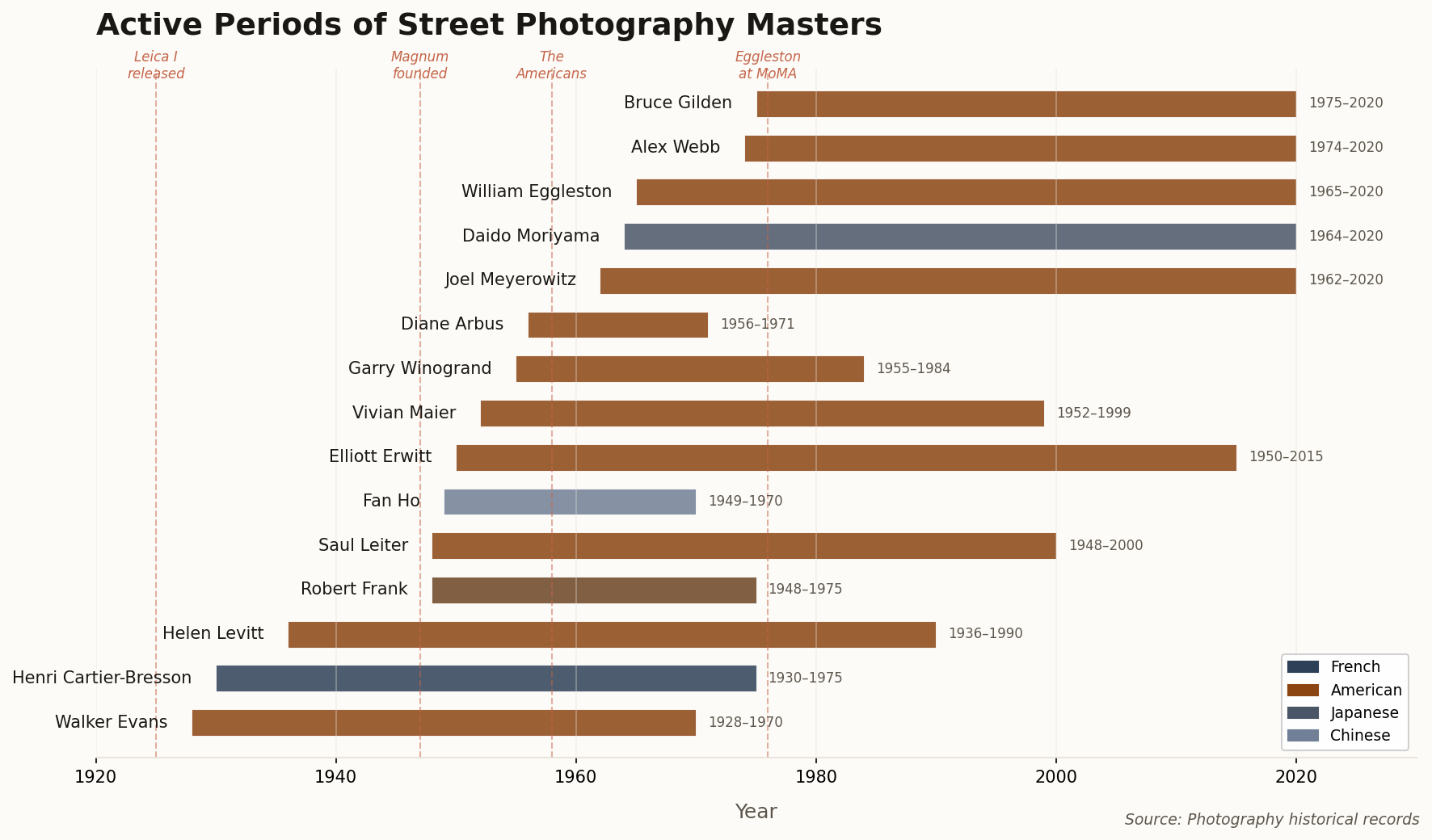
Gantt chart showing active periods of fifteen street photography masters from 1920 to 2020
Active periods of the great street photographers. Leiter's career spanned seven decades, from the 1940s through the 2000s, making him one of the longest-working masters.

For most of his life, Leiter was known primarily as a fashion photographer for Harper's Bazaar and Esquire. His street work remained largely unseen until the 2006 publication of Early Color, when he was 83. The book caused a sensation. Here was a body of work that seemed to anticipate everything—from New Color Photography to contemporary Instagram aesthetics—by half a century.

"I have no philosophy. I have a camera. I look into the camera and take pictures." — Saul Leiter

The legacy: Leiter proved that obscurity is not failure. His late-life rediscovery reminded the photography world that significance isn't determined by fame—and that patience, applied over decades, has its own rewards.

05

Daido Moriyama: The Chaos Engine of Tokyo

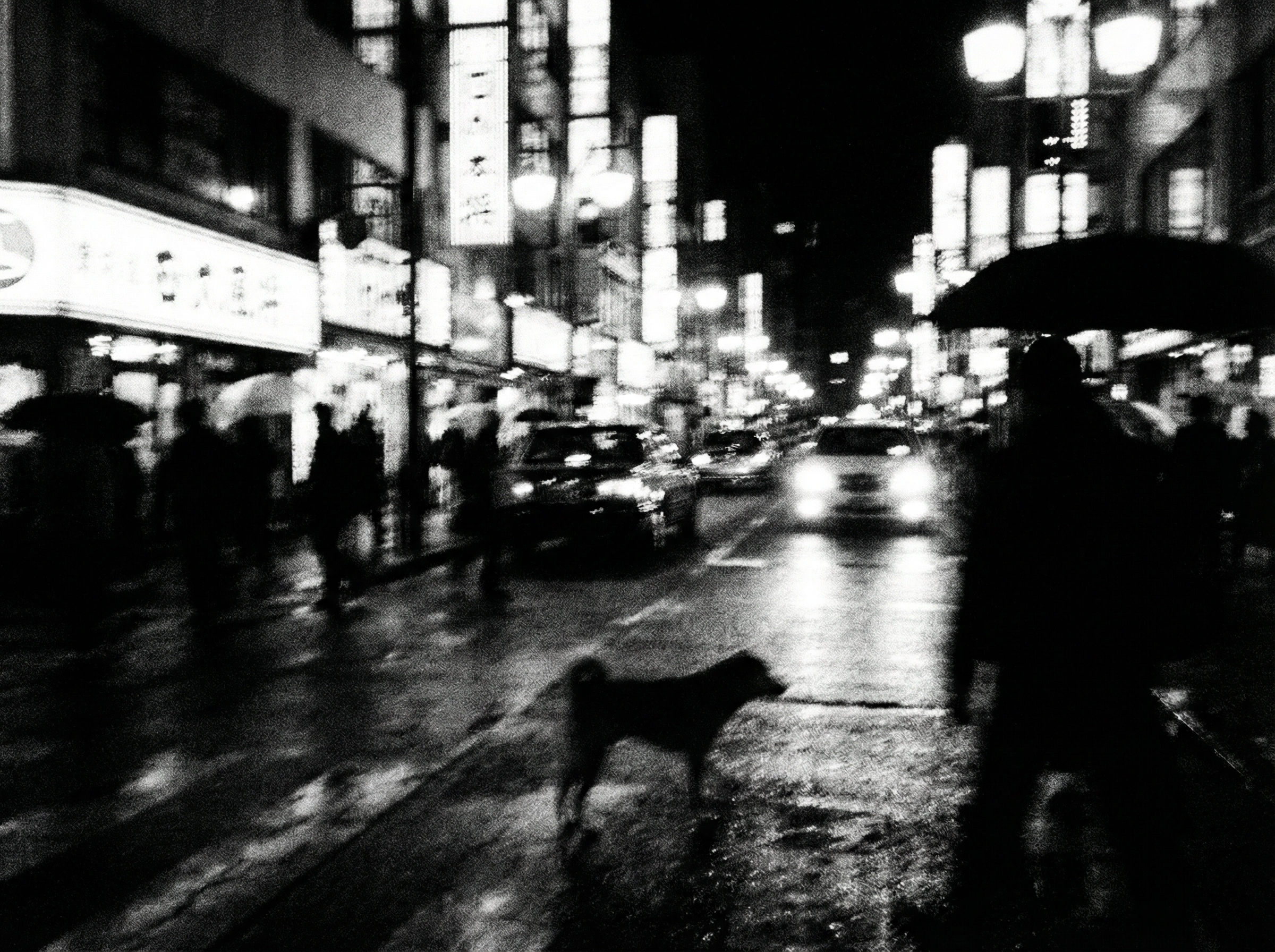
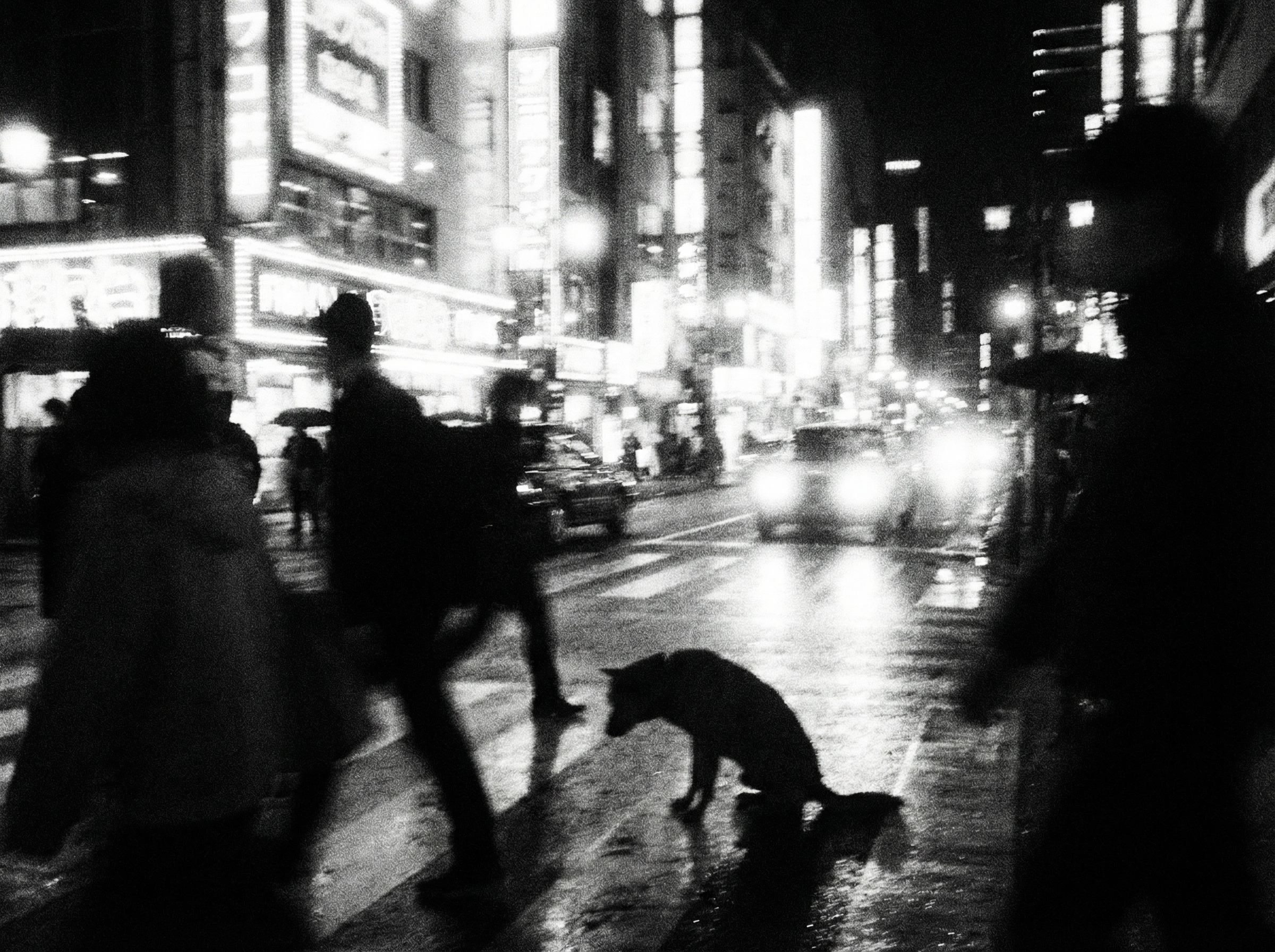
Extreme high contrast grainy black and white Tokyo nightscape with blurred neon signs

The Western street photography tradition values composition, clarity, and the decisive moment. Daido Moriyama rejected all of it. His images are blurred, grainy, overexposed, underexposed—and utterly electrifying. The Japanese call his aesthetic are-bure-boke: rough, blurred, out-of-focus.

Moriyama emerged from the Provoke movement of late-1960s Japan, which sought to destroy conventional photography in service of raw, visceral expression. His most famous image, Stray Dog (1971), is barely recognizable as a dog at all—it's a blur of teeth and dark fur, all menace and instinct, captured with a point-and-shoot camera.

He shoots constantly, obsessively, using cheap compact cameras like the Ricoh GR. His subject is Tokyo itself: its neon signs, its sex shops, its train stations, its anonymous crowds. He photographs the city as a hallucination, a fever dream of post-war capitalism.

"For me, photography is not about 'art,' but about 'copying' reality." — Daido Moriyama

The legacy: Moriyama proved that technical imperfection can be an aesthetic choice rather than a failure. His work liberated generations of photographers from the tyranny of sharpness, opening up new territories of expression that value emotion over precision.

06

Alex Webb: The Master of Layered Color

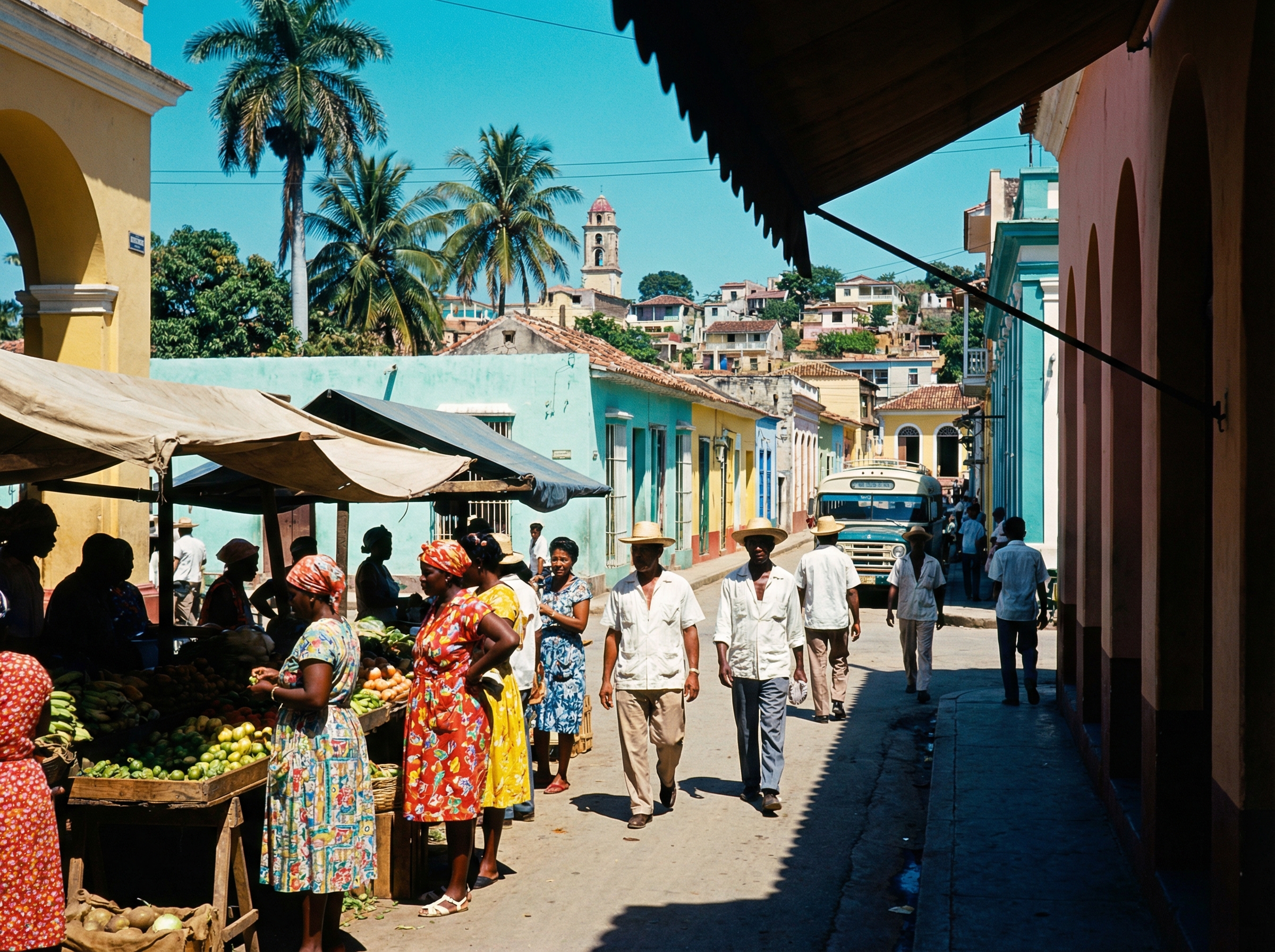
Complex layered composition in tropical sunlight with multiple figures and vibrant saturated colors

If Cartier-Bresson's photographs are haiku—spare, essential, perfect—then Alex Webb's are symphonies. His images overflow with visual information: multiple figures in foreground, midground, and background, all interacting within a single frame, bathed in the saturated colors of the tropics.

Webb spent decades photographing in Haiti, Mexico, Cuba, Istanbul—places where light is harsh and life spills into the streets. His technique of "complex composition" requires extraordinary patience and reflexes. Every element must work: the shadow falling one way, the arm extending another, the distant figure creating rhythm with the near figure.

Bar chart comparing auction prices and photobook values for six influential street photographers
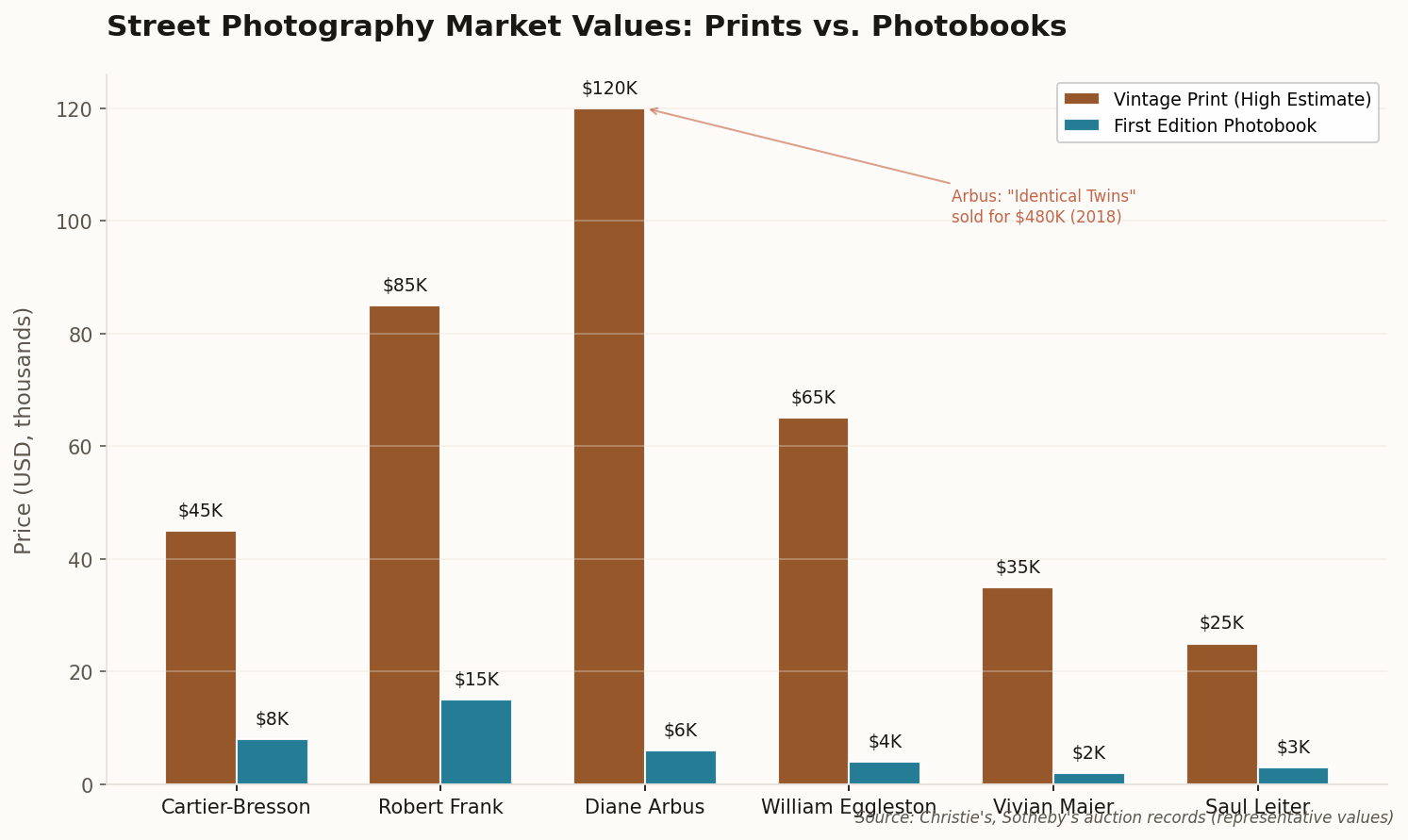
Market values for vintage prints and first edition photobooks. The auction market increasingly recognizes street photography as collectible fine art.

Working with a Leica M and Kodachrome film, Webb creates images that reward endless examination. Look at a Webb photograph for five seconds and you'll see the main subject. Look for five minutes and you'll find three more stories happening in the corners.

"I only know how to approach a place by walking. For what does a street photographer do but walk and watch and wait and talk?" — Alex Webb

The legacy: Webb represents the current gold standard for color street photography. His work proves that complexity and beauty can coexist—that a photograph can reward both the glance and the gaze.

The Camera as Extension of the Eye

These six photographers span nearly a century, three continents, and radically different aesthetics. Yet they share one quality: the ability to see what others overlook. Street photography, at its best, is not about documentation—it's about revelation. The decisive moment, the gritty truth, the hidden genius, the painterly abstraction, the beautiful chaos, the complex harmony. Each master teaches us a different way to observe the world we walk through every day without seeing.