Modern Warfare

Seven Million Reasons War Will Never Look the Same

Ukraine isn't just fighting a war. It's rewriting the manual on how all future wars will be fought — with swarms of cheap drones, AI targeting, and fiber-optic cables that laugh at your electronic warfare.

Listen
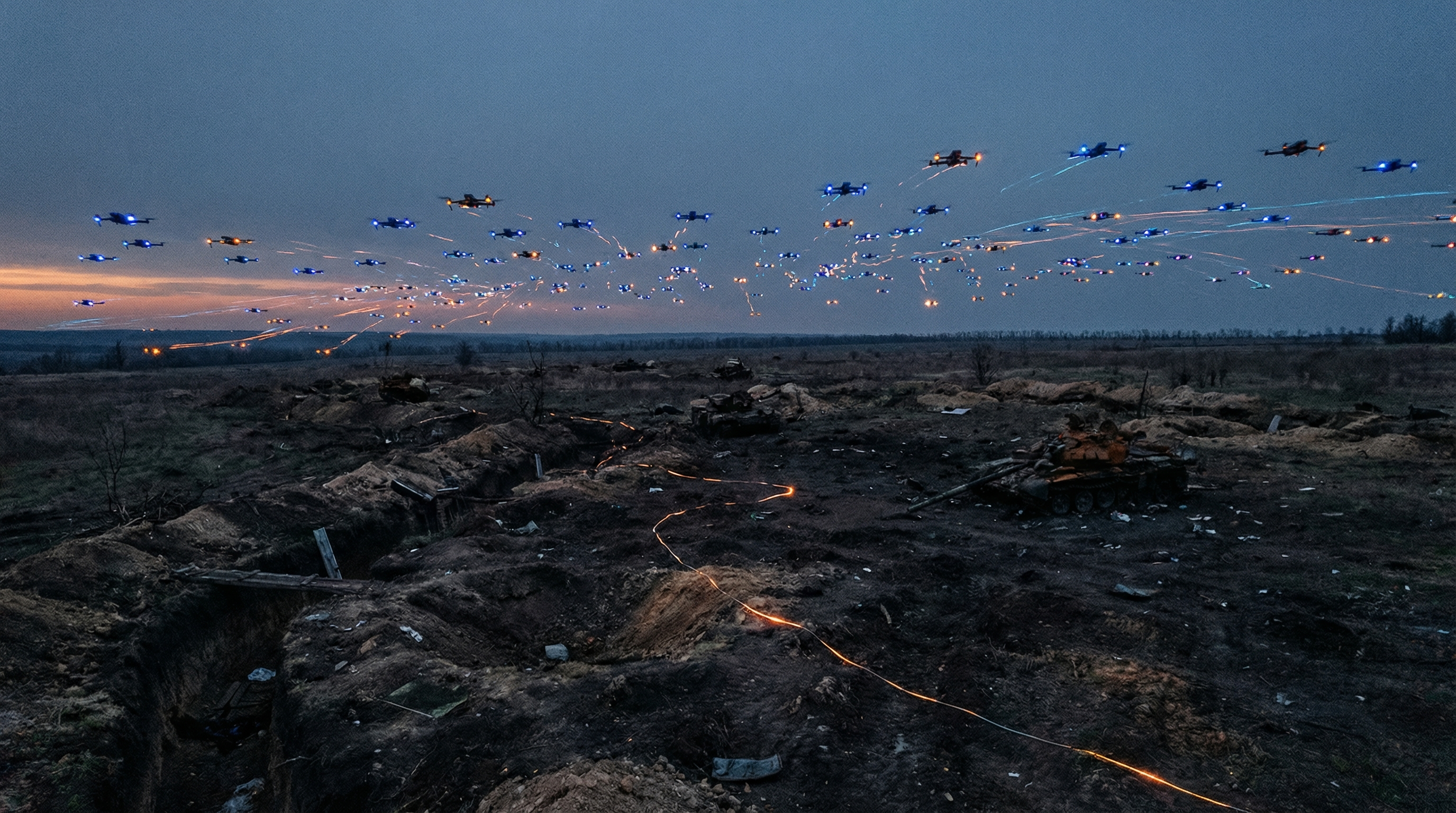
Dramatic aerial view of a modern battlefield at dusk with hundreds of drones filling the sky like fireflies
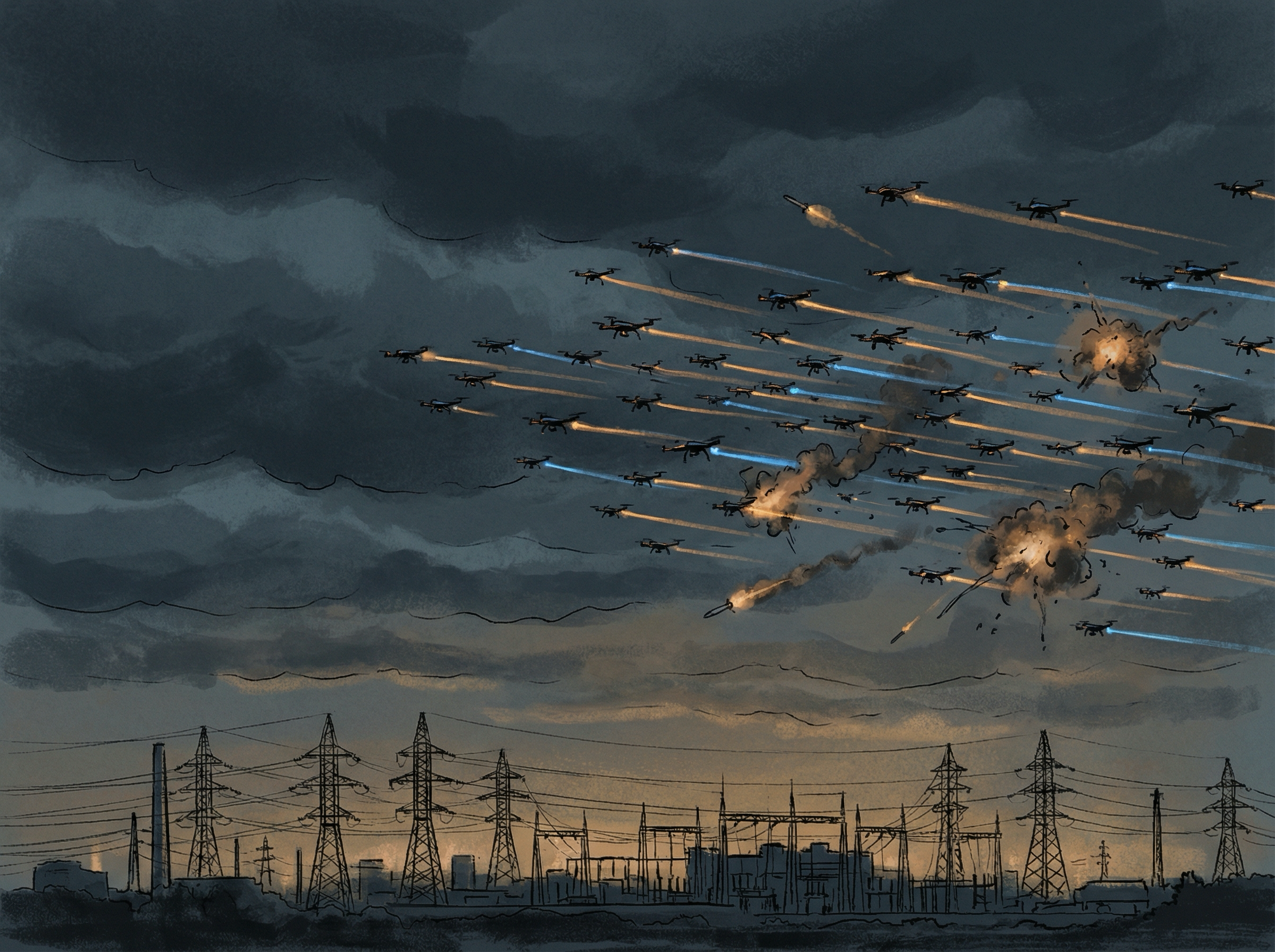
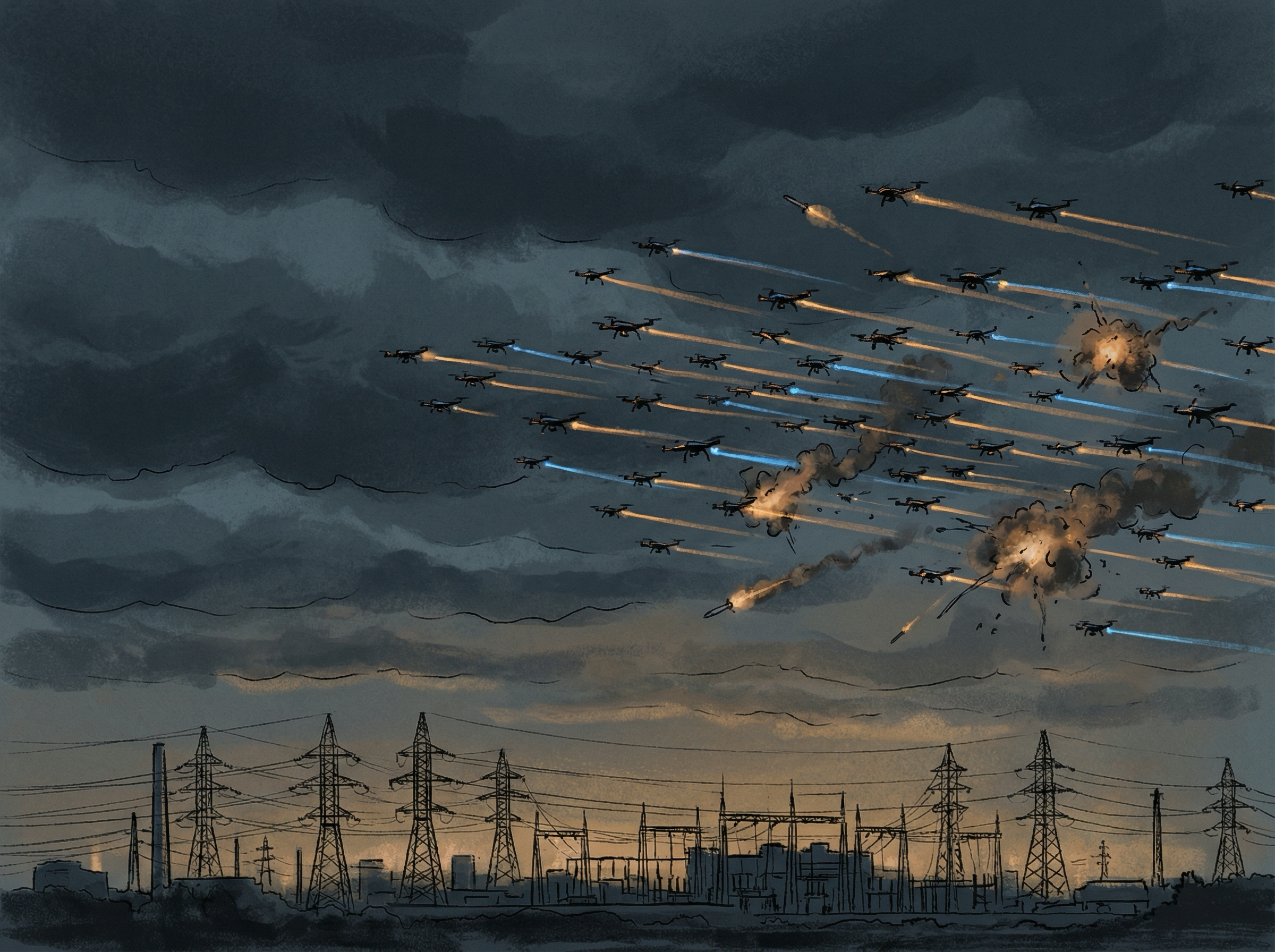
Massive coordinated drone swarm streaming across a winter sky toward power infrastructure
01

Four Hundred and Fifty Drones Walk Into an Air Defense Network

Here's the arithmetic of modern warfare, stripped to its ugly essence: launch 450 drones and 70 missiles in a single wave, and it doesn't matter that your opponent's interception rate is extraordinary. Some get through. That's the design. Russia's latest coordinated strike on Ukraine's energy grid wasn't about precision — it was about overwhelming the math.

The strategy is brutally simple and devastatingly effective. Every interceptor missile costs orders of magnitude more than the drone it destroys. Every successful interception depletes a finite stockpile. And every "leaker" that slips through hits infrastructure that takes months to repair. Ukraine's air defense operators are among the most battle-tested in history, but they're fighting a war of attrition against an adversary that has industrialized disposable weapons at a pace not seen since World War II.

This is the new calculus of air warfare: quantity has a quality all its own, and the side that can produce the cheapest effective munition at the highest volume wins the logistics war, regardless of who has the fancier technology. NATO planners watching this unfold know they're seeing a preview of what their own air defenses would face in a peer conflict — and the spreadsheets don't look comfortable.

US Army Apache helicopter releasing a swarm of small modular drones from wing-mounted pods
02

The Pentagon's Billion-Dollar Admission: Manned Aircraft Can't Survive This Fight

When the US Army activated Foxtrot Troop at Fort Riley, Kansas last month, it wasn't just standing up another cavalry unit. It was acknowledging, in doctrine and in budget, that the era of the manned aircraft flying freely over contested airspace is functionally over.

Foxtrot Troop is the first unit dedicated to "Launched Effects" — small, modular drones deployed from AH-64E Apache helicopters. The concept is elegant in its implications: instead of flying the pilot into the threat zone, you keep the manned platform at standoff distance and send the expendable drones forward to scout, jam, and kill. The Apache becomes less of an attack helicopter and more of a flying drone carrier. This is doctrine written in Ukrainian blood — a direct response to watching manned aircraft get swatted from the sky by cheap, shoulder-launched missiles and FPV kamikaze drones.

And the scale is staggering. The Army has signaled intent to acquire up to one million Launched Effects systems over the next two to three years, with the goal of equipping every active-duty division by end of 2026. One million. That's not an experiment — that's a revolution in force structure happening in real time, informed by a war most Americans can barely find on a map.

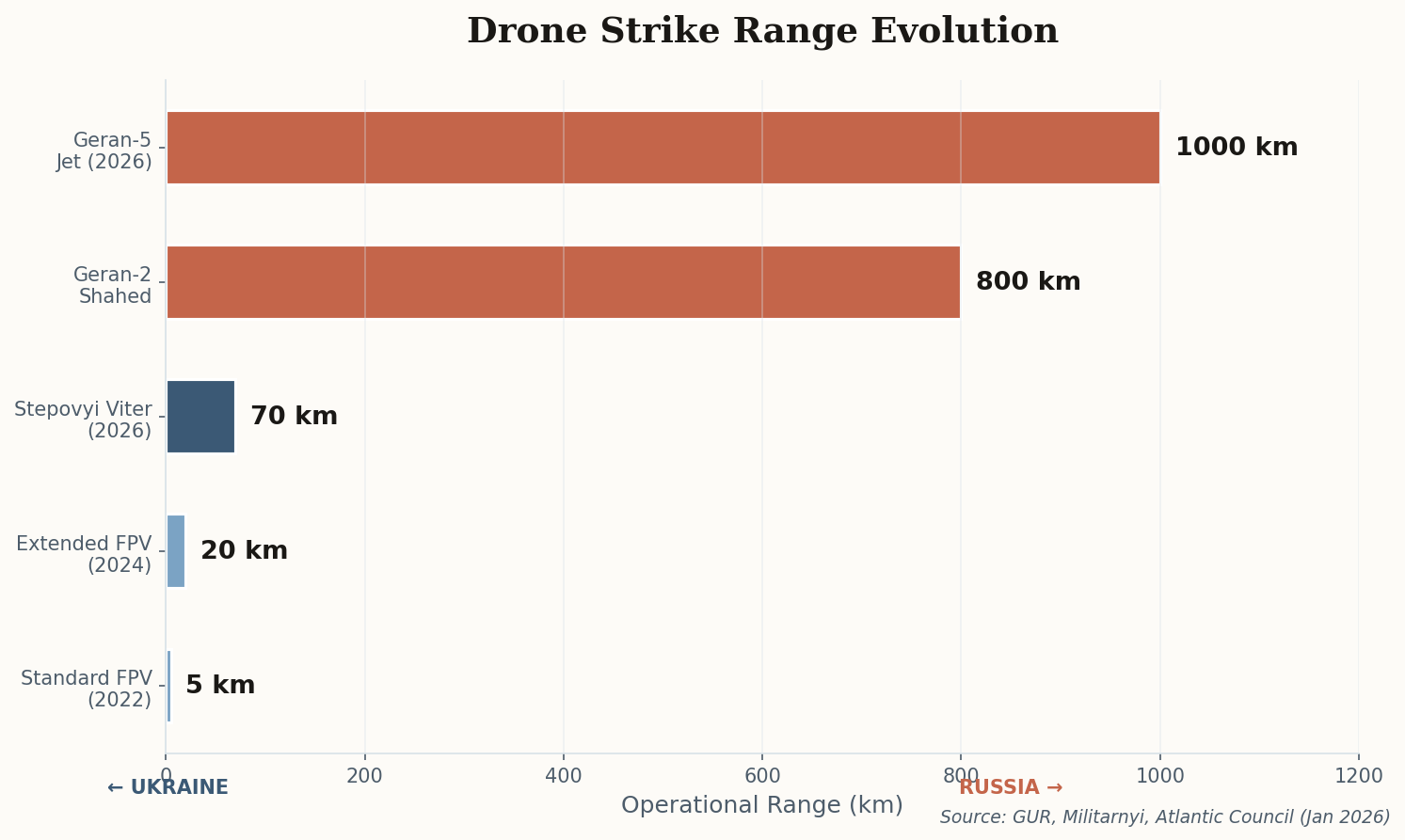
Chart showing drone strike range evolution from 5km FPV drones in 2022 to 1000km jet-powered drones in 2026
Drone operational ranges have expanded 200x in four years — from hobbyist FPV drones to jet-powered cruise munitions. The battlefield depth has fundamentally changed.
Inside a Ukrainian drone factory with rows of partially assembled FPV drones on assembly lines
03

The Drone Superpower Nobody Saw Coming

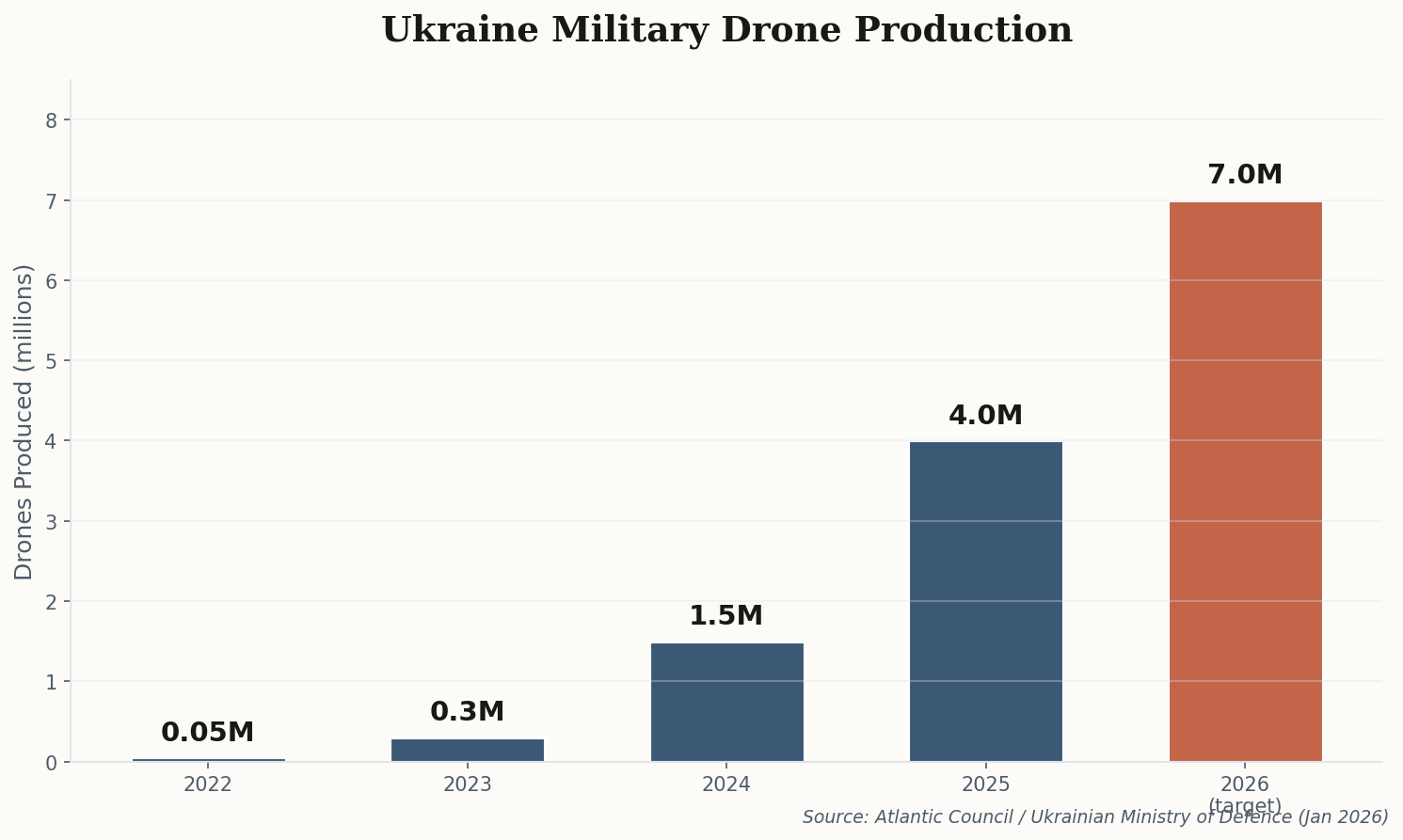
Four years ago, Ukraine was duct-taping commercial DJI Mavics to improvised grenades. Now it plans to produce seven million military drones in 2026 — nearly double the four million it churned out last year. Let that number settle. Seven million. That's more drones than some countries have bullets.

The transformation from desperate improvisation to industrial-scale production is one of the most remarkable defense manufacturing stories in modern history. Ukraine has built an entire drone industrial base from scratch under active bombardment, creating hundreds of small manufacturers competing on innovation speed rather than government contract cycles. The standard tactical drone strike zone is being extended from 20 kilometers to 100 kilometers, pushing the kill zone deep enough to hit Russian logistics, command posts, and ammunition depots at operational depth.

Bar chart showing Ukraine's drone production scaling from 50,000 in 2022 to a target of 7 million in 2026
Ukraine's drone production has scaled 140x since 2022. The 2026 target of 7 million units would make Ukraine one of the world's largest military drone producers by volume.

The broader lesson: modern warfare's center of gravity isn't the tank, the jet fighter, or the aircraft carrier. It's the factory floor. Whoever can produce the most effective disposable weapons at the highest rate wins the attritional math. RUSI analysts have been saying it for two years now — the West's defense industrial base isn't ready for this kind of conflict. Ukraine is proving, by necessity, that it can be done. The question is whether anyone else is paying attention.

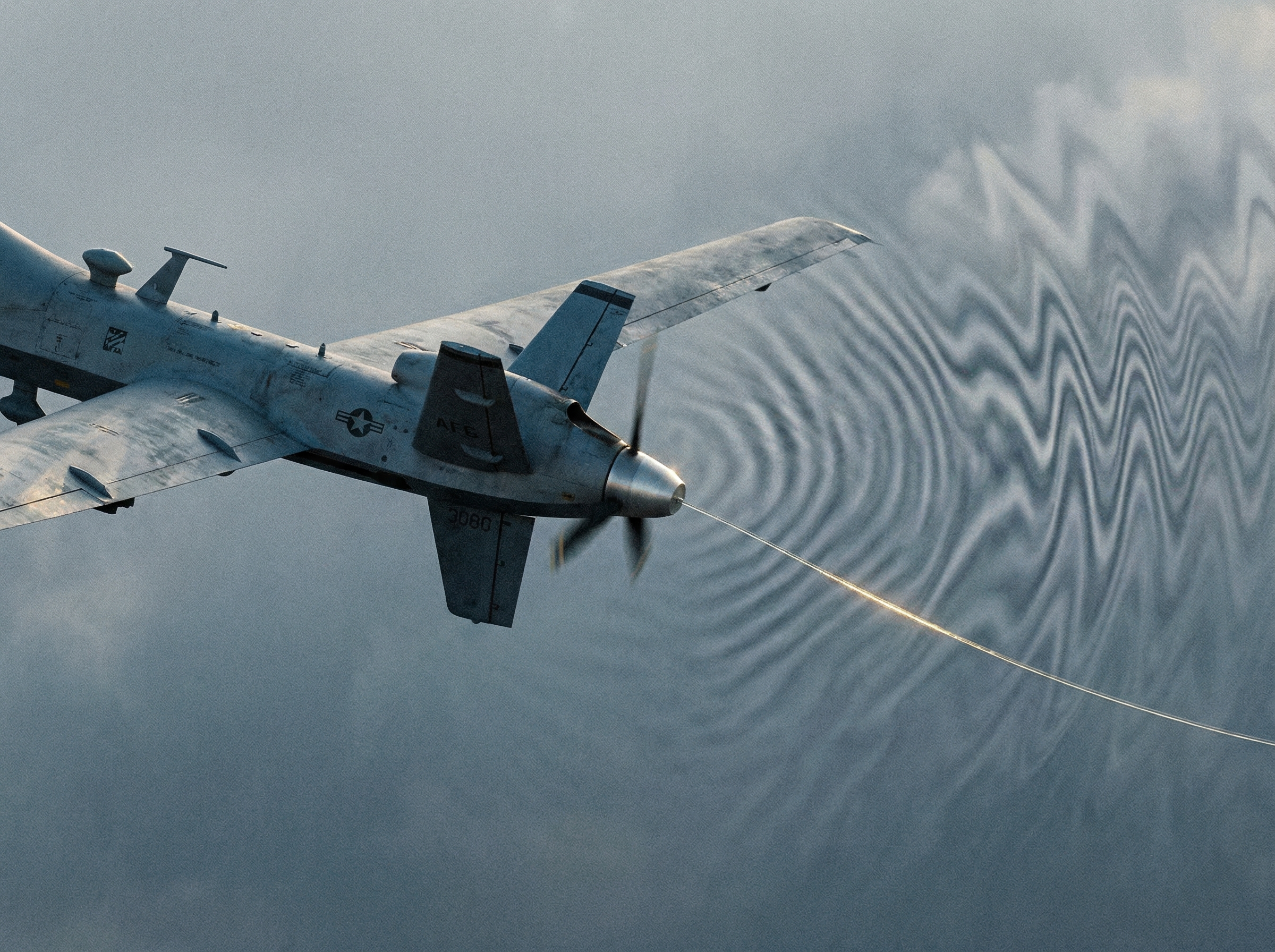
Military drone in flight trailing a thin translucent fiber-optic cable behind it
04

The Cable That Broke Electronic Warfare

Every major military on earth has spent billions developing sophisticated electronic warfare systems — GPS spoofing, RF jamming, signal interception, the whole electromagnetic toolkit. And a thin glass thread the width of a human hair just rendered most of it irrelevant.

Fiber-optic guided drones unspool a hair-thin cable during flight, maintaining a hardwired video and control link back to the operator. No radio signal to jam. No GPS to spoof. No electronic signature to detect. They are, in the most literal sense, invisible to the electromagnetic spectrum warfare that both sides have poured billions into developing. Russia began fielding these in mid-2024, and by early 2026 they've become standard equipment for high-threat environments on both sides.

The implications beyond Ukraine: Nations that have built their entire air defense doctrine around detecting and disrupting radio-frequency signals are watching their foundational assumption evaporate. If a drone doesn't emit, you can't jam it. If you can't jam it, you need kinetic intercept — and you're back to the cost-asymmetry problem of using a $100,000 missile to kill a $500 drone.

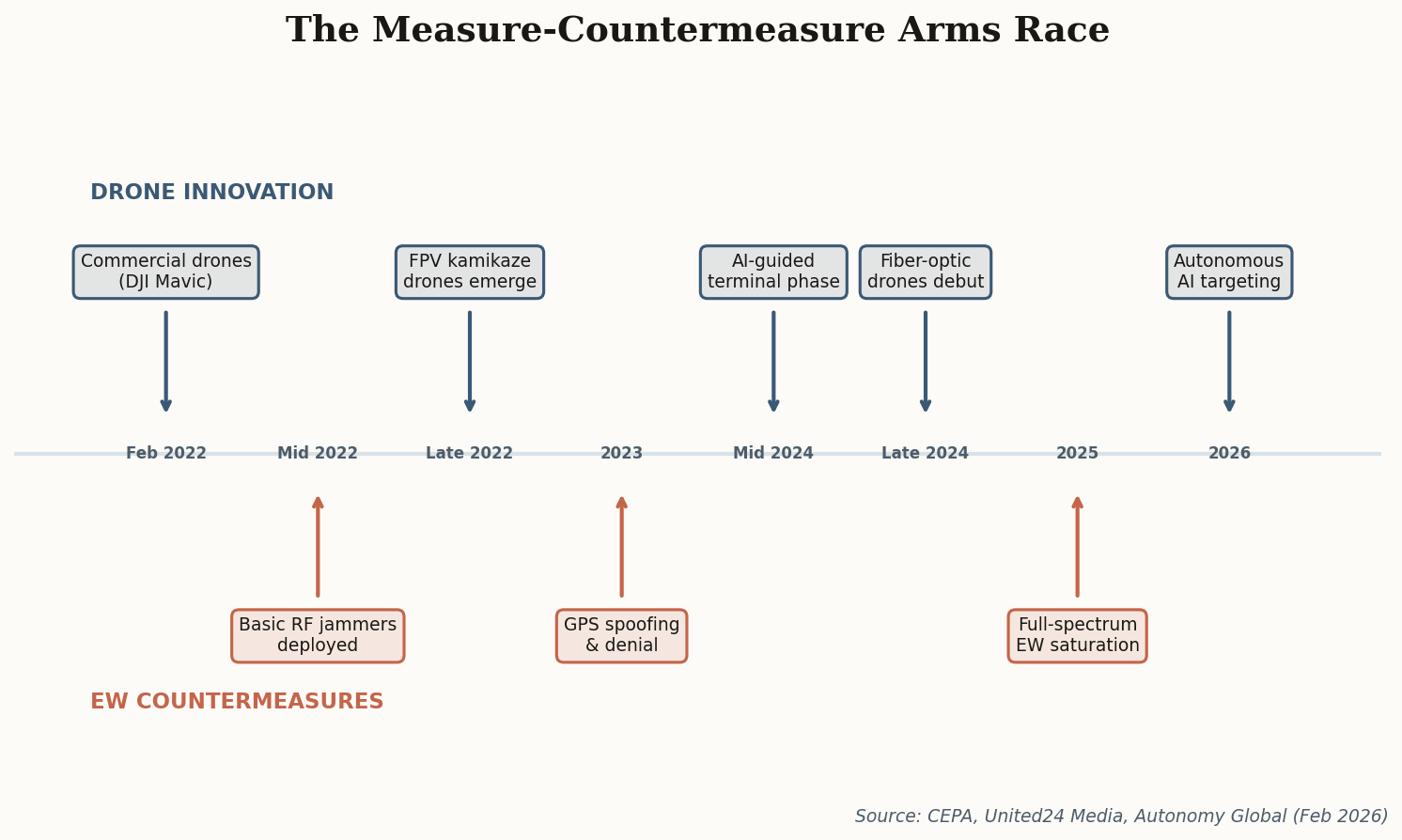
Timeline showing the measure-countermeasure arms race between drone innovation and EW countermeasures from 2022 to 2026
The drone vs. electronic warfare arms race iterates on cycles measured in months, not years. Each countermeasure spawns a counter-countermeasure within one to two battlefield seasons.

This is evolution at wartime speed. The measure-countermeasure cycle that used to take a decade in peacetime R&D labs is now running in three-to-six-month sprints on the battlefield. Fiber-optic drones are the answer to EW saturation, and somewhere in a lab right now, someone is working on the answer to fiber-optic drones. The only certainty is that whatever doctrine you write today will be obsolete by next year.

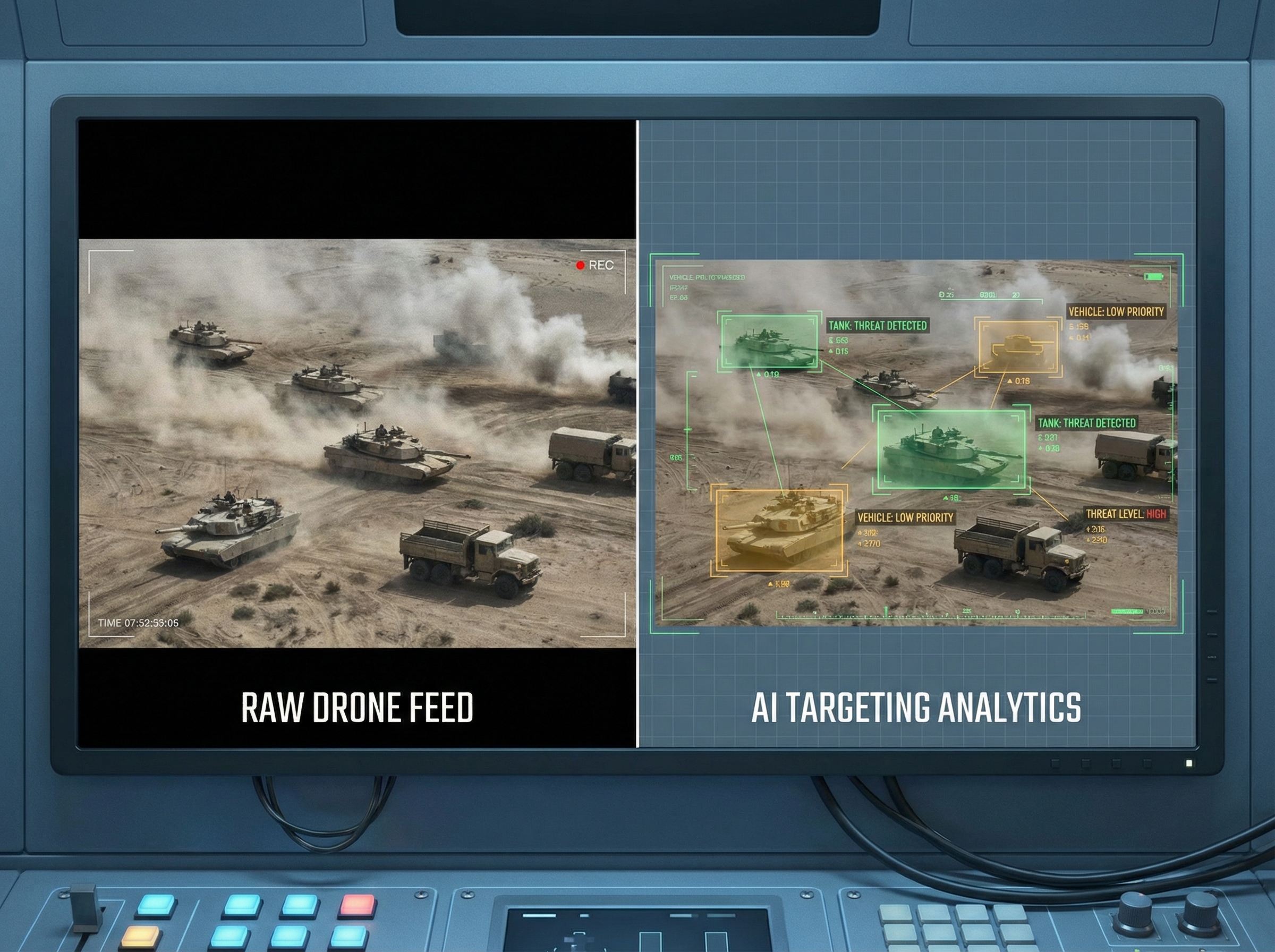
Split-screen view showing raw drone footage and the same scene with AI targeting overlays
05

The Algorithm Joins the Kill Chain

Forget the science fiction debates about autonomous weapons. While ethicists at the ICRC draft position papers, Ukraine's defense ministry is processing tens of thousands of frontline video feeds monthly through AI systems that automatically identify, classify, and geolocate targets in real time. Tanks, artillery positions, infantry concentrations — the algorithm sees it all, tags it, and hands the targeting solution to a human operator who makes the final call. For now.

The real breakthrough is in the "last mile." New ground-based kamikaze drones are being deployed with AI vision systems capable of autonomous terminal guidance — navigating the final kilometer to target even after the operator link is severed by jamming. Ukraine's Stepovyi Viter drone, unveiled by defense group UNWAVE, features an automatic target-lock system with a 70-kilometer range, designed specifically to complete its mission after losing operator contact.

This isn't Terminator. It's more mundane and more consequential. AI isn't replacing human decision-making on the battlefield — it's compressing the kill chain from minutes to seconds, processing more sensor data than any human staff could manage, and ensuring that the most perishable commodity in war — a fleeting target — doesn't escape because a drone operator blinked. The ethical questions are real and urgent. But the battlefield isn't waiting for the ethics committee to publish.

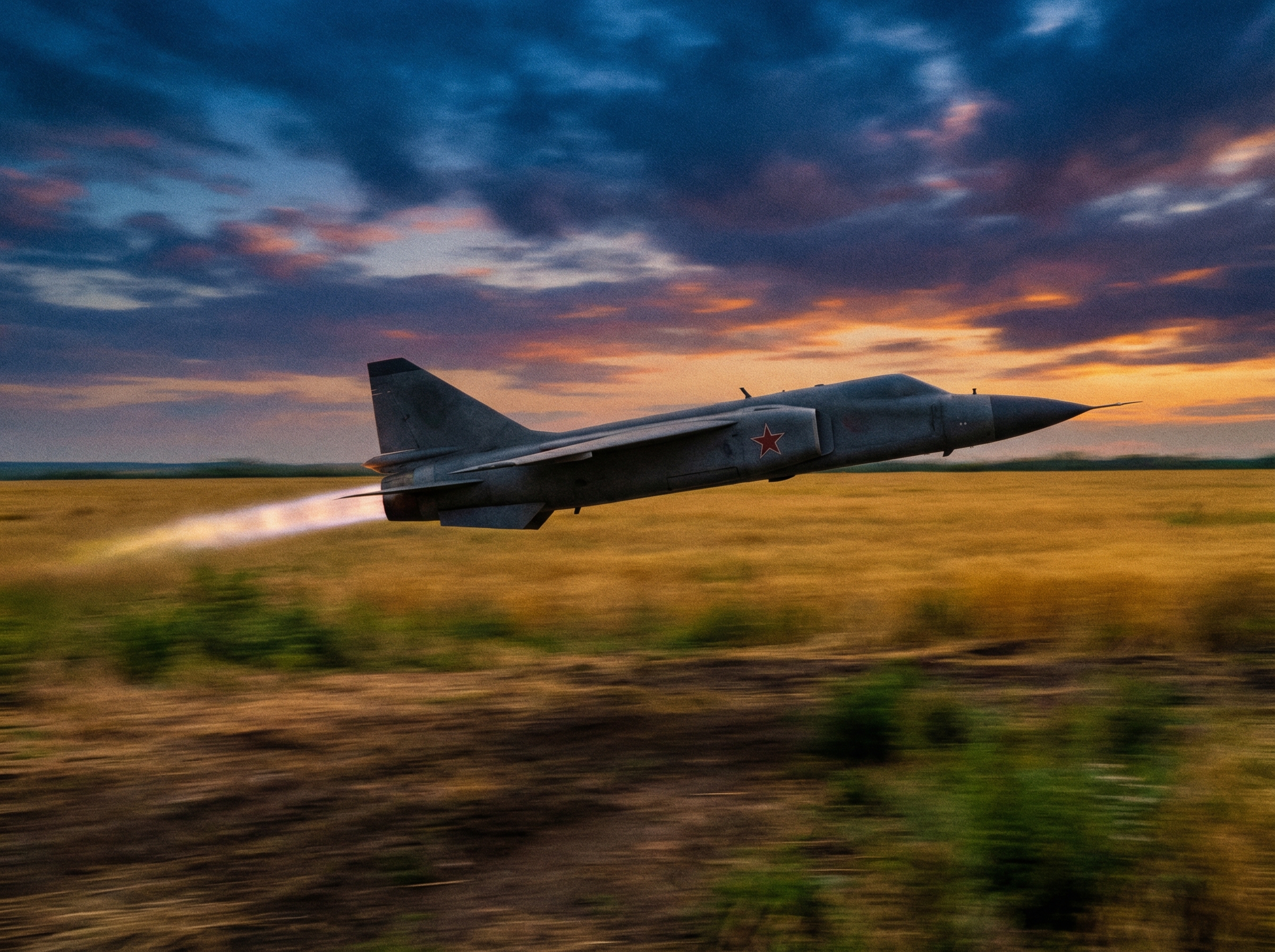
Sleek jet-powered military drone screaming low over farmland at high speed
06

Russia's Jet-Powered Answer: The Drone You Can't Shoot Down From a Pickup Truck

Ukraine's mobile fire groups — pickup trucks with mounted machine guns that have become iconic symbols of improvised air defense — have a new problem. GUR (Ukraine's defense intelligence) confirmed that Russia has deployed the Geran-5, a jet-powered evolution of the infamous Shahed-136 drone. Where the original puttered along at 180 km/h, a sitting duck for ground-based interception, the Geran-5 screams in at 600 km/h with a 1,000-kilometer range and a 90-kilogram warhead.

The propulsion leap comes courtesy of a Chinese-manufactured "Telefly" turbojet engine — a detail that speaks volumes about the sanctions evasion pipeline keeping Russia's war machine fed. There's speculation that Russia intends to air-launch these from Su-25 aircraft, further extending their reach and complicating early warning.

The Geran-5 represents the other side of the drone revolution: not just the cheap-and-many approach, but the fast-and-hard approach. At 600 km/h, mobile fire groups can't track it. At 1,000 km range, launch sites are unreachable. And at a fraction of the cost of a cruise missile, Russia can afford to send them in volume. The drone war isn't converging on one optimal design — it's diverging into an entire ecosystem of specialized killers, from $500 FPV kamikazes to jet-powered cruise munitions, each filling a different niche in the kill chain.

The Manual Is Being Rewritten in Real Time

Every war college on earth is frantically updating its curriculum. The lessons from Ukraine are clear: mass beats precision, speed beats armor, software beats hardware, and the factory floor is the new strategic center of gravity. The militaries that absorb these lessons fastest will define the next generation of conflict. The ones that cling to legacy platforms and procurement timelines measured in decades will find themselves fighting the last war — which, as Ukraine has demonstrated with seven million drones and counting, is a war that no longer exists.