521 Munitions, One Night, Zero Lights
Between February 2nd and 3rd, Russia launched what the Ukrainian Air Force called the "most powerful" combined strike of 2026: 71 missiles and 450 drones targeting energy infrastructure across the country. Kyiv, Kharkiv, and Odesa went dark. Temperatures were below freezing.
The timing isn't coincidental. This barrage came immediately after the expiration of a 7-day US-brokered halt on strikes against Kyiv — a supposed goodwill gesture toward the Abu Dhabi peace talks. So much for gestures. NATO Secretary General Mark Rutte, who was visiting Kyiv at the time, put it bluntly: these attacks demonstrate Russia has "no serious commitment to peace."
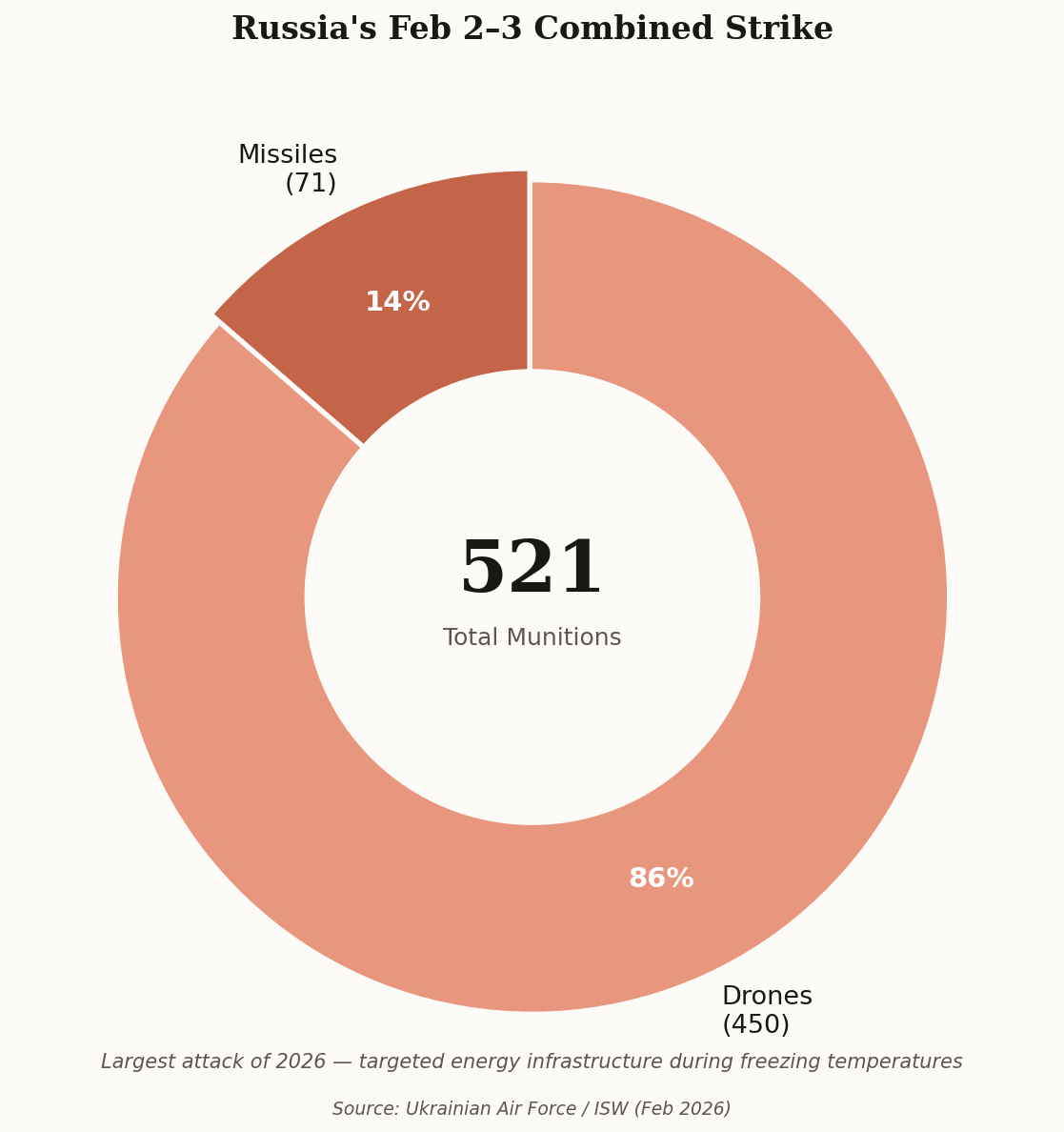
The 86% drone ratio tells a story the Kremlin won't say out loud. Russia is running low on precision-guided missiles — the expensive stuff from Kalibr and Kh-101 inventories — and backfilling with Iranian-designed Shahed drones produced at scale. Cheaper per unit, but devastating in volume. Ukraine's air defenses intercepted a significant portion, but against 450 simultaneous inbound threats, some always get through.
The so what: Moscow is weaponizing winter, and doing it with industrial-scale drone warfare that prioritizes quantity over precision. Every blackout is a pressure test on Ukrainian civilian resolve and Western commitment to air defense resupply.