
Investigation

The Efficiency Illusion

DOGE promised $2 trillion in savings. Independent audits found $18 billion. What happened to the other 99%?

Listen
A crumbling golden government building facade revealing hollow scaffolding beneath
Digital lock broken with Social Security cards spilling out
01

DOJ Admits DOGE Compromised Social Security Data

The Department of Justice has formally admitted what privacy advocates feared all along: DOGE employees compromised the security of Americans' Social Security data. The admission came in court documents filed as part of a lawsuit originally brought by labor unions in February 2025.

According to DOJ attorneys, the Social Security Administration "identified communications, use of data, and other actions by the then-SSA DOGE Team that were potentially outside of SSA policy and/or noncompliant with the District Court's March 20, 2025, temporary restraining order."

The violations weren't minor paperwork issues. DOGE team members bypassed IT security rules to share sensitive data on outside servers, and sent password-protected files containing private records to DOGE affiliates outside the agency. In the rush to find "waste," they became the waste—creating exactly the kind of security breach that costs taxpayers millions to remediate.

The irony is staggering: An organization created to reduce government waste has now exposed the government to potential lawsuits, remediation costs, and identity theft claims that could dwarf any "savings" they claimed to achieve.
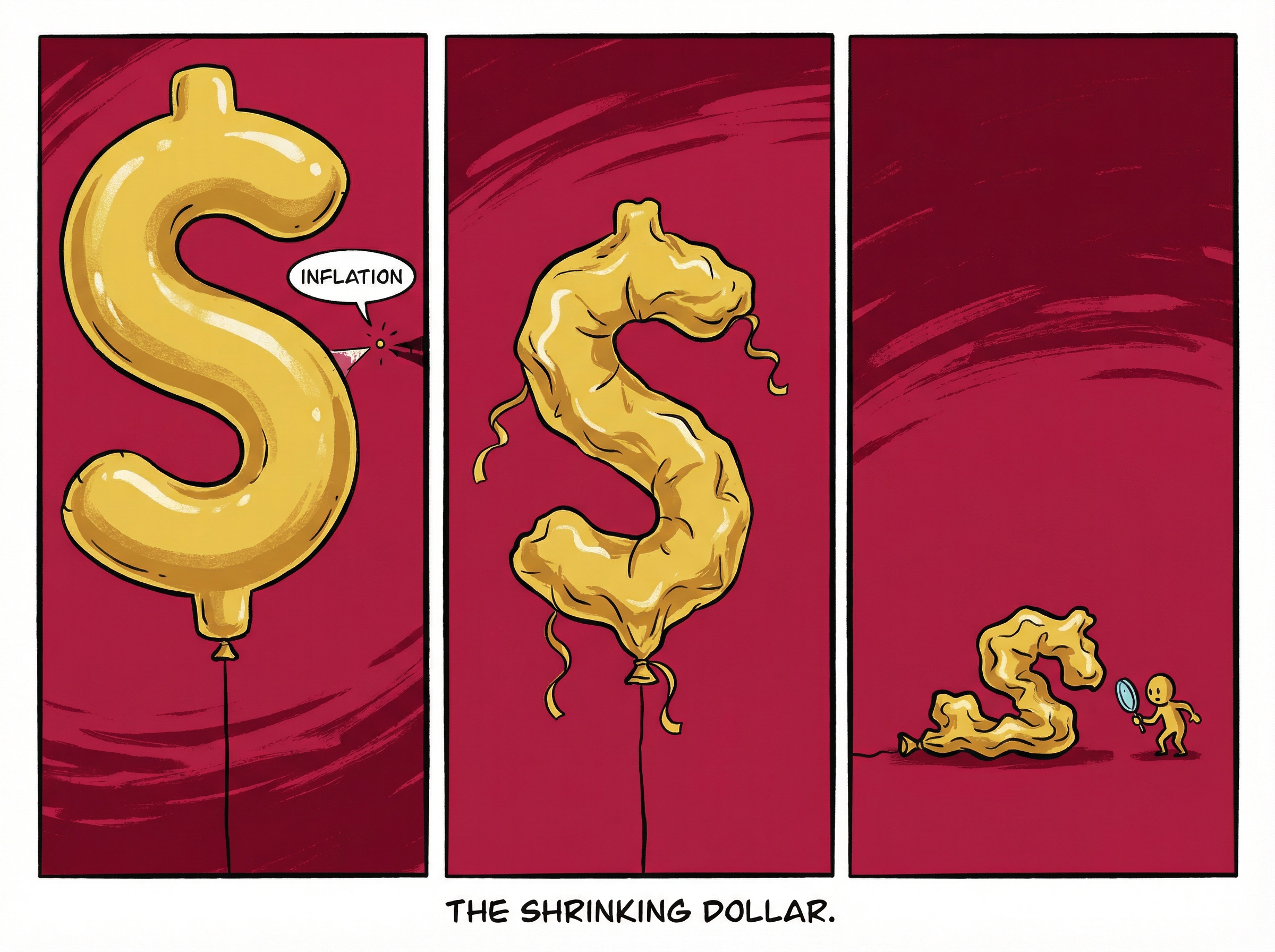
Deflating golden dollar sign balloon
02

The Incredible Shrinking Promise: From $2 Trillion to $150 Billion

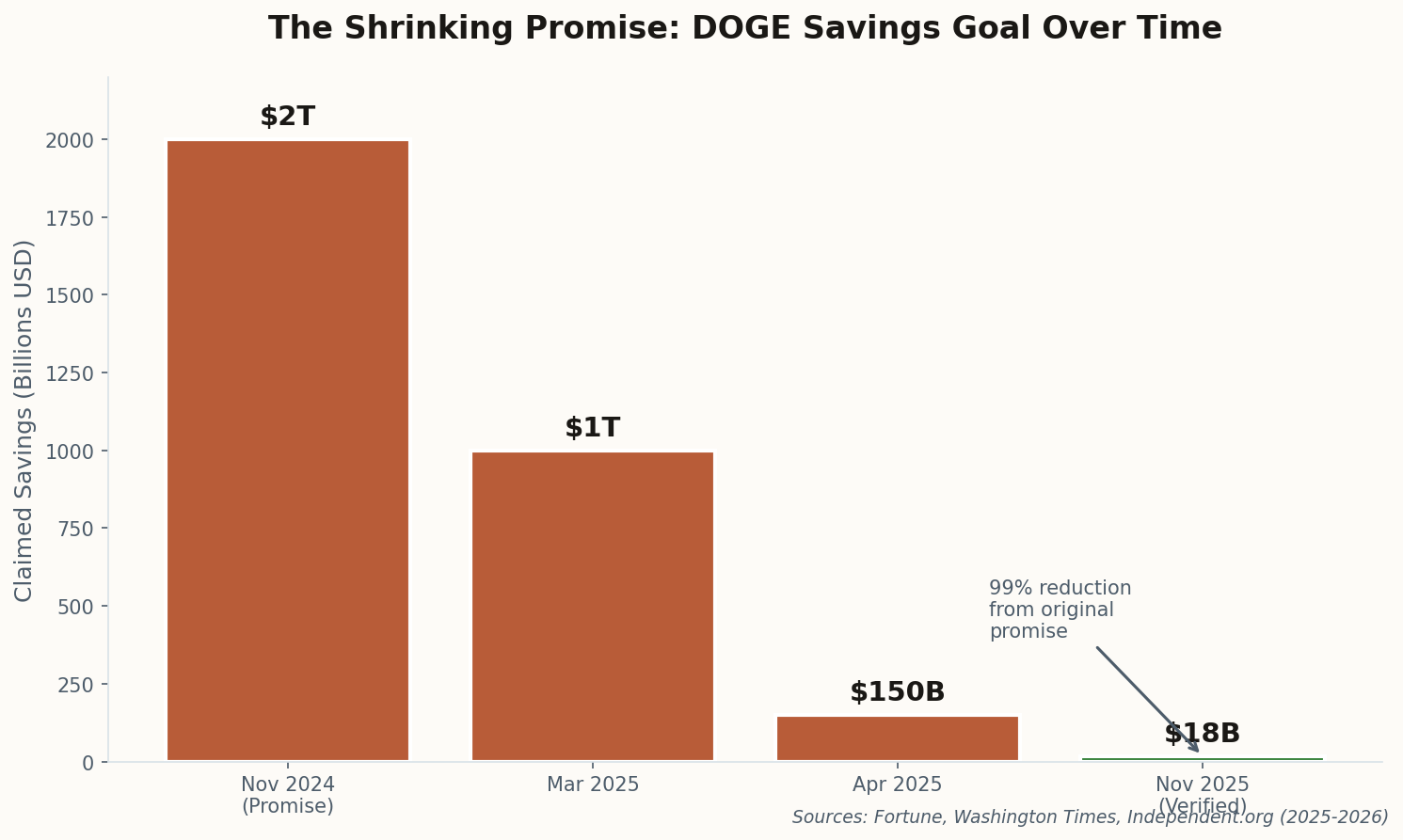
Elon Musk launched DOGE with a promise that sounded revolutionary: $2 trillion in government waste, just waiting to be cut. By March 2025, that number had quietly become $1 trillion. By April, it was $150 billion. That's a 92.5% reduction in the promised savings—before any independent verification even began.

Chart showing DOGE savings goal declining from $2T to $150B to $18B verified
The incredible shrinking promise: DOGE's savings claims collapsed by 99% when subjected to independent verification.

As Cato Institute director of budget policy Romina Boccia put it: "They're just spinning their wheels, citing in many cases overstated or fake savings." This isn't a partisan critique—Cato is a libertarian think tank that should, in theory, be cheering for government cuts.

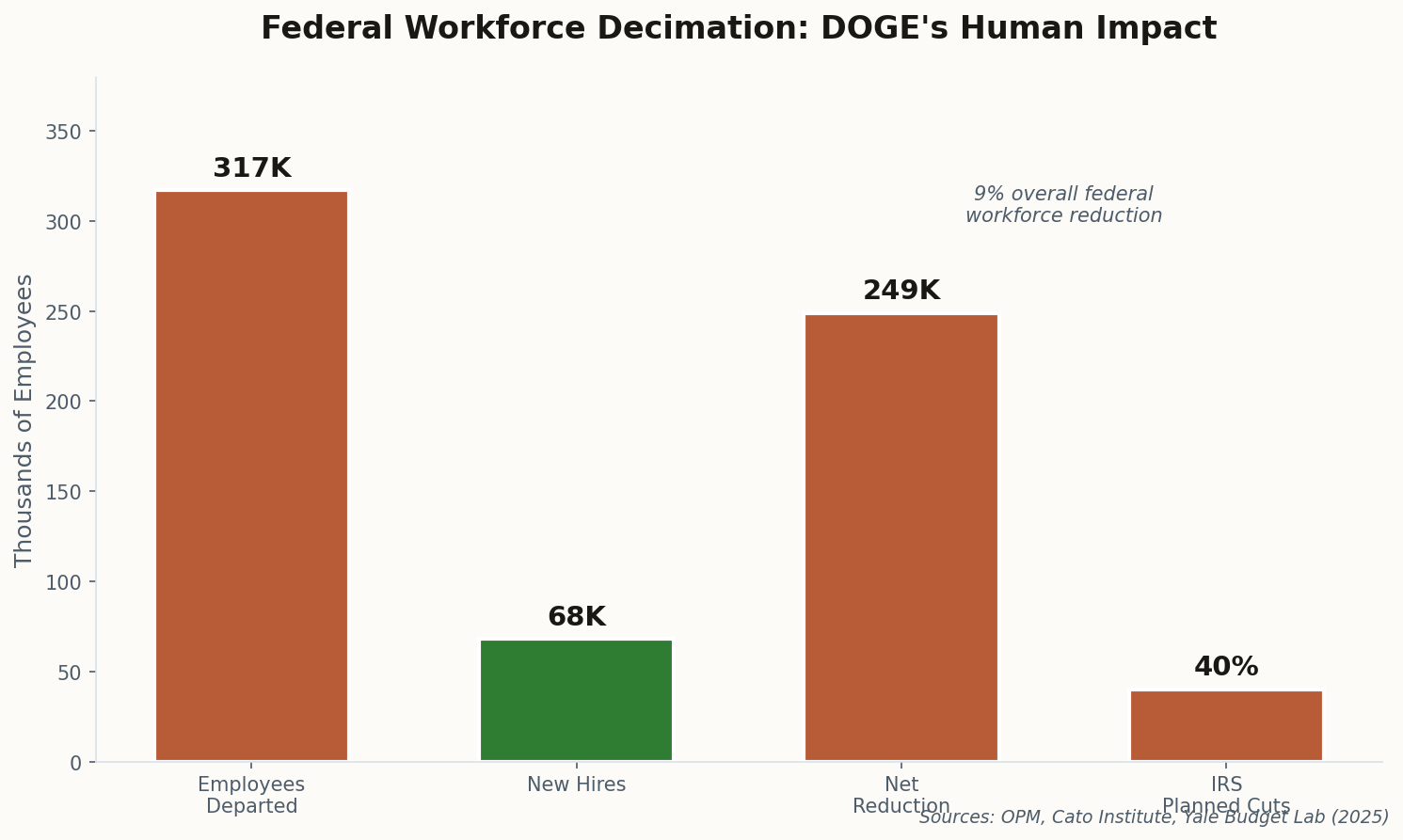
By November 2025, DOGE was announced to "no longer exist" as a formal entity. Its legacy: 317,000 federal employees departed (with only 68,000 new hires, a net reduction of 249,000 workers), the effective elimination of USAID and its $50 billion annual budget, and a trail of inflated claims that evaporated under scrutiny.

Imbalanced scales showing claimed vs verified savings
03

The Numbers Game: $215 Billion Claimed, $18 Billion Verified

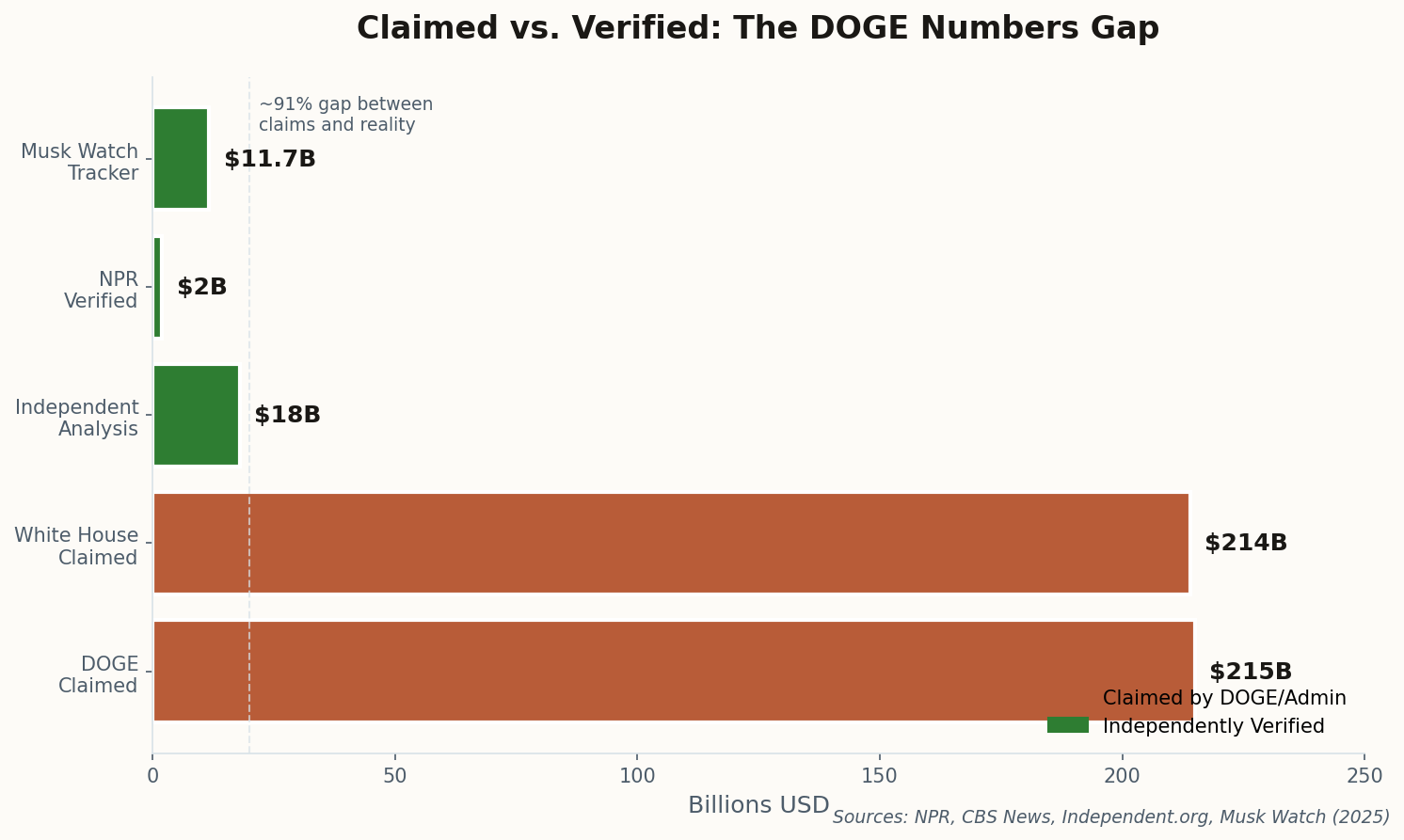
The White House claimed DOGE saved $215 billion—$1,335 for every American taxpayer. It was a number designed to make headlines. But when NPR, CBS News, and independent analysts actually examined the receipts, a very different picture emerged.

Horizontal bar chart comparing claimed savings to verified amounts
Multiple independent analyses found a 91% gap between DOGE's claimed savings and verifiable reality.

NPR's investigation was particularly damning. They found the documented savings were "grossly overstated," including an $8 billion typo (a contract listed at $8 billion that was actually $8 million), misleading inclusion of standard procurement adjustments, and billions in contracts that were never actually terminated. Their estimate: roughly $2 billion in actual savings.

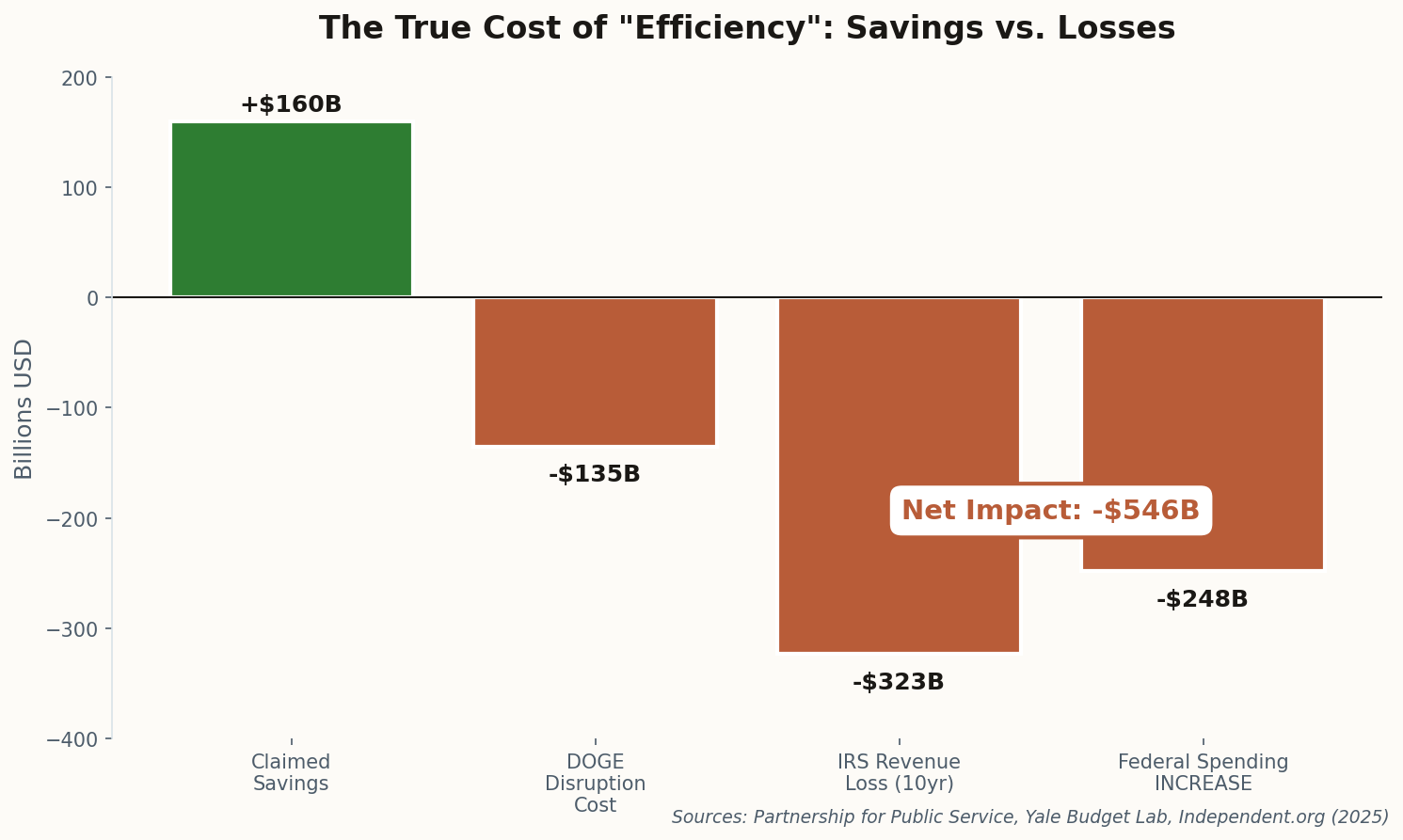
The Independent Institute found only $18 billion saved out of total federal spending of $7.009 trillion. Here's the kicker: total federal spending actually increased by $248 billion compared to the previous year. DOGE was claiming victory while the ship was taking on more water.

As one analyst noted: "There is a possibility that Musk is delivering the opposite of taxpayer savings—a worse government at roughly the same cost."

Empty IRS office with money flying out windows
04

The Cost of "Efficiency": IRS Projects $500 Billion Revenue Loss

Here's where the math gets truly perverse. DOGE claimed $160 billion in savings. But the Yale Budget Lab estimates that cutting 40% of the IRS workforce will cost $323 billion in lost tax revenue over the next decade due to reduced audits and lower compliance.

Bar chart showing claimed savings vs actual costs including IRS revenue loss
When you factor in lost IRS enforcement revenue and disruption costs, DOGE's "efficiency" may have cost taxpayers over $500 billion.

The Partnership for Public Service estimates that DOGE's disruption—putting tens of thousands of employees on paid leave, rehiring mistakenly fired workers, lost productivity—will cost $135 billion this fiscal year alone. That's nearly as much as DOGE claimed to save.

Think about it: you can't save money by firing the people who collect money. It's like a store cutting its cashiers to reduce payroll and then wondering why revenue collapsed. The IRS's own internal estimates projected over $500 billion in revenue loss from "DOGE-driven" enforcement cuts.

Bar chart showing federal workforce reductions
DOGE drove a 9% reduction in federal workforce—317,000 departures against just 68,000 new hires.
Congressional gavel striking down on torn executive order
05

Congress Strikes Back: NIH Funding Restored

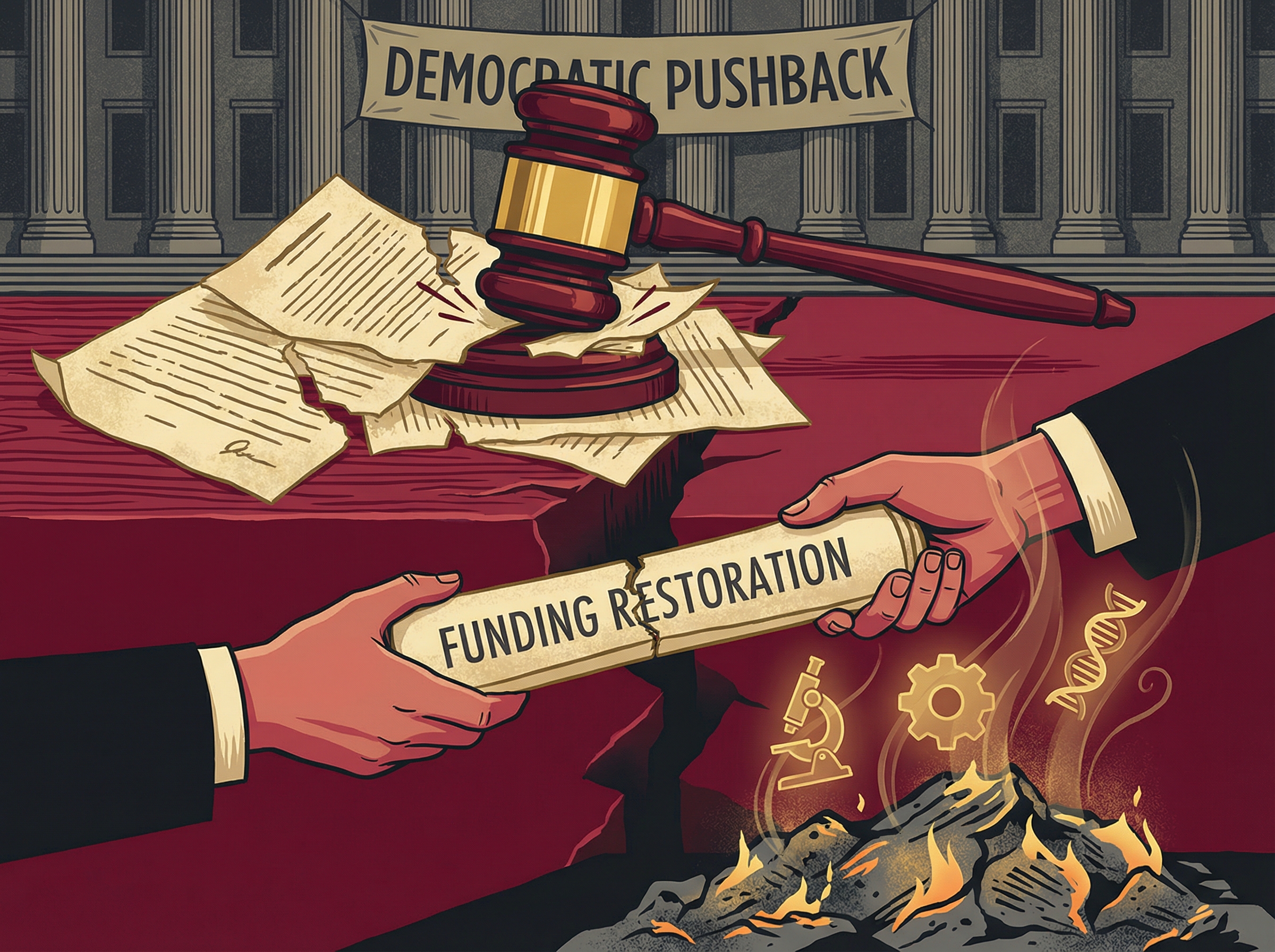
Not everyone was content to watch DOGE dismantle government in pursuit of phantom savings. In a rare bipartisan rebuke, Congress included a $415 million increase for the National Institutes of Health in the FY2026 budget—directly repudiating DOGE's earlier $4 billion cut to medical research.

The move signals that even a Republican-controlled Congress recognized that some cuts aren't "efficiency"—they're sabotage. Medical research doesn't produce quarterly earnings reports, but it does produce treatments, vaccines, and scientific breakthroughs that make future generations healthier and more productive.

This wasn't the only legal setback. Judge Tanya Chutkan ruled that 14 states could proceed with their lawsuit against Musk and DOGE, writing that "the Constitution does not permit the Executive to commandeer the entire appointments power by unilaterally creating a federal agency pursuant to Executive Order." Courts also ruled that DOGE is subject to FOIA requests—meaning all those internal communications about "savings" may eventually become public.

Empty medicine bottles casting long shadows
06

The Human Cost: 720,000 Deaths Linked to Aid Cuts

This is where the spreadsheet meets the morgue. Research led by Professor Brooke Nichols estimates that DOGE-driven cuts to USAID resulted in approximately 300,000 deaths by May 2025. By January 2026, that estimate exceeded 720,200—primarily children.

The headline in The Times was stark: "DOGE Cuts to USAID Blamed for 300,000 Deaths—Most of Them Children."

DOGE effectively eliminated an agency with unfettered authority to distribute up to $50 billion annually to global health programs. These weren't abstract line items—they were malaria nets, childhood vaccines, HIV treatments, and emergency food supplies. The "waste" DOGE eliminated was keeping people alive.

You can argue about the role of foreign aid. You can debate whether $50 billion is the right number. But you cannot, with any intellectual honesty, call the elimination of life-saving medical programs "efficiency." Efficiency implies you're getting the same output with fewer inputs. What DOGE delivered was fewer inputs and catastrophically fewer outputs—measured in human lives.

The Verdict

DOGE was sold as a revolutionary assault on government waste. What it delivered was a masterclass in accounting theater: inflated claims, undisclosed costs, and human consequences that never made it to the savings spreadsheet. The $2 trillion promise became $18 billion in verified savings—while the IRS alone projects losing $500 billion in uncollected revenue. When the final accounting is done, "efficiency" may have been the most expensive word in American fiscal history.