Leica Noctilux-M 35mm f/1.2

The $10,000 Question

After decades of waiting, Leica finally delivers a 35mm Noctilux. The reviews are in. Is it worth the price of a used car?

Listen
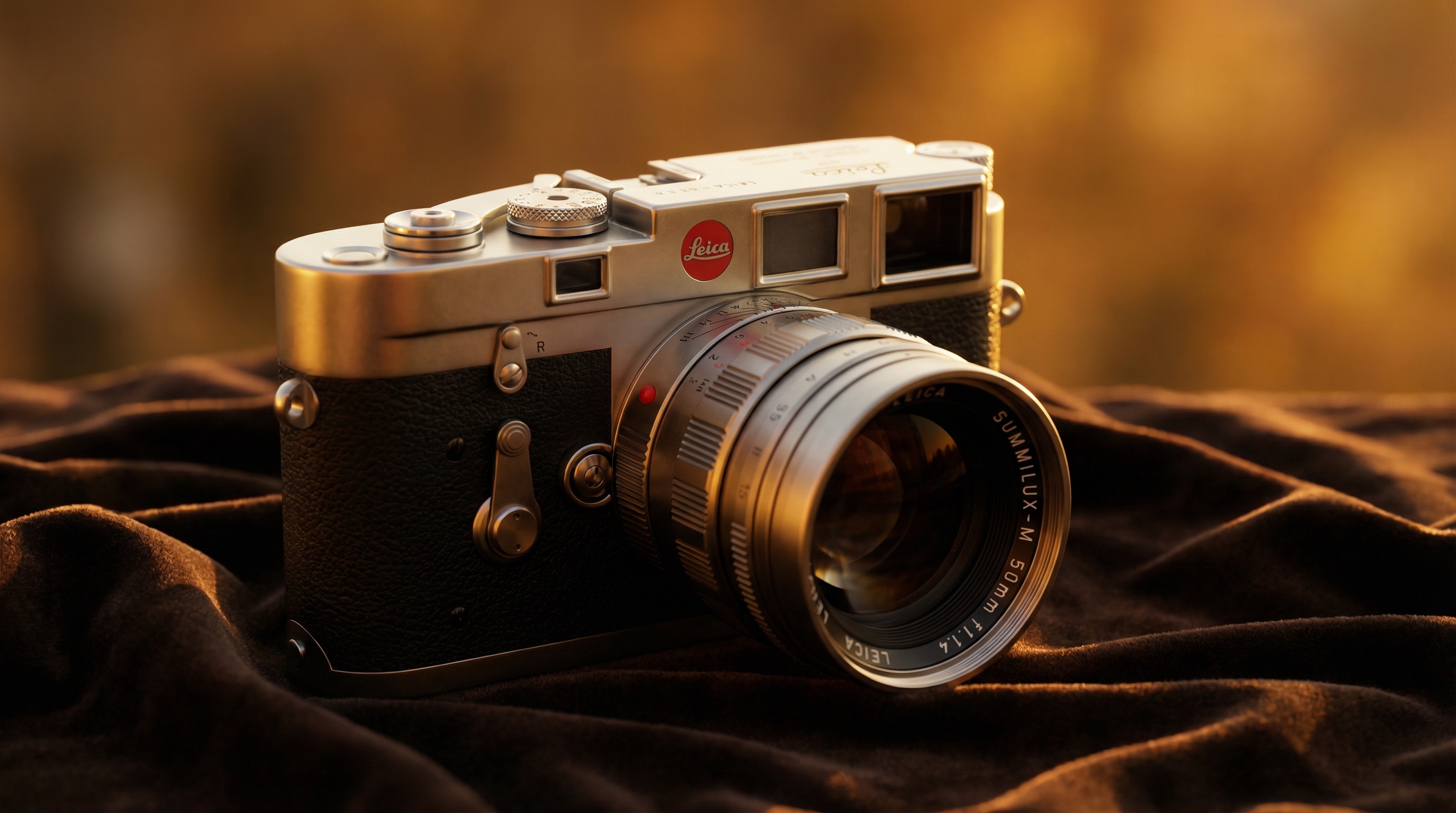
Leica rangefinder camera with the new Noctilux-M 35mm f/1.2 lens, bathed in golden light
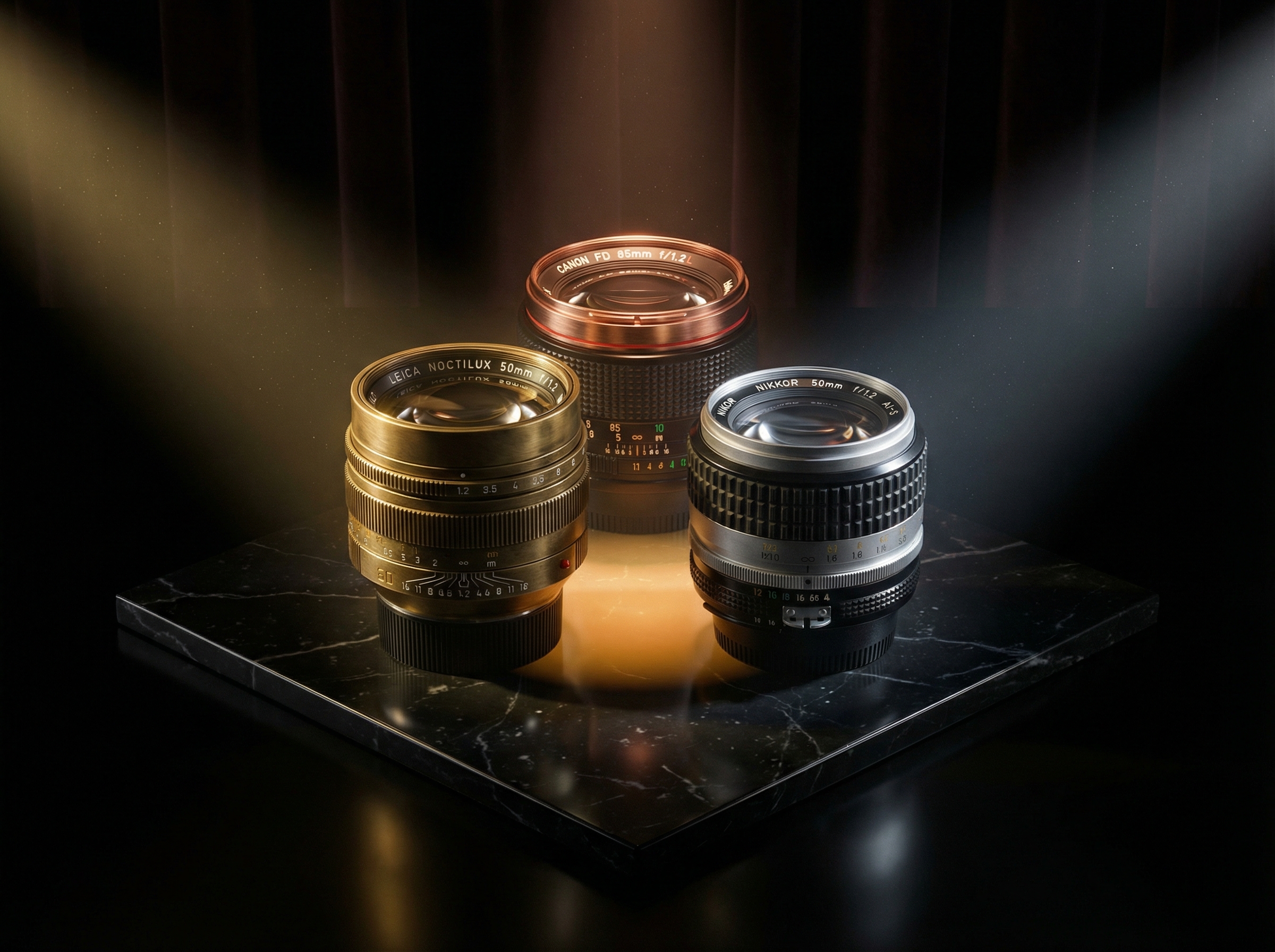
Three legendary lenses arranged in triangle formation, representing the Noctilux trinity
01

The Trinity Is Complete

For years, Leica shooters had two-thirds of a holy trinity: the legendary 50mm f/0.95 and the whisper-quiet 75mm f/1.25. The 35mm gap was conspicuous—the most popular focal length for street photographers, denied the Noctilux treatment.

That era ended January 29th. Milan Swolfs, a working photographer who's shot all three Noctiluxes extensively, calls the new 35mm "potentially the most versatile lens in the entire M-system lineup." High praise from someone who could easily dismiss it as unnecessary.

The verdict that caught my attention: the 35mm might eliminate the need to own both a Summilux and a 50mm Noctilux. If you're shooting wide open in mixed conditions—street, reportage, documentary—the 35mm's extra stop over the Summilux combined with its wider field of view could replace two lenses. That's not just convenience; it's a statement about where modern photography is heading.

The Noctilux Trinity: 35mm f/1.2 ($9,650) + 50mm f/0.95 ($13,195) + 75mm f/1.25 ($12,795) = $35,640 in glass. Or roughly the cost of a new Civic.
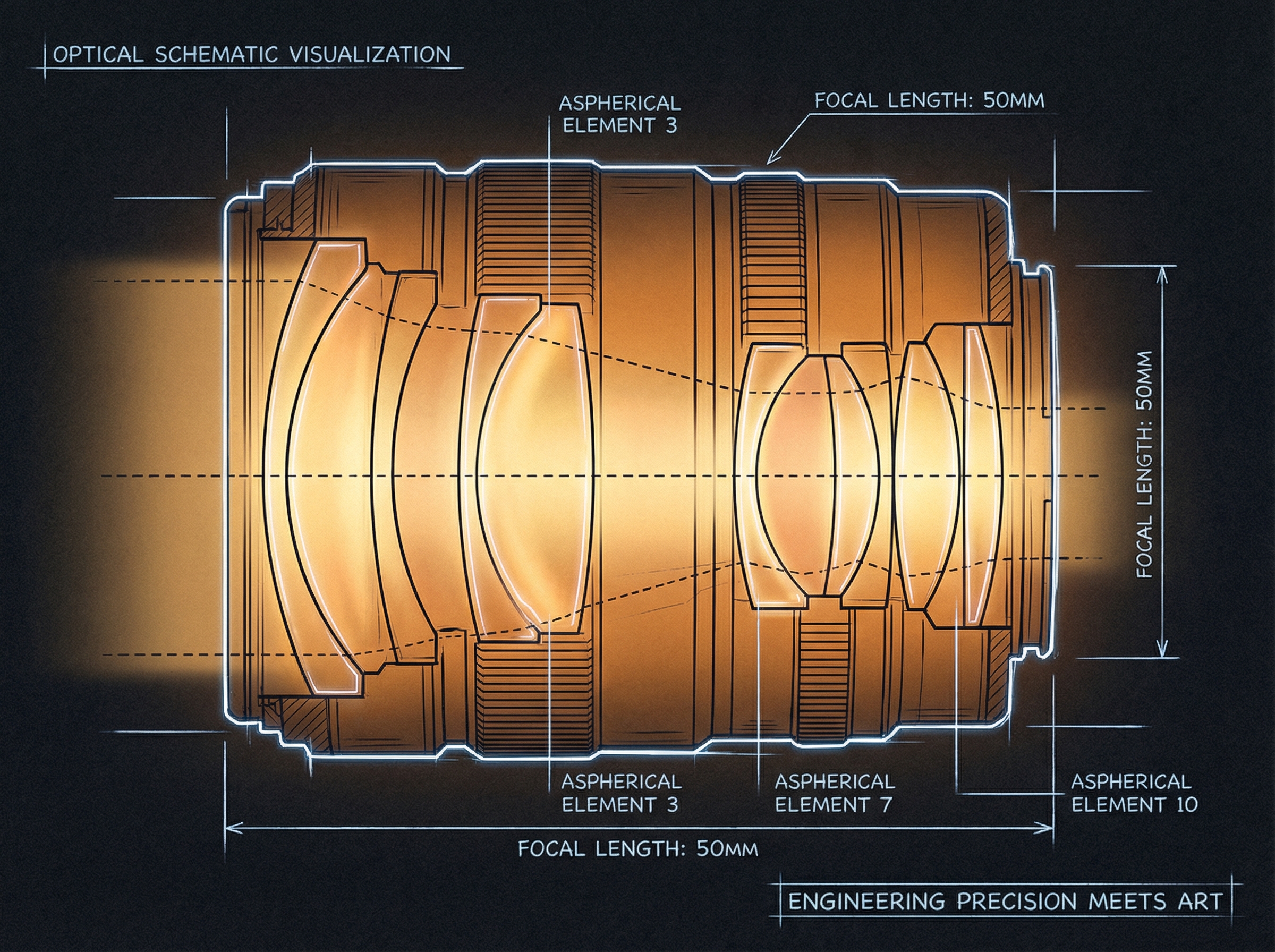
Cross-section of a complex camera lens showing precision optical elements
02

Ten Elements of Obsession

Jonathan Slack's technical deep-dive at Macfilos reveals the engineering decisions that separate this from every other 35mm lens on the market. The headline number: 10 elements, including three aspherical surfaces manufactured using Leica's new "Precision Glass Moulding" process.

But the spec that actually matters for daily use is the 0.5m minimum focus distance—a full 20cm closer than the traditional 0.7m for M-mount lenses. Combined with f/1.2, you can isolate subjects in ways that previously required switching to a macro or close-focus adapter. It's street photography meets environmental portraiture.

Specification Noctilux 35mm f/1.2 Summilux 35mm f/1.4
Elements/Groups 10/7 11/8
Aspherical Surfaces 3 1
Weight 416g 320g
Min Focus 0.5m 0.7m
Price $9,650 $5,495

Slack's conclusion: "It is the sharpest and most modern-looking Noctilux Leica has ever made." That's not hyperbole—it's a deliberate design choice. This lens doesn't have the ethereal glow of vintage fast glass. It's surgically precise while maintaining that subject-isolation "draw" that makes Noctiluxes feel different from clinical APO designs.

Abstract visualization of optical vignetting with cat's eye bokeh shapes
03

Beautiful Flaws (And Real Ones)

PetaPixel's review is the one to read if you want honesty instead of reverence. Yes, the center sharpness wide open is remarkable. But the corners at f/1.2? They drop off hard. This isn't a flaw hidden in test charts—it's visible in real images.

The signature characteristic is the vignetting. At f/1.2, the light falloff creates what's called "cat's eye bokeh"—those swirly, lemon-shaped highlights that vintage lens collectors obsess over. PetaPixel frames this as a feature, not a bug: "An incredible optical achievement with very few downsides... but these benefits come with an incredibly high cost."

That cost: $9,650 USD. The elephant in the room. Voigtländer makes a 35mm f/1.2 for about $1,000. It's not as sharp, the build isn't as refined, but it exists. The Leica tax here isn't just brand prestige—it's three aspherical surfaces, 11-blade diaphragm construction, and that intangible "rendering" that either matters to you or doesn't.

My take: if you're shooting at f/2.8 most of the time anyway, buy the Summilux. The Noctilux is for people who live at f/1.2 and want every image to look like it was lit by Vermeer.

Moody Pacific Northwest forest scene with shallow depth of field
04

The Evidence, Unfiltered

DPReview's sample gallery is the court of final judgment. Shot in the Pacific Northwest—overcast skies, forest scenes, exactly the conditions where you need f/1.2—the images reveal what no spec sheet can: how this lens feels.

Three observations from the samples:

1. The bokeh is busy. Complex backgrounds (think tree branches, urban signage) create a swirly, almost painterly blur. Some will call it distracting. Others will call it character. Know which camp you're in before spending $10k.

2. Color rendering is warm. Compared to the clinical neutrality of the APO-Summicron line, the Noctilux pushes slightly toward amber and rose. It's subtle—maybe a 5% shift—but visible in side-by-side comparisons.

3. The 0.5m close focus is transformative. Several samples show subjects at distances that would be impossible with a standard 35mm. The combination of close focus + f/1.2 creates an intimacy usually reserved for 75mm+ lenses.

The quote that sums it up: "Extreme mechanical vignetting at f/1.2 results in a distinct 'cat's-eye' bokeh." Either that sentence excites you, or you should save your money.

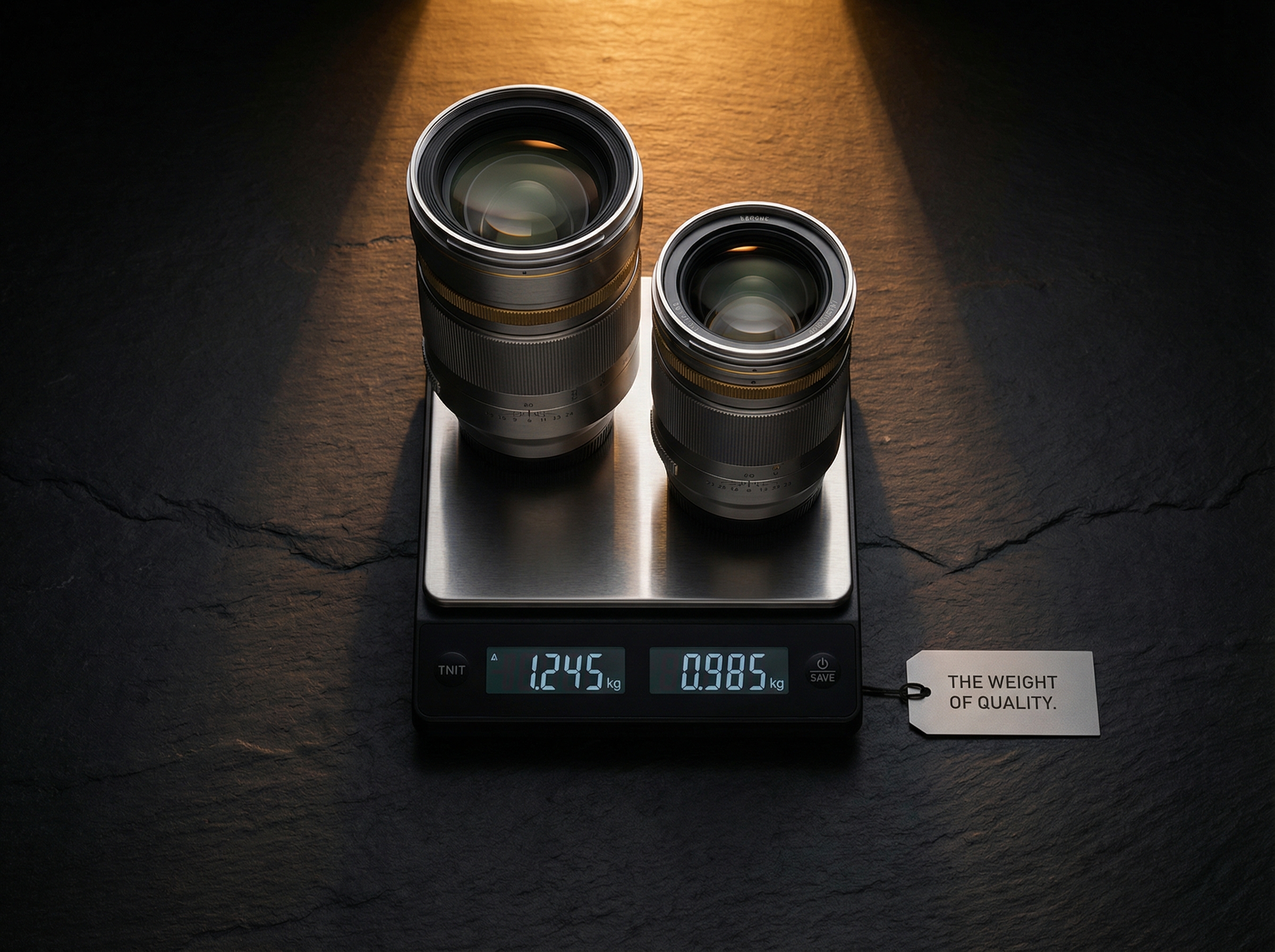
Two camera lenses on a precision scale, comparison visualization
05

The Summilux Question

Red Dot Forum's David Farkas, who has handled more M-mount glass than most people have seen in photographs, provides the comparison everyone wants: Noctilux vs. Summilux.

The Summilux-M 35mm f/1.4 ASPH has been the default recommendation for decades. It's sharp, compact (320g), relatively affordable ($5,495), and "good enough" for virtually every situation. The Noctilux outperforms it in sharpness, light transmission, and chromatic aberration control—but only when you're shooting wide open.

The size difference is minimal: the Noctilux is "only marginally larger" than the Summilux. At 416g vs 320g, that's roughly the weight of a smartphone added to your kit. The integrated slide-out hood is new—previous 35mm lenses used clip-on hoods that could accidentally detach.

Farkas's insight about the development: Leica spent three years on this design. The 11-blade diaphragm (unusual for a Leica lens) ensures circular bokeh even stopped down to f/2 or f/2.8. If you're the type who shoots at f/1.2 then chickens out to f/2 for "safety," you'll still get those creamy out-of-focus areas.

The bottom line: the Summilux is the rational choice. The Noctilux is for photographers who've stopped being rational about their tools—and accept that about themselves.

Silhouette of a photographer before a massive camera lens aperture, spiritual connection to craft
06

Why f/1.2 and Not f/0.95

Thorsten Overgaard's review is less about specifications and more about philosophy—which is exactly what you'd expect from someone who writes 10,000-word essays about the "soul" of a camera strap.

But buried in the aesthetic musings is a crucial insight: Leica chose f/1.2 instead of f/0.95 deliberately. The 50mm Noctilux at f/0.95 is legendary but punishing—700g of glass, razor-thin depth of field that makes focusing a meditation exercise, and a price that approaches $14,000.

The 35mm at f/1.2 is what Overgaard calls "a conservative choice for better balance." At 416g (vs. 700g for the 50mm f/0.95), it's a lens you'll actually carry. The f/1.2 aperture gives you the Noctilux "look" without the focusing anxiety. And it's optimized for the Leica M11's high-resolution sensor—meaning modern digital shooters were the primary design target, not film romantics.

The quote that reframes the whole lens: "Leica chose usability over bragging rights... resulting in a lens that you will actually want to carry all day."

That's the real pitch. Not the sharpest. Not the fastest. But perhaps the most usable ultra-fast lens ever made for a rangefinder. In 2026, that might be the most radical design decision of all.

The Verdict

The Noctilux-M 35mm f/1.2 isn't for everyone—but it knows exactly who it's for. If you shoot wide open, crave that indefinable "Leica rendering," and have $10k to allocate to a single piece of glass, this is the lens that will make you fall in love with the 35mm focal length all over again. For everyone else, the Summilux remains excellent, the Voigtländer alternative remains tempting, and the question of "is it worth it?" remains gloriously unanswerable.