Apple Strategy

Crazy Like a Fox

While the tech world declares Apple "behind" in AI, Cupertino is playing a different game entirely. Privacy as a product. Hardware as moat. And a Google partnership that signals pragmatism, not defeat.

Listen
Apple logo transforming into streams of AI data
01

The Privacy Moat Just Got a Six-Month Stress Test

Encrypted data sphere protected by crystalline shields

When Apple launched Private Cloud Compute last year, skeptics assumed it was marketing theater—a clever story to tell regulators while the real compute happened on Google's servers. They were wrong.

Security researchers just completed a six-month stress test of PCC infrastructure. The verdict: no significant vulnerabilities that would allow Apple or third parties to access user data. This isn't a trivial claim. It means Apple has built the only cloud AI implementation that cryptographically guarantees the provider cannot see what's being processed.

Key insight: PCC is effectively an extension of your iPhone, just running on Apple Silicon in a data center. The encryption keys never leave your device.

Why does this matter? Because enterprise adoption of AI hinges on trust. Healthcare systems won't run patient data through cloud AI unless they're certain of confidentiality. Legal firms won't summarize privileged documents on servers that might be subpoenaed. Apple just validated that their solution passes the most demanding security bar in the industry. That's not "late to AI"—that's building infrastructure competitors don't have.
02

Visual Intelligence Is the Feature Nobody Expected to Win

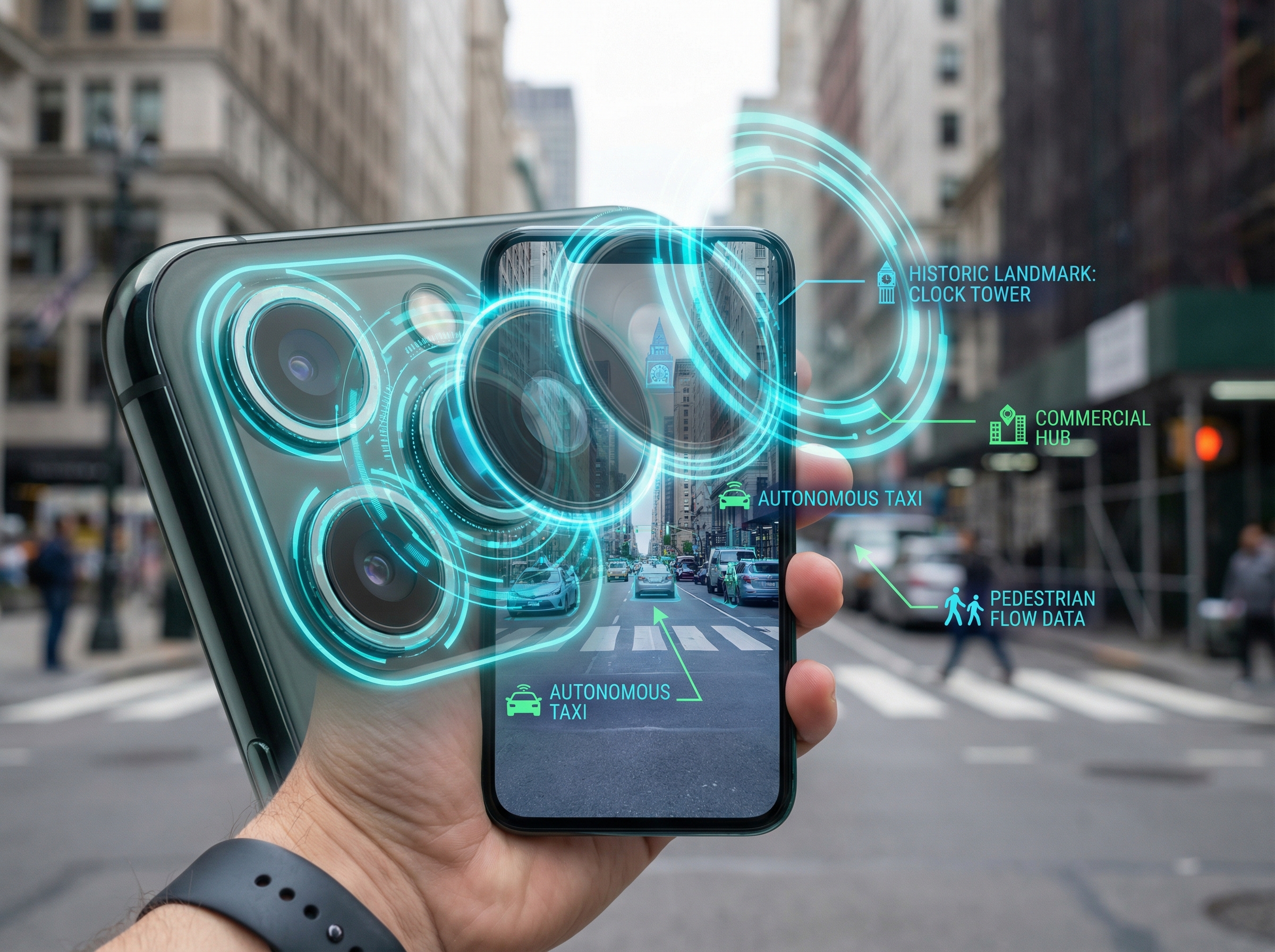
Smartphone camera with AI overlay identifying objects

The tech press spent two years declaring Apple Intelligence would be a ChatGPT clone. Tim Cook just revealed it's something else entirely.

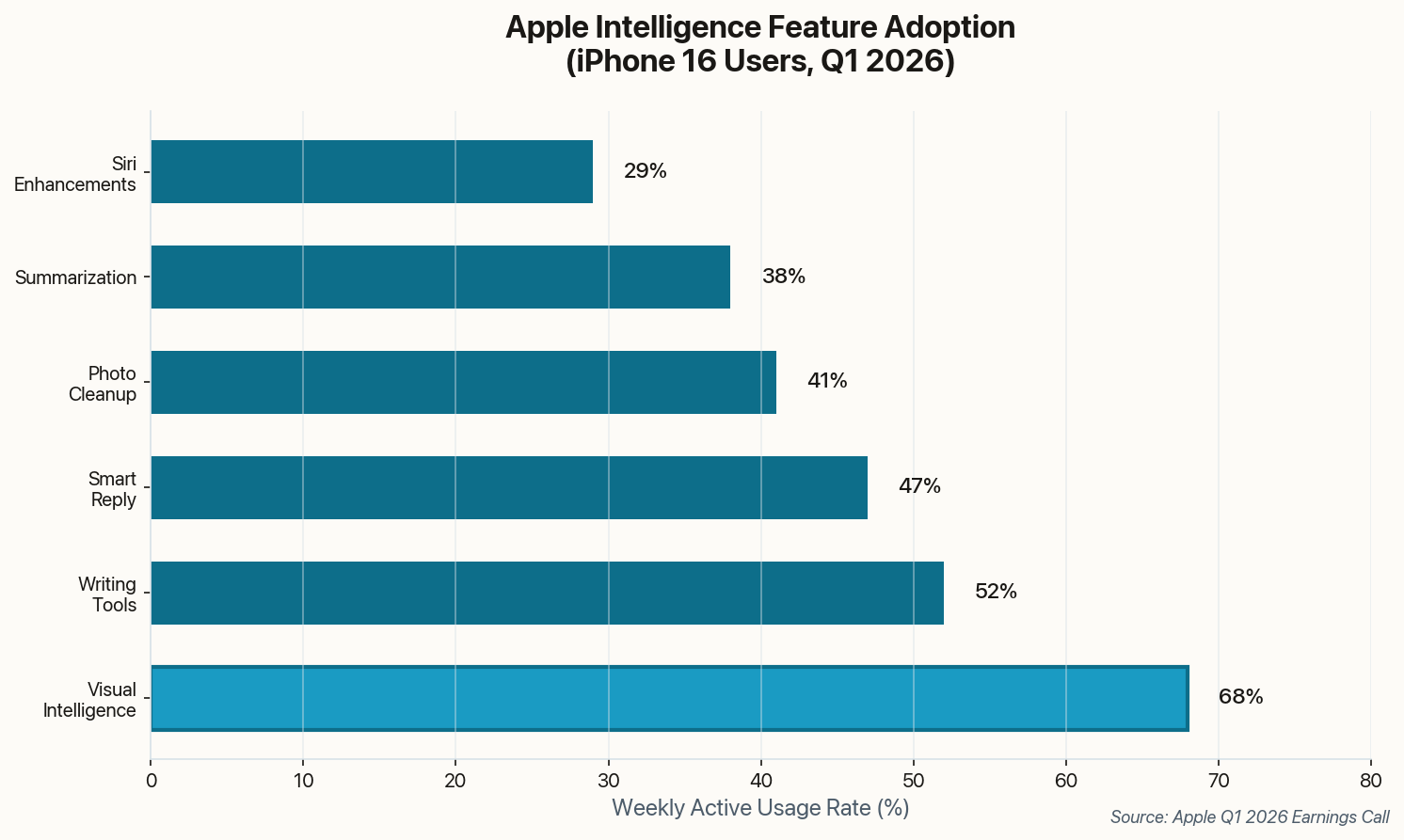
On Apple's Q1 earnings call, Cook highlighted Visual Intelligence—the camera-based search and analysis feature activated by the Camera Control button—as the most actively used Apple Intelligence feature. Not Siri. Not Writing Tools. The camera. Customers are pointing their phones at restaurant menus, storefronts, and objects, getting instant context without typing a word.

Bar chart showing Visual Intelligence at 68% weekly usage, ahead of Writing Tools at 52%
Visual Intelligence leads adoption by a wide margin. Source: Apple Q1 2026 Earnings Call.

This validates Apple's bet on hardware integration over chat interfaces. While competitors focus on making AI conversational, Apple made it observational. You don't need to describe what you're looking at—just look at it. The Camera Control button, widely dismissed as a gimmick at launch, turns out to be the interface paradigm that makes AI accessible to people who never wanted a chatbot.

Cook called it "Invisible AI"—features so integrated that users don't perceive them as AI tools. That's not a bug in Apple's strategy; it's the entire product thesis.

03

The $350 Bull Case: Hiding the Machinery

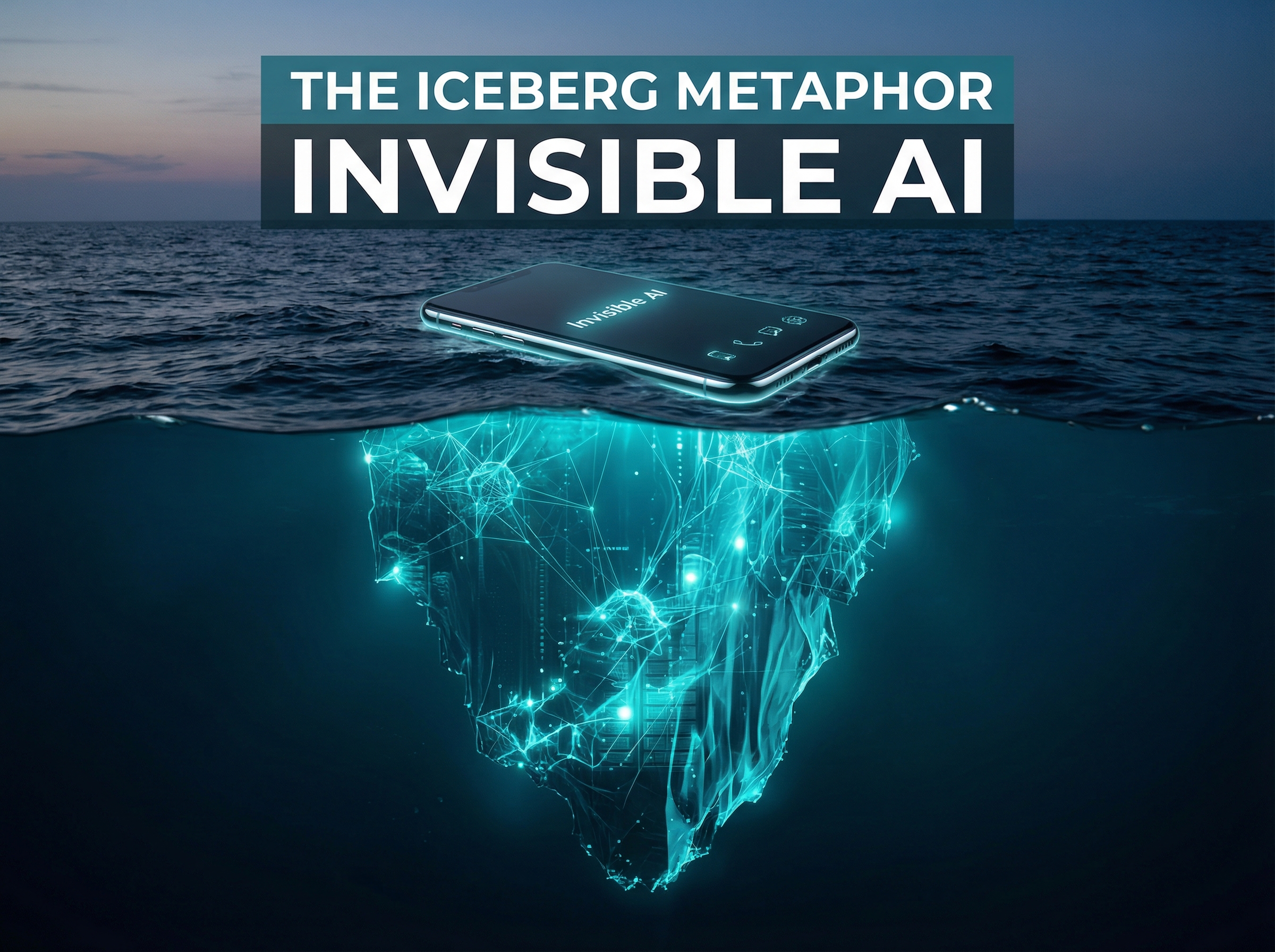
Iceberg metaphor showing iPhone above water with massive AI infrastructure below

Daniel Ives at Wedbush Securities has a message for the "Apple is behind" crowd: you're measuring the wrong race.

His new report coins the term "Invisible AI" and argues it's Apple's greatest strategic strength. Features like enhanced photo editing, battery management, predictive text, and Live Voicemail transcription all use AI heavily—but Apple doesn't brand them as "AI Tools." They're just... how the phone works now.

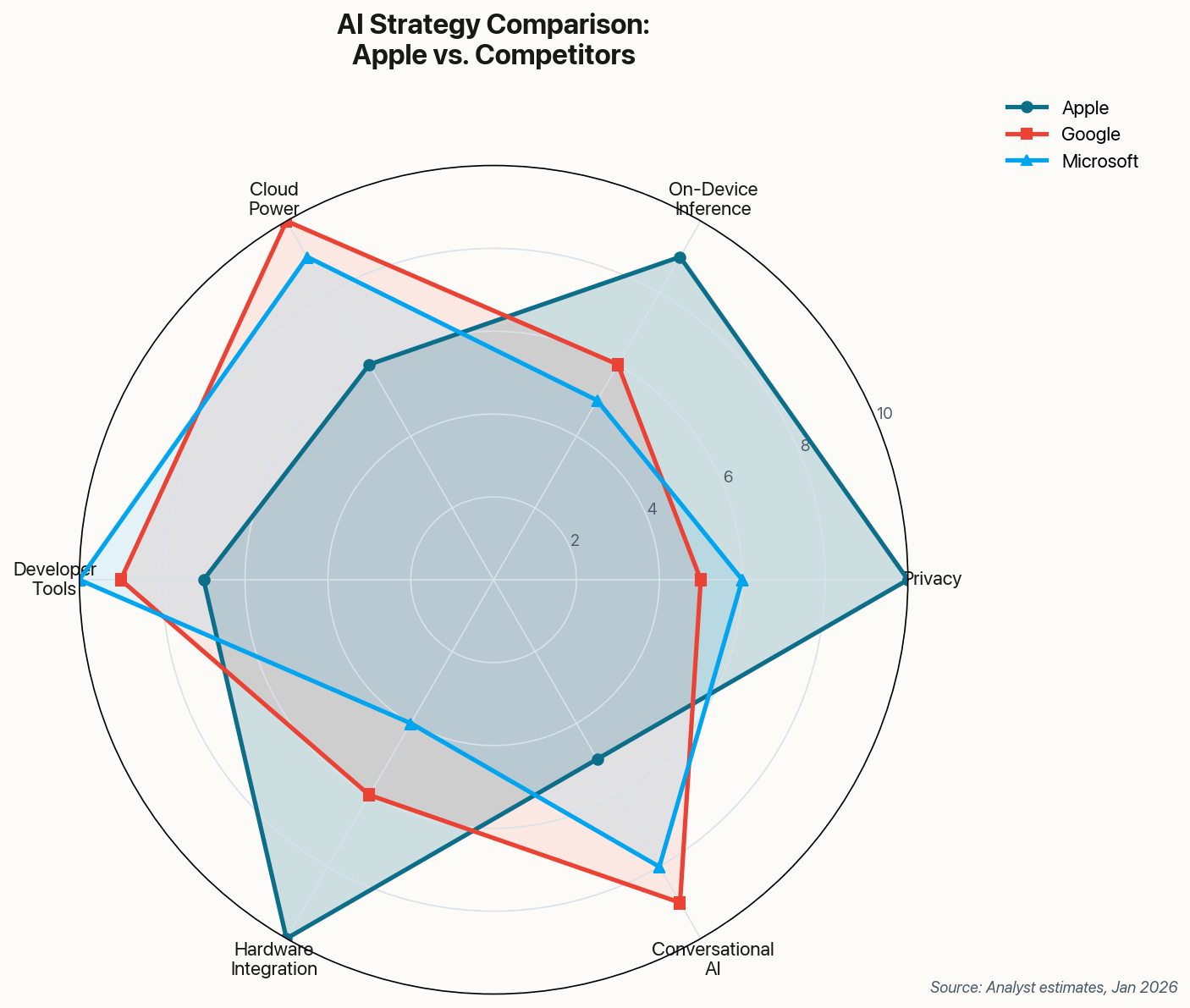
Radar chart comparing Apple, Google, and Microsoft across privacy, on-device inference, cloud power, developer tools, hardware integration, and conversational AI
Apple leads on privacy and hardware integration, concedes conversational AI and cloud power.

Ives predicts an "AI Supercycle" for iPhone 18, driven not by flashy chatbot features but by the accumulated weight of invisible improvements that make the device indispensable. His price target: $350, with the thesis that "Apple isn't late; they're just hiding the machinery."

The counter-narrative is compelling: while OpenAI and Microsoft compete on benchmark scores and context windows, Apple competes on customer retention and hardware upgrade cycles. Different games, different scoreboards.

04

Siri's Evolution: Doing Over Knowing

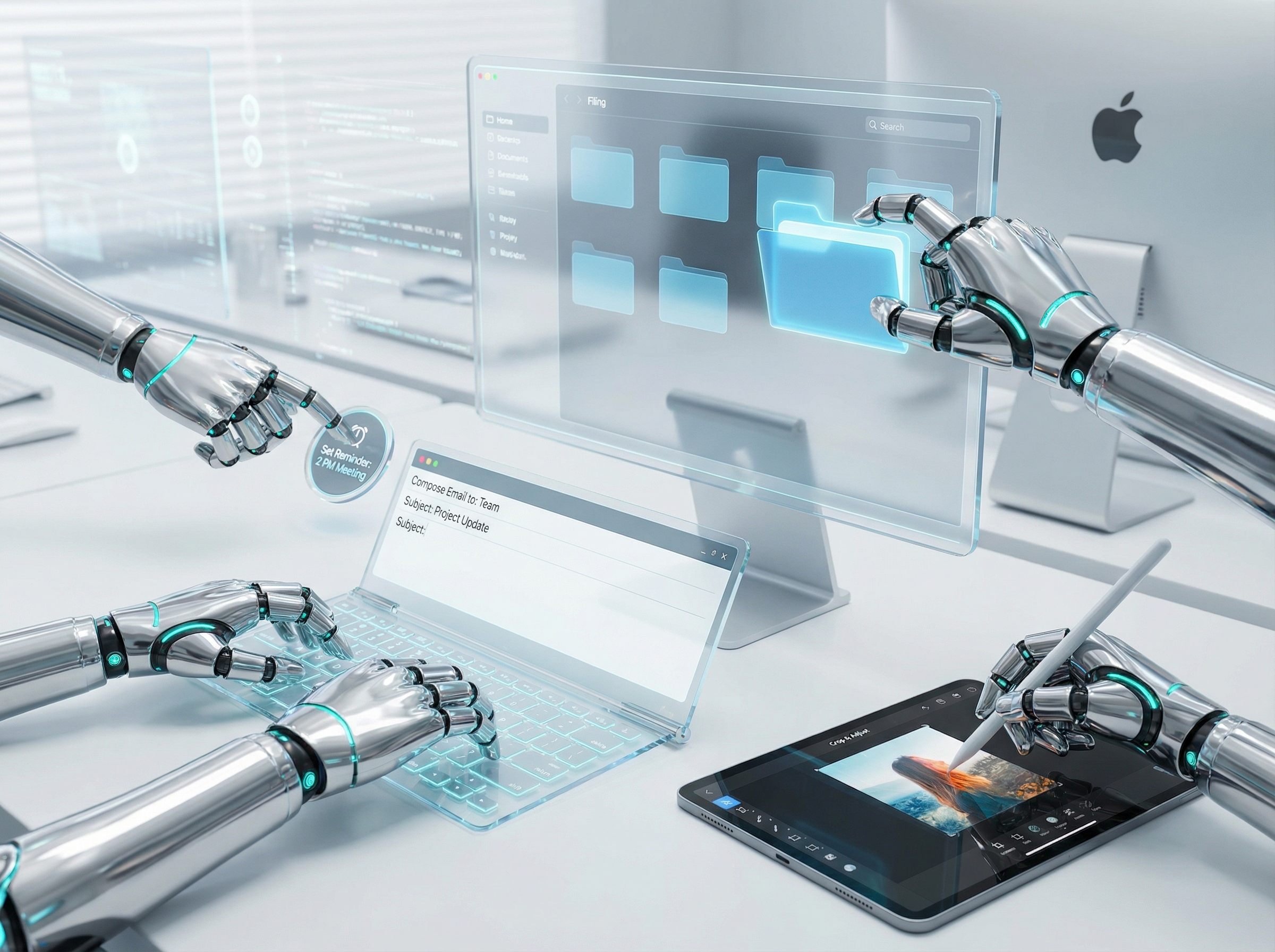
Robotic hands performing multiple productivity tasks simultaneously

A leaked internal roadmap reveals Apple's Siri strategy for 2026, and it's deliberately modest. iOS 26.4, expected in beta next month, will introduce "Siri 2.0" with a focus on what Apple calls "Practical Intelligence."

Translation: Siri will get dramatically better at multi-step device commands. "Find that photo I took in Tahoe and email it to Mom" will actually work reliably. "Set up a focus mode for my morning routine and remind me to take the dog out" will chain together without breaking. The emphasis is on doing, not knowing.

The more conversational "Chatbot Siri" (Siri 3.0) is delayed until iOS 27, late this year at earliest. This is a deliberate sequencing choice: Apple would rather nail device control—where they have a unique advantage—before competing head-to-head with ChatGPT on general knowledge.

The bet: Users would rather have an AI that reliably does things on their device than one that impressively chats about anything but accomplishes little.

Whether this patience pays off depends on whether competitors can match Apple's hardware integration while Apple catches up on conversational capabilities. The race isn't over; Apple just chose to run a different leg first.

05

Beautiful But Battery-Hungry: The Liquid Glass Misstep

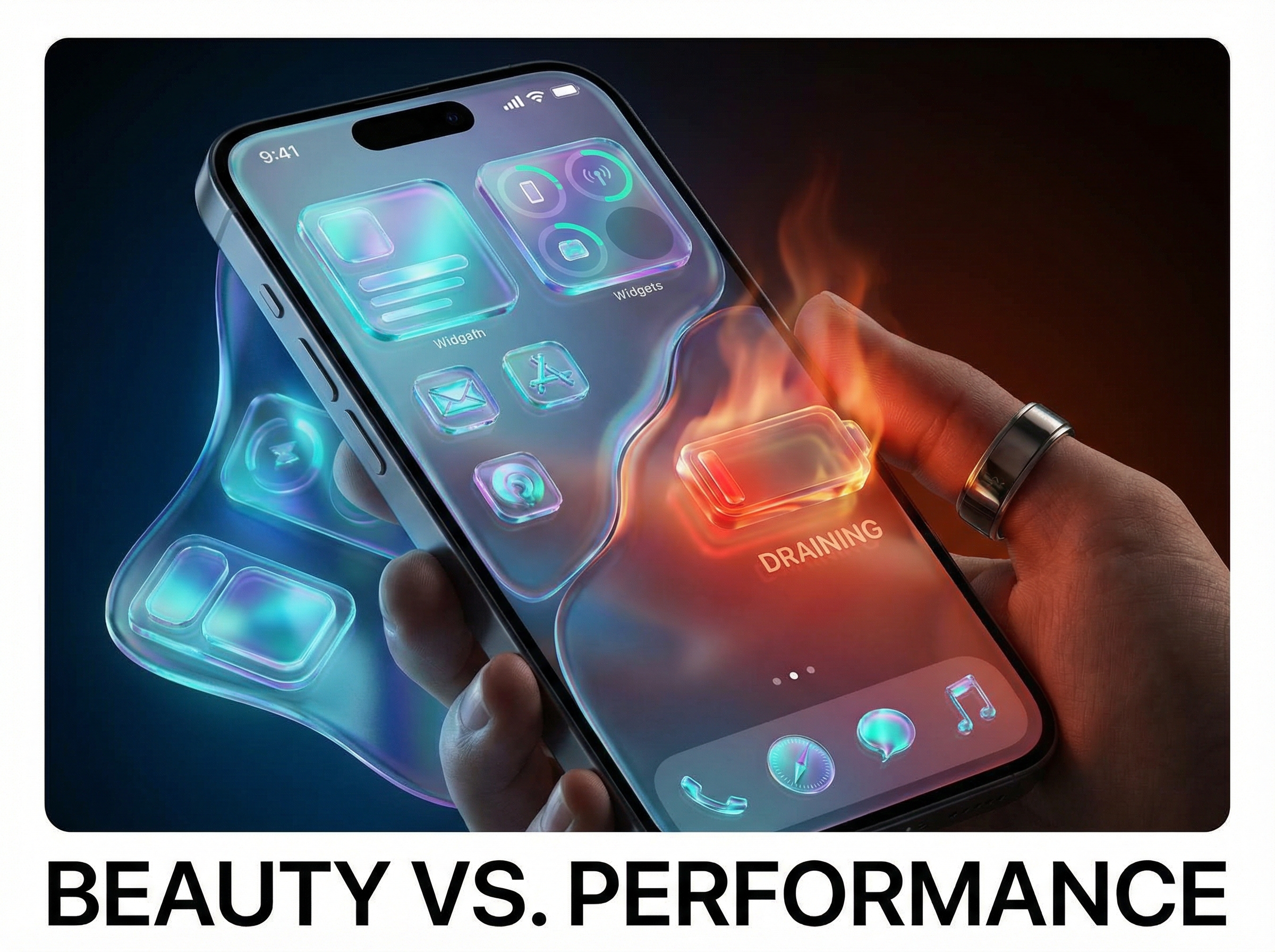
iPhone with beautiful glass UI effects but warning battery icon

Not every Apple AI move has been a masterstroke. iOS 26.2.1 introduced "Liquid Glass," an AI-generated UI effect that makes screens feel more immersive with real-time reflections and depth effects. It's gorgeous. It's also a battery vampire.

Users on older Pro models report significant lag and 15-20% faster battery drain when the effect is enabled. The feature feels like a beta that slipped into production—technically impressive but practically problematic. Apple's typically ruthless prioritization of battery life took a backseat to visual ambition.

The silver lining: the same update quietly enabled deeper API hooks for third-party AI apps, a move praised by developers who've been waiting for more on-device inference access. Apple's developer relations team clearly pushed this through while the consumer-facing feature grabbed headlines.

This tension—between pushing computationally expensive on-device AI and maintaining the stability Apple is known for—will define the next few years. You can't have infinite features running infinite neural networks on a device that needs to last all day. Something has to give.

06

The Google Deal: Pragmatism Wins Over Pride

Apple and Google logos meeting with energy flowing between them

Apple officially partnered with Google to integrate Gemini models into iOS 26 and macOS. This ends years of speculation about whether Apple would build its own GPT-4 competitor for general knowledge.

The hybrid strategy is now clear: Apple Intelligence handles personal context and privacy-sensitive tasks on-device, while Gemini powers Siri's broader knowledge capabilities. Apple keeps the data; Google provides the brains for world knowledge.

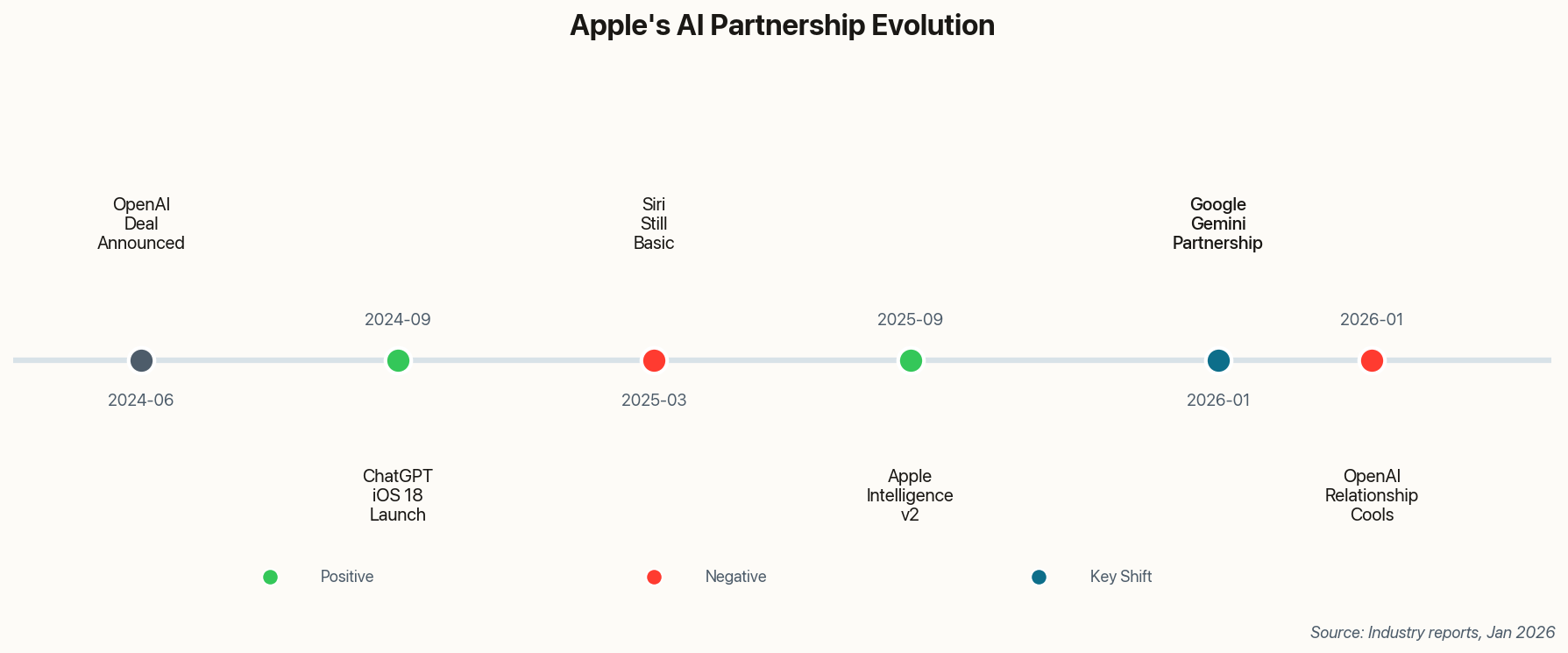
Timeline showing Apple's AI partnerships from 2024 to 2026
Apple's partnership strategy has evolved from OpenAI to Google over 18 months.

What about OpenAI? According to PYMNTS, the relationship has cooled. OpenAI reportedly refused a deeper integration deal, citing Apple's restrictive privacy demands. Sam Altman's team is now accelerating hardware plans for late 2026—a direct play against Apple's ecosystem.

The battle lines are drawn: Apple + Google versus Microsoft + OpenAI. Two different visions of how AI should work with hardware, who controls the data, and where the compute happens. Crazy like a fox? Time will tell. But Apple's strategy is finally coherent enough to judge.

The Game They're Actually Playing

Apple isn't trying to win the chatbot race—they're building something different. Privacy as product. Hardware as moat. And patience while competitors sprint. The fox knows exactly what it's doing.