AI Manga Economics

The Nine-Cent Page

How AI is rewriting the economics of digital comics—from nine cents per panel to a $16 billion market by 2035. The business model for online manga just got a lot more interesting.

Listen
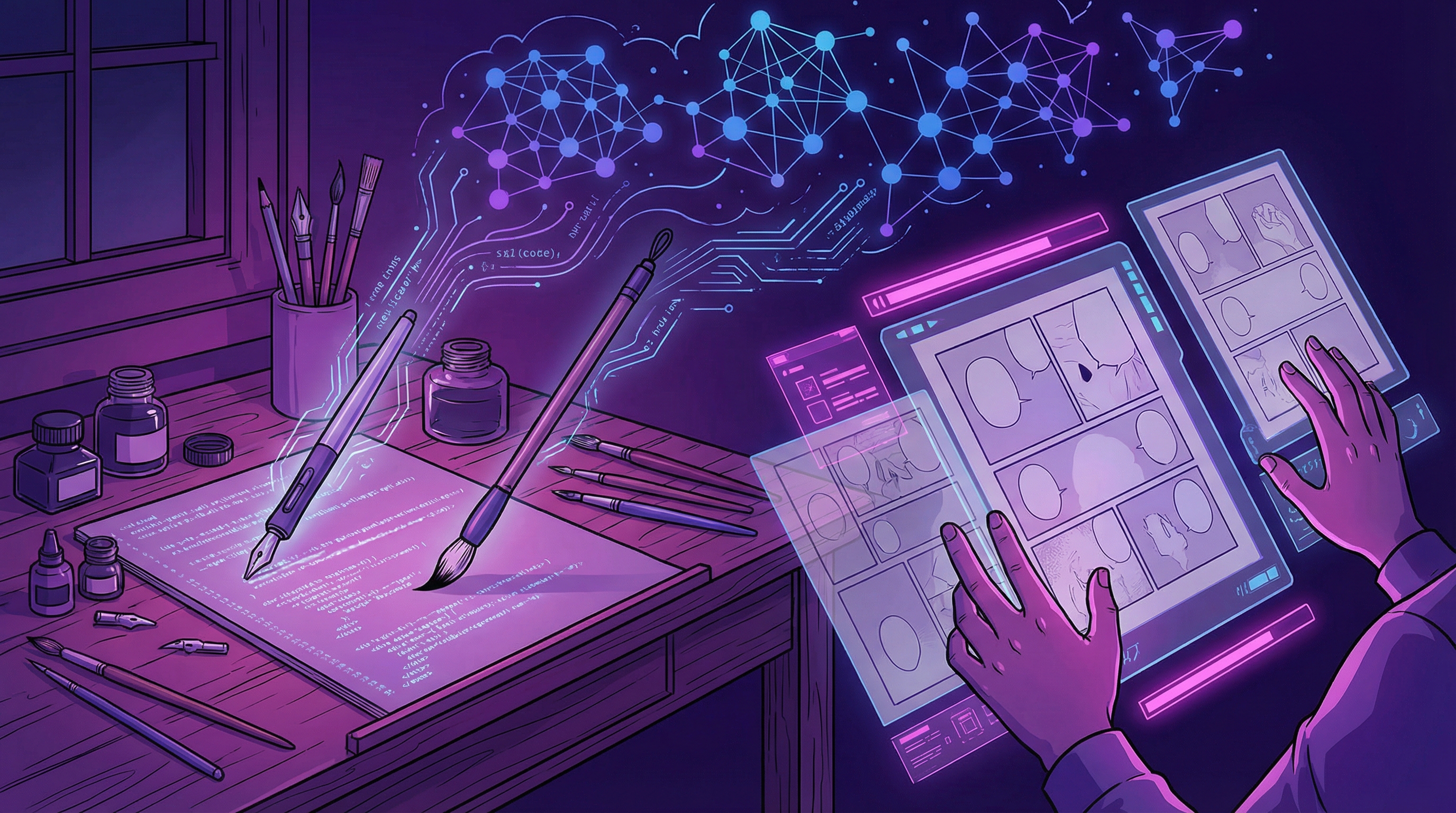
A manga artist's desk where traditional ink brushes transform into streams of glowing digital data
01

The Open-Source Pipeline Gets Serious
Interconnected nodes forming a vast network of manga production workflows

The ComfyUI ecosystem just dropped three updates that signal a shift from "toy" to "production tool." The new Prompt Styler Node includes a dedicated Anime/Manga category for standardized styling. The Manga2Anime_LineArt_Preprocessor can now convert rough sketches into clean, anime-ready line art. And the "InfiniteYou" node—added this week—finally tackles the recurring character problem with identity-preserved generation.

These aren't cosmetic improvements. They represent the professionalization of open-source manga tools, moving from "generate random images" to "specific production pipeline tasks." When your free, self-hosted stack can handle sketch cleanup, character consistency, and style standardization, the gap between hobby project and professional studio narrows considerably.

The cost advantage: Running ComfyUI on your own hardware brings per-image generation costs down to roughly $0.02—an order of magnitude cheaper than any API-based alternative.
02

Korea's Invisible Watermark Mandate

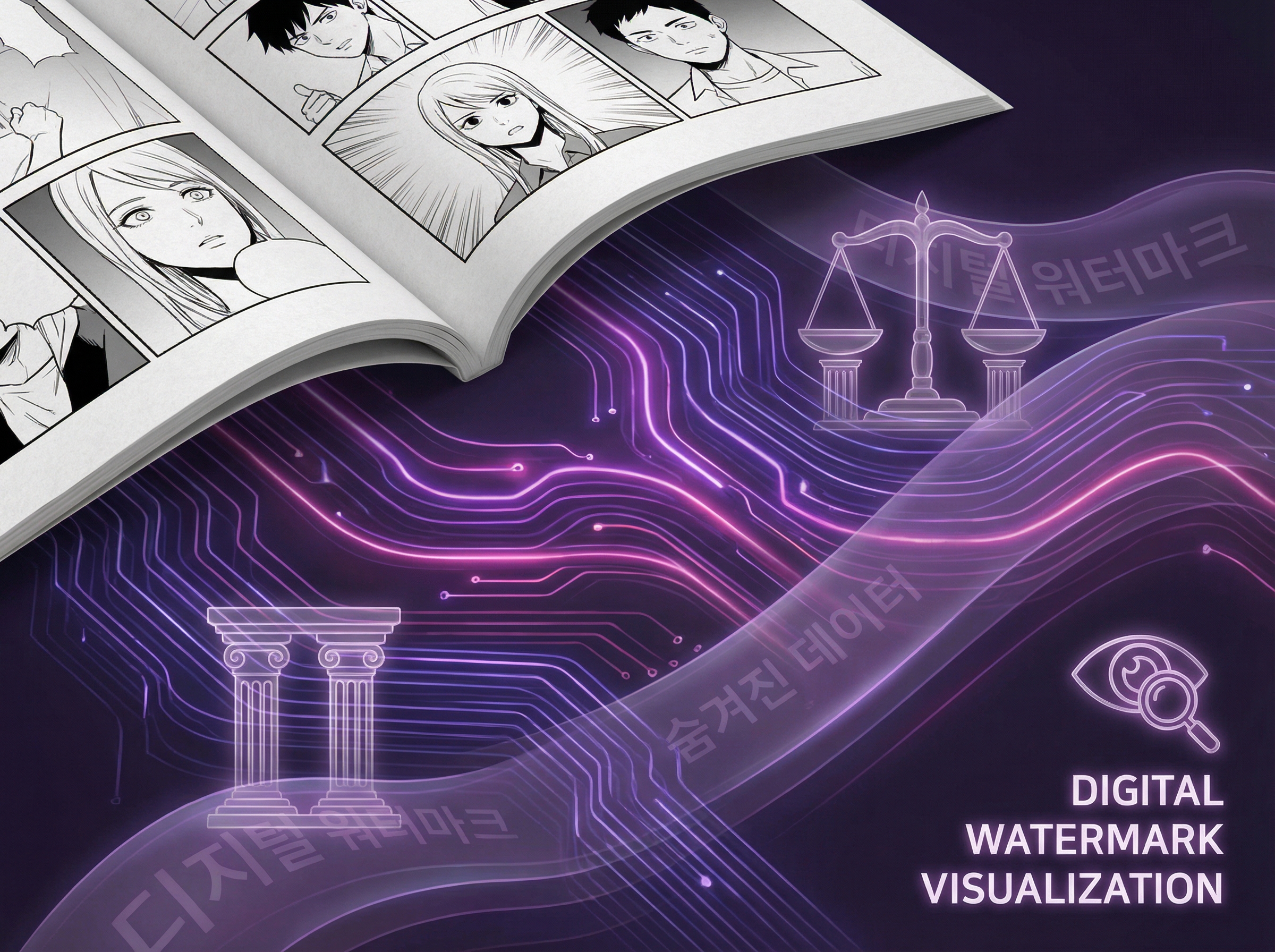
Digital watermark patterns flowing beneath a manga page like bioluminescent currents

South Korea's "AI Basic Act" went into effect this week, mandating that all AI-generated content carry a watermark. But here's the interesting part: for webtoons and animation, invisible machine-readable watermarks are permitted. The law explicitly acknowledges that visible labels would "disrupt the viewing experience."

This matters because South Korea is the global hub of the webtoon industry. Webtoon, Tapas, and Kakao Page all operate under Korean law. Whatever compliance standard Seoul sets becomes the de facto global standard. Violations carry fines up to 30 million won (~$20,400 USD).

For creators building AI-assisted comics, the message is clear: you need metadata infrastructure. The good news is that invisible watermarks don't affect your art. The bad news is that "AI-generated" is now a trackable category, which has implications for platform policies, copyright claims, and audience perception.

03

A $3 Billion Market—And Growing

Skyscrapers made of stacked manga volumes rising toward clouds

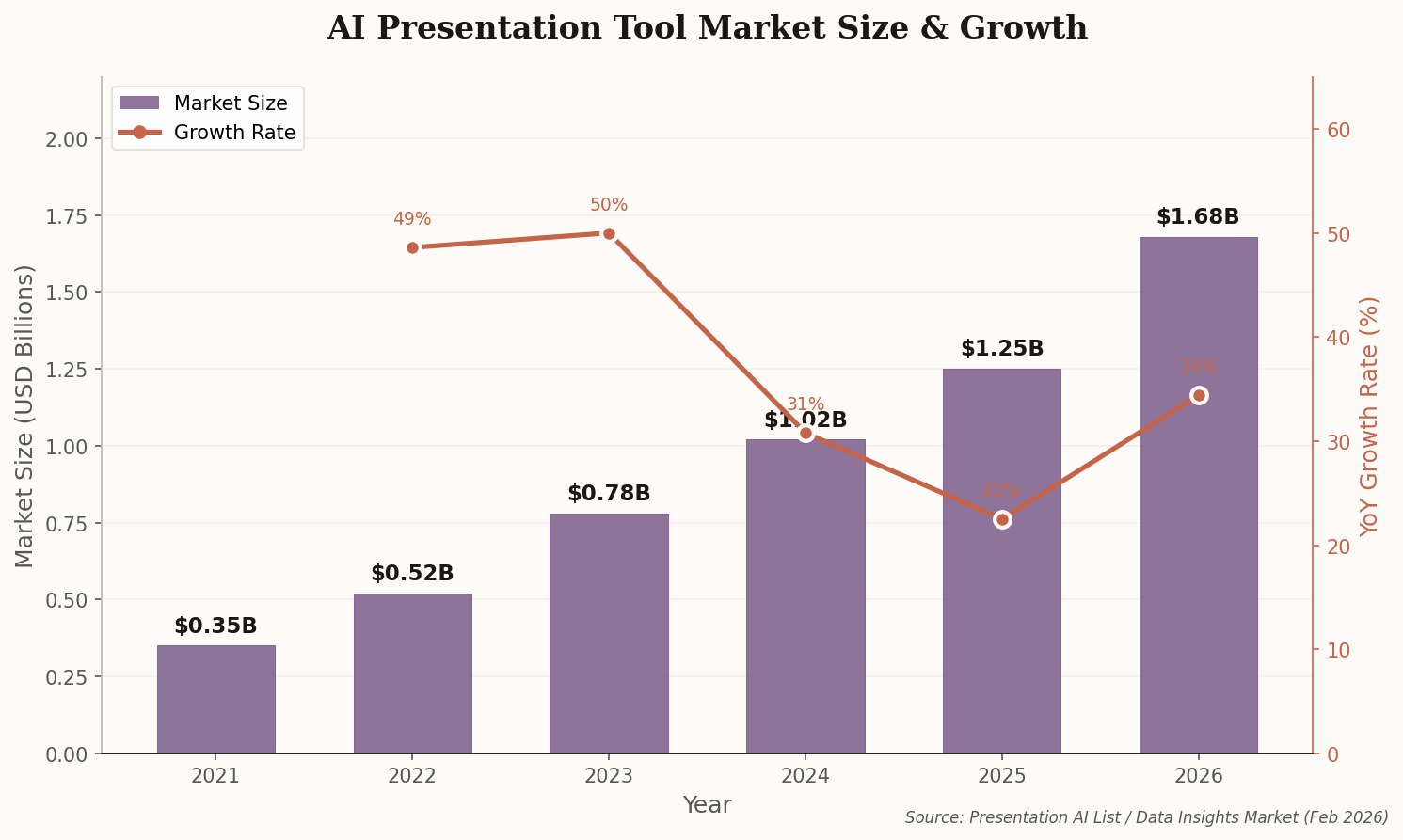
The global AI Comic Generator market is now valued at $3.01 billion. By 2035, analysts project it will hit $16.88 billion—a compound annual growth rate of 21.1%. The drivers are exactly what you'd expect: accessibility, affordability, and the "democratization" of comic creation for non-artists.

Line chart showing AI Comic Generator market growth from $3B in 2026 to $16.88B in 2035
Projected market growth with 21.1% CAGR through 2035

What's interesting isn't the number itself—it's what it signals. Multi-billion dollar valuations attract venture capital. VC money accelerates tool development. Faster tool development means the disruption to traditional workflows won't plateau; it will accelerate. If you're a traditional manga studio planning your 2027 budget, this chart is the context.

04

The Economics of Nine Cents

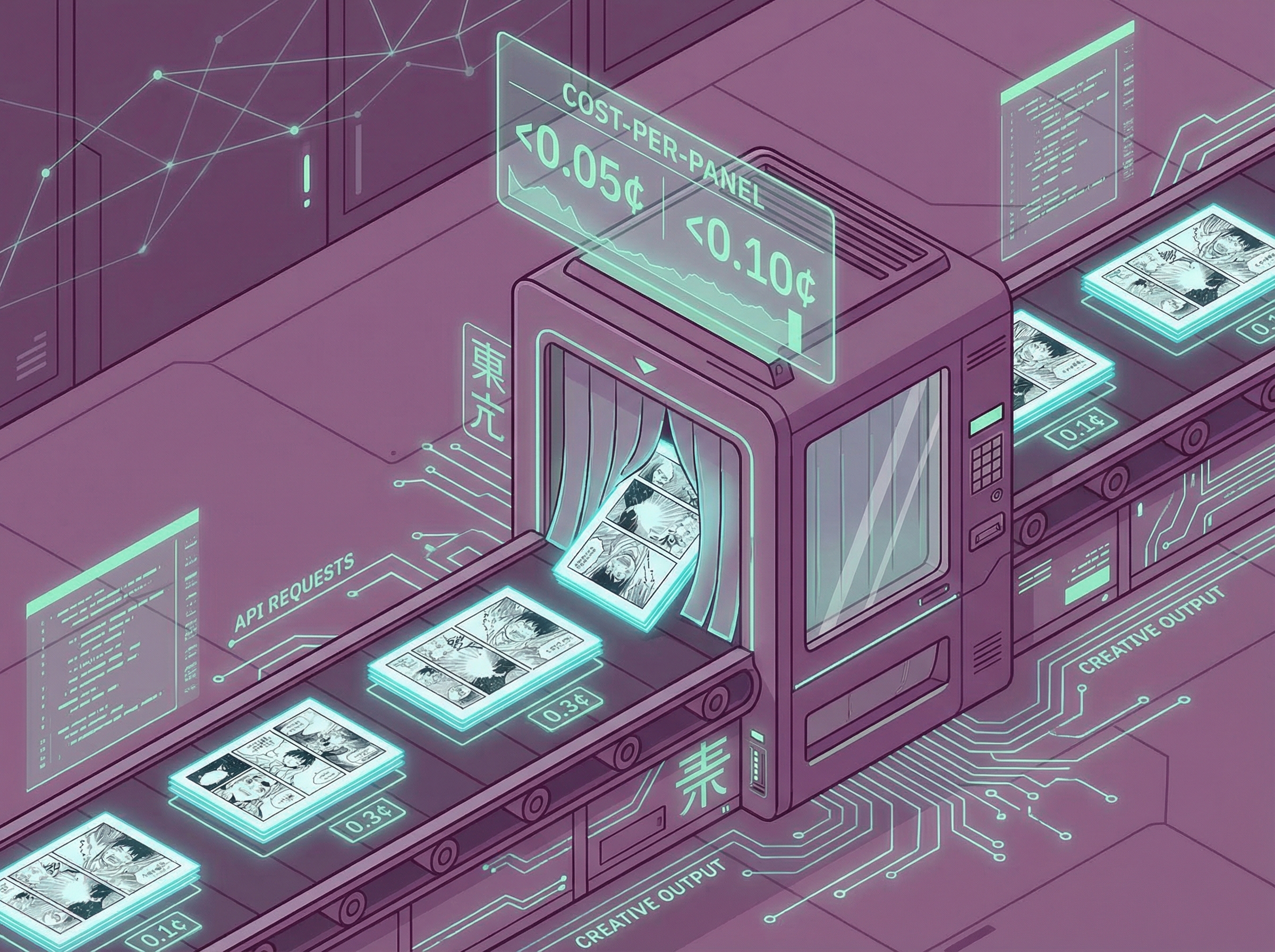
Machine dispensing manga pages like a vending machine with tiny price tags

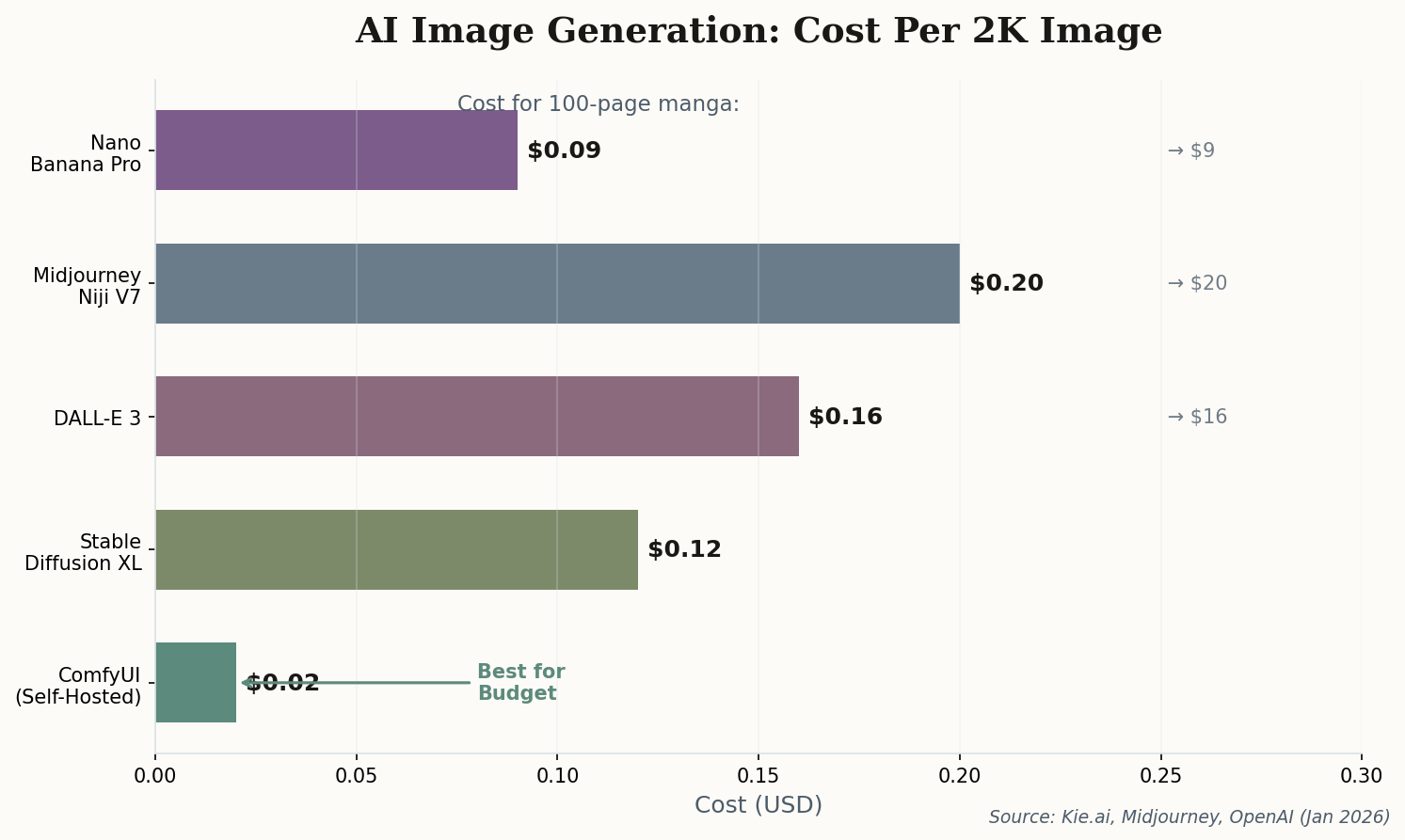
The headline number is $0.09 per 2K image. That's what Nano Banana Pro charges via API—roughly 50% cheaper than major competitors. For 4K images, it's $0.15. There are also unlimited generation plans at around $5.30/month for those willing to commit.

Horizontal bar chart comparing per-image costs across AI tools
Cost comparison across major AI image generation platforms (per 2K image)

But the real news is the "Full Page Generation" feature. Instead of generating panel-by-panel and stitching them together, Nano Banana can now handle complex panel layouts in a single pass. This changes the unit economics: you're not paying nine cents per panel; you're paying nine cents per page. A 100-page manga chapter costs $9 in generation fees. A 200-chapter series costs $1,800.

Compare that to traditional manga production costs—$1,500+ per page at professional studios—and the arbitrage is staggering. Even if you factor in revision cycles, prompt engineering time, and post-processing, you're looking at 70-90% cost reductions.

05

The 70% Cost Reduction Is Real

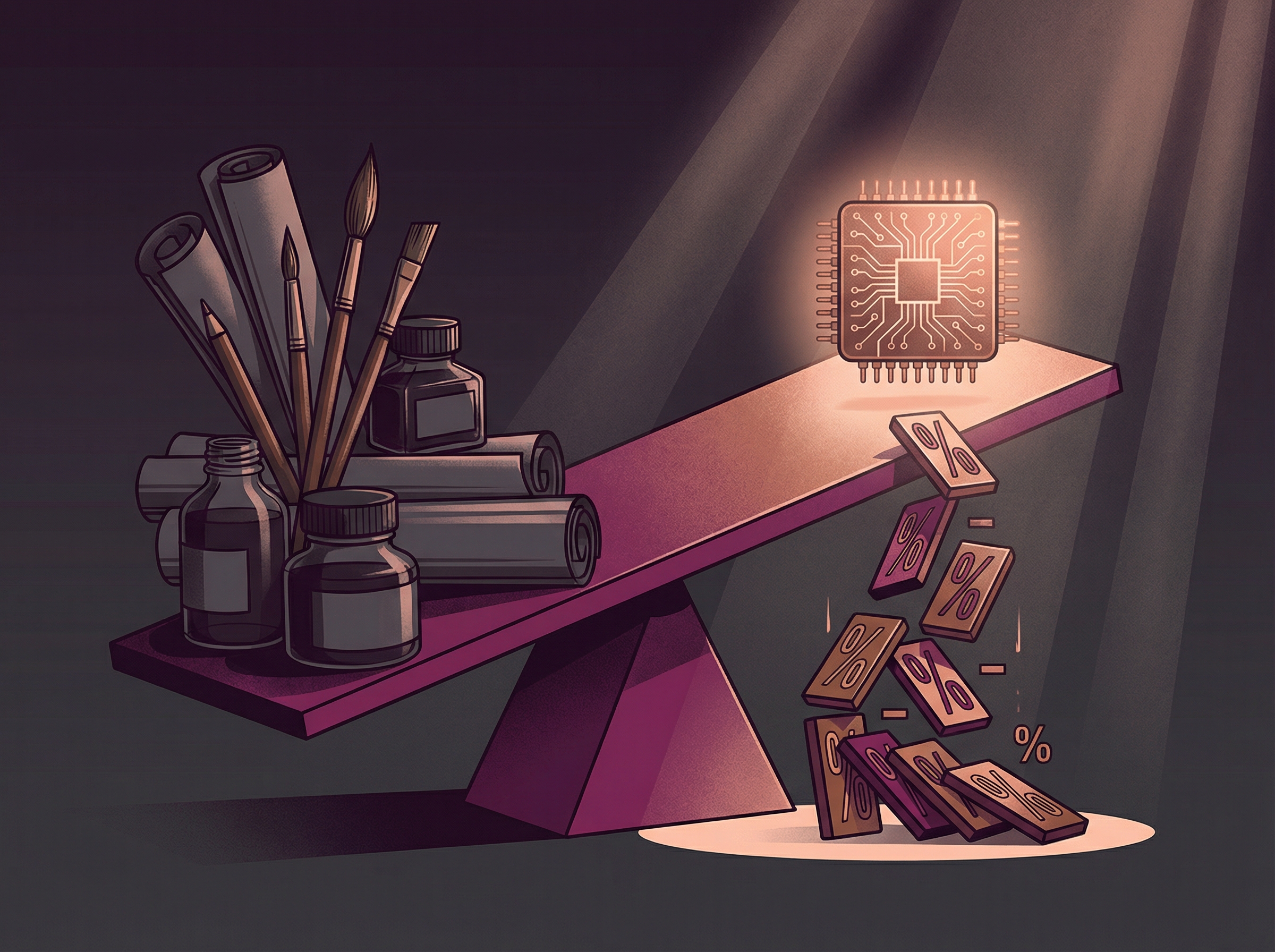
Seesaw balancing traditional art supplies against a glowing neural chip

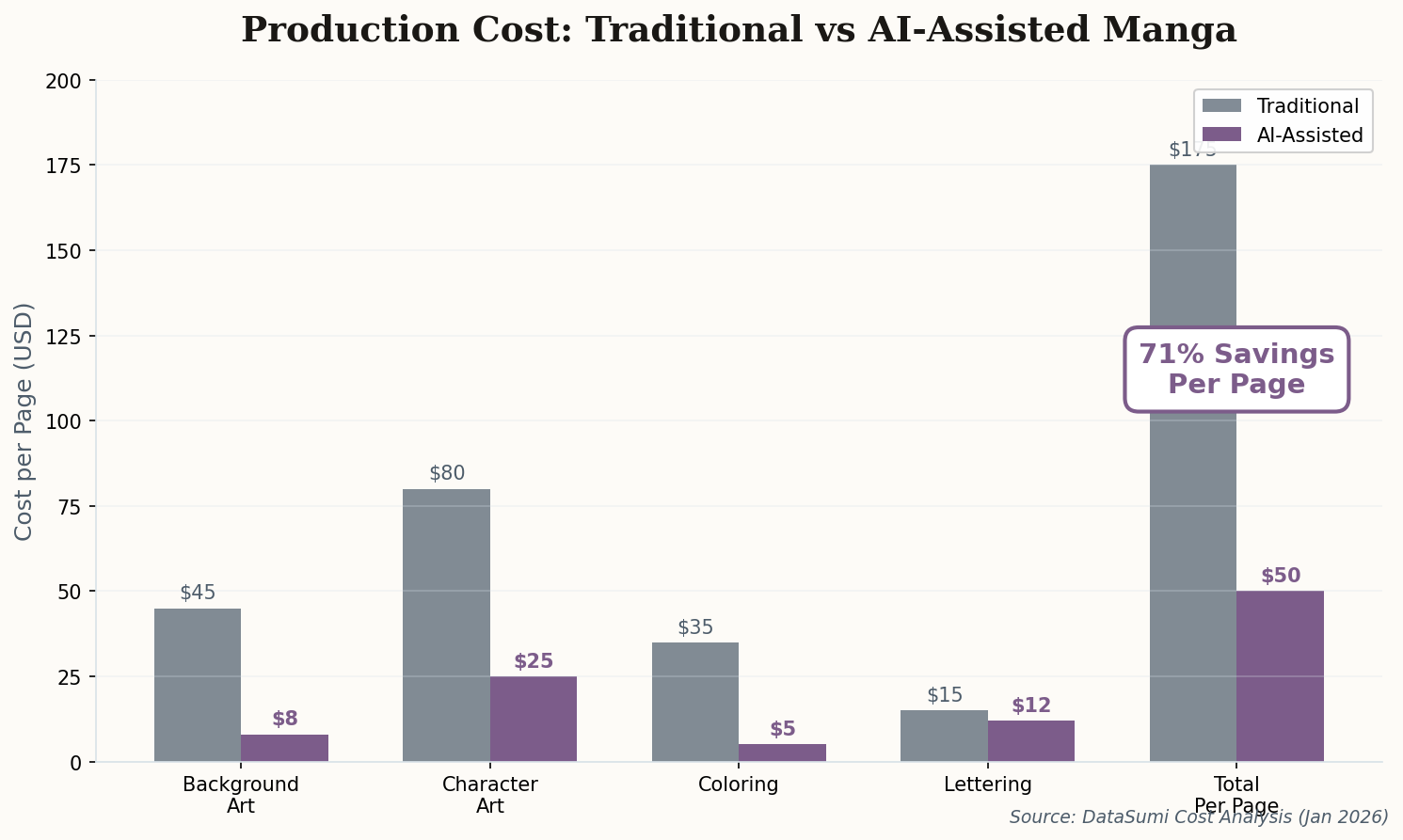
DataSumi's 2026 cost analysis puts numbers on what the industry has been whispering: AI tools reduce overall comic production costs by an average of 42%. For independent creators who automate backgrounds, coloring, and lettering, the savings hit 60-70%. Enterprise studios are seeing per-unit costs drop from ~$1,500 to ~$70.

Bar chart comparing traditional vs AI-assisted production costs per page component
Production cost breakdown: Traditional vs AI-assisted workflows

The report notes that investments in AI creative tools typically reach break-even within six months. That's not a long runway. A solo creator with $500 to invest in tools can expect to recoup it by their third or fourth chapter.

The implication: cost is no longer the barrier. A solitary creator with AI assistance can now match small studios in output volume and color fidelity. The competitive moat for traditional workflows is shrinking to "brand" and "storytelling"—assets that can't be automated.

06

Midjourney's Manga Moonshot

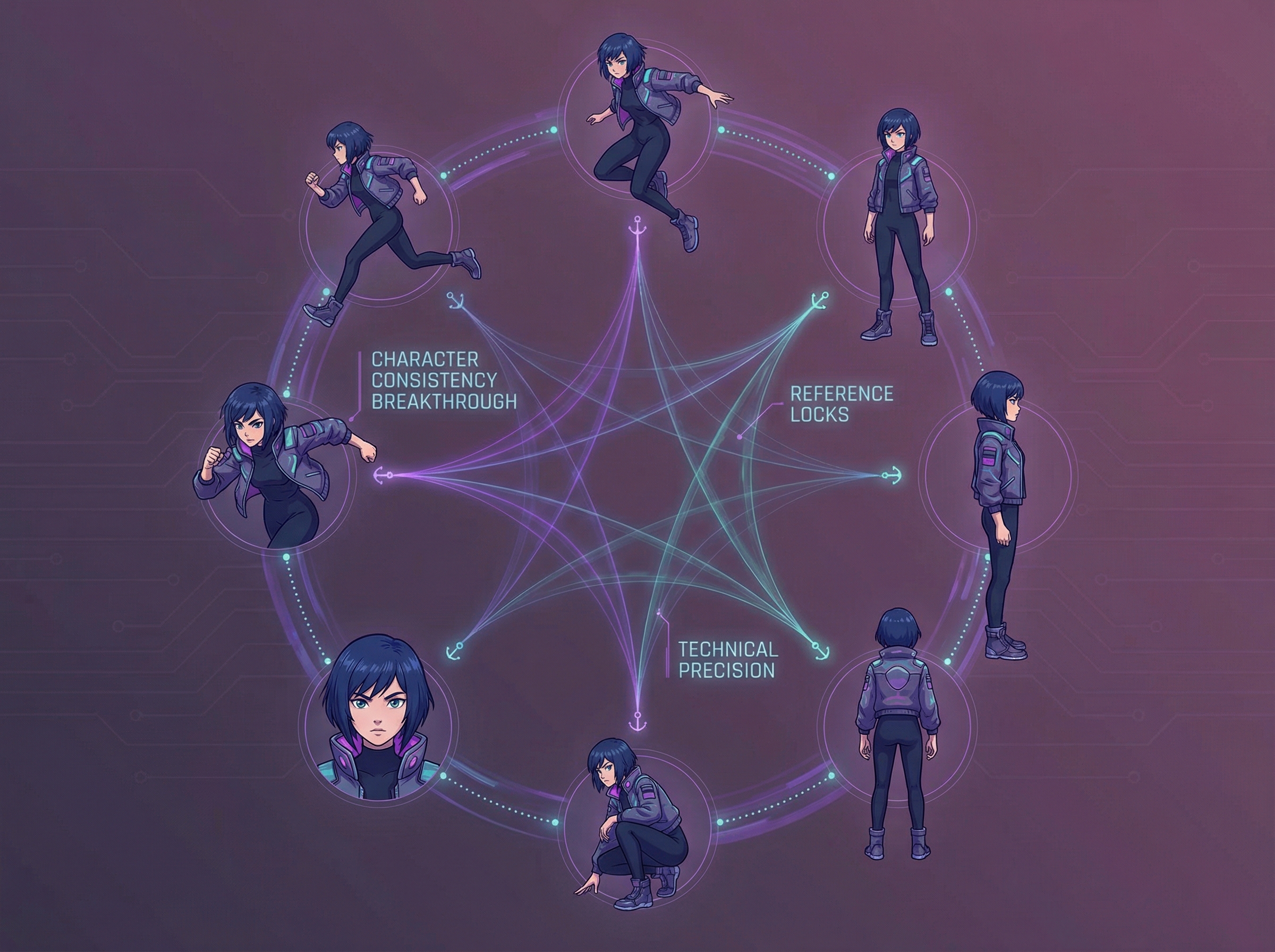
Anime character shown in multiple poses arranged in a circle, connected by data threads

Midjourney's Niji V7 model launched specifically targeting anime and manga aesthetics. The headline feature is "Omni Reference"—a system that allows consistent character tracking across multiple panels and scenes. The model also emphasizes a cleaner, flatter look designed to mimic traditional ink-and-pen line work.

Character consistency has been the #1 technical bottleneck for AI manga. Without it, you can generate beautiful standalone panels, but you can't tell a story. Every page requires manual fixes to ensure your protagonist looks like the same person. Niji V7's focus on "flatter" line work and character locking directly addresses this—and if it works as advertised, it removes the single biggest barrier to professional adoption.

The quote: "Significantly boosts coherency, making fine details clearer and improving adherence to prompts for specific designs."

07

When AI Manga Hits #1

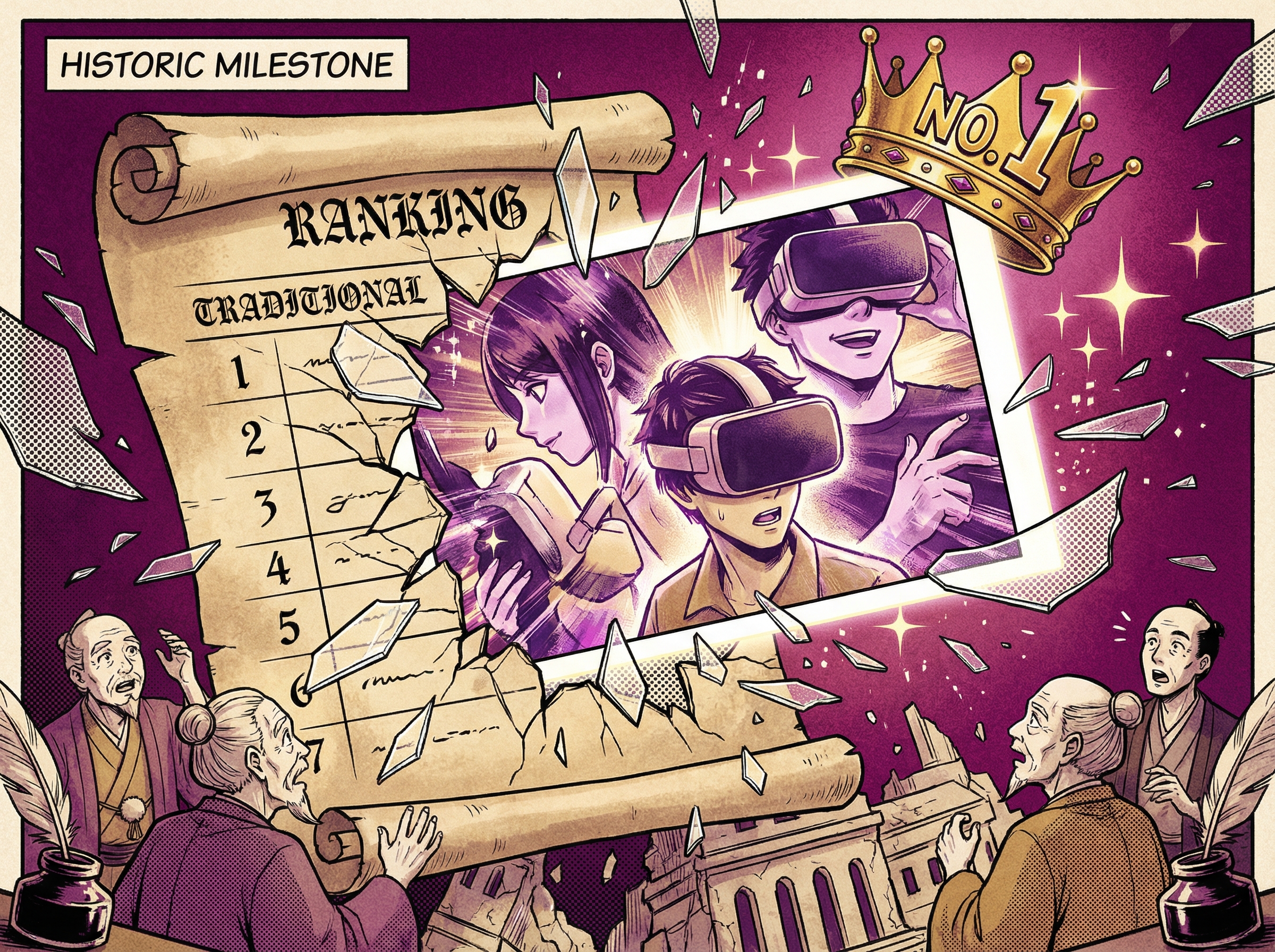
Manga panel breaking through a ranking chart, number one crown floating above

The fully AI-generated manga "My Dear Wife, Will You Be My Lover?" hit #1 on Comic C'moA's daily seinen rankings in the first week of January. Released December 28, 2025, it dominated the Young Adult category and cracked the top 10 overall on one of Japan's major manga platforms. The series features 100% AI-generated artwork.

This is the commercial proof point the industry needed. You can debate the ethics, the aesthetics, the soul of the work—but you can't debate the chart position. AI-generated comics can compete with human-created content on mainstream platforms. Consumers are willing to pay for them. The market has voted.

For anyone building a business model around AI manga, this is the reference case. It's not theoretical anymore. The question isn't "can AI manga succeed?" It's "how do you build a sustainable production pipeline?"

The Business Model Equation

At $0.09 per page and 70% cost reduction, the economics favor volume. The winning strategy isn't one masterpiece—it's a library of 50 series, each finding its niche. Japan's $38B piracy loss signals regulatory pressure coming, but the invisible watermark compromise shows regulators understand the viewing experience matters. The path forward: transparent about the AI, aggressive on volume, relentless on character consistency. The nine-cent page isn't a gimmick. It's a new production floor.