Military History

The Longest Day

Eighty-two years ago, 156,000 Allied soldiers launched the largest amphibious invasion in human history. The beaches of Normandy became a crucible where the fate of Western civilization hung in the balance. This is the story of June 6, 1944.

Listen
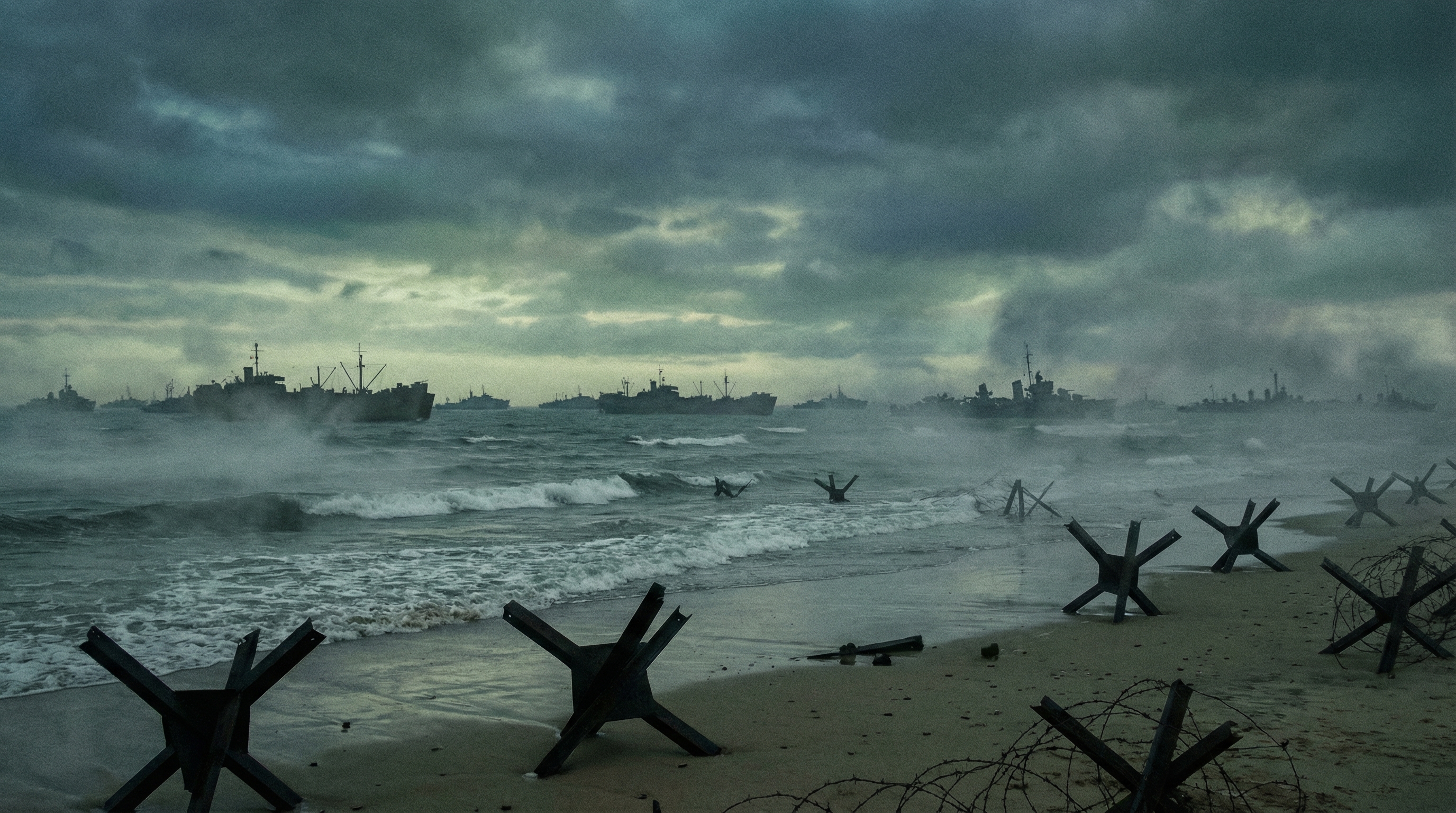
Vast Allied armada approaching the beaches of Normandy at dawn on June 6, 1944
01

The Ghost Army and the Greatest Deception in Military History
Military commanders gathered around war room table covered in invasion plans

Before a single soldier touched sand at Normandy, the Allies had already won their first battle—inside the minds of German High Command. Operation Bodyguard was an elaborate deception so audacious that even Hollywood would call it unrealistic. Inflatable tanks, fake radio traffic, and a phantom army commanded by the one general Hitler feared most: George S. Patton.

The fictional "First United States Army Group" (FUSAG) was positioned across from the Pas-de-Calais, convincing German intelligence that Normandy could only be a diversion. The real invasion? It would surely come at the narrowest point of the English Channel. Hitler's 15th Army—his best troops—waited there for weeks after D-Day, defending against an attack that never came.

"You are about to embark upon the Great Crusade, toward which we have striven these many months. The eyes of the world are upon you."

— General Dwight D. Eisenhower, Order of the Day, June 6, 1944

The command structure reads like an all-star roster of military history: Eisenhower as Supreme Commander, Montgomery leading ground forces, Admiral Ramsay commanding the naval operation, and Air Chief Marshal Leigh-Mallory controlling the skies. But the real genius lay in the men who crafted the lie—intelligence officers who understood that the most powerful weapon isn't always the one that fires bullets.
02

Fifty Miles of Hell: The Five Beaches That Changed History

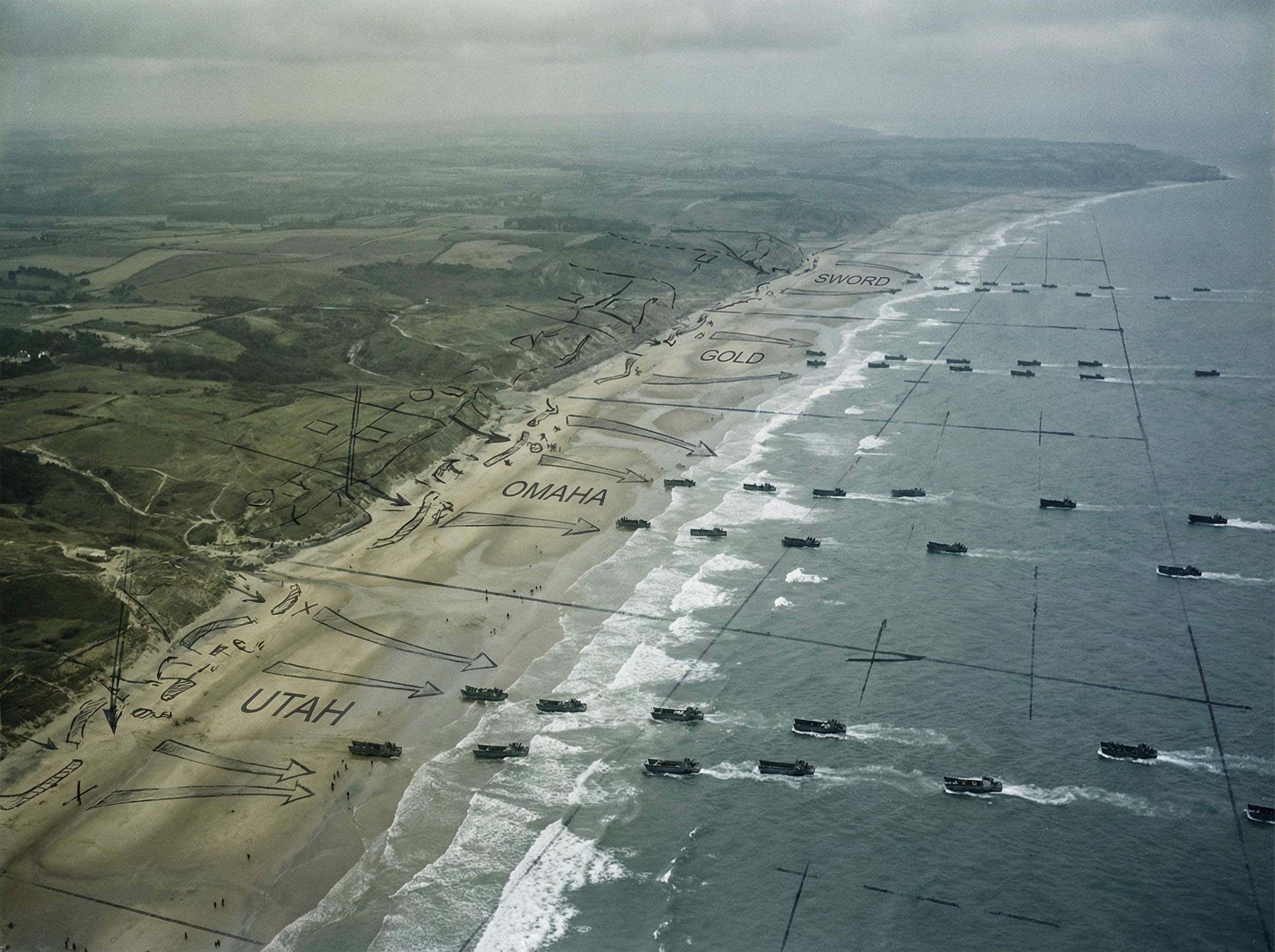
Aerial view of Normandy coastline showing the five invasion beaches

The planners chose five landing zones across a 50-mile stretch of Norman coastline, each assigned a code name that would echo through history: Utah, Omaha, Gold, Juno, and Sword. This wasn't arbitrary—by spreading the assault, they prevented the Germans from concentrating their defenses at any single point. It was a calculated gamble that paid off in blood.

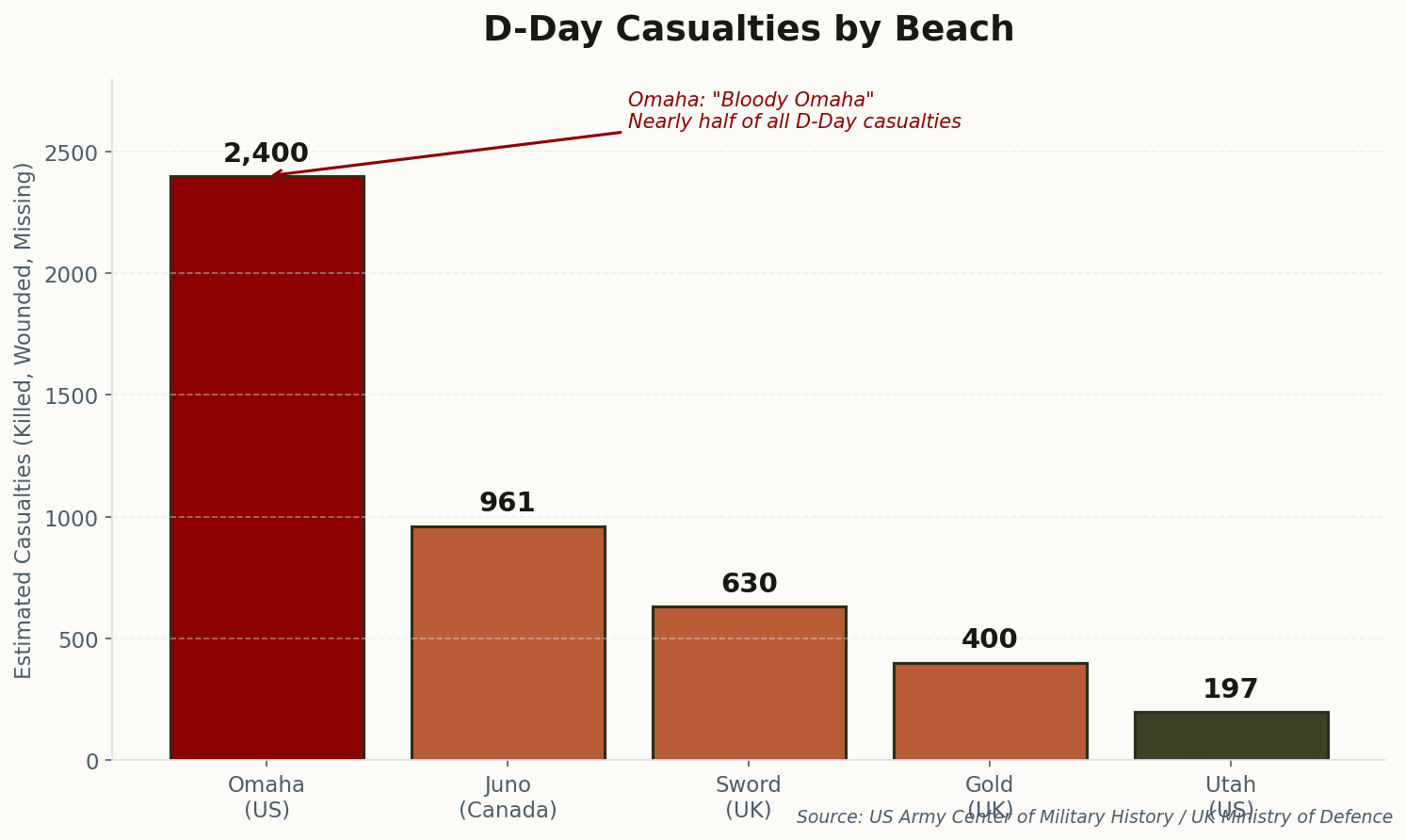
Bar chart comparing casualties across the five D-Day beaches
Omaha Beach alone accounted for nearly half of all D-Day casualties. The disparity reflects both the terrain and the unexpected presence of the veteran German 352nd Infantry Division.

Utah Beach (American): The 4th Infantry Division landed here with a mission to secure the Cotentin Peninsula and capture the vital port of Cherbourg. Remarkably, they suffered the lightest casualties—approximately 197—partly due to a fortunate navigation error that landed them 2,000 yards south of their intended target, in a less defended area.

Omaha Beach (American): The deadliest of all. The 1st and 29th Infantry Divisions walked into a nightmare. (More on this below.)

Gold Beach (British): The 50th Infantry Division pushed inland to capture Arromanches—crucial because this would become the site of an artificial harbor—and the ancient town of Bayeux. Casualties: approximately 400.

Juno Beach (Canadian): The 3rd Canadian Division faced the second-toughest opposition after Omaha. Their objectives: cut the Caen-Bayeux road and seize Carpiquet airfield. They lost 961 men, including 340 killed, but advanced further inland than any other force that day.

Sword Beach (British): The 3rd Infantry Division's goal was the most ambitious—capture Caen, a major city, on Day One. They would not succeed (Caen wouldn't fall until July), but they linked up with the 6th Airborne Division, securing the eastern flank.

03

"Two Kinds of People Are Staying on This Beach: The Dead and Those Who Are Going to Die"

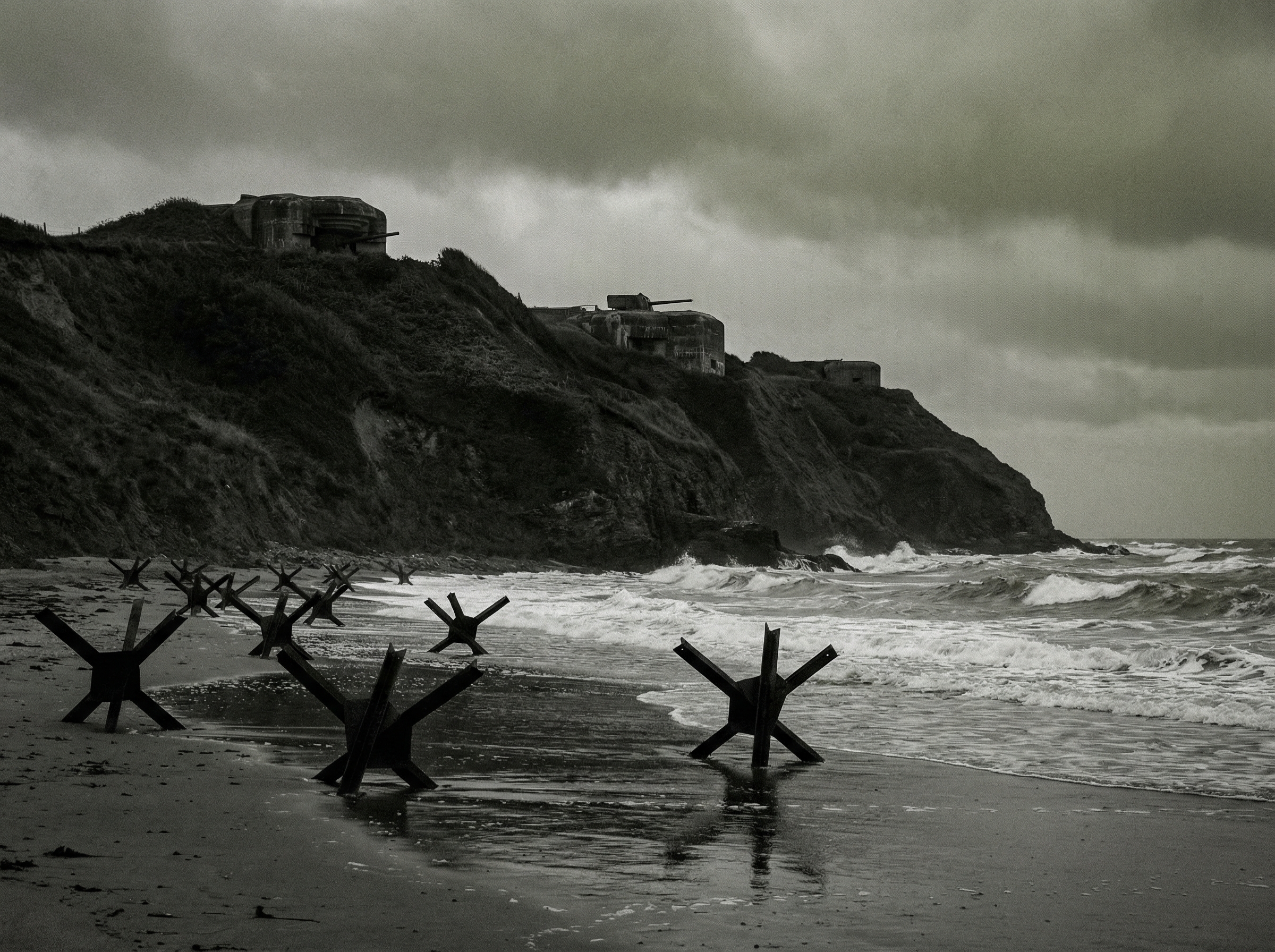
Dramatic view of Omaha Beach with towering bluffs and steel obstacles

Everything that could go wrong at Omaha did.

The beach itself was a natural fortress. One hundred-foot bluffs dominated the shoreline, their faces honeycombed with German pillboxes, mortar pits, and machine gun nests. Intelligence had somehow missed that the veteran 352nd Infantry Division—battle-hardened troops, not the green conscripts expected—had recently moved into the sector.

Then came the bombardment failure. Low clouds on the morning of June 6th caused B-24 bombers to release their payloads late. The naval barrage similarly overshot targets. When the ramps of the landing craft dropped at 06:30, the soldiers of the 1st and 29th Infantry Divisions found themselves charging into German defenses that were completely intact.

Within minutes, the first wave was virtually annihilated. Men drowned under the weight of their equipment. Those who reached the sand found no cover, only the metal obstacles of the Atlantic Wall and murderous crossfire. For hours, the outcome hung in doubt. General Omar Bradley, watching from offshore, considered evacuating the beach entirely.

What turned the tide wasn't a grand maneuver—it was small groups of survivors, led by junior officers and NCOs who improvised under fire. Brigadier General Norman Cota, walking upright through the chaos with his .45 pistol, rallied shattered units with the words that would define the day: "Two kinds of people are staying on this beach: the dead and those who are going to die. Now let's get the hell out of here."

They did. By nightfall, despite 2,400 casualties, the Americans held a precarious foothold at Omaha. The cost was staggering—nearly half of all Allied casualties on D-Day occurred on this single stretch of sand. But they held. And holding was everything.

04

Night Jump: 24,000 Paratroopers and the First Shots of D-Day

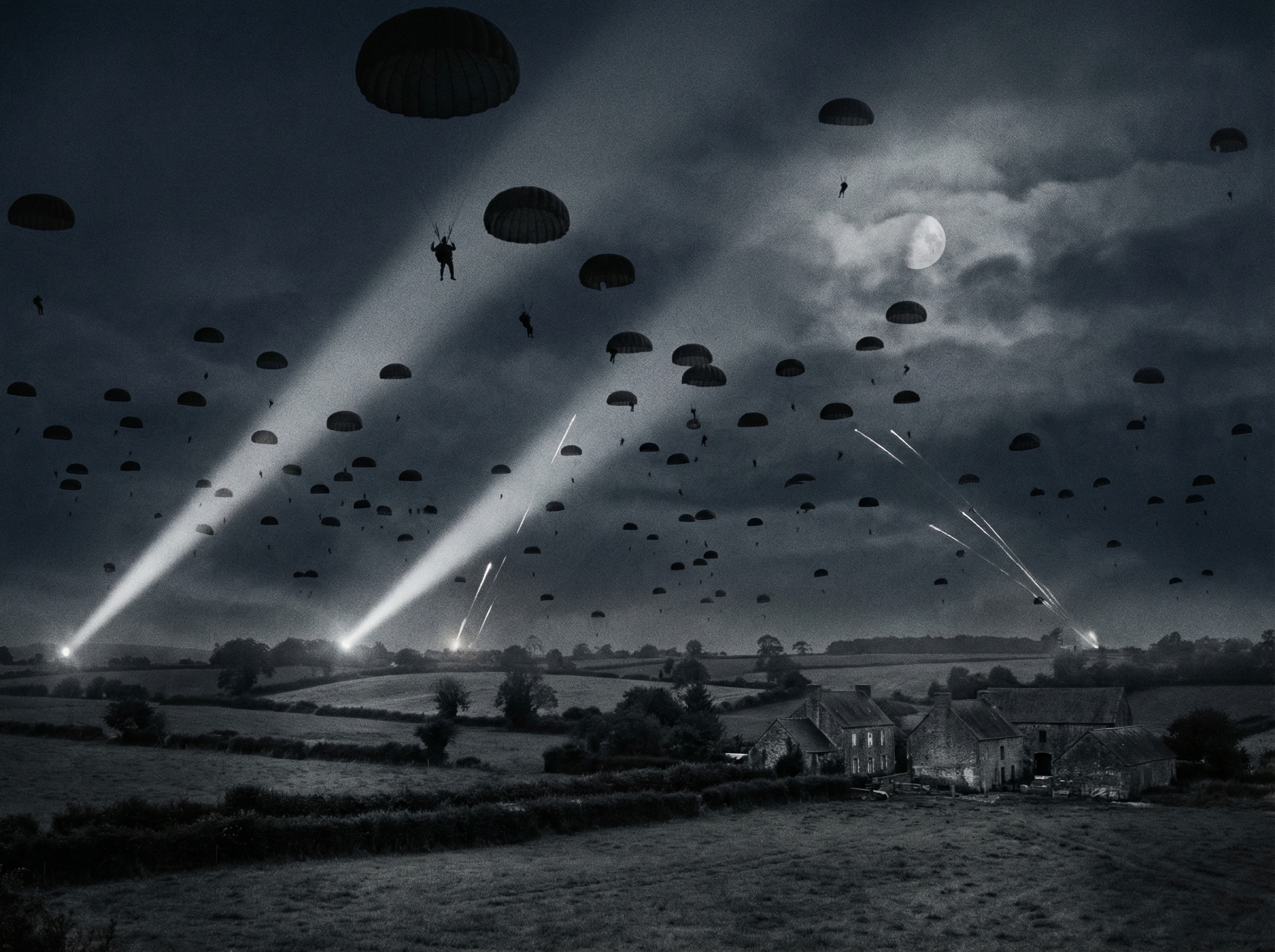
Night sky over Normandy filled with hundreds of descending parachutes

The invasion didn't begin at dawn. It began in the moonlit darkness over occupied France, when 24,000 paratroopers of the 82nd Airborne, 101st Airborne, and British 6th Airborne Division jumped into the unknown.

The first engagement of D-Day occurred at precisely 00:16. British glider troops, their plywood aircraft landing with pinpoint accuracy beside the Caen Canal, stormed Pegasus Bridge in a coup de main operation that lasted mere minutes. Lieutenant Den Brotheridge fell leading the charge—the first Allied soldier killed by enemy fire on D-Day.

Timeline showing key events from midnight to end of D-Day
The sequence of D-Day: airborne operations began in darkness, followed by naval bombardment at dawn, and the beach landings at 06:30. By nightfall, 156,000 men were ashore.

The American drops were chaos. Scattered by anti-aircraft fire and navigation errors, paratroopers from the 82nd and 101st landed miles from their drop zones. Some drowned in fields Rommel had deliberately flooded. Others came down in the middle of German-occupied villages. Units were hopelessly intermixed.

But this chaos had an unintended benefit: it utterly confounded German commanders. Reports flooded in of paratroopers everywhere and nowhere. Unable to determine the size or objective of the airborne assault, German forces hesitated, waiting for clarity that would never come.

Despite the disorganization, the airborne troops accomplished their core missions. The 101st secured the causeways leading off Utah Beach—without which the seaborne troops would have been trapped. Sainte-Mère-Église became the first town liberated in France. And the British 6th Airborne held the eastern flank, preventing German armored counterattack from rolling up the invasion from that direction.

05

Operation Neptune: The Largest Armada Ever Assembled

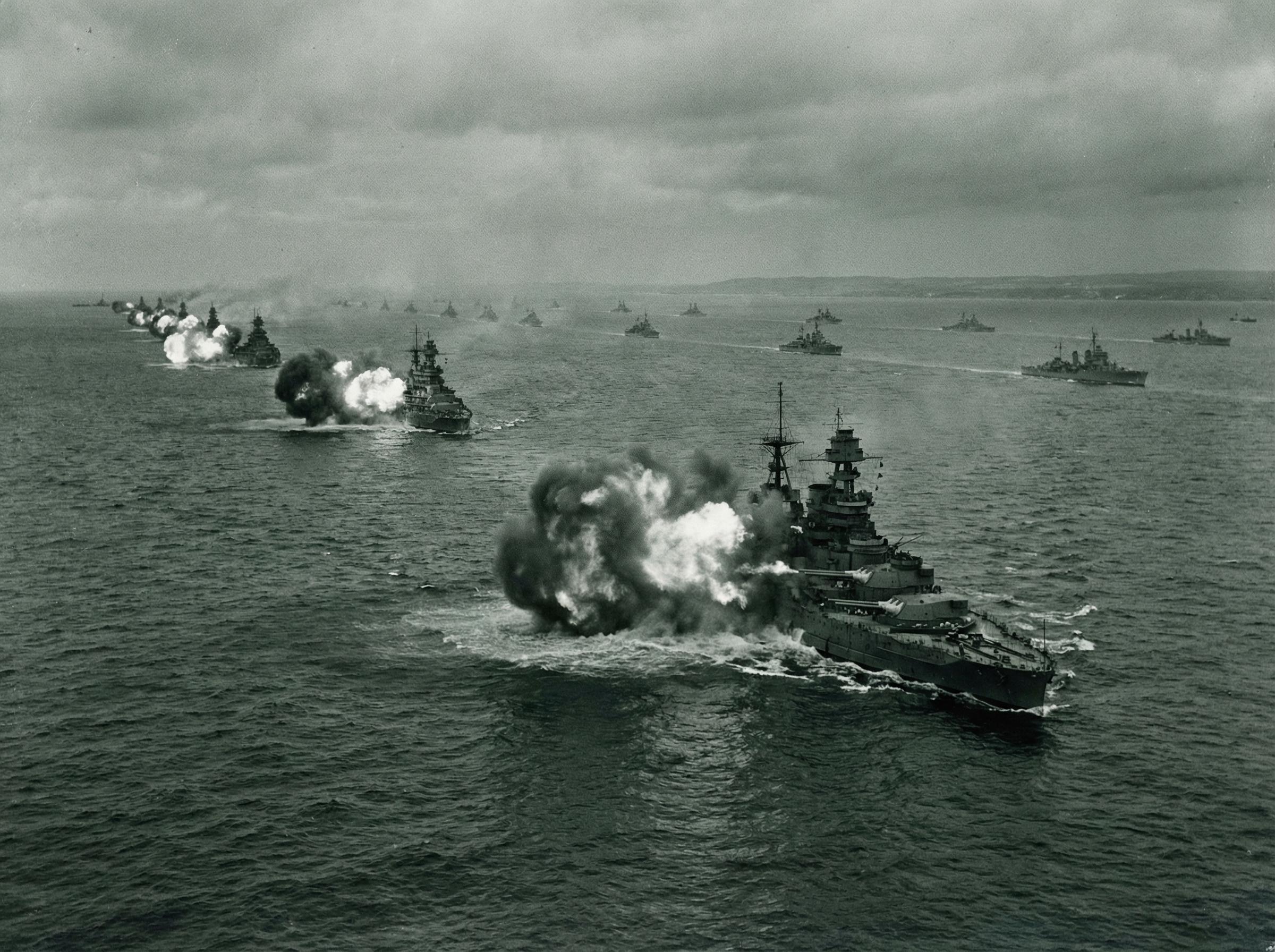
WWII battleships firing broadside toward shore with massive muzzle flashes

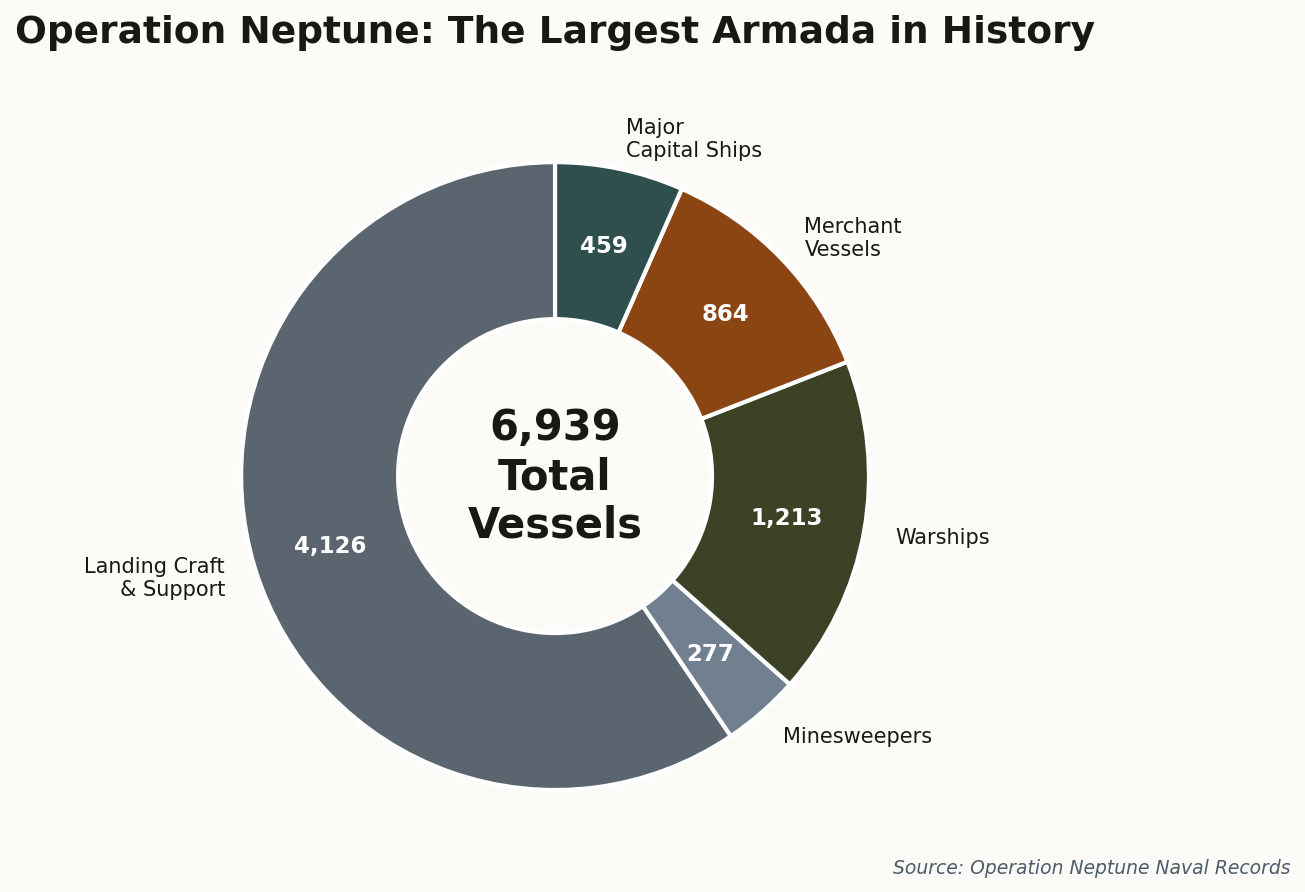
The naval operation supporting D-Day—codenamed Operation Neptune—was a logistical achievement that still boggles the mind. Nearly 7,000 vessels crossed the English Channel that night: 1,213 warships, 4,126 landing craft, and hundreds of support and merchant vessels. The armada stretched from horizon to horizon.

Donut chart showing composition of Operation Neptune naval forces
Operation Neptune deployed 6,939 vessels total—the largest naval operation in history. Landing craft comprised the majority, carrying the 156,000 troops who would storm the beaches.

Battleships like USS Texas, USS Arkansas, and HMS Warspite—veterans of an earlier age of naval warfare—dueled with coastal batteries along the Norman cliffs. The Texas famously fired from so close to shore that she listed from the recoil of her own guns.

But perhaps the most remarkable engineering feat was the Mulberry harbors. The Allies knew they couldn't immediately capture a major port, and they knew the invasion force would need continuous resupply. Their solution: bring the ports with them. Two massive artificial harbors—floating concrete caissons, pier heads, and roadways—were towed across the Channel and assembled off the Normandy coast.

Mulberry A (at Omaha) was destroyed by a storm on June 19th. But Mulberry B, at Gold Beach near Arromanches, operated for ten months. Through it flowed 2.5 million men, 500,000 vehicles, and 4 million tons of supplies—the lifeblood that sustained the liberation of Western Europe.

06

The Führer Sleeps: How German Paralysis Doomed the Defense

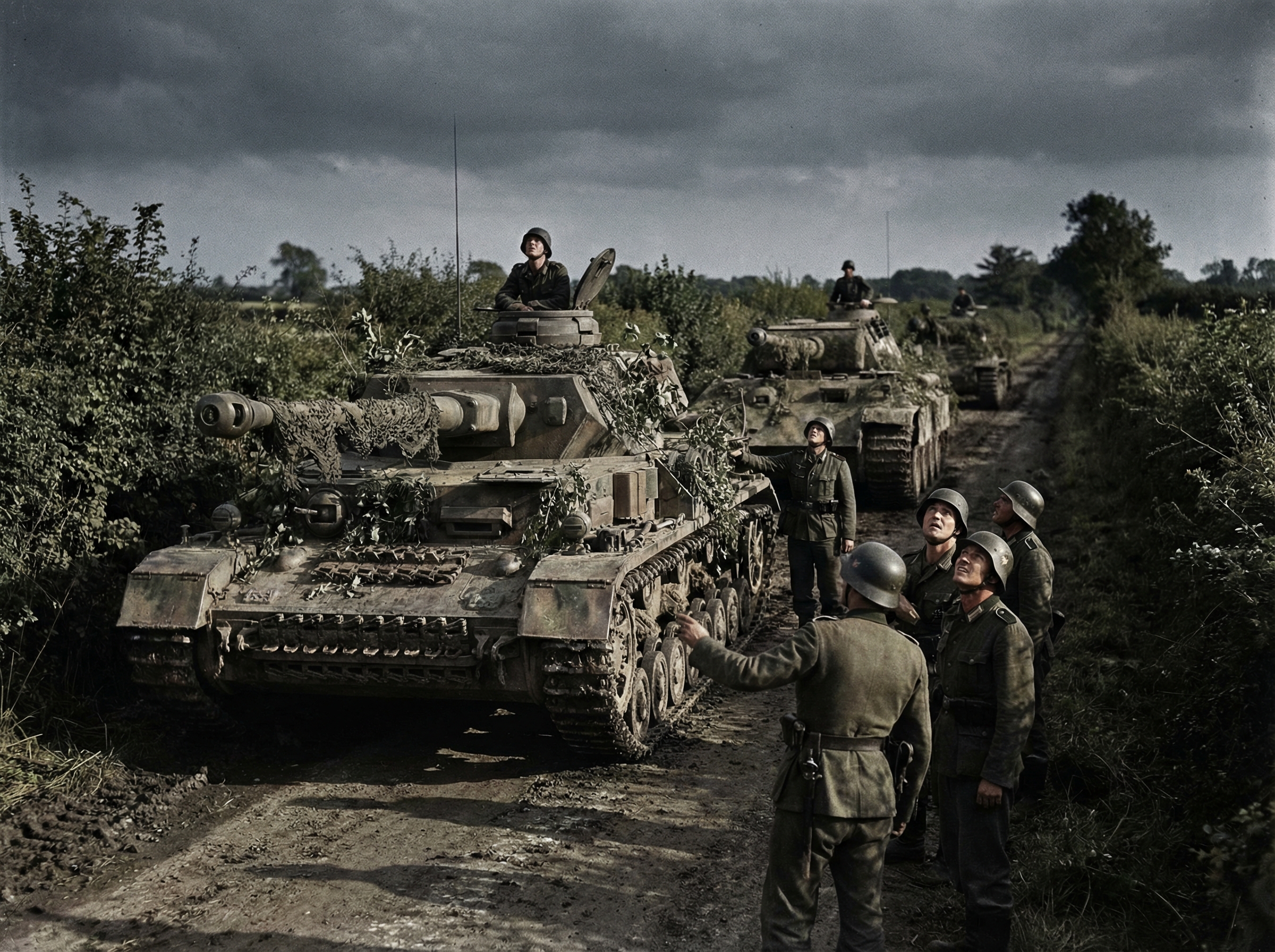
If D-Day was the Allies' greatest triumph, it was also Germany's greatest failure of command. The seeds of defeat were planted long before the first landing craft hit the beach.

Field Marshal Erwin Rommel, commanding the Atlantic Wall defenses, had warned Hitler that the invasion must be stopped on the beaches. "The first 24 hours will be decisive," he wrote. "For the Allies, as well as Germany, it will be the longest day."

Yet on the morning of June 6th, Rommel was in Germany, celebrating his wife's birthday. German meteorologists had predicted weather too severe for an invasion. They were wrong.

When reports of the airborne landings reached German headquarters, confusion reigned. The deception operations had done their work—many officers believed this was a feint, the real invasion still to come at Calais. Critically, Hitler had insisted on personal control of the Panzer reserves. And Hitler was asleep.

His staff refused to wake him. For hours, as the largest invasion force in history poured onto the beaches, the armored units that might have pushed the Allies back into the sea sat immobile, awaiting an order that wouldn't come until late afternoon. By then, Allied fighters owned the skies. Any German vehicle that moved during daylight was strafed and bombed. The Panzers arrived too late, in too few numbers, to matter.

The irony is profound: Hitler's obsessive centralization of command, his distrust of his own generals, became the Allies' secret weapon. The longest day, for German defenders, was defined by paralysis, hesitation, and a dictator who chose sleep over the fate of his Reich.

07

The Cost of Freedom: Remembering the 10,000

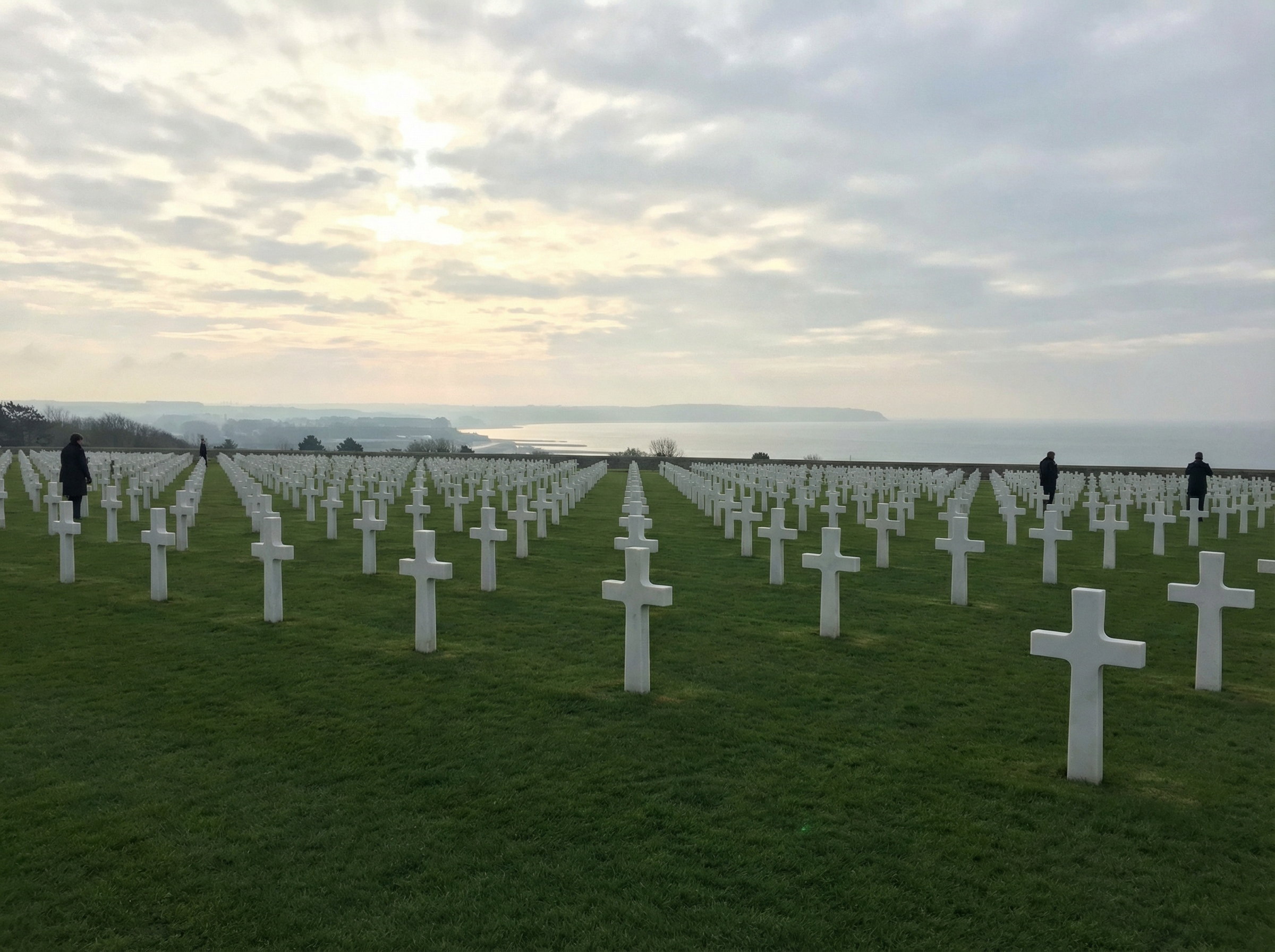
Rows of white marble crosses at American Cemetery overlooking Normandy beach

Numbers can sanitize what was, in truth, a human catastrophe. Let them not.

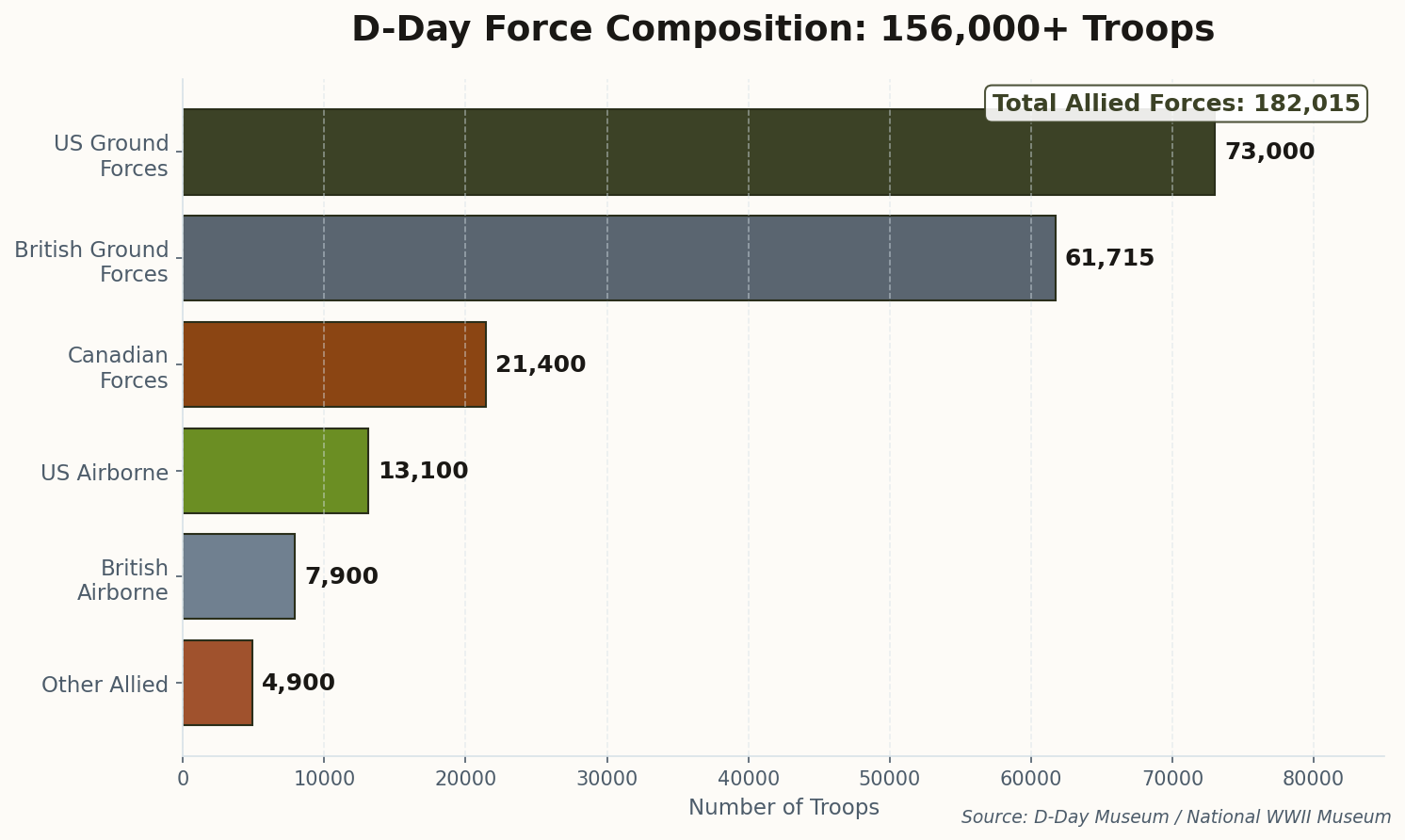
Horizontal bar chart showing D-Day force composition by nationality
The invasion force represented a coalition of free nations: American, British, Canadian, and other Allied forces united against tyranny.

On June 6, 1944, approximately 10,000 Allied soldiers became casualties. Of these, 4,414 are confirmed killed. German losses are estimated between 4,000 and 9,000. And 3,000 French civilians—the people the invasion was meant to liberate—died in the bombing and shelling, caught in the crossfire of their own rescue.

The Normandy American Cemetery overlooks Omaha Beach. Here, 9,387 white marble headstones stand in perfect rows on manicured grass—a silent army of the fallen. Many graves belong to men who died on D-Day; others fell in the weeks of brutal fighting that followed. Among them are three Medal of Honor recipients, 307 unknown soldiers, and four women.

The British and Canadian cemeteries dot the Norman countryside too—Bayeux, Ranville, Bény-sur-Mer. German soldiers lie at La Cambe, 21,000 of them, a reminder that war claims victims on all sides.

What did these deaths purchase? The beginning of the end. Within three months, Paris was liberated. Within eleven months, Hitler was dead and Germany had surrendered. The invasion of Normandy cracked open Fortress Europe and began the final destruction of Nazi tyranny.

Was the price too high? Ask the survivors of Dachau and Auschwitz. Ask the nations that lived under the swastika. Ask the world that exists because young men—many of them teenagers—climbed out of landing craft into machine gun fire on a cold June morning eighty-two years ago.

Their Legacy Endures

Eisenhower kept a letter in his pocket on June 6th, never sent, accepting full responsibility if the invasion failed. It didn't fail. But the outcome was never certain. History turned on the courage of ordinary men who did extraordinary things—and on the mistakes of those who opposed them. We owe them everything.