Higher Education

Higher Ed at the Crossroads

ICE walkouts sweep campuses, nursing programs face existential threat, accreditation gets overhauled, and graduate students stare down loan caps. This week the federal government made its intentions clear: higher education will be remade.

Listen
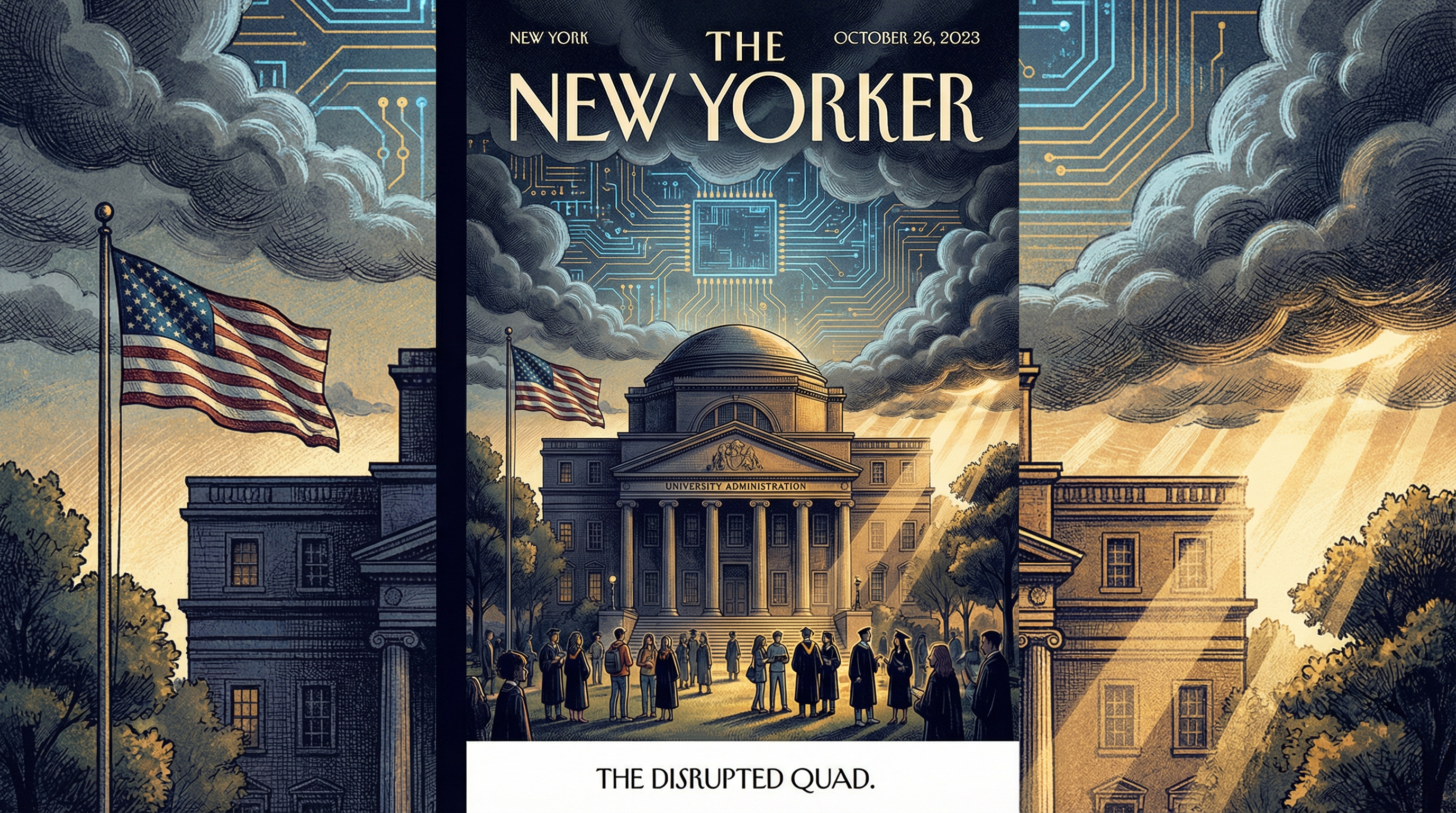
Editorial illustration of a university campus at a crossroads, storm clouds and digital patterns fracturing the sky above neoclassical buildings
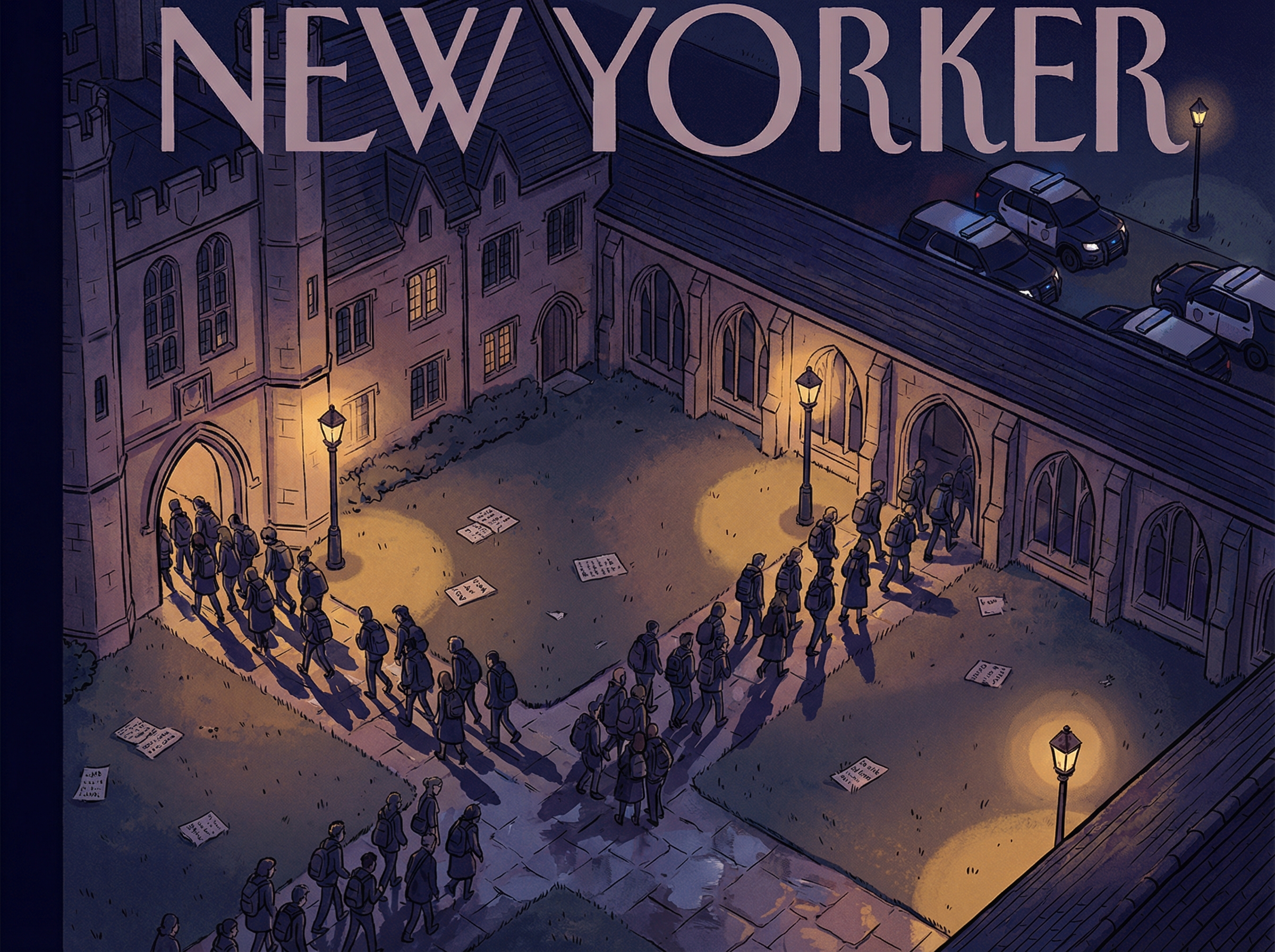
University quad at dusk with students clustering and walking toward buildings, long shadows and protest signs visible
01

Students Walk Out as ICE Closes In

Hundreds of students at UCLA, UT-Austin, and other major public universities staged coordinated walkouts yesterday, protesting a surge in Immigration and Customs Enforcement activity near their campuses. The demonstrations follow reports of federal agents detaining students and new guidance from institutions on handling ICE site visits.

This isn't abstract fear anymore. It's tactical adaptation. At some campuses, students have mapped "safe routes" between buildings that minimize outdoor exposure. At others, underground tunnels and skyways have become the preferred circulation paths. The spatial logic of campus life is being rewritten by enforcement anxiety.

The fundamental tension: Universities can't promise protections they cannot deliver. But their silence feels like abandonment. Many are posting "know your rights" resources while training staff for enforcement encounters—a middle ground that satisfies no one.

The walkouts signal something broader: a generation of students willing to disrupt their own education to make a political point. Whether this pressure moves the needle on federal policy remains unclear. What's certain is that for many students, campus no longer feels like sanctuary. It feels like contested territory.
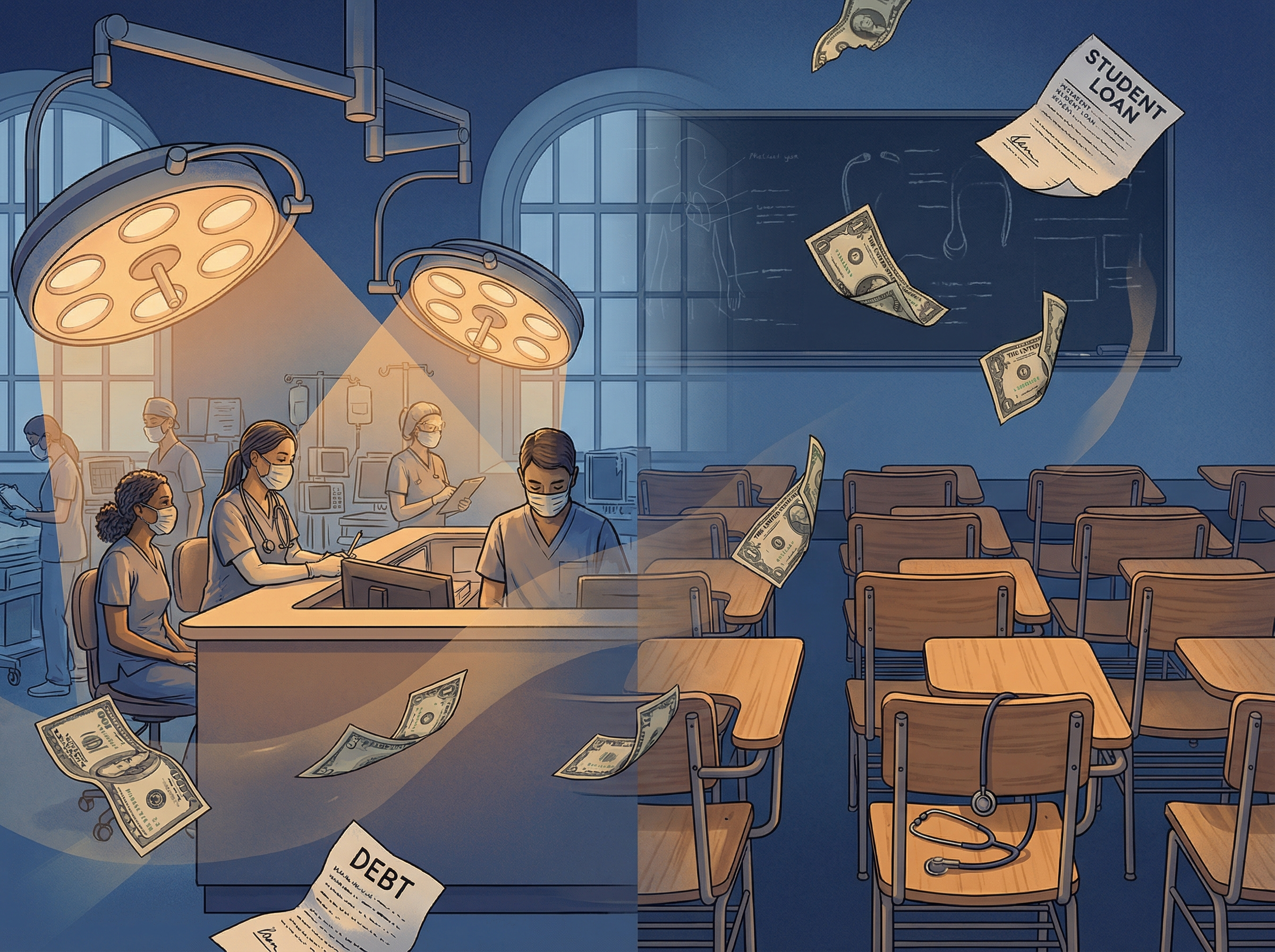
Surreal split composition showing hospital nursing station merging with university lecture hall, dollar bills floating through air
02

Nursing Programs Face Existential Threat

Under the "One Big Beautiful Bill Act," the Department of Education is moving to strip nursing degrees of their "professional" classification—a bureaucratic change with devastating practical consequences. If finalized, federal loan limits for nursing students would plummet, making clinical training unaffordable for many.

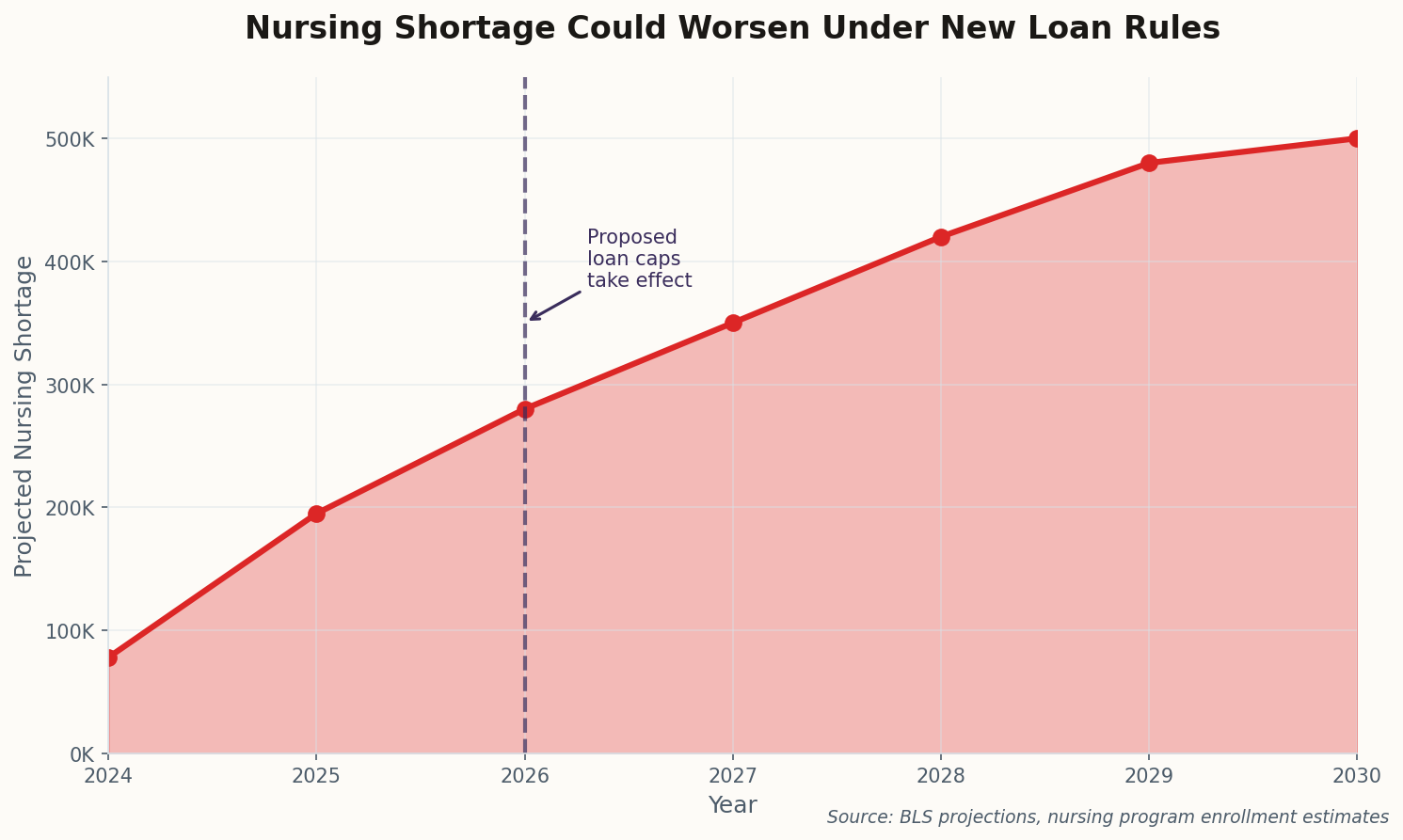
Nursing deans are sounding alarms. The nation already faces a projected shortage of 500,000 nurses by 2030. This policy could accelerate the crisis by pricing out exactly the students most likely to serve underserved communities: those who can't afford to pay out of pocket.

Line chart showing projected nursing shortage worsening from 2024 to 2030, with annotation marking when proposed loan caps take effect
Source: BLS projections, nursing program enrollment estimates

The irony is thick: the same administration touting healthcare workforce development is simultaneously cutting off the financing pipeline that makes nursing education accessible. Deans are left wondering whether this is deliberate targeting or collateral damage from a blunt instrument of loan reform. Either way, the healthcare system will pay the price.

Grand governmental hearing room with figures examining accreditation certificates, some stamped approved, others rejected
03

The Accreditation Revolution Begins

The White House has formally launched the "Accreditation, Innovation, and Modernization" (AIM) rulemaking committee, the first concrete step in the administration's long-promised assault on regional accreditors. The committee's mandate: dismantle what the administration calls "monopoly gatekeeping" and refocus quality assurance on "data-driven student outcomes."

Translation: DEI requirements, shared governance standards, and traditional measures of institutional quality are on the chopping block. In their place: graduation rates, job placement numbers, and loan repayment metrics. Quantifiable. Auditable. Stripped of subjective judgment about educational mission.

The real stakes: This isn't just about paperwork. Accreditation determines which institutions can accept federal financial aid. Weakening standards could open the floodgates for for-profit providers while removing external checks on institutional governance.

Traditional universities are bracing for what comes next. Some fear a race to the bottom; others see opportunity to escape what they view as ideological litmus tests. The coming rule changes will determine whether American higher education's quality assurance system survives in recognizable form.

Graduate student at crossroads between towering books and wall of loan documents, diploma hovering out of reach
04

The End of Grad PLUS as We Know It

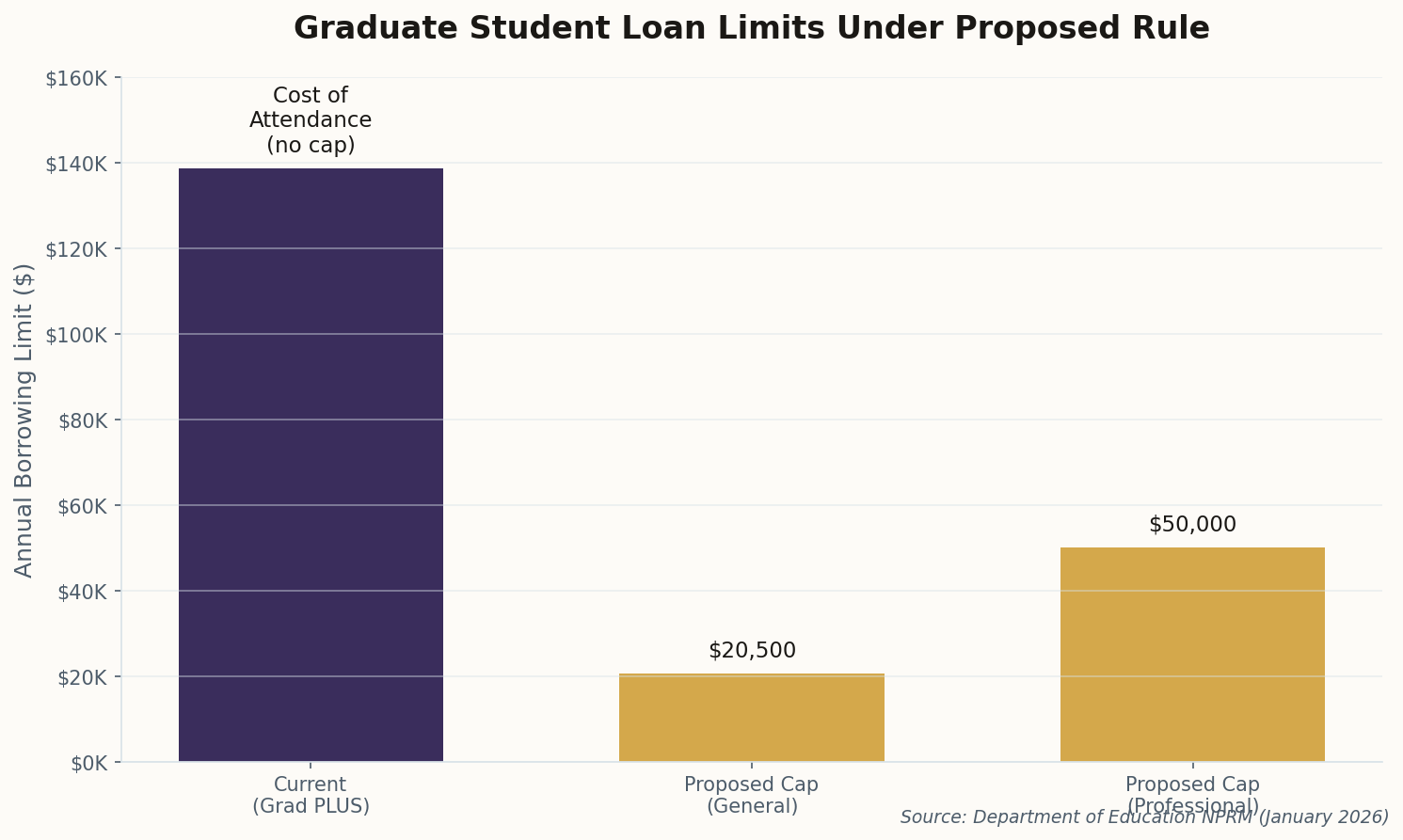
The Department of Education has proposed hard caps on graduate student borrowing: $20,500 annually for most programs, $50,000 for designated professional degrees. If enacted, this would end the "Grad PLUS" era, where students could borrow up to the full cost of attendance—often six figures for elite professional programs.

Bar chart comparing current unlimited Grad PLUS borrowing to proposed $20,500 and $50,000 caps
Source: Department of Education NPRM (January 2026)

The administration frames this as a check on tuition inflation. The logic: unlimited federal lending has enabled institutions to raise prices without consequence. Cap the loans, and market discipline forces tuition down.

University leaders see it differently. They argue this will restrict access to advanced degrees, disproportionately affecting students from modest backgrounds who can't bridge the gap with family wealth. Research universities are particularly exposed—their doctoral programs depend on funding models that assume substantial student borrowing capacity.

The rule is open for public comment, but the direction is clear: the federal government is retreating from its role as higher education's financier of last resort.

Professor at desk surrounded by papers dissolving into algorithmic circuitry, warm desk lamp fighting cold digital glow
05

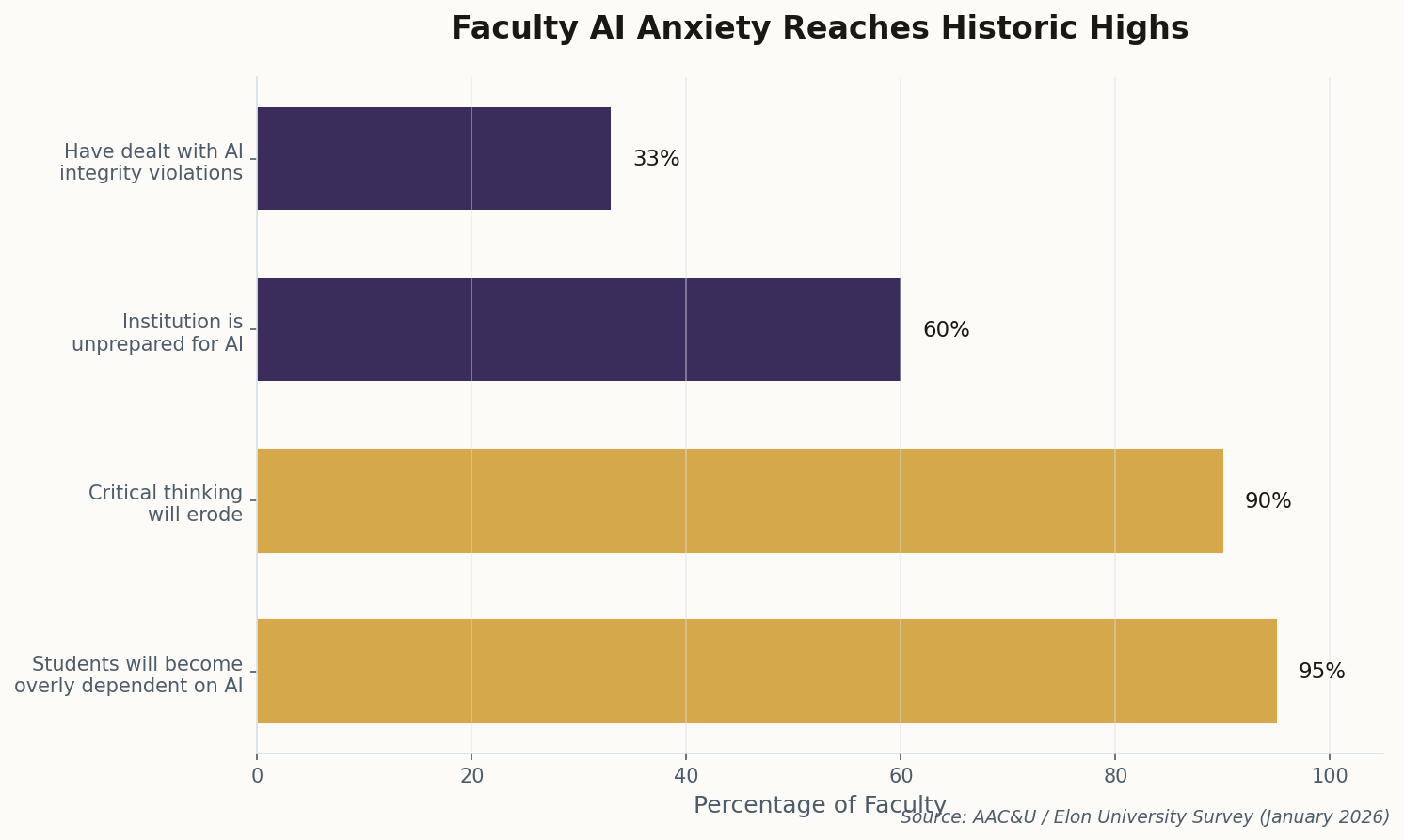
Faculty AI Anxiety Reaches Historic Highs

A new survey from AAC&U and Elon University quantifies what many professors have been feeling: generative AI has become an existential concern. The numbers are stark—and represent a hardening of faculty sentiment since last year's more cautious optimism.

Horizontal bar chart showing 95% worry about AI dependency, 90% fear critical thinking erosion, 60% say institutions unprepared
Source: AAC&U / Elon University Survey (January 2026)

That one-third of faculty reporting significant AI integrity violations deserves attention. This isn't a fringe problem—it's pervasive. Yet most institutions have been slow to develop clear policies, leaving individual professors to improvise enforcement in real time.

The gap is growing: Students adopt AI tools instantly. Institutions develop policies over semesters. Faculty are caught in the middle, expected to enforce standards that don't yet exist while administrators invest in "AI infrastructure" without consulting the people who actually teach.

What's remarkable is that faculty anxiety persists despite—or perhaps because of—AI's genuine usefulness. Most professors recognize legitimate applications. They just don't trust students to use the tools appropriately, and they don't trust their institutions to help them navigate the complexity.

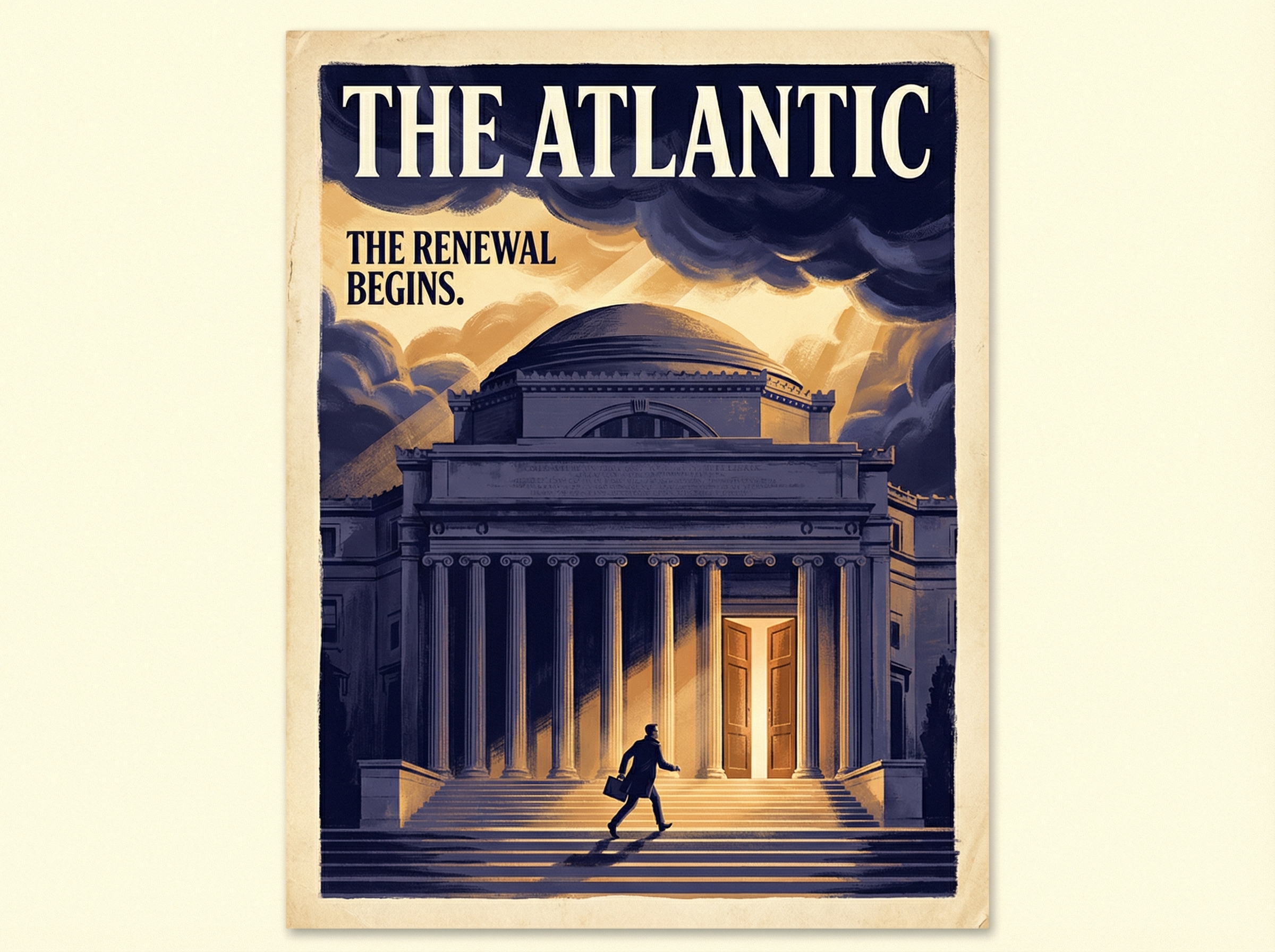
Imposing Ivy League building with classical columns, figure walking up steps toward warm light as storm clouds clear
06

Columbia Taps a Public University Leader

Columbia University has named Jennifer L. Mnookin, currently chancellor of the University of Wisconsin-Madison, as its next president. She'll take the helm July 1, tasked with stabilizing an institution that has lurched from crisis to crisis—campus protests, leadership turmoil, and now intense federal scrutiny.

The choice is revealing. Mnookin is a seasoned public university administrator, not an Ivy insider. She's navigated Wisconsin's politically charged landscape, including conflicts with the state legislature over campus speech and DEI policies. Columbia's board apparently decided they need battle-tested pragmatism over elite pedigree.

She'll immediately face the new federal "Compact for Academic Excellence" requirements—the administration's framework for conditioning institutional aid on compliance with its policy priorities. How she balances Columbia's institutional traditions against federal pressure will set a template for elite privates facing similar pressures.

The appointment signals a broader trend: universities in crisis are looking beyond their traditional talent pools. The skills required to lead modern institutions—political navigation, crisis management, regulatory compliance—aren't always cultivated in the Ivy ecosystem. Sometimes you need someone who's actually run something complicated.

The Pattern Is Clear

Every story this week shares a through-line: the federal government asserting new forms of control over higher education. Loan caps reshape institutional finances. Accreditation reform redefines quality. Immigration enforcement transforms campus life. AI policy gaps leave faculty adrift. These aren't isolated policy changes—they're a coordinated reimagining of what American universities should be, who they should serve, and who gets to decide. The academy's traditional autonomy is being tested as never before.