AI + Creative Industries

The Manga Machine

AI-generated manga just hit #1 in Japan. San Diego Comic-Con just banned it entirely. Welcome to the most divided moment in comic book history.

Listen
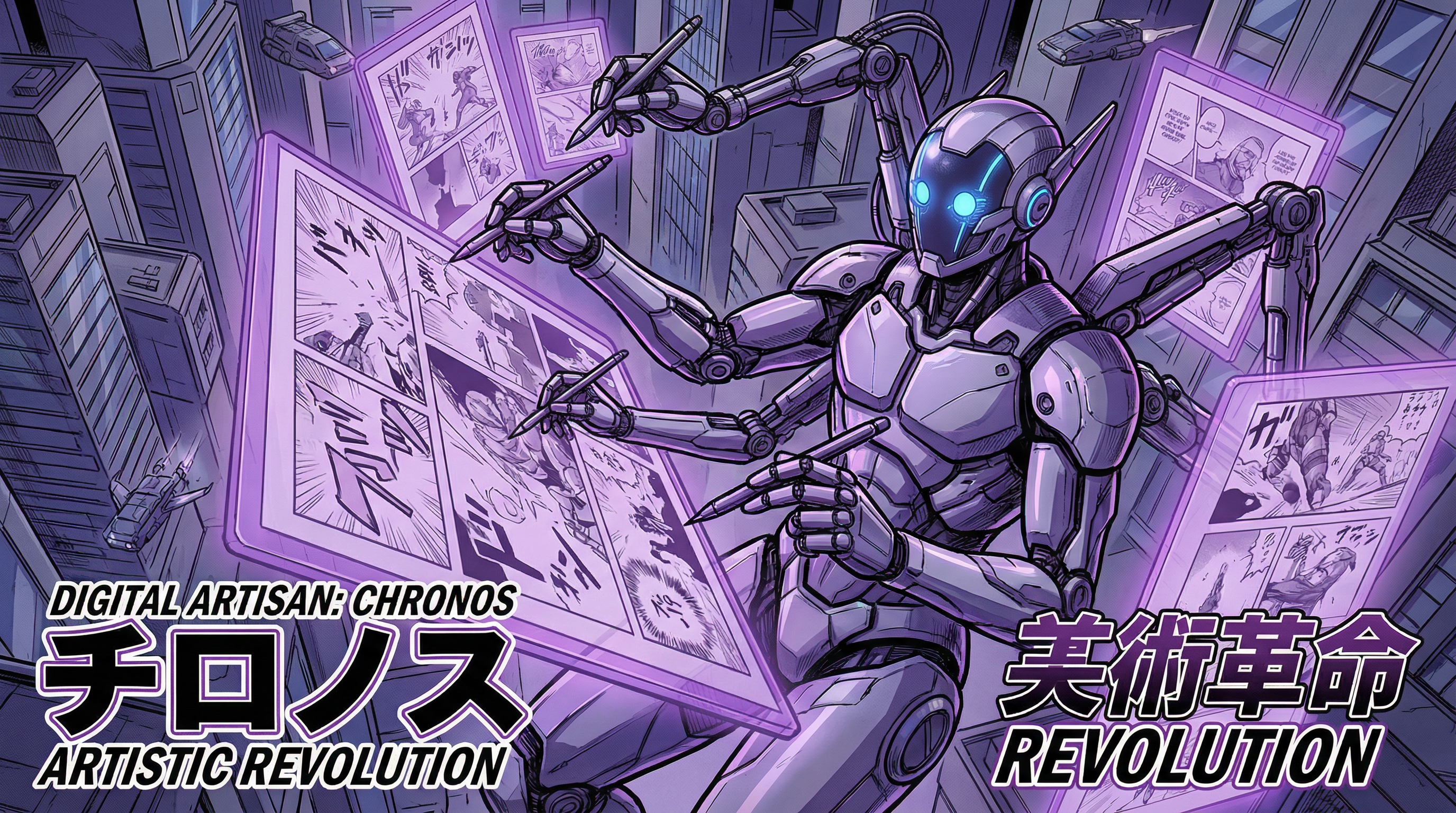
Futuristic robot artist creating manga panels on holographic displays
01

Japan Deploys AI to Fight AI: The $650K Piracy Fingerprint
Digital fingerprint technology overlaying manga pages with glowing circuit patterns

Here is a twist nobody saw coming: Japan's government is now funding AI to fight AI. The Japan Agency for Cultural Affairs just allocated $650,000 (roughly 95 million yen) to build a specialized system that "fingerprints" manga pages—tracking pirated content back to its original distribution source.

The target? A new generation of piracy sites that use AI to automatically scrape, translate, and redistribute manga faster than human moderators can respond. It's an arms race now, and the Japanese government decided to stop bringing a knife to a gunfight.

What's particularly notable is the acknowledgment that the threat has evolved. Traditional takedown notices don't work when bots can republish content faster than lawyers can file complaints. The fingerprinting approach suggests a shift toward persistent identification rather than whack-a-mole enforcement. Publishers who've lost billions to piracy sites like Mangamura (shut down in 2018) are watching closely.

The signal: When governments start funding AI-vs-AI infrastructure, we've entered a new phase of the copyright wars. Expect similar investments from South Korea's Webtoon ecosystem next.
02

Comic-Con Draws the Line: No AI Art in 2026

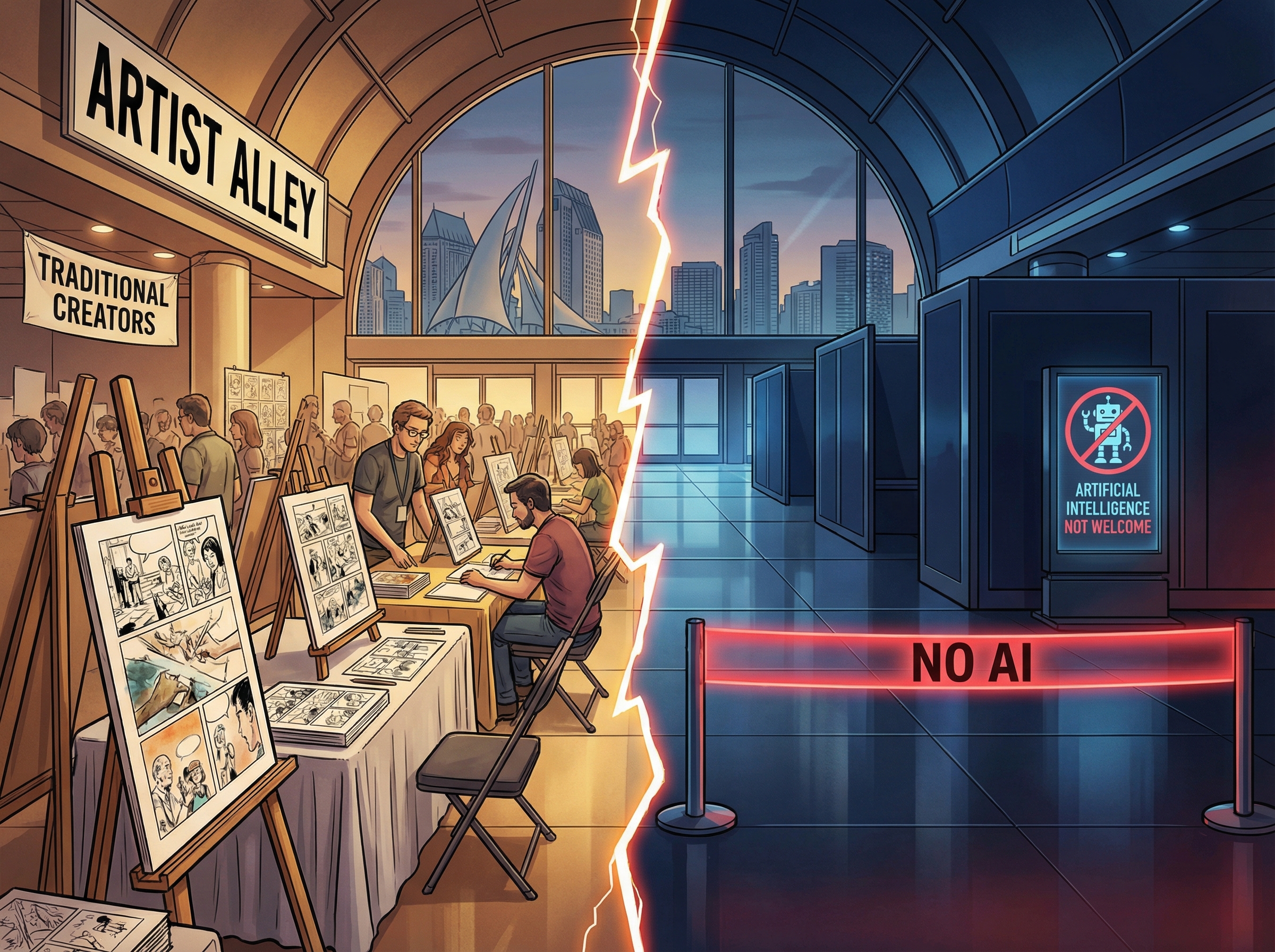
Convention hall divided between traditional artist alley and empty AI-banned section

San Diego Comic-Con—the world's largest pop culture convention—quietly updated its exhibitor rules this month with a stark new policy: "Material created by Artificial Intelligence (AI) either partially or wholly, is not allowed in the art show."

The previous policy had allowed AI art if marked as "Not-For-Sale." That loophole is now closed. The ban applies to SDCC's prestigious juried art show and potentially broader exhibitor spaces, signaling a hardening stance from legacy institutions that see themselves as guardians of human creativity.

This matters because SDCC sets precedent. When the biggest convention in the industry takes a position, smaller cons follow. Artist alleys at Dragon Con, New York Comic Con, and Anime Expo will likely adopt similar language by summer. For creators who've built businesses around AI-assisted workflows, this fragments the market into "AI-allowed" and "AI-banned" venues.

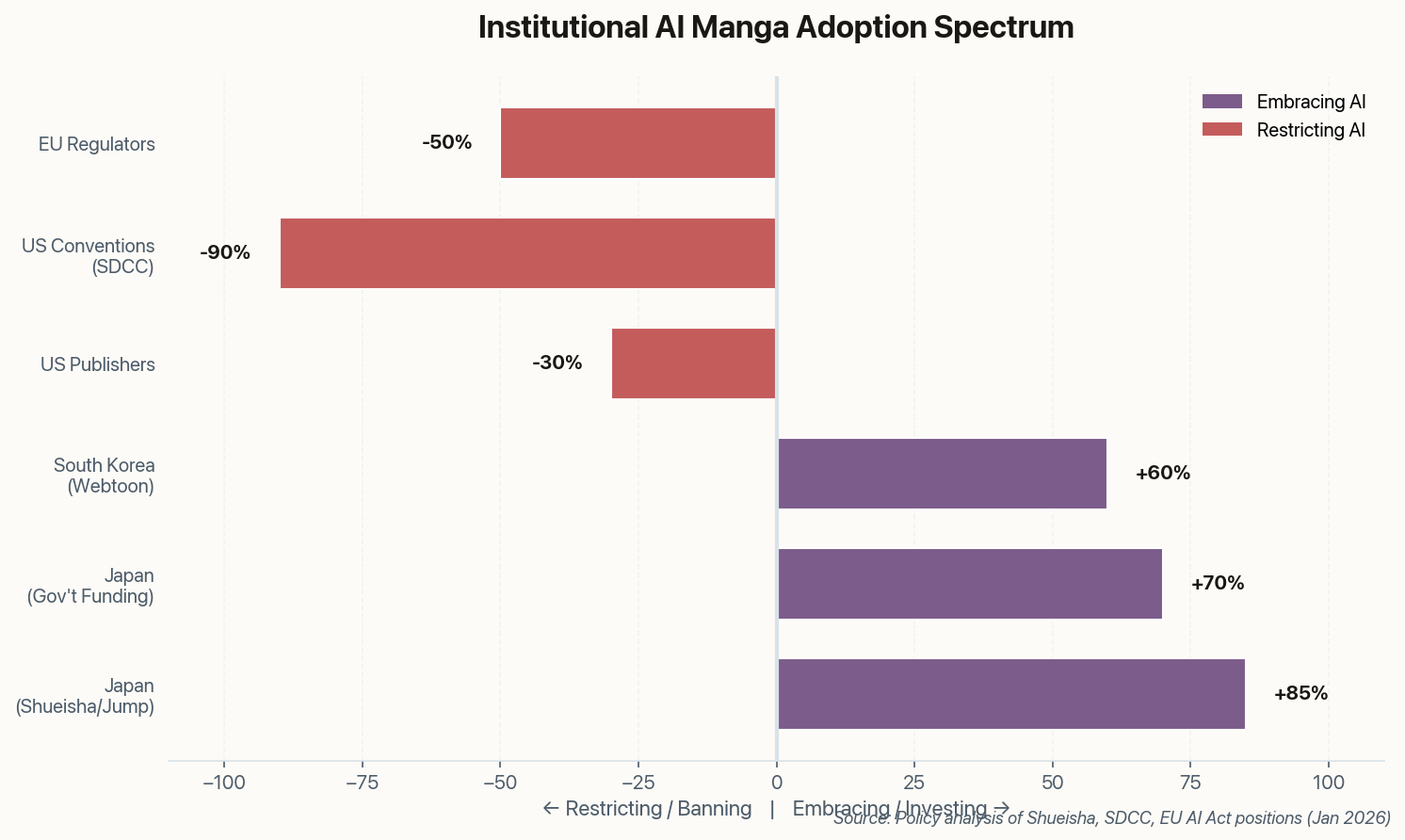
Chart showing institutional AI adoption spectrum from Japan embracing to US banning
The institutional divide: Japanese publishers embrace AI assistance while Western institutions implement bans

The irony? Just 6,000 miles away, Japan's biggest manga publisher is actively encouraging AI tools. The global creative industry is fracturing along geographic lines.

03

The Consistency Problem Gets Solved (Mostly)

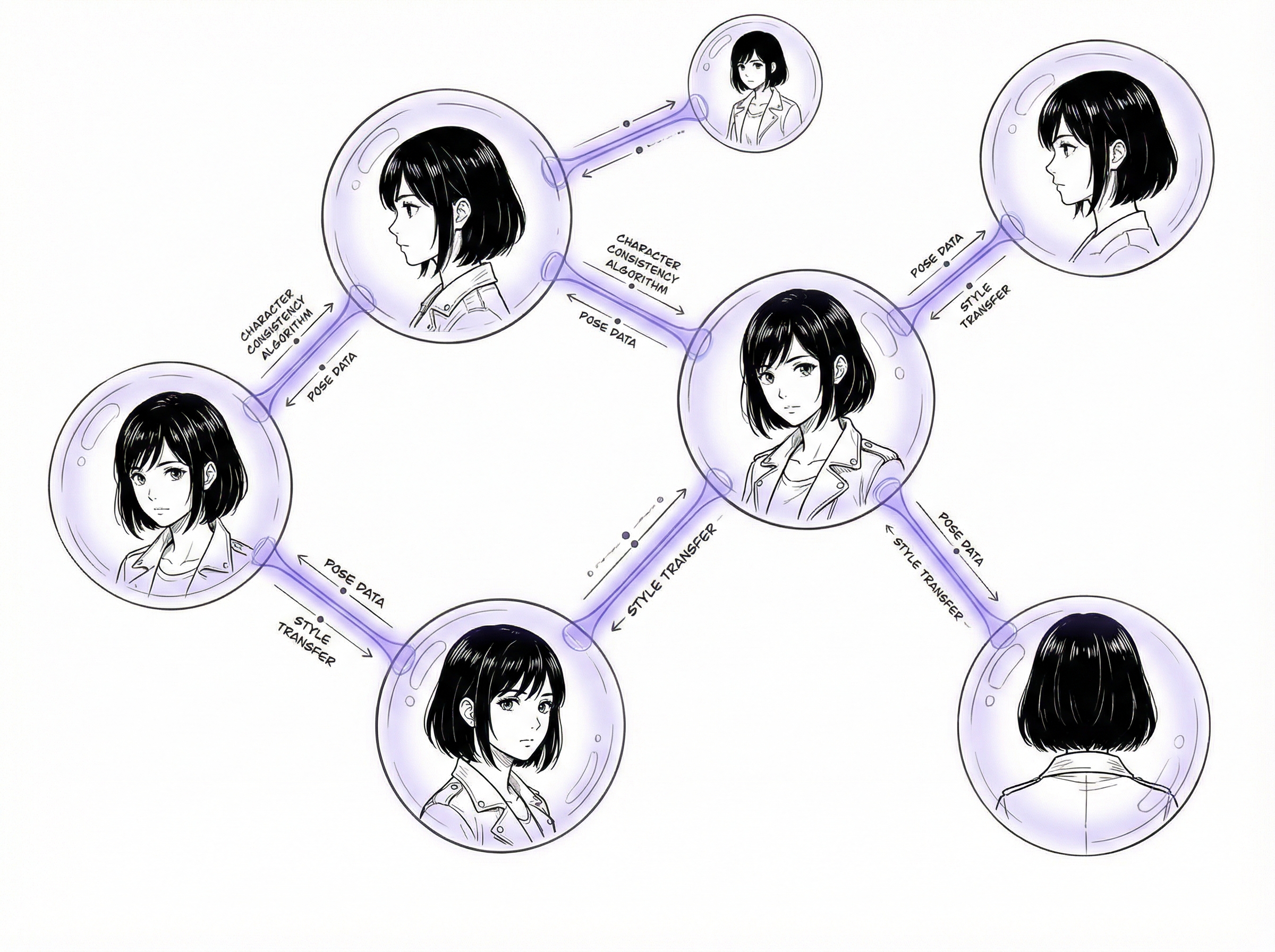
Same anime character shown at multiple angles connected by neural network nodes

If you've ever tried to create a comic with AI, you know the pain: your protagonist looks completely different in panel two than she did in panel one. Hair color drifts. Face structure morphs. It's the uncanny valley of sequential art.

Skywork AI's January update takes a serious swing at this problem. Their graphic novel generator now maintains what they call "character persistence"—the same face, same outfit, same proportions across different angles and expressions. They've also added automated panel layout generation and text bubble placement tailored for standard manga formats.

The technical details matter here. Previous AI image generators treated each panel as an independent generation, with only text prompts to maintain consistency. Skywork's approach appears to use a reference embedding system—essentially teaching the model what "this specific character" looks like before generating subsequent panels.

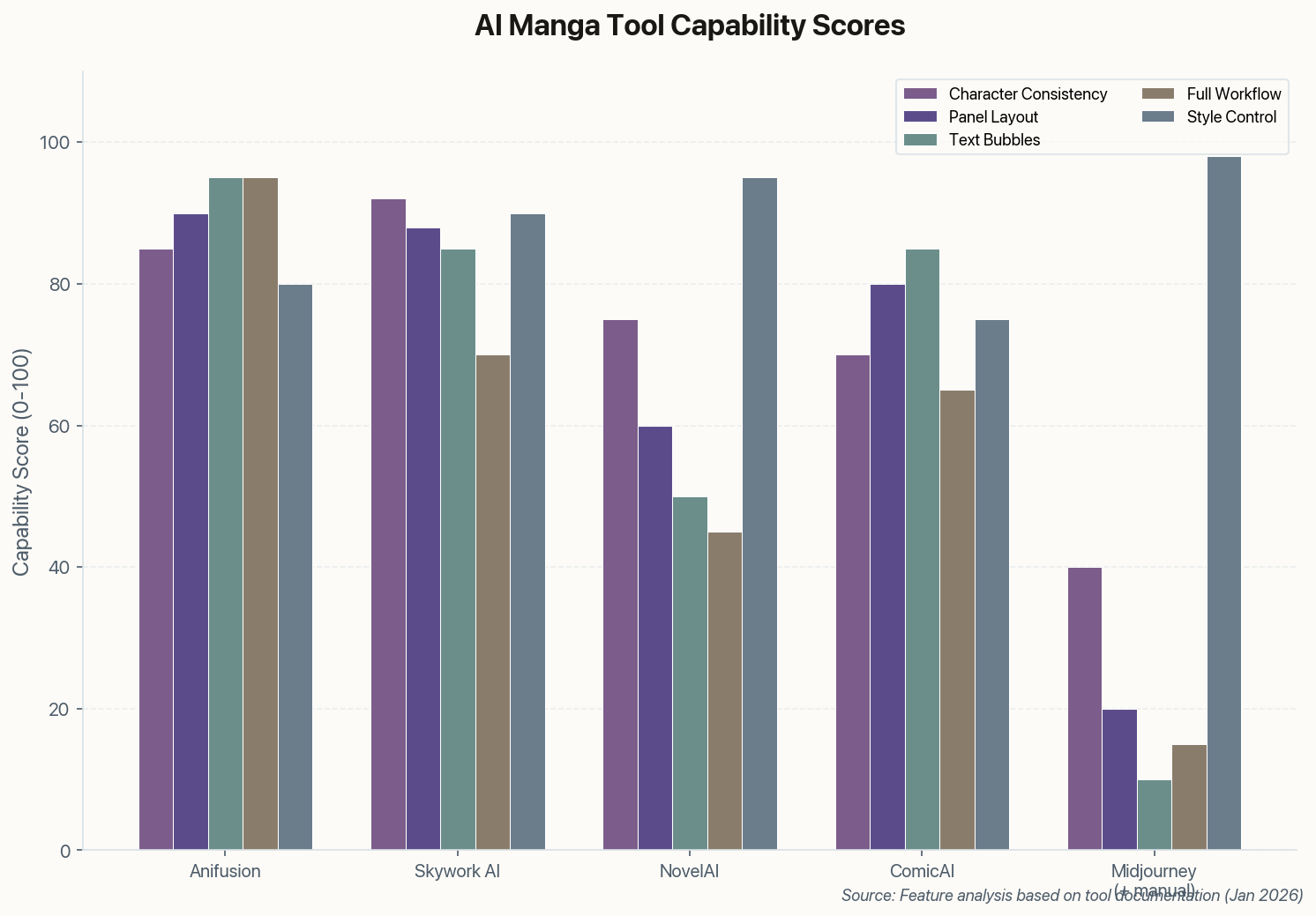
Chart comparing AI manga tool capabilities across different features
AI manga tools are rapidly closing capability gaps, with consistency and workflow emerging as key differentiators

Is it perfect? No. Complex action sequences with multiple characters still break down. But for single-character drama—which describes a huge chunk of seinen and romance manga—the quality ceiling just got significantly higher.

04

The Sequential Art Moat: Why Manga Artists Are Safer Than Illustrators

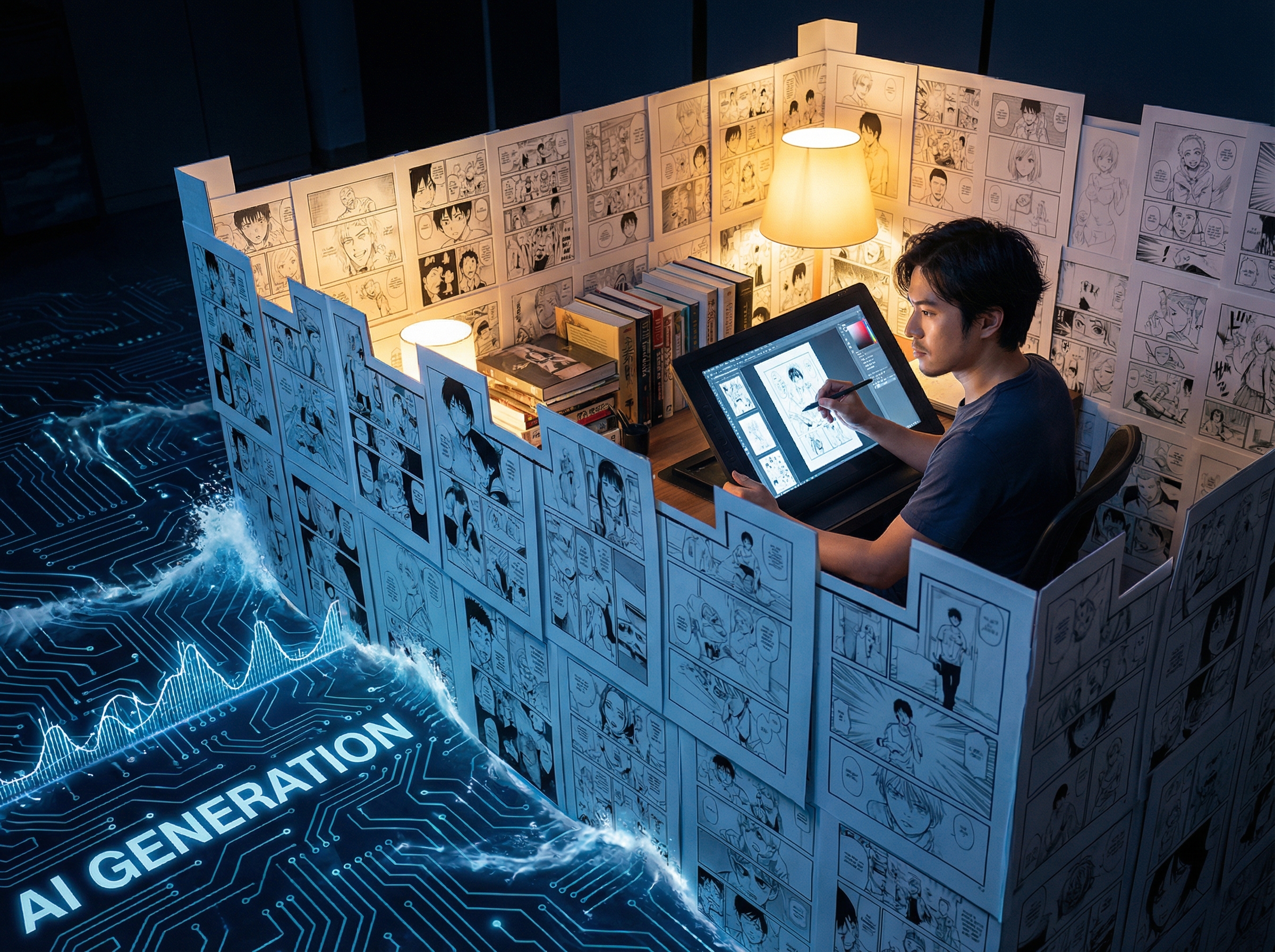
Manga artist protected in fortress of comic panels while AI waves crash outside

Here's the most important research you'll read this month. Economists analyzing data from Pixiv—Japan's massive illustration platform with over 84 million users—found something counterintuitive: comic and manga artists are significantly more resistant to AI displacement than single-image illustrators.

The numbers are stark. Following the release of advanced text-to-image models, casual illustrator uploads dropped 42%. But manga and comic artist uploads? Down only 8%. The complexity of sequential storytelling—maintaining character consistency, pacing narrative beats, designing readable page layouts—acts as what the researchers call a "moat" against current AI capabilities.

Bar chart showing -42% for illustrators vs -8% for manga artists
Sequential art complexity provides meaningful protection against AI displacement

This doesn't mean manga artists should relax. The moat exists because today's AI struggles with multi-panel coherence. As tools like Skywork improve that capability, the moat narrows. But for now, there's a clear hierarchy of displacement risk—and if you can tell stories across panels, you're in a stronger position than if you're competing on single images alone.

Career implication: Illustrators who want to future-proof should consider expanding into sequential formats. The skill ceiling is higher, but so is the job security.

05

Shonen Jump's Publisher Goes All-In on AI Assistance

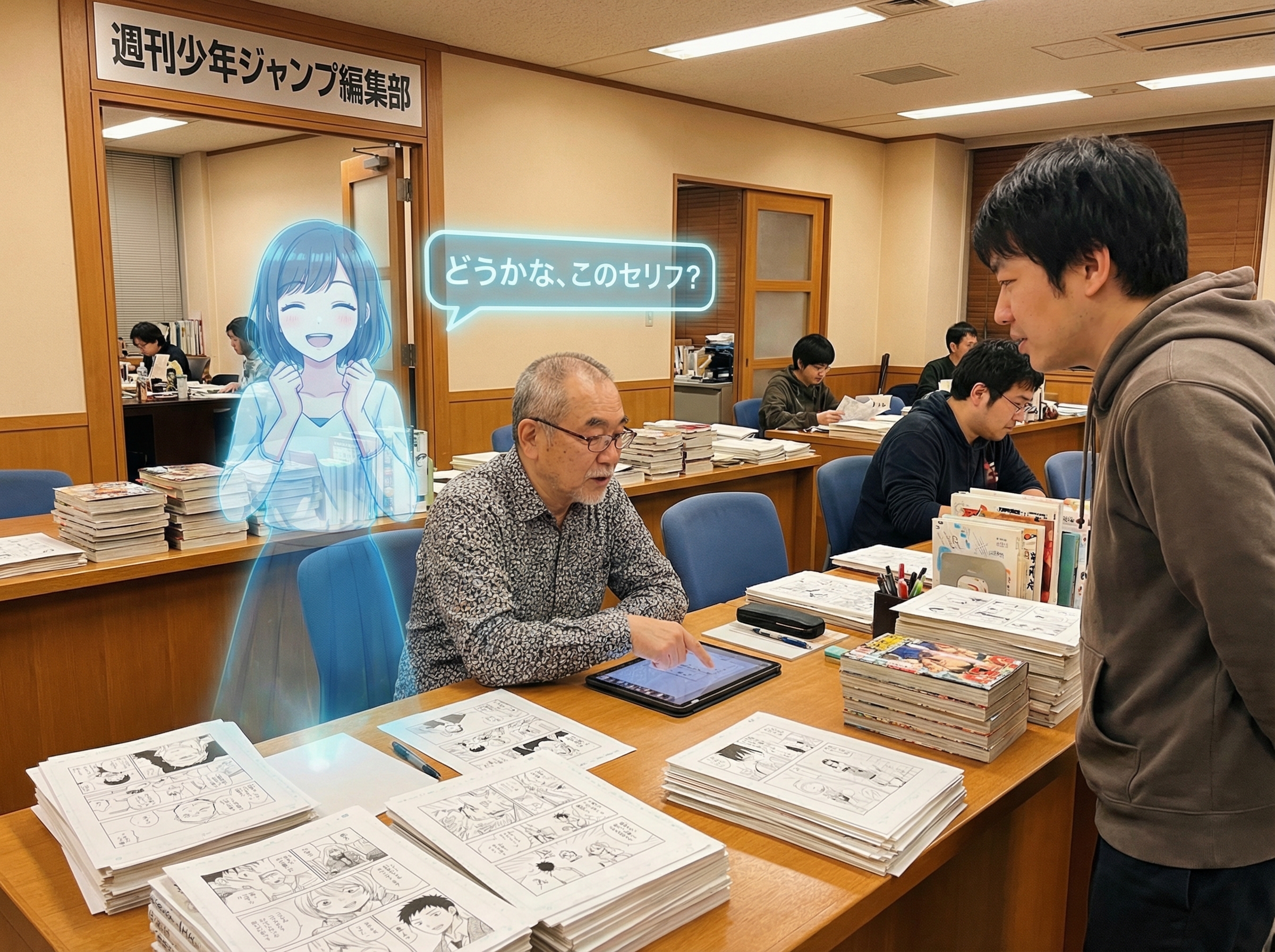
Manga editor at desk with holographic AI assistant suggesting text edits

While Western institutions debate whether to ban AI, Shueisha—publisher of Shonen Jump, home to One Piece, Naruto, and Dragon Ball—is actively promoting AI as a creative partner.

Their "Comic Co-Pilot" tool, built on a ChatGPT foundation with a Japanese tech startup, helps authors brainstorm titles, generate character names, and—most practically—shorten dialogue to fit into speech bubbles. If you've ever tried to localize manga, you know that last problem is real: Japanese is more compact than English, and what fits in a Japanese bubble often explodes out of an English one.

Even more significant: Shueisha explicitly permits AI-generated comics on their amateur platform, Jump Rookie, provided they're labeled. They're treating AI as a ramp that lets more people participate in manga creation, not a threat to be contained.

This philosophical divide—AI as collaborator vs. AI as threat—may be the defining split of the 2020s creative economy. And right now, the world's largest manga market is firmly in the "collaborator" camp.

06

First 100% AI Manga Hits #1 on Japan's Largest Platform

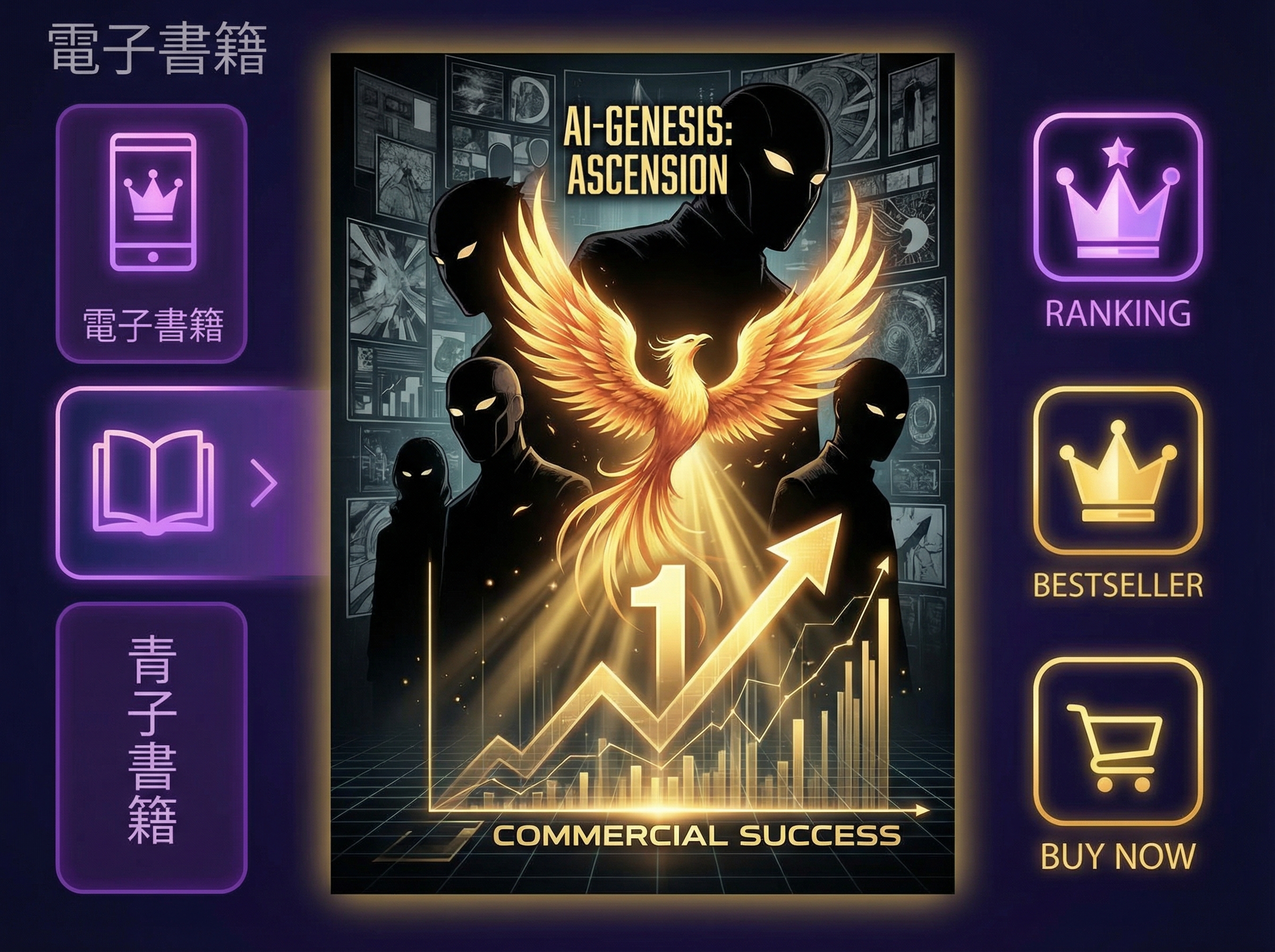
Stylized manga cover rising to number 1 position with violet and gold prestige colors

It finally happened. "My Dear Wife, Will You Be My Lover?" (妻の正体、怖いけど愛してる) reached #1 on the daily seinen rankings of Comic C'moA, Japan's largest digital comic store. The series is 100% AI-generated—character art, backgrounds, panel composition, all of it.

For several days in early January, this AI creation displaced traditional human-drawn titles in one of manga's most competitive categories. Let that sink in: the market didn't just tolerate AI manga—it elevated it to the top spot.

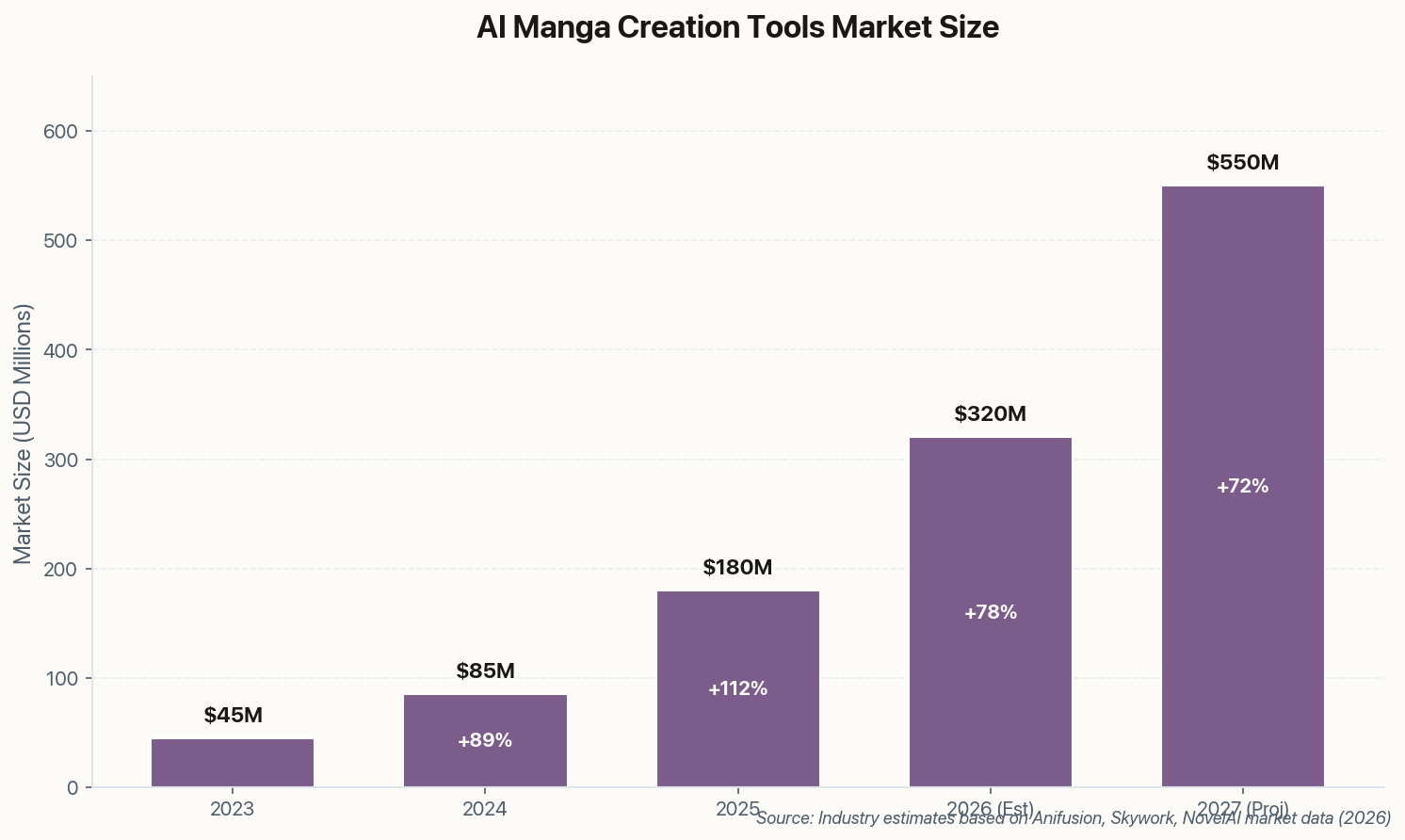
Bar chart showing AI manga tools market growth from $45M in 2023 to projected $550M in 2027
The commercial breakthrough validates a market that's grown 7x in four years

Now, context matters. User reviews were divided. The "AI" label on the series likely attracted curious readers who wanted to see what the fuss was about. And seinen romance—the genre of My Dear Wife—is well-suited to AI's current capabilities: limited action, consistent characters, dialogue-heavy.

But the commercial proof point is undeniable. The question has shifted from "Can AI manga compete?" to "In which categories can it compete?" The answers are coming faster than the industry expected.

The Fork in the Road

We're watching the creative industries split in real time. Japan sees AI as a productivity unlock for its massive content pipeline. Western institutions see it as an existential threat to human artistry. Both are responding rationally to their incentives. The question isn't which side is "right"—it's which market you want to build for, and whether you can navigate a world where both exist simultaneously.