Constitutional Crisis

The Guardrails Failed

A year into Trump's second term, the constitutional stress test has produced clear results: pardons for insurrectionists, defiance of courts, and a DOJ rebuilt for loyalty. Here's the damage report.

Listen
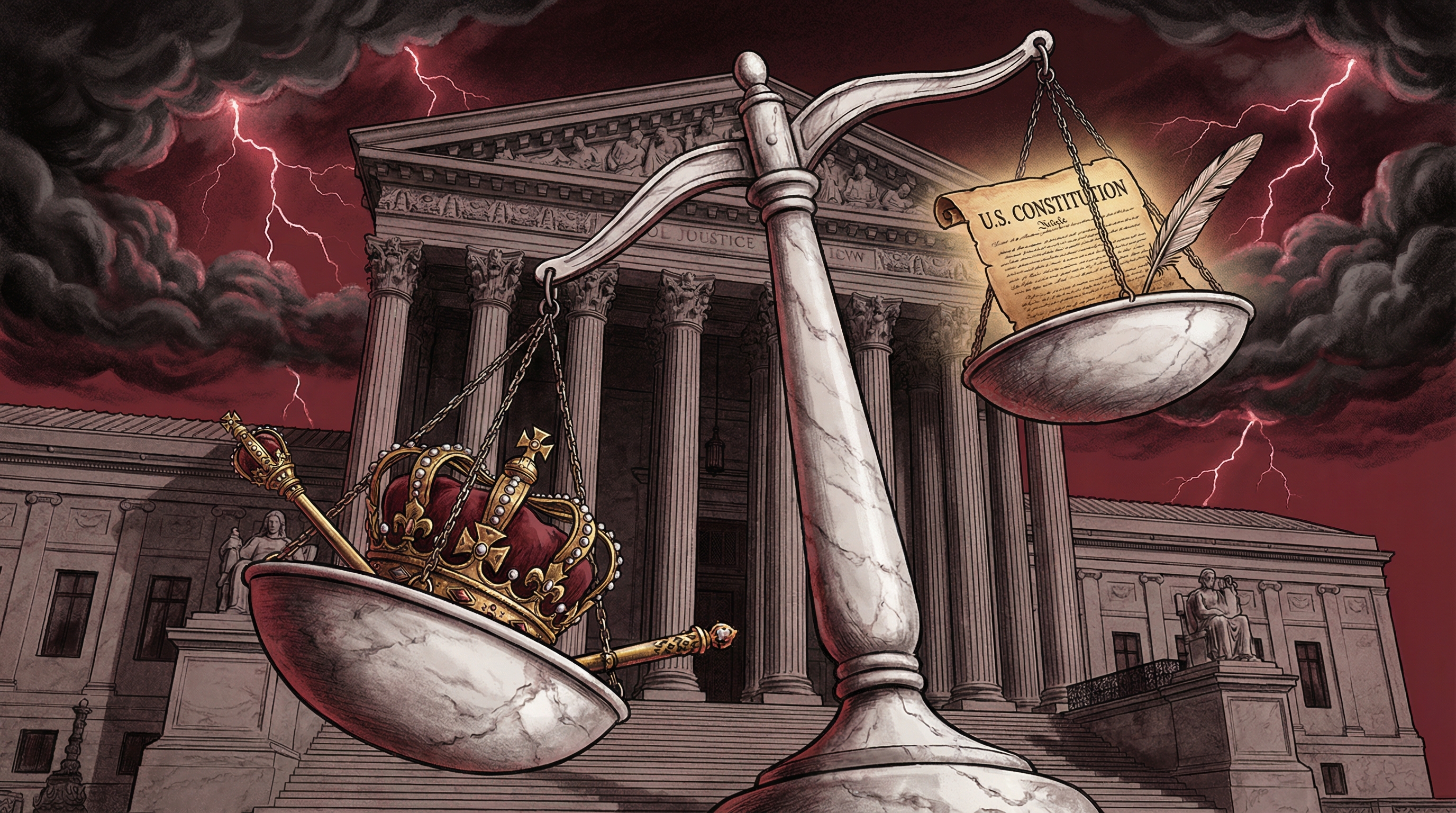
Scales of justice tilted off balance, representing constitutional stress

The Constitutional Toll

When constitutional scholars warned about "stress testing" American institutions, this is what they meant. Over the past year, the Trump administration has systematically challenged nearly every constitutional guardrail: the independence of the judiciary, Congress's power of the purse, the apolitical enforcement of law, and the fundamental rights enshrined in constitutional amendments.

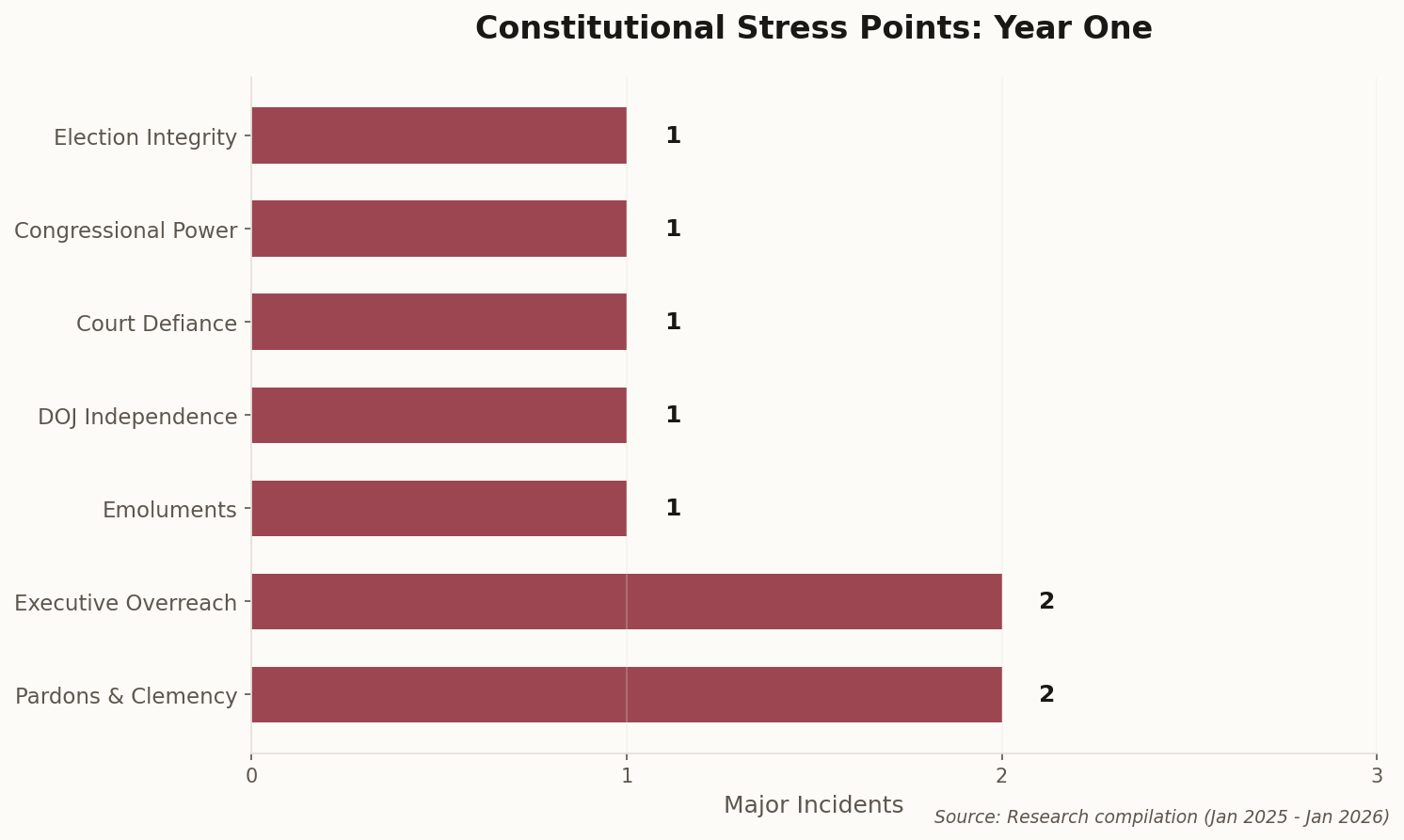
The pattern is unmistakable. Seven major categories of constitutional friction, each attacking a different pillar of the republic's architecture.

Bar chart showing constitutional stress points across seven categories
Constitutional stress points by category, January 2025 through January 2026
Timeline of constitutional flashpoints throughout 2025
Timeline showing escalation of constitutional confrontations through 2025
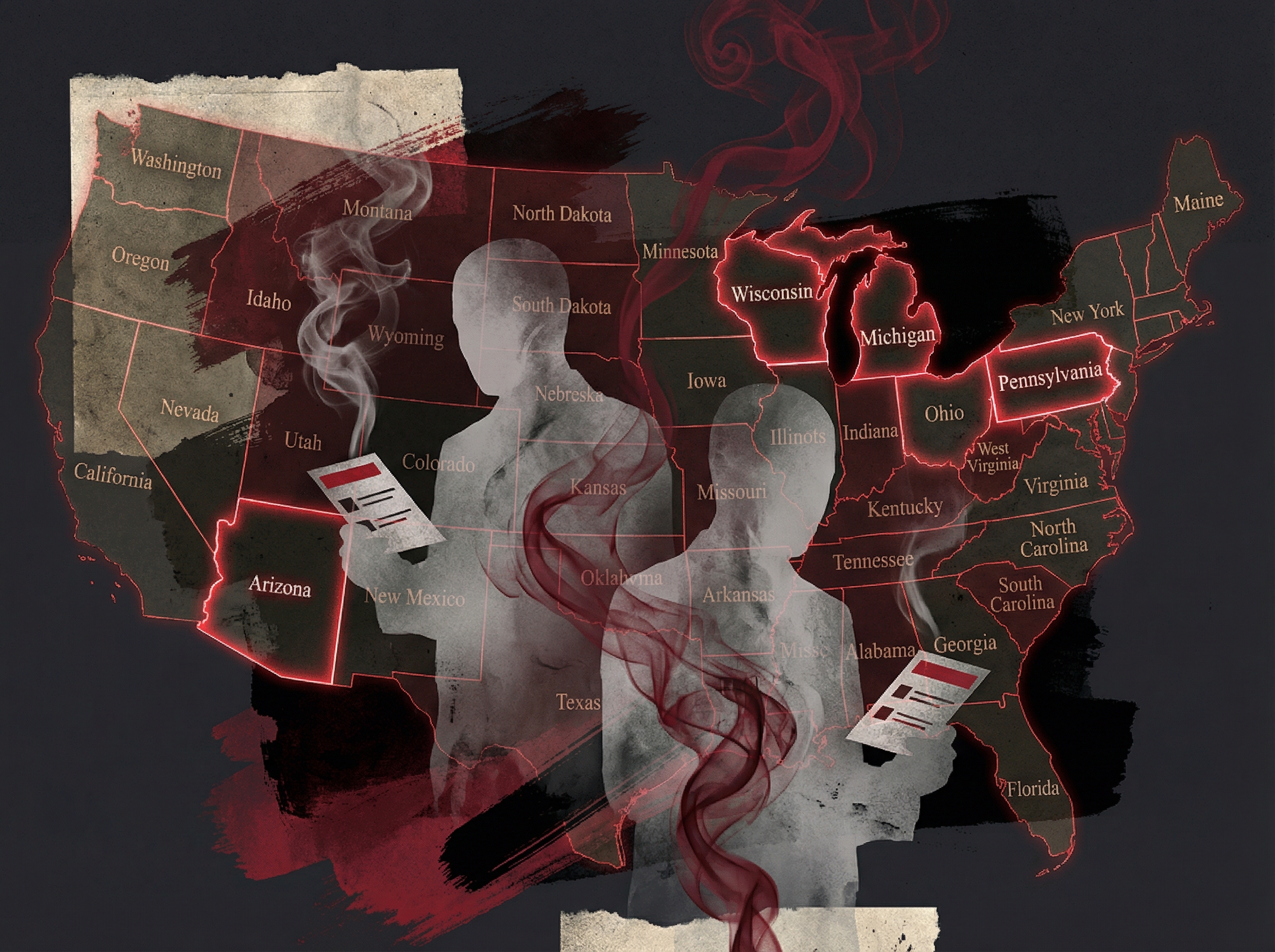
Phantom figures holding fraudulent ballots dissolving into smoke
01

The Fake Elector Forgiveness Tour

In perhaps the most brazen validation of election subversion to date, the administration issued pardons to nearly 80 individuals involved in the "fake electors" scheme from the 2020 election. The pardons covered "any conduct relating to their efforts to expose voting fraud"—a framing that transforms attempted election theft into whistleblowing.

These weren't confused citizens caught up in a protest. They were participants in a coordinated plan to submit fraudulent electoral certificates to the National Archives, hoping to give Vice President Pence cover to reject legitimate electoral votes. The Justice Department had been methodically prosecuting these cases across seven states.

The message couldn't be clearer: attempt to overturn an election for the right candidate, and you'll be rewarded. Fail, and you'll eventually be pardoned. The next fake elector scheme just got its instruction manual.
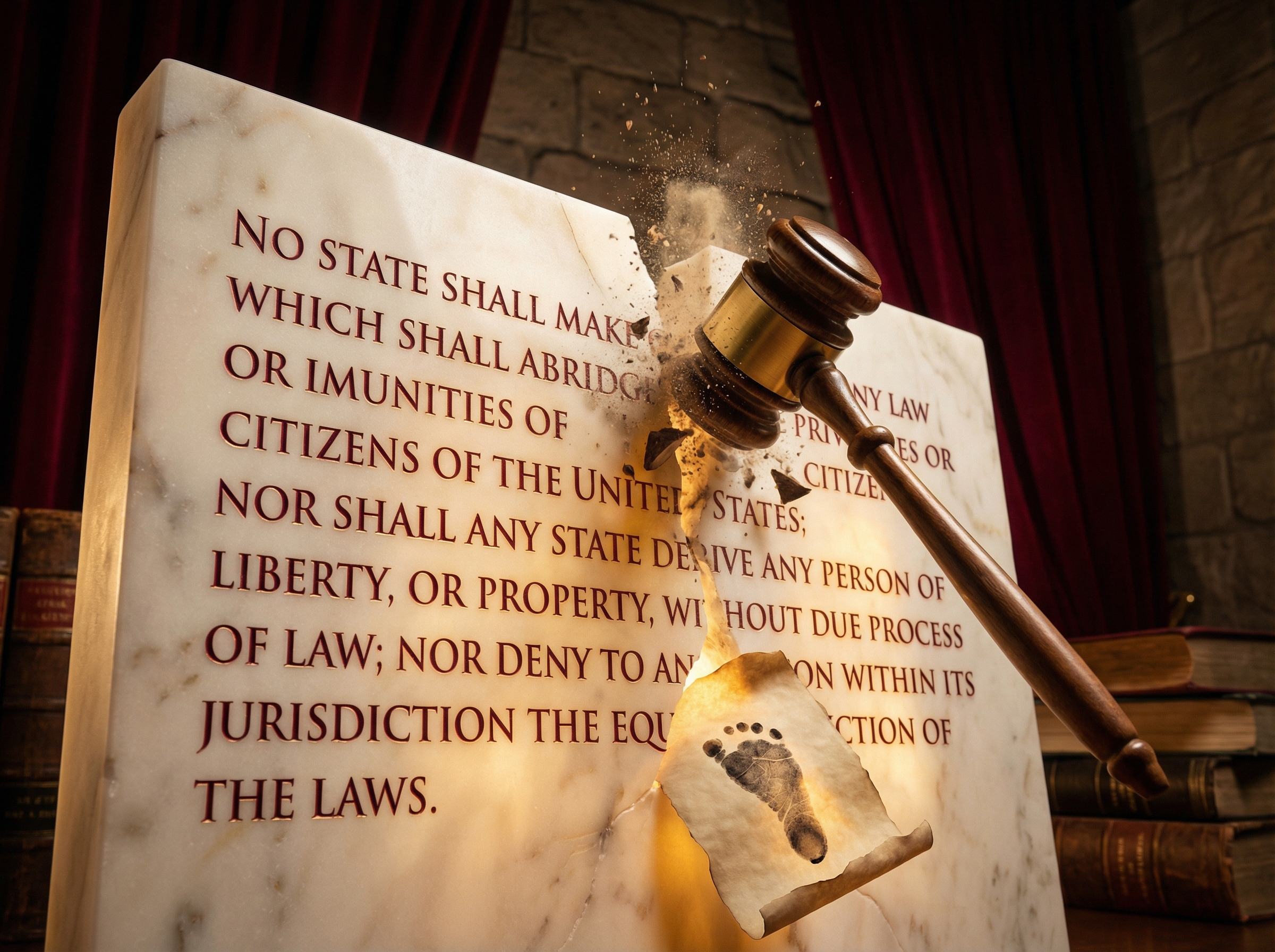
14th Amendment text struck by a shattering gavel
02

The 14th Amendment Assault

The Constitution is remarkably clear on few matters. Birthright citizenship is one of them. The 14th Amendment states: "All persons born or naturalized in the United States, and subject to the jurisdiction thereof, are citizens of the United States." The Supreme Court affirmed this in United States v. Wong Kim Ark (1898).

None of this deterred an executive order attempting to nullify birthright citizenship for children of undocumented immigrants. A federal court in New Hampshire blocked it as "blatantly unconstitutional"—a phrase judges rarely use, preferring softer language even in obvious cases.

The legal theory was creative: reinterpreting "subject to the jurisdiction thereof" to exclude anyone whose parents weren't lawfully present. Constitutional scholars across the ideological spectrum called it nonsense. But the point wasn't to win in court—it was to establish that even foundational constitutional provisions are negotiable if the executive simply ignores precedent long enough.

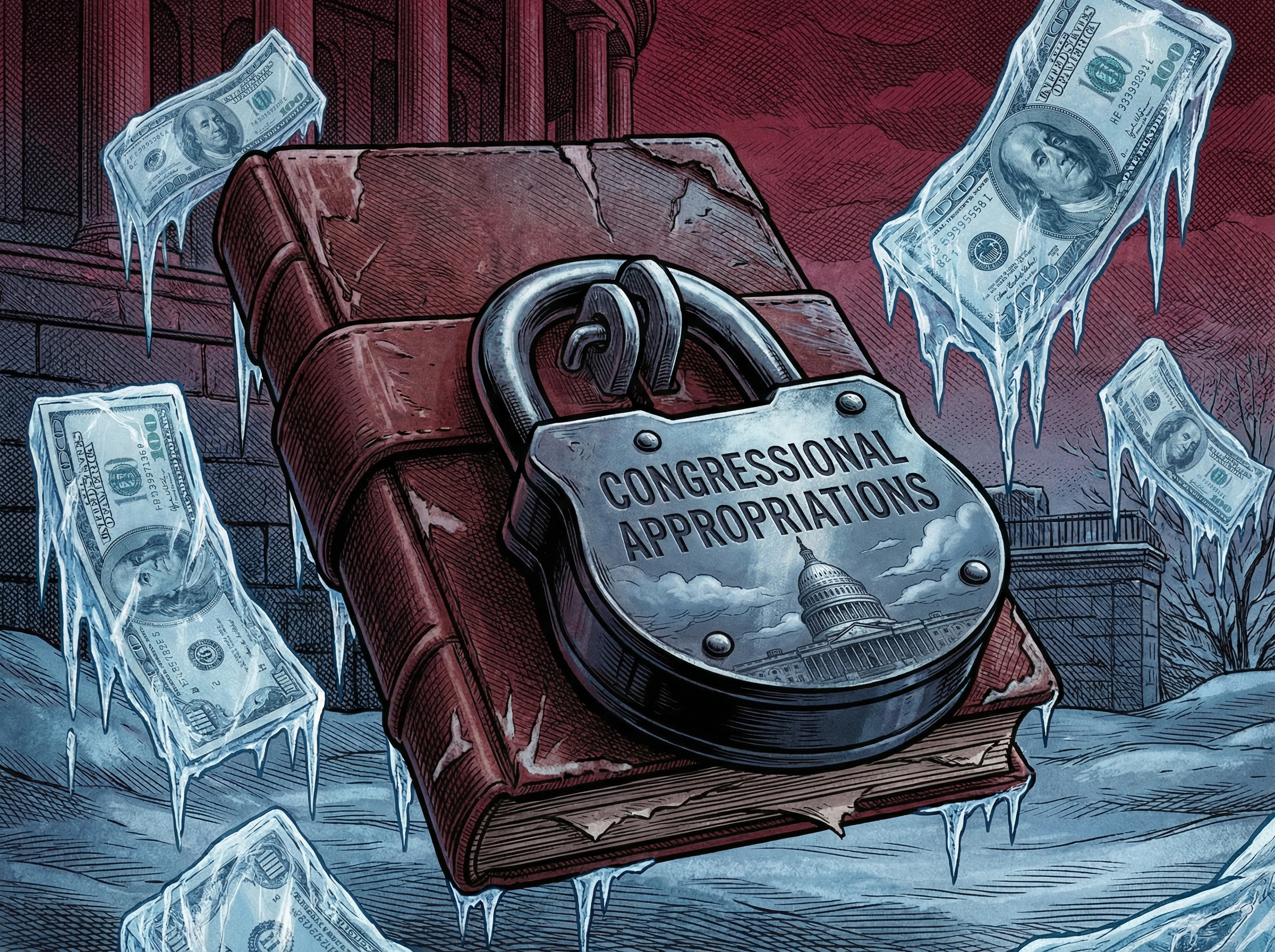
Giant padlock on congressional ledger with frozen dollar bills
03

Stealing Congress's Wallet

The "power of the purse" is Congress's most fundamental check on executive power. Article I, Section 9 is unambiguous: "No Money shall be drawn from the Treasury, but in Consequence of Appropriations made by Law." After Nixon abused impoundment authority, Congress passed the Impoundment Control Act of 1974 to explicitly prohibit presidents from refusing to spend appropriated funds.

The administration simply ignored this. Programs the President opposed found their funds frozen without statutory authority. The White House argued that the Impoundment Control Act was itself unconstitutional—a position no court has ever accepted and which would effectively give the President line-item veto power the Supreme Court explicitly rejected in Clinton v. City of New York (1998).

Courts found the administration "impermissibly encroaching on Congress's 'power of the purse' by imposing conditions on the receipt of federal funds." But enforcement proved elusive. When the executive branch controls the Treasury, a court order to release funds becomes a suggestion.

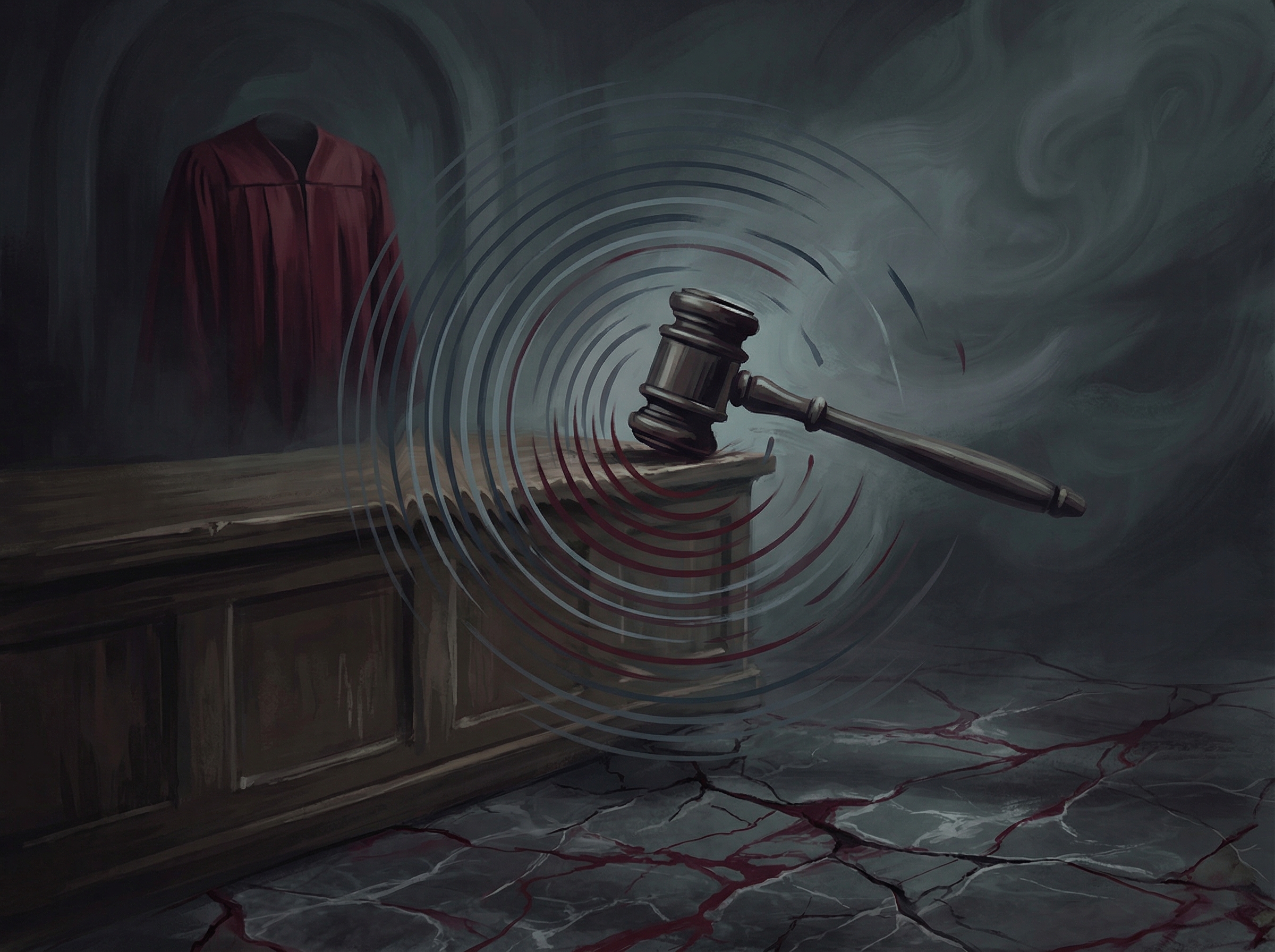
Judge's gavel striking an empty bench, waves dissipating into void
04

When Courts Become Suggestions

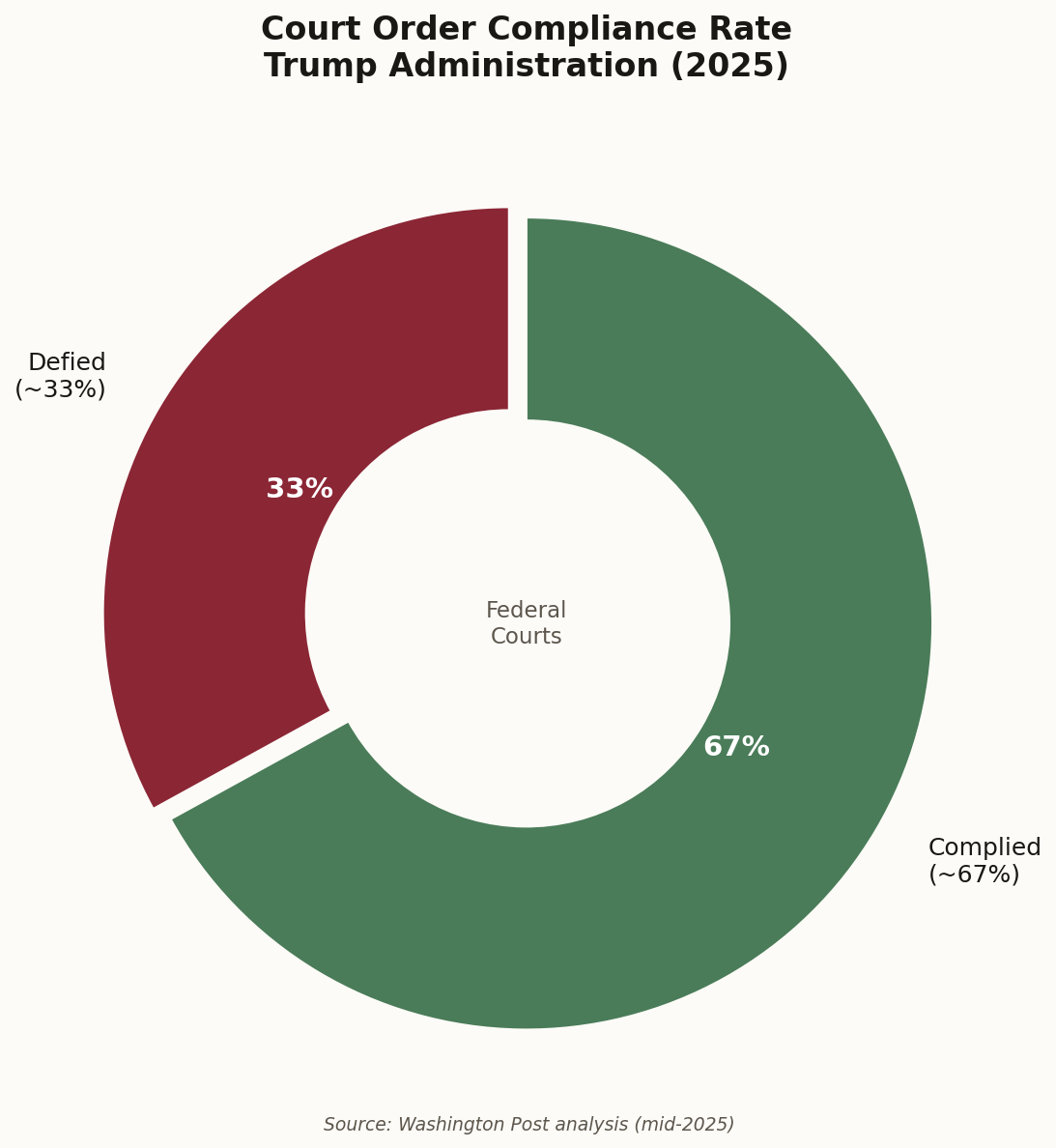
By mid-2025, a striking pattern had emerged: the administration was defying federal judges in approximately one-third of all cases against it. Legal experts called this rate "unprecedented" in American history.

Donut chart showing 33% court order defiance rate
Court order compliance rate, Trump Administration through mid-2025 (Washington Post analysis)

The defiance took various forms: ignoring injunctions against grant terminations, proceeding with spending freezes despite restraining orders, and simply delaying compliance until cases became moot. When challenged, administration lawyers argued that Article II grants the President sufficient authority to override judicial interference in executive functions.

This isn't a legal argument—it's a declaration that the executive branch operates outside judicial review. The constitutional implications are existential: if the President can simply ignore court orders, what constrains executive power at all? Marbury v. Madison's foundational principle—that courts say what the law is—means nothing without executive compliance.

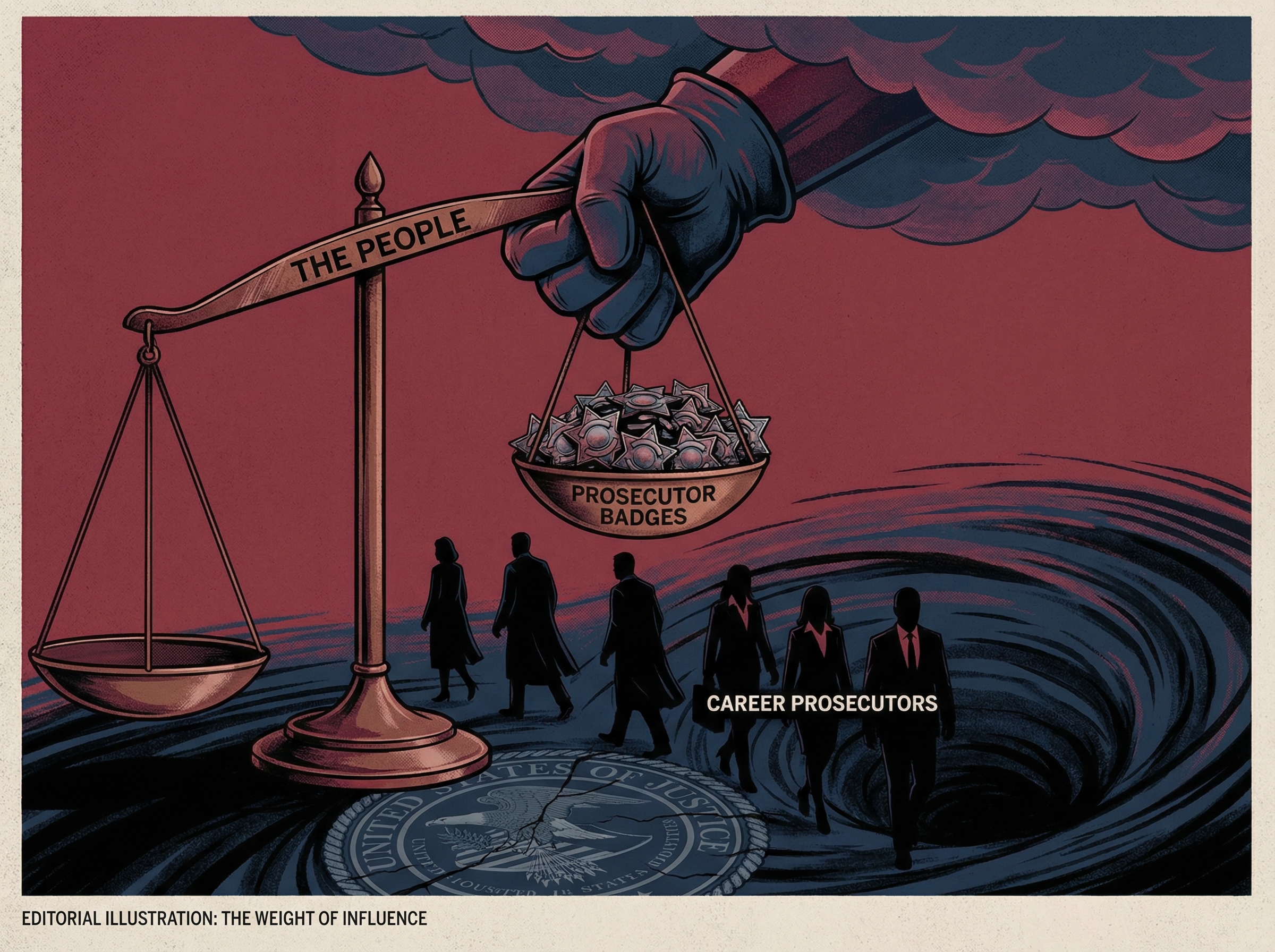
Scales of justice tipped by a giant hand, prosecutors walking away
05

The Loyalty Test at Main Justice

The Department of Justice was built on a simple premise: laws apply equally regardless of political affiliation. That premise died quietly in 2025.

Career prosecutors involved in the January 6 prosecutions found themselves targeted. Some were fired outright. Others resigned after being reassigned to dead-end positions. A new division was established specifically to combat "weaponization"—the administration's term for any investigation that had previously examined the President or his allies.

The purge violated both the spirit of prosecutorial independence and the letter of the Civil Service Reform Act, which prohibits personnel actions based on political affiliation. But enforcement mechanisms require someone to enforce them—and when the enforcers are the ones being purged, complaints go nowhere.

The result is a Justice Department that now operates on a simple principle: investigate the President's enemies, protect the President's friends. Every banana republic starts somewhere.

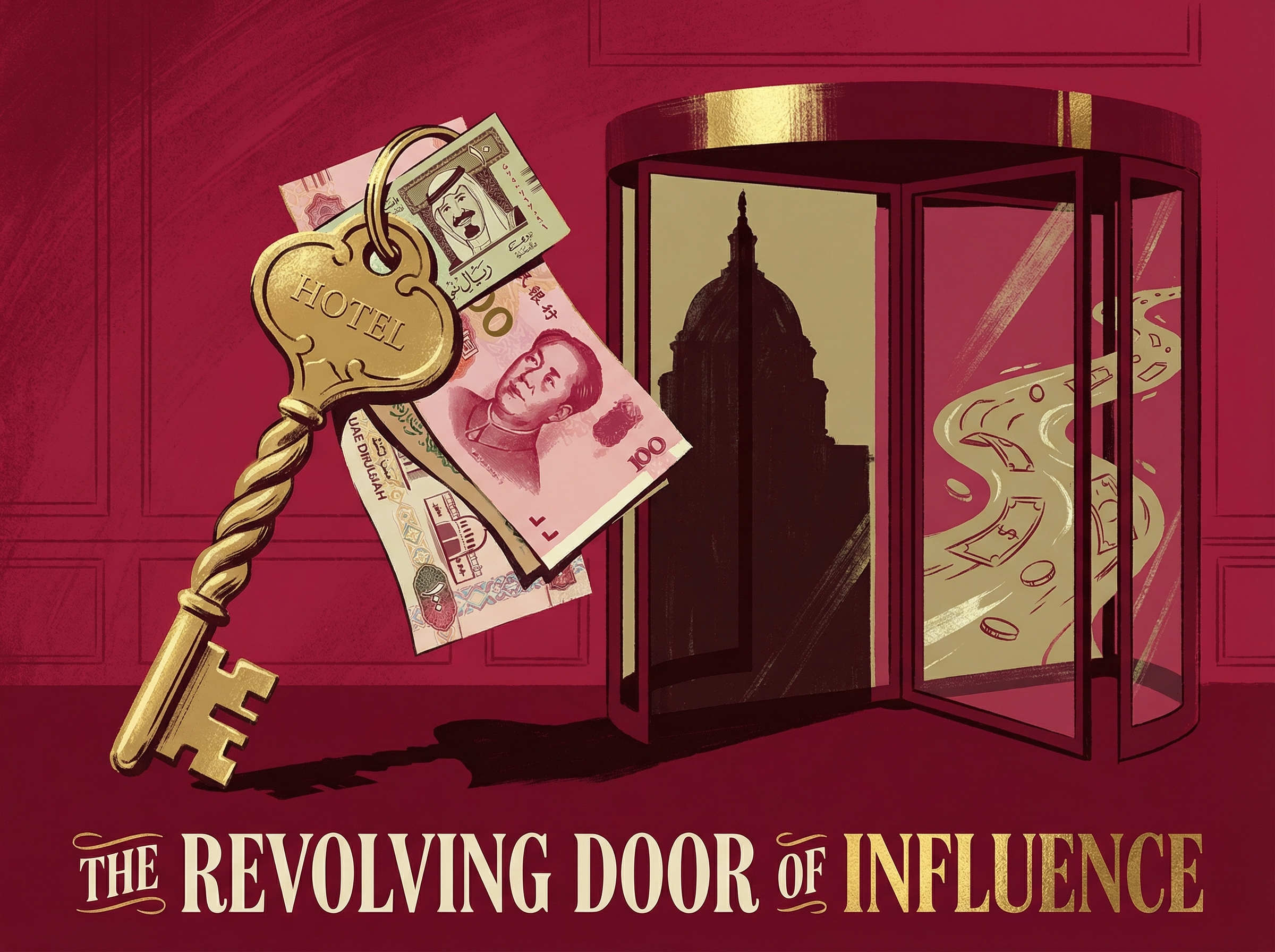
Golden hotel key intertwined with foreign currency, White House shadow
06

The Founders' Nightmare, Realized

The Foreign Emoluments Clause exists for one reason: the Founders feared that foreign governments would attempt to corrupt American officials through financial entanglement. Article I, Section 9, Clause 8 prohibits federal officials from accepting "any present, Emolument, Office, or Title, of any kind whatever, from any King, Prince, or foreign State" without Congressional consent.

By May 2025, the situation had become so flagrant that the Senate passed S.Res.242, formally condemning the President's private business agreements with foreign governments. The resolution documented that five foreign governments were paying Trump businesses nearly $2 million monthly throughout 2025. A Saudi-backed LIV Golf event at a Trump resort channeled hundreds of thousands directly to the President.

The resolution has no binding force—it's a formal statement of disapproval. But it established a Congressional record: elected representatives publicly acknowledging that the President was receiving substantial foreign payments while making foreign policy decisions affecting those same nations. Whether U.S. policy toward Saudi Arabia was influenced by Saudi payments to Trump properties is a question that can never be answered cleanly. That ambiguity is itself the harm the Founders sought to prevent.

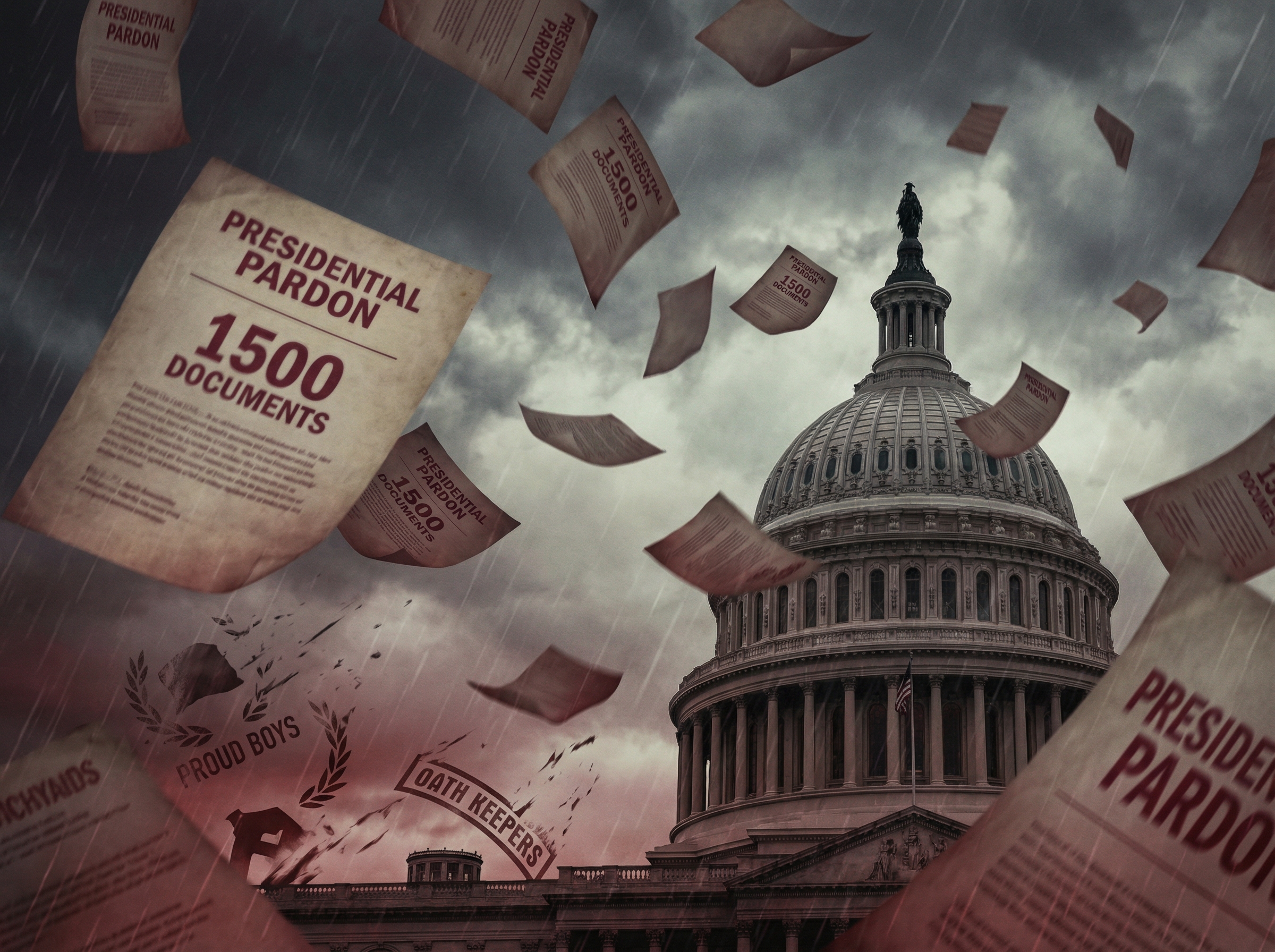
Presidential pardon documents raining on the Capitol
07

Day One: Pardoning the Insurrection

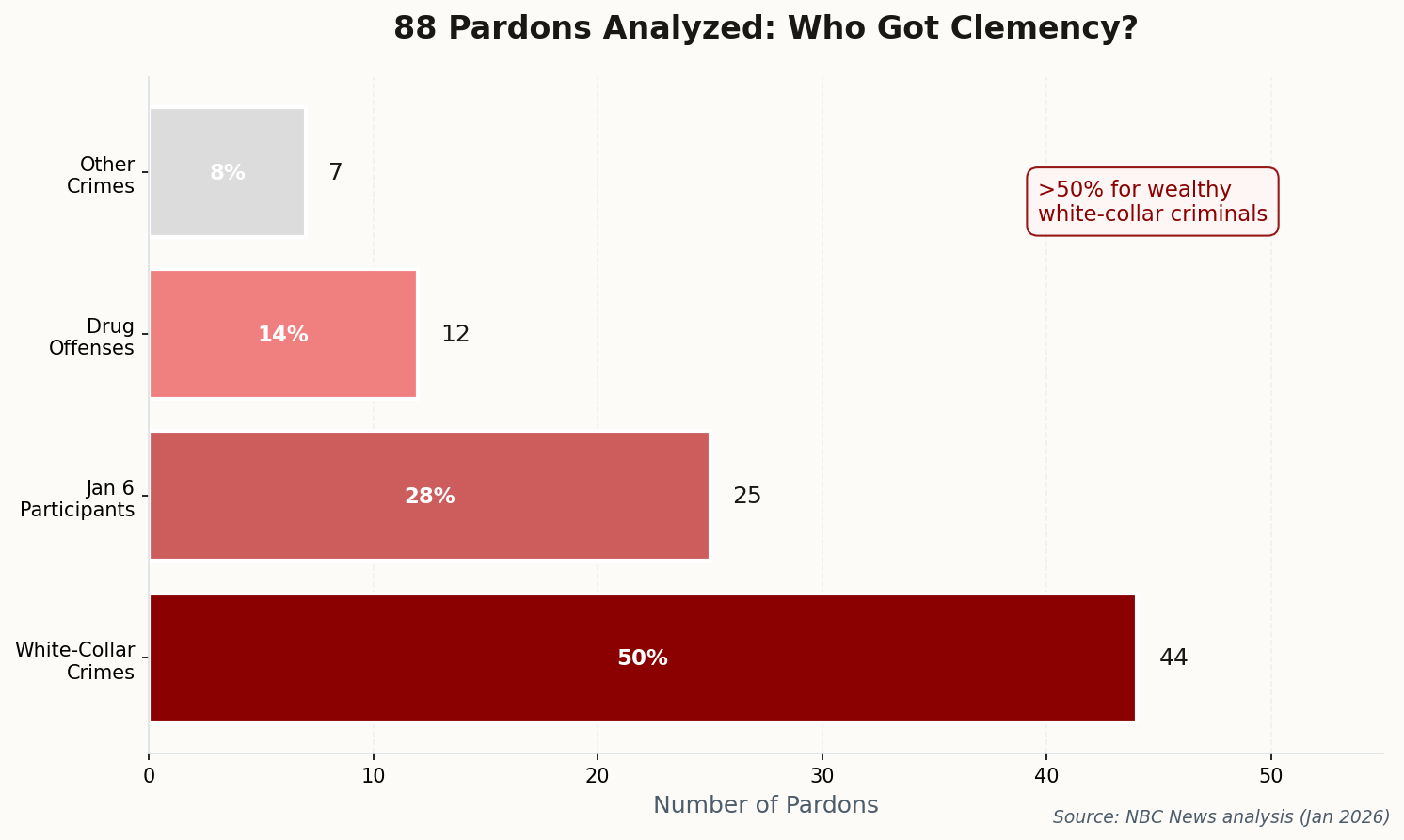
The first hours of the administration established its constitutional posture. On Inauguration Day, clemency was granted to over 1,500 individuals involved in the January 6 Capitol attack. This wasn't selective mercy for sympathetic cases—it was blanket absolution, including commuted sentences for Proud Boys leader Enrique Tarrio and Oath Keepers founder Stewart Rhodes, both convicted of seditious conspiracy.

Bar chart comparing J6 pardons and fake elector pardons
Presidential clemency for political allies, 2025. Note: $1.3 billion in restitution was also waived for J6 defendants.

The clemency actions also waived restitution and fines estimated at $1.3 billion—money that would have compensated victims and the government for the attack's damages. Capitol Police officers who suffered injuries, congressional staff traumatized by the assault, the cost of repairing the building itself: all written off.

The constitutional issue runs deeper than pardons, which are an enumerated presidential power. The problem is using that power to reward those who attacked the constitutional order itself. Article II, Section 3 requires the President to "take Care that the Laws be faithfully executed." Pardoning those who violently attempted to prevent the lawful transfer of power doesn't execute the law—it nullifies it.

The message to future insurrectionists: Attack the Capitol for the right candidate, and you'll be pardoned. The next January 6 just got its insurance policy.

What Comes Next

Constitutional crises don't announce themselves with fanfare. They accumulate—one ignored subpoena, one defied court order, one self-serving pardon at a time. Year one has established the pattern. Whether year two breaks the remaining guardrails or triggers meaningful resistance depends on institutions that have so far proven inadequate to the moment. The Constitution is parchment. Its power exists only if people enforce it.