
Congress Moves to Federalize Voting Restrictions
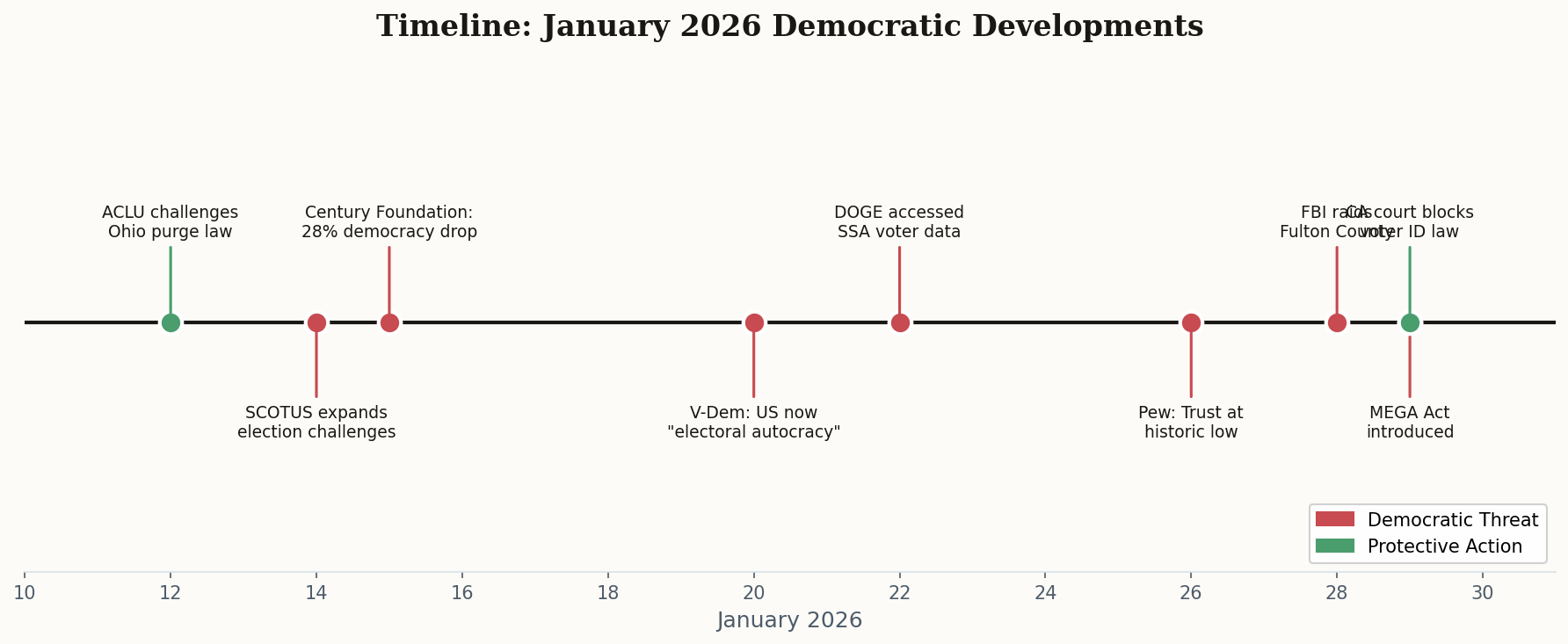
For 230 years, America's decentralized election system—where states set their own rules—served as a bulwark against federal overreach. That firewall is now under direct assault. Chairman Bryan Steil introduced the "Make Elections Great Again" (MEGA) Act yesterday, a sweeping bill that would impose federal voting standards across all 50 states.
The specifics are breathtaking in scope: mandatory photo ID for all voters, proof of citizenship for registration, a ban on "universal vote-by-mail," elimination of ranked-choice voting in federal races, and—critically—a requirement that all mail ballots be received by election day, not merely postmarked. That last provision alone would have invalidated tens of thousands of legally cast votes in 2020 and 2024.
The constitutional question: The Elections Clause gives states primary authority over election administration. A federal law this sweeping faces serious legal challenges—but those challenges require courts willing to push back.
The bill will likely stall in the Senate. But that's not the point. The MEGA Act establishes the legislative ceiling for voting restrictions—a marker for what becomes politically acceptable. When "comprehensive election reform" means stripping states of their own franchise decisions, the Overton window has shifted beneath our feet.