Publishing & Culture

The Marriage of Spaceships and Swords

Why bookstores force dragons to share shelf space with robots—and what a century of reader behavior tells us about the future of genre.

Listen
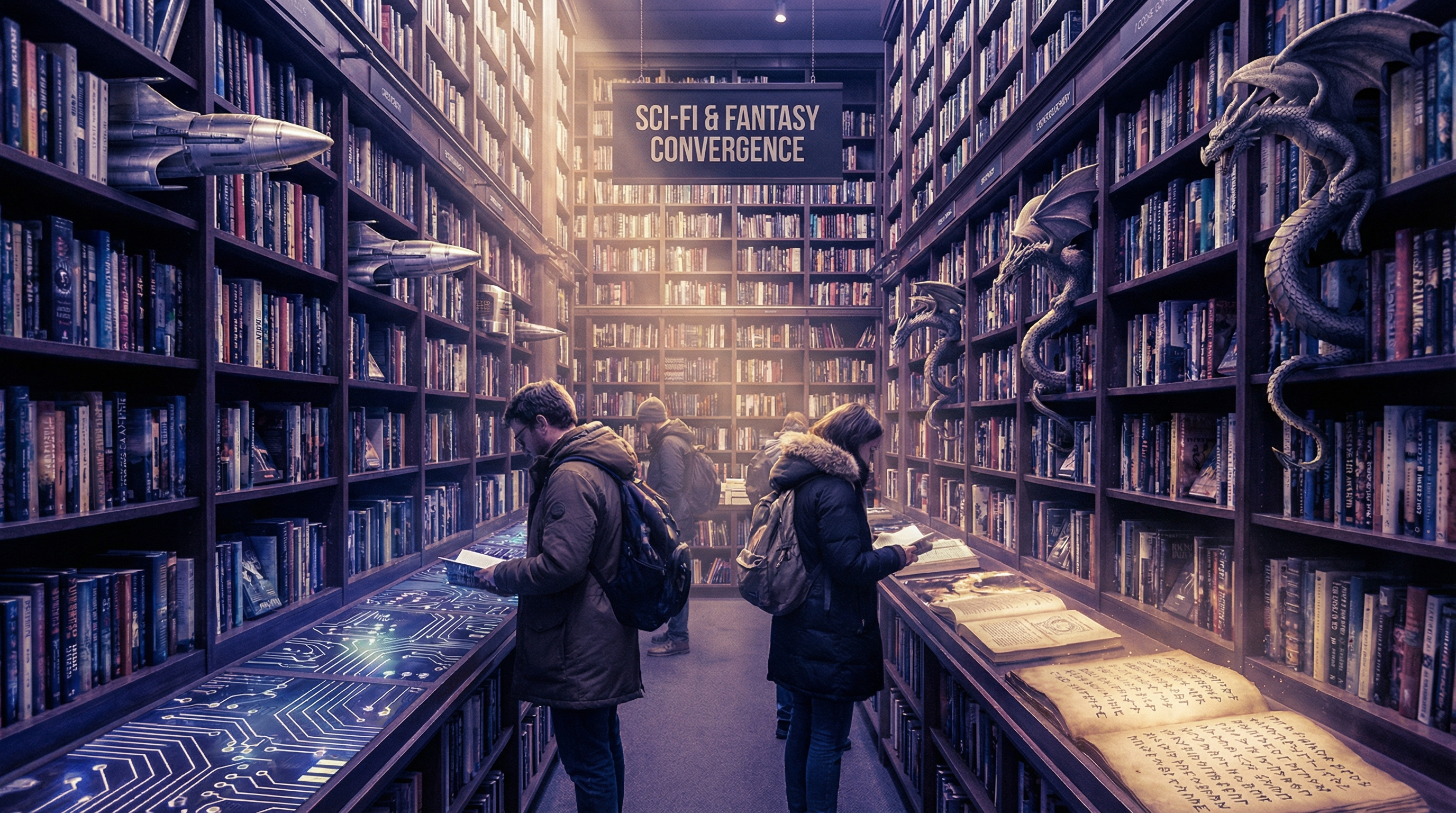
A bookstore aisle where science fiction spaceships morph into fantasy dragons
01

The $610 Million Question
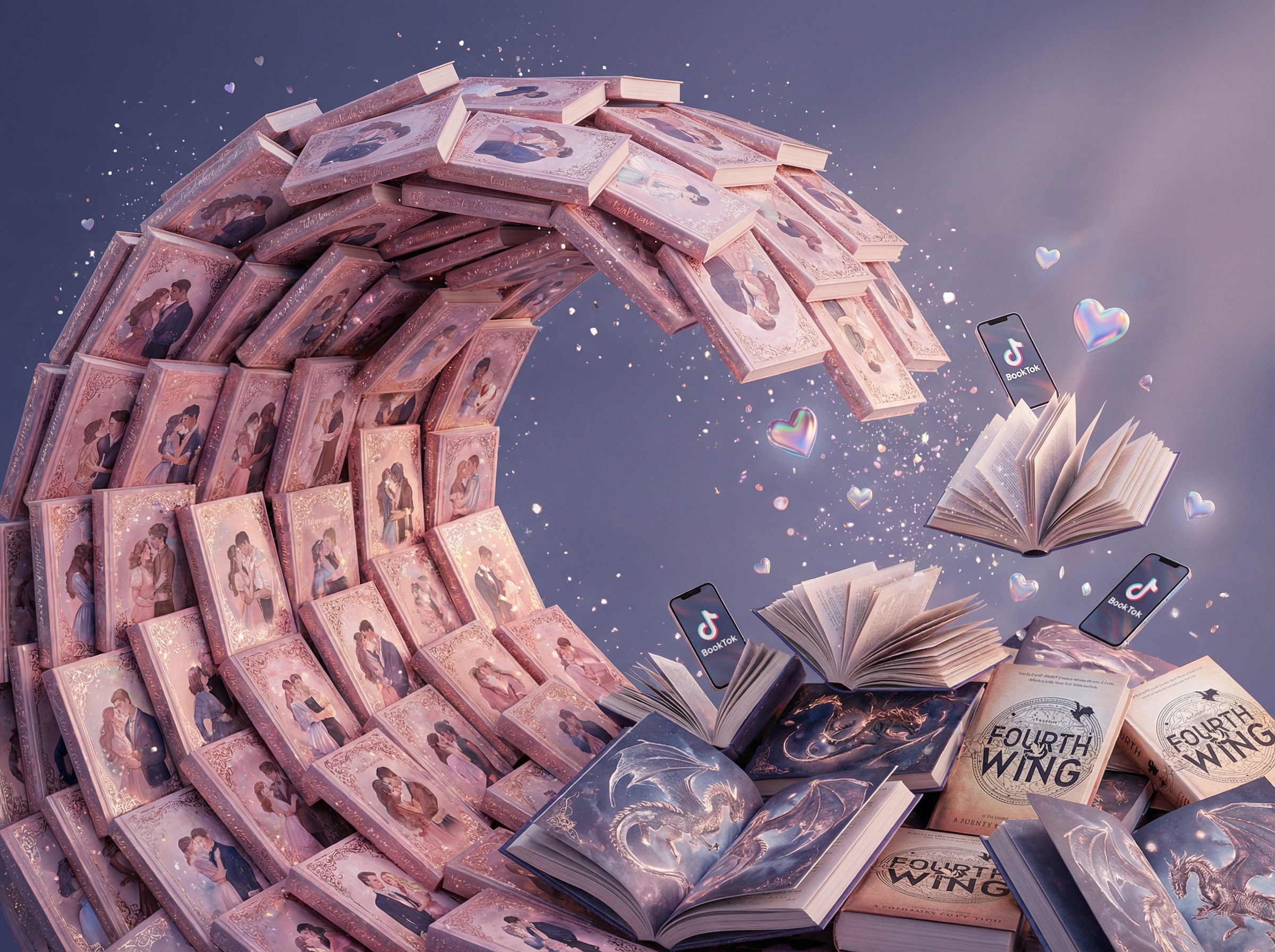
A wave of romance novel covers crashing into fantasy dragon imagery

Walk into any Barnes & Noble today and you'll find something curious: the biggest section isn't "Science Fiction" or "Fantasy" separately. It's the merged blob labeled "Sci-Fi/Fantasy"—and increasingly, a third creature lurks within: Romantasy.

In 2024, the "Romantasy" subgenre alone generated approximately $610 million in sales, driving a jaw-dropping 41.3% growth in the overall SFF category compared to the previous year. Rebecca Yarros's Fourth Wing didn't just sell books—it created a gravitational field that bent the entire shelving strategy of physical bookstores.
Chart showing SFF market growth from 2020-2025 with Romantasy segment highlighted
The fantasy book market hit $17.17 billion in 2024, with Romantasy emerging as the fastest-growing segment.

But here's what's fascinating: the merger of SF and Fantasy isn't new. BookTok didn't invent it. BookTok just revealed what booksellers have known since the 1960s—these readers were never separate populations to begin with.

02

The Retail Tetris Problem

Birds-eye view of bookshelves arranged like Tetris blocks

Here's a truth that literary purists hate: the SF/Fantasy merger is fundamentally a real estate decision.

In a physical bookstore, "face-out" display space is premium shelf real estate. Separating the genres would often result in two anemic, half-empty sections rather than one robust, traffic-heavy aisle. A combined section appears larger and more successful, which encourages browsing. Psychology beats philosophy.

Major imprints like Tor, DAW, and Baen have catered to both markets from inception. DAW Books, founded in 1971 by Donald A. Wollheim, was the first publisher devoted exclusively to science fiction and fantasy—note the conjunction, not the division. They used the same cover artists (like Michael Whelan) for both space opera and high fantasy. The visual language was unified before the shelving ever was.

The bookstore calculation: Two half-empty genre sections = reader perception of "niche, dying genres." One healthy combined section = "this is where the action is."

This isn't cynical—it's symbiotic. The business decision created a browsing environment where readers discovered authors they never would have found otherwise. Ursula K. Le Guin's Earthsea sitting next to Isaac Asimov's Foundation wasn't a shelving mistake. It was a discovery engine.

03

The 70% Overlap

A reader silhouette holding a book that is half science fiction, half fantasy

The "superfan" who buys only Hard SF or only High Fantasy is a statistical minority. The data tells a different story entirely.

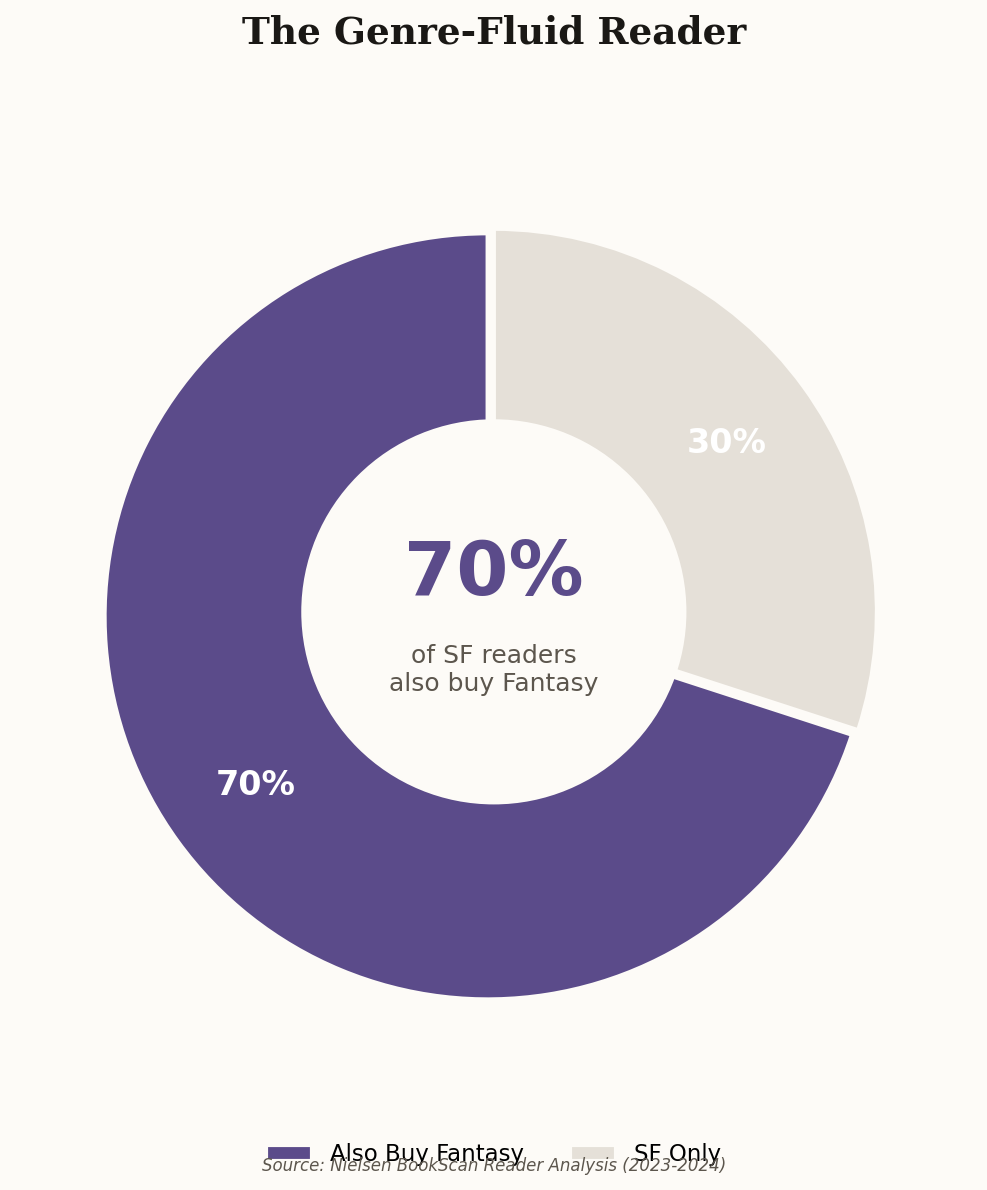
Industry estimates suggest that 60–80% of readers who buy science fiction also buy fantasy. Nielsen BookScan reported in 2023 that crossover titles—books blending genres—saw a 25% increase in sales, vastly outperforming "pure" genre titles. The reader doesn't care about your taxonomy; they care about what makes them feel something.

Donut chart showing 70% of SF readers also buy Fantasy
The genre-fluid reader: most SF buyers are also Fantasy buyers, making separation economically irrational.

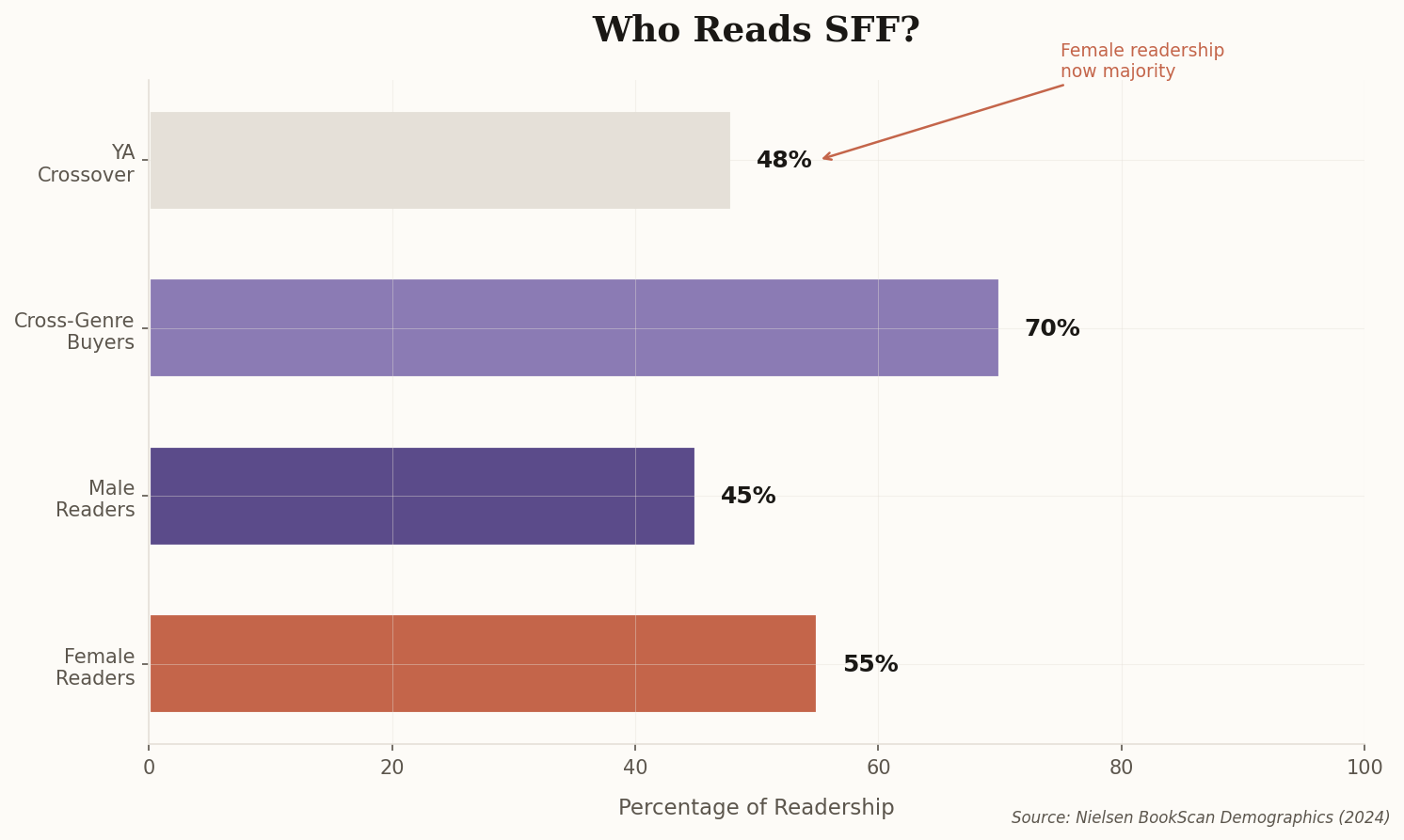
Female readership in the combined genre has exploded, now driving over 55% of sales in fantasy—largely due to the crossover appeal of YA and Romantasy titles. This demographic shift has further blurred the lines: a reader who came for Sarah J. Maas might stay for Brandon Sanderson.

Horizontal bar chart showing SFF reader demographics
Female readership is now the majority in combined SFF, a dramatic shift from the genre's male-dominated history.

The "omnivore reader" isn't an exception—they're the baseline.

04

Born Together in the Pulps

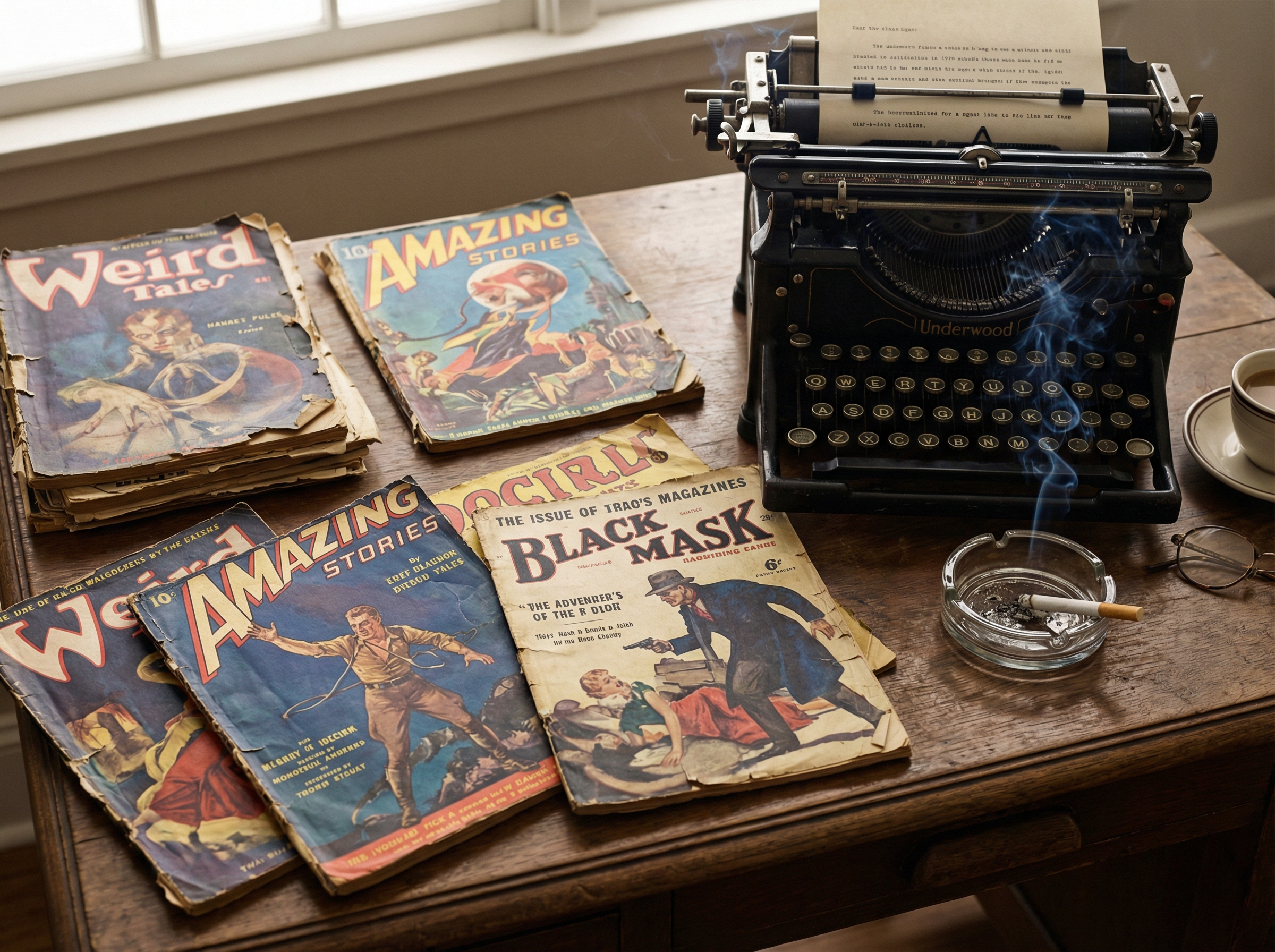
Vintage 1920s pulp magazines scattered on a wooden desk

The genres were never separate to begin with. Before the paperback boom, both SF and Fantasy appeared in the same cheap pulp magazines.

1923: Weird Tales launches, publishing fantasy, horror, and early sci-fi side-by-side. H.P. Lovecraft and Robert E. Howard (creator of Conan) shared pages with proto-SF tales of alien worlds.

1926: Hugo Gernsback launches Amazing Stories. While he pushed for "scientifiction" (later science fiction) as a distinct educational tool, the readership for "fantastic stories" was already the same population.

Timeline showing key moments in SFF genre convergence from 1923 to 2024
A century of convergence: the genres have been intertwined since their commercial inception.

1965: The critical turning point. J.R.R. Tolkien's The Lord of the Rings explodes in American college campuses. Bookstores, unsure where to shelve this thing with no spaceships, placed it next to Asimov and Heinlein—because the readership (college students, counter-culture youth) was identical. The merger wasn't a marketing decision; it was empirical observation of who was actually buying what.

05

The Authors Disagree (Sort Of)

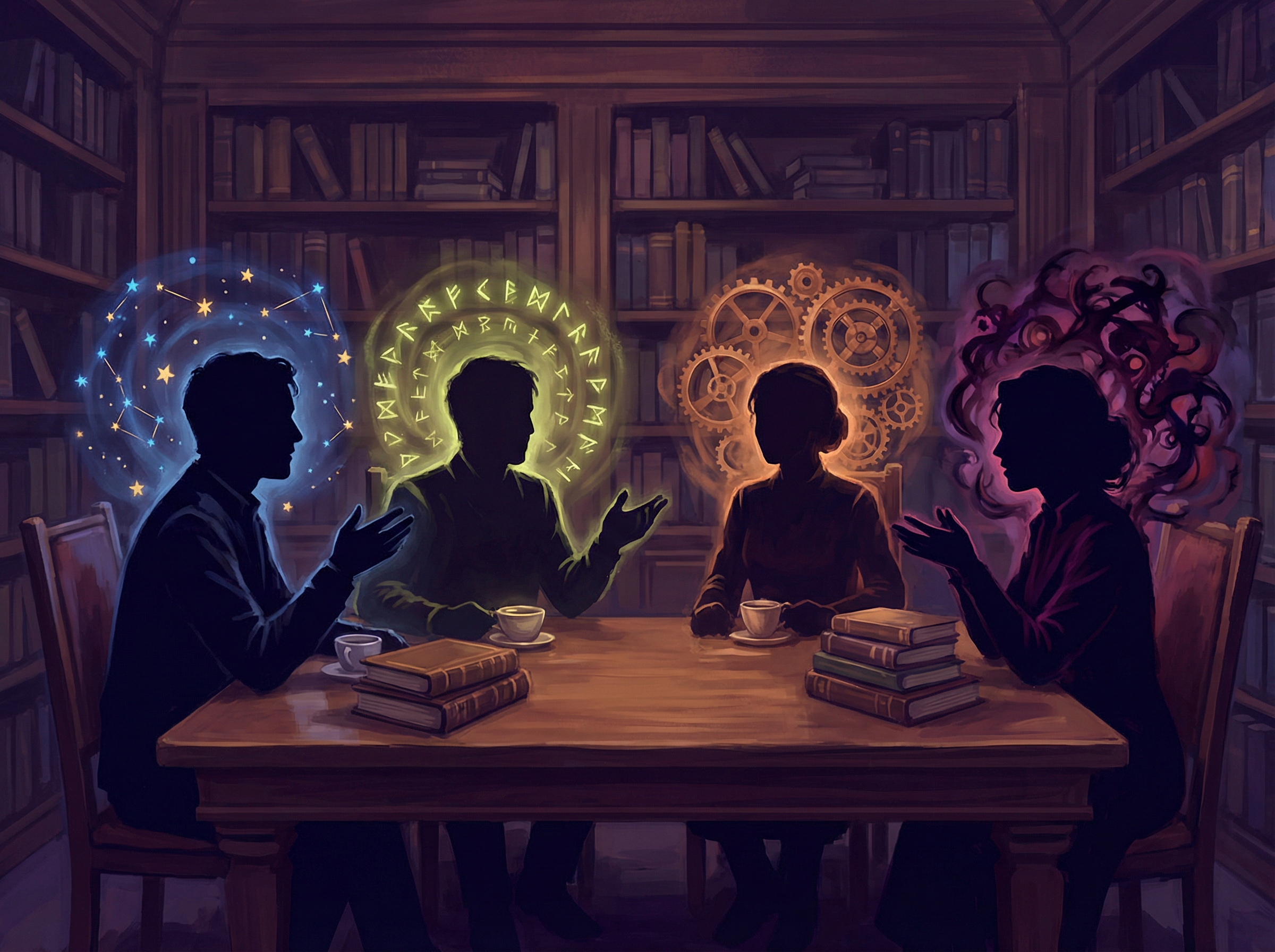
Four author silhouettes in conversation, each with distinct auras

Ask the writers themselves, and you'll get a spectrum of opinions that somehow all arrive at the same conclusion.

Ursula K. Le Guin famously despised the "ghettoization" of the genres by literary critics—but she saw SF and Fantasy as two sides of the same coin: "mythology for the modern world." Both are useless without being grounded in people.

Samuel R. Delany offers a more precise distinction: the genres differ by "reading protocols." In a realistic novel, "her world exploded" is a metaphor for emotional trauma. In science fiction, it means a planet actually blew up. He argues the way we read sentences defines the genre—not just the setting or props.

China Miéville, champion of "Weird Fiction," actively rejects the split. He argues both genres perform "cognitive estrangement"—forcing the reader to look at the real world differently by presenting an "alterity" (otherness). Strict separation, he believes, limits speculative fiction's political power.

The Serling Distinction: "Science fiction is the improbable made possible. Fantasy is the impossible made probable." — Often misattributed to Le Guin, actually said by Rod Serling.

Brandon Sanderson represents the future: his "Cosmere" universe features swords and magic (Fantasy) alongside aliens and power armor (Sci-Fi). His "Hard Magic" systems obey strict physical laws, treating magic as science. Librarians reportedly struggle with where to shelve Stormlight Archive. The answer, increasingly, is "everywhere."

06

The Blurring That Was Always There

A brain split between circuit boards and magical runes

Here's what the genre purists miss: the distinction between SF and Fantasy has always been fuzzy, and that fuzziness is a feature, not a bug.

The traditional "Rivet Rule" says SF deals with what could happen (extrapolation of technology), while Fantasy deals with what cannot happen (magic, supernatural). But Arthur C. Clarke's Third Law blows this up: "Any sufficiently advanced technology is indistinguishable from magic."

Is Star Wars science fiction? It has spaceships and lasers. But it also has the Force, prophecies, and a chosen-one narrative arc lifted straight from Joseph Campbell's monomyth. By any reasonable definition, it's Fantasy with SF set dressing. Nobody cares. It's on both shelves anyway.

Robert Heinlein coined the term "speculative fiction" in 1941 specifically because he wanted an umbrella that sounded more dignified than "science fiction" and could include stories about sociology and psychology—not just rockets. Today, it serves as the neutral ground where the genres meet.

The real insight isn't that the genres should be separate or should be combined. It's that readers have always voted with their wallets for stories that make them feel wonder, regardless of whether that wonder comes from a faster-than-light drive or a magic ring. The bookstore shelving just finally caught up with the readers.

The Only Taxonomy That Matters

In the end, the question "why are SF and Fantasy shelved together?" reveals something deeper about how we organize knowledge itself. We impose categories on stories, but readers impose their own meaning. The $17 billion SFF market exists because readers refuse to be taxonomized—and the smartest booksellers learned to follow them rather than lead.