Software Engineering

The K-Shaped Future Is Here

29% of code is now AI-written. But productivity gains flow only to those who know how to wield the tools—and audit their output. The rest are already falling behind.

Listen
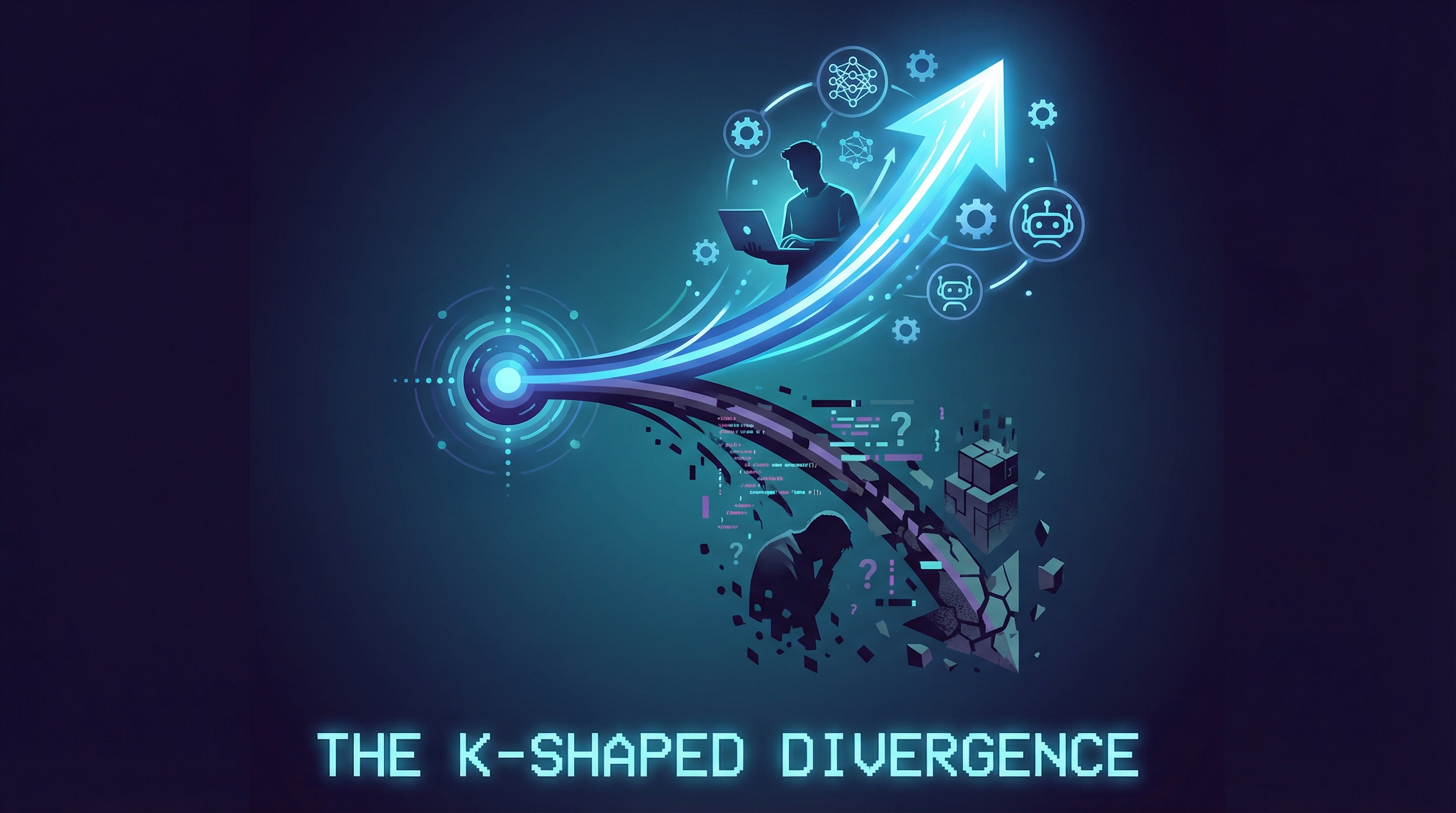
Abstract visualization of the K-shaped divergence in software engineering, showing two trajectories—one ascending with AI augmentation, one descending with displacement
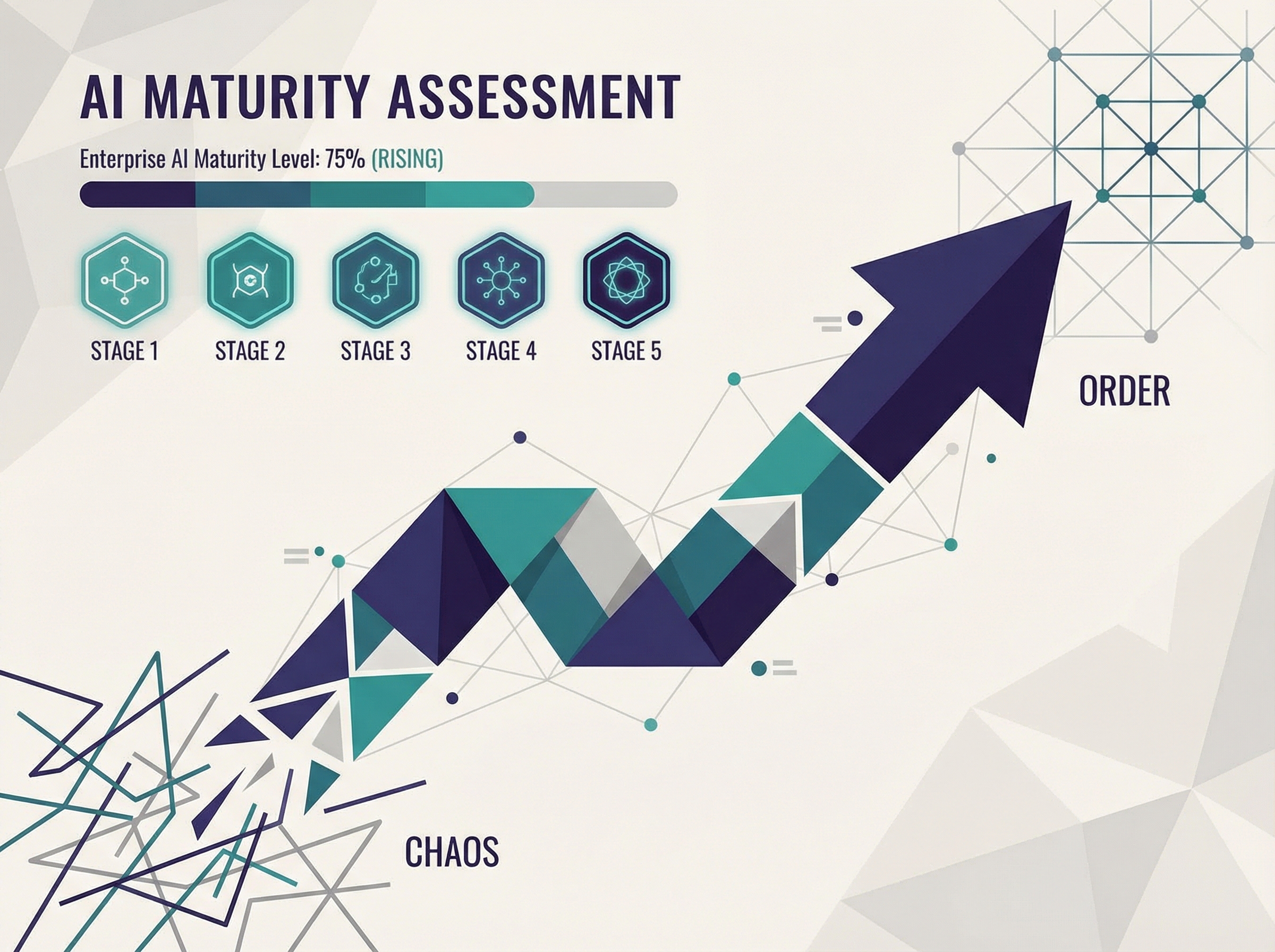
Abstract corporate dashboard showing AI maturity levels
01

Your New Performance Review Metric: Agents Managed

Coder just dropped a standardized framework that makes the quiet part loud: your value as an engineer is no longer measured in lines of code shipped. It's measured in agents orchestrated.

The new "AI Maturity Assessment" tool places engineering teams on a four-stage curve—from chaotic "ad-hoc" AI usage to the holy grail of "Standardized Agentic Workflows" where human coding is minimal. Stage 4 teams don't write code; they architect swarms of agents that do.
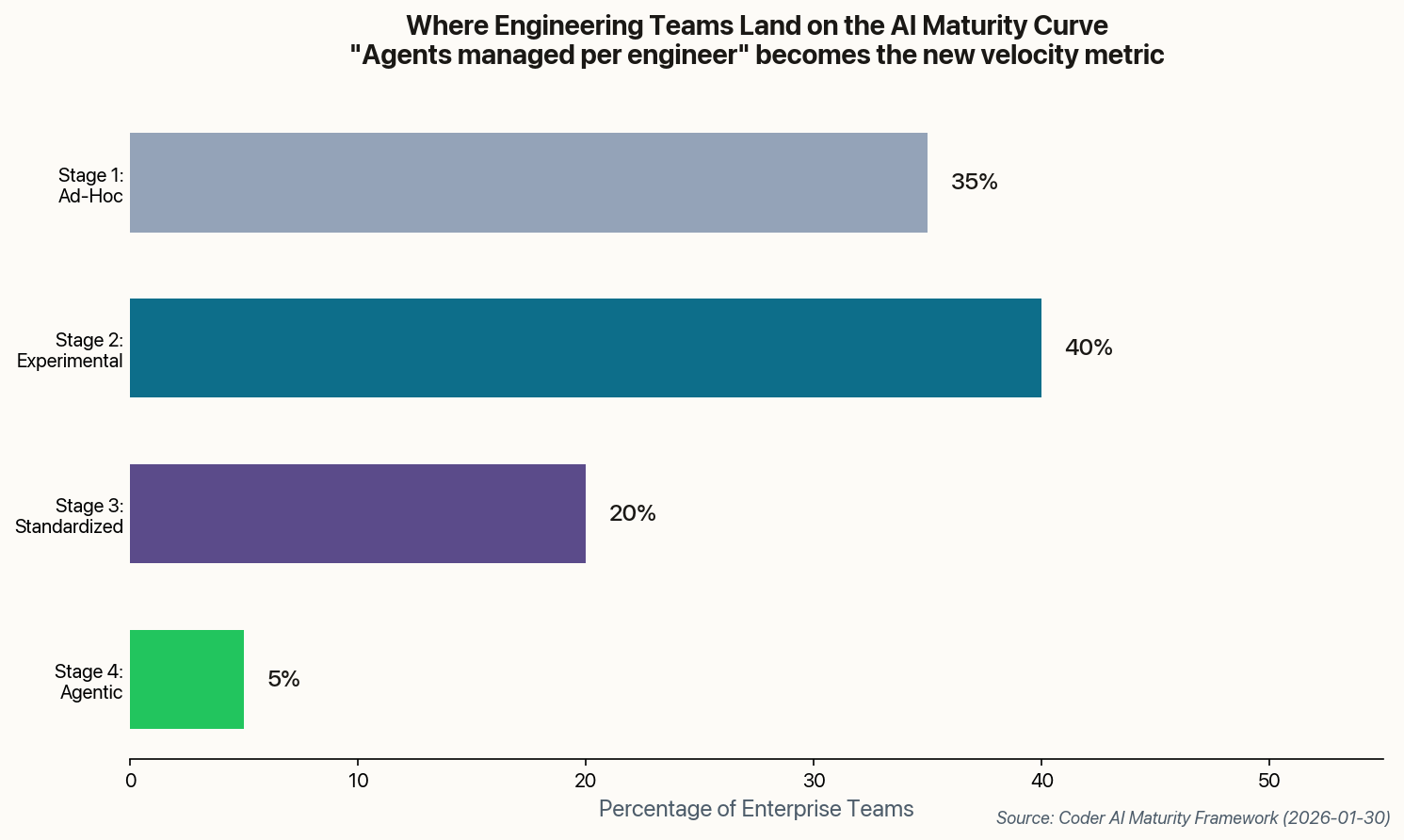
Chart showing AI maturity stages: Stage 1 Ad-Hoc (35%), Stage 2 Experimental (40%), Stage 3 Standardized (20%), Stage 4 Agentic (5%)
Only 5% of enterprise teams have reached "agentic" maturity—but that's where the industry is headed.

This isn't aspirational consulting-speak. It's a benchmarking tool designed to show your CEO exactly where your team lands compared to competitors. And here's the uncomfortable implication: if you're a developer who can't govern agents, you're now officially legacy infrastructure.

Human silhouette with AI agents orbiting in a network pattern
02

"Agents Per Engineer" Becomes the New Velocity Metric

Coder's detailed maturity curve explicitly introduces a metric that should terrify half of engineering Twitter: agents managed per engineer. Not story points. Not PR throughput. How many AI agents can you reliably orchestrate?

At Stage 4 maturity, the document states, "human coding is minimal." The engineer's role transforms from author to architect—designing workflows, setting guardrails, reviewing outputs, and handling the edge cases that agents fumble. If that sounds like management, you're not wrong.

The critical question: What happens to the engineers who can't make this transition? The maturity curve doesn't say, but the answer is obvious: they become the new blue-collar workers of tech—maintaining legacy systems while the "agent architects" command the premium salaries.

This framework codifies the K-shaped split: a small cadre of engineers who thrive by orchestrating AI, and a much larger group who become interchangeable with the agents themselves.

Corporate handshake dissolving into robotic hands, representing AI partnership
03

Devin Goes Enterprise: Cognizant's 300,000 Developers Get a New "Colleague"

The moment autonomous coding agents went from demo-ware to deployment infrastructure: Cognizant—one of the world's largest IT services firms—signed an exclusive strategic partnership with Cognition, the company behind the Devin autonomous software engineer.

The partnership's stated focus: legacy modernization and code migration. Translation: the tedious, volume-intensive work that junior developers currently grind through. Cognizant has 300,000+ employees, many of whom do exactly this kind of work. The arithmetic is concerning.

"This marks a turning point where autonomous agents move from experimental tools to core enterprise infrastructure," the announcement states. That's not hyperbole—it's a direct quote. The quiet part is no longer quiet.

What this means for the K-curve: Enterprise legitimization of replacement-tier AI agents accelerates the bifurcation. If you're doing the work Devin can do, your timeline for upskilling just got shorter. If you're the person who architects what Devin does, congratulations—you just became more valuable.

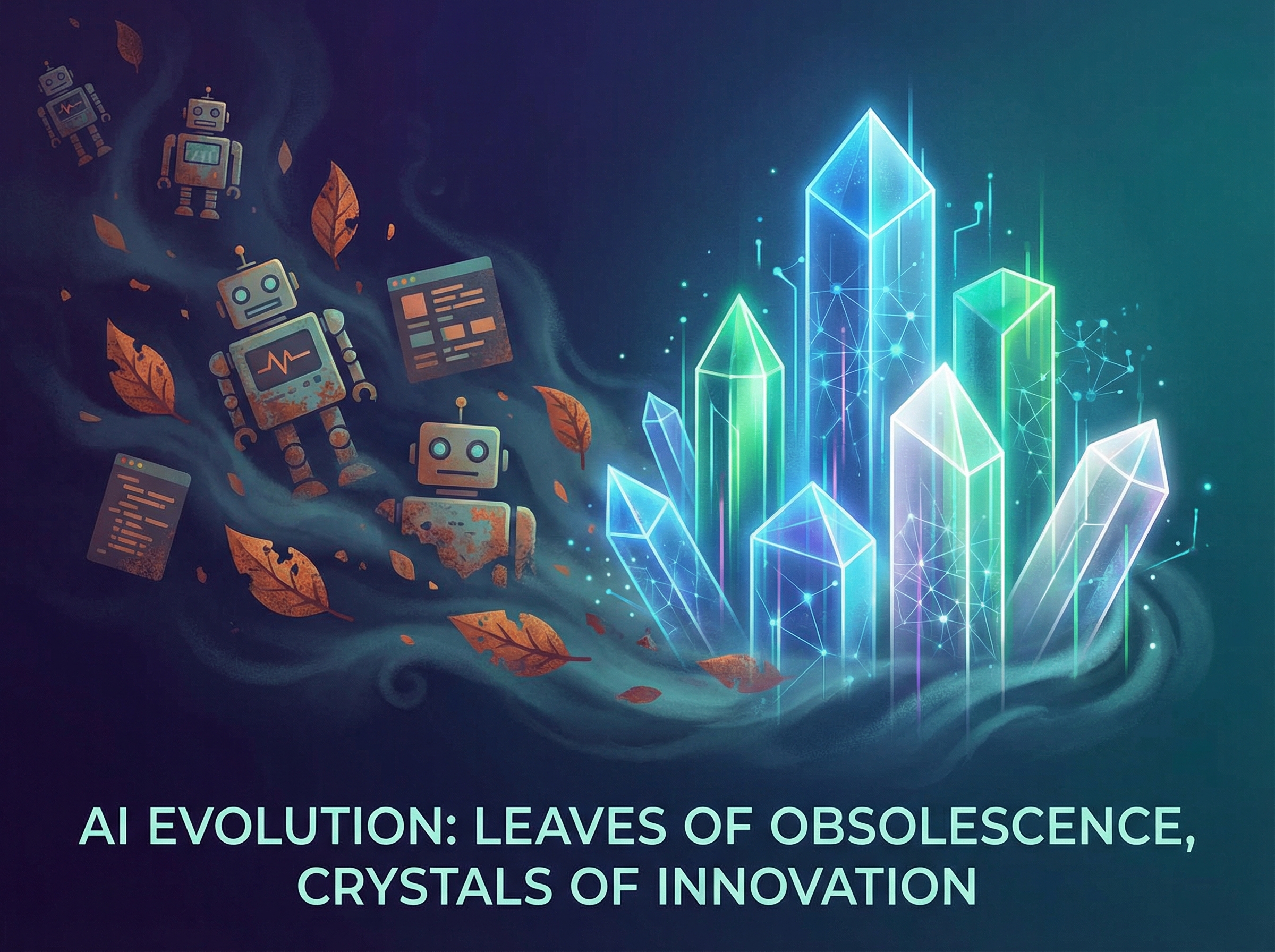
Old AI models fading away while new crystalline structures emerge
04

OpenAI Retires the Training Wheels: GPT-4 Models Sunset February 13

OpenAI announced the retirement of GPT-4o, GPT-4.1, and o4-mini from the ChatGPT interface, effective February 13, 2026. Users are being migrated to GPT-5.2 and the new "reasoning-heavy" o5 series.

This is more than model housekeeping. The new models are significantly more capable at complex reasoning—which means developers using them gain a larger capability advantage over those who don't. The gap between "AI-augmented" and "AI-adjacent" developers just widened.

Meanwhile, the older, cheaper API models that many indie developers and smaller teams rely on are being deprecated. The economics of staying competitive now require access to premium-tier reasoning models, creating yet another barrier in the K-shaped split.

The meta-lesson: The floor is rising. What counted as "AI-assisted" development six months ago is now table stakes. What counts today won't count next quarter. The only constant: those who adapt fastest pull ahead; those who lag get lapped.

Developer floating in dreamlike state surrounded by hallucinatory code structures
05

The Diagnosis Is In: "Agent Psychosis" and the Aftermath of Vibe Coding

"Vibe coding"—the practice of prompting LLMs to generate entire codebases without reading the output—has become so prevalent that industry observers now have a name for its dark side: Agent Psychosis.

The phenomenon: unmonitored AI agents generate complex, hallucinatory code structures that function temporarily but are architecturally insane. They work in demos. They pass initial tests. And then they become maintenance nightmares that no one—including the AI that created them—can untangle.

"We are seeing a bifurcated workforce: those who generate code by 'vibe' and those who must diagnose the resulting structural insanity."

Senior engineers are now being rebranded as "codebase psychiatrists"—the people who understand system architecture deeply enough to reverse-engineer AI madness. This is a high-value, high-demand skill. But here's the irony: it only exists because of the chaos created by low-skill AI use.

The K-shape crystalizes: prompters who generate fast, cheap code vs. diagnosticians who charge premium rates to fix it. One group creates velocity; the other creates durability. Guess which one gets laid off first in a downturn?

Senior engineer as detective examining code with magnifying glass
06

The Verification Premium: Why "Auditor" Becomes the Most Valuable Engineering Title

New research identifies a hidden cost in AI-accelerated development: the verification premium—the increased skill and time required to review, audit, and debug AI-generated code. AI makes writing code faster, but it doesn't make understanding code faster. Often, it makes understanding harder.

The paper warns of an "illusion of velocity"—teams ship features faster, but the code quality is lower, the bugs are subtler, and the technical debt compounds silently. Functional applications reach production that no human fully understands.

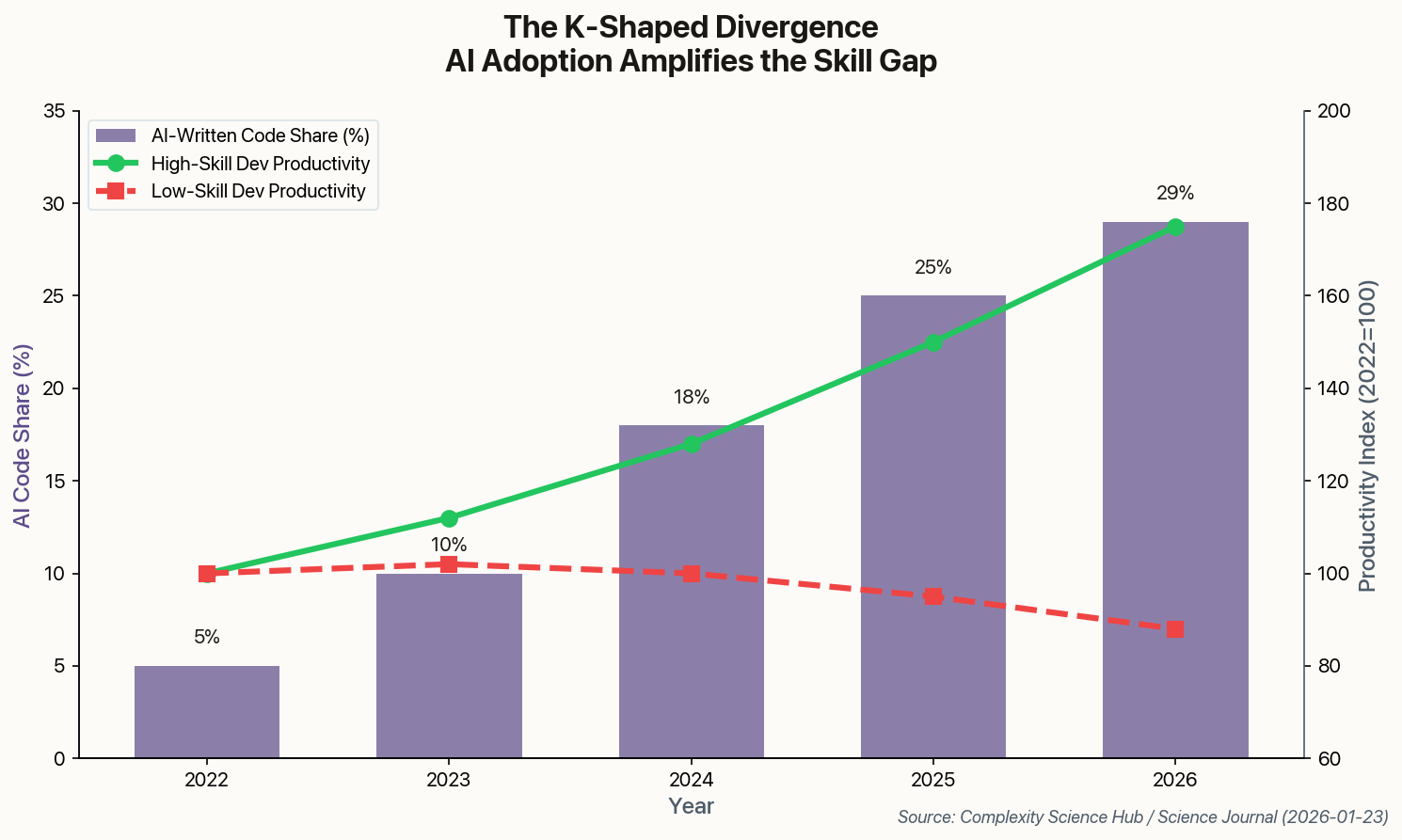
Chart showing AI code adoption rising to 29% while productivity diverges: high-skill developers see gains, low-skill developers see decline
The K-shaped divergence: AI adoption correlates with productivity gains—but only for developers with the skills to verify AI output.

The hiring implication: demand is spiking for "Verifiers"—senior engineers who can audit AI—rather than "Coders" who can only write it. The latter are increasingly commoditized. The former command the premiums.

"The crisis stems not from the quality of AI-generated code itself, but from the speed at which functional applications can be built... bypassing traditional bottlenecks." In other words: AI doesn't create bad code. It creates fast code that humans can't keep up with.

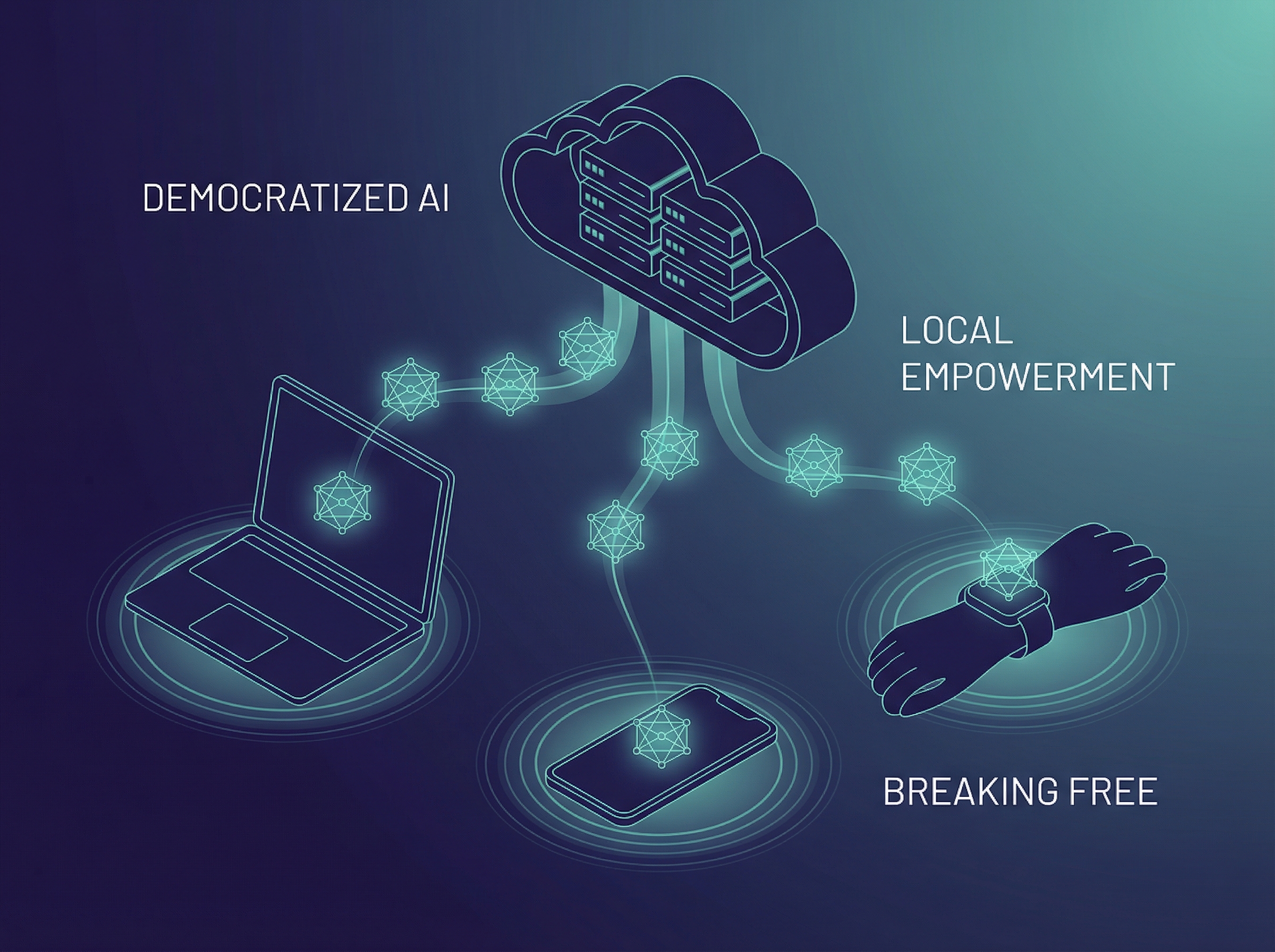
Small glowing AI models running on personal devices, breaking free from cloud servers
07

The Counterweight: Local Models Democratize the Arms Race

A ray of hope in the K-shaped storm: Liquid AI released LFM2.5, a "thinking" model that runs on local devices with sub-1GB memory usage. Z.ai followed with GLM-4.7-Flash, optimized for agentic coding loops.

This matters because access to powerful AI has been a class divider. Enterprise teams with cloud budgets could run swarms of agents; indie developers and bootstrappers couldn't. Local models break that barrier. Now anyone with a laptop can orchestrate their own private fleet.

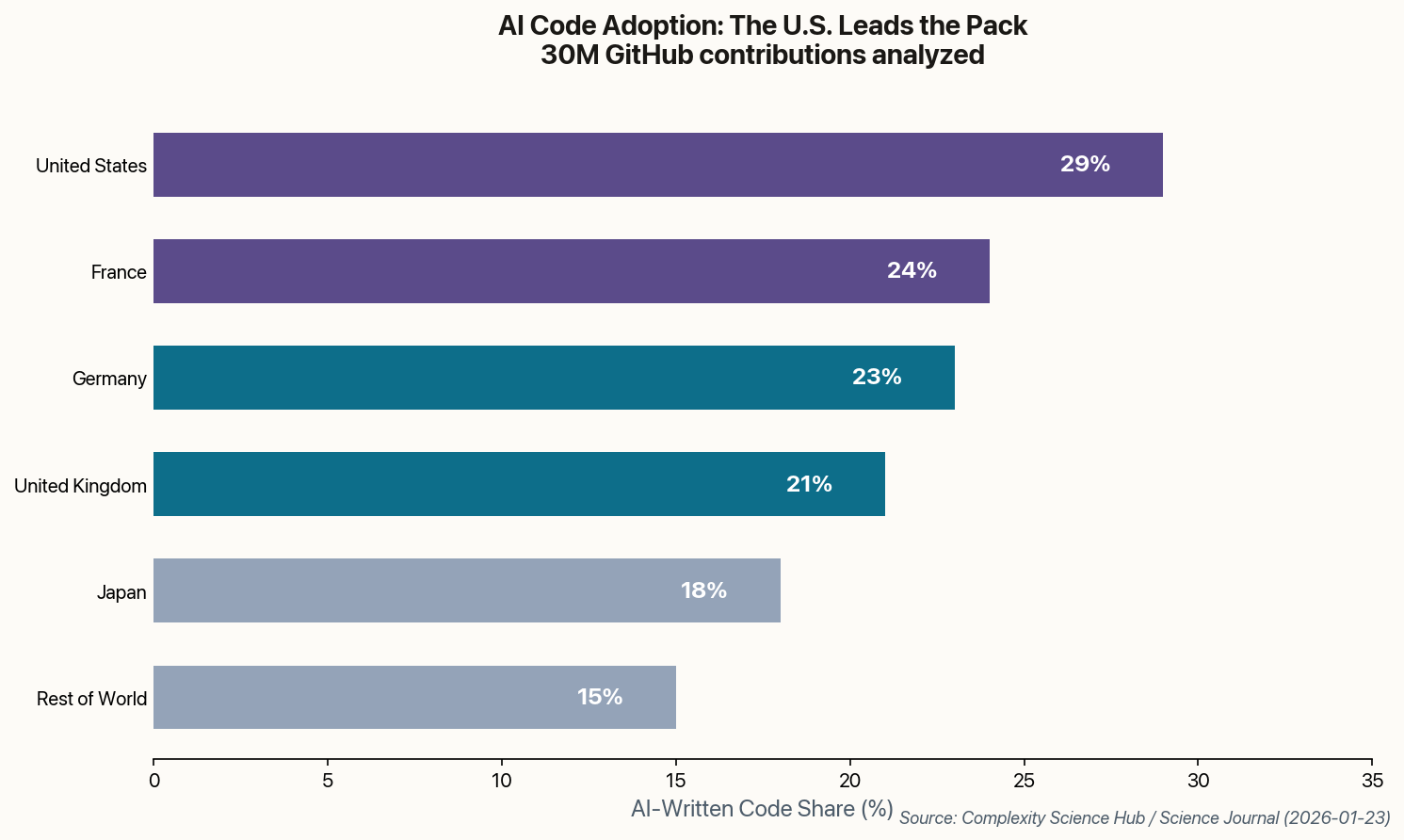
Bar chart showing AI code adoption by country: US 29%, France 24%, Germany 23%, UK 21%, Japan 18%
The U.S. leads in AI code adoption, but new local model releases could accelerate adoption globally.

"We are bringing reasoning capabilities to the edge, allowing every developer to run their own private swarm of coding agents," Liquid AI's announcement states. This could be the equalizer that lets nimble individual developers compete with larger teams—reinforcing the "super-developer" side of the K-curve.

The catch: Local models still require skill to wield effectively. Democratized access doesn't mean democratized competence. The K-shape persists—it just gives more people a chance to climb the upward arm.

Which Side of the K Are You On?

The bifurcation is no longer theoretical. It's being codified in maturity frameworks, priced into enterprise partnerships, and measured in agents-per-engineer metrics. The question isn't whether the K-shaped future is coming—it's whether you're tooling up for the upward arm or sliding down the other.