Agentic AI

The Deck is Dealt

AI presentation tools hit $100M ARR, enterprises move from pilots to production, and the architectural patterns for building your own are finally becoming clear.

Listen
Abstract visualization of AI agents orchestrating presentation slides into cohesive structure
01

Gamma Crosses $100M ARR: The AI-First Presentation Era is No Longer Theoretical

Ascending stacks of luminous presentation slides forming a triumphant bar chart

When Gamma launched three years ago, skeptics dismissed it as another "AI wrapper" — a thin veneer of machine learning over PowerPoint's tired paradigm. Yesterday, those skeptics got their receipt: $100 million in annual recurring revenue, 70 million users, and a product roadmap that treats slides as a legacy format to be transcended.

The number matters less than what it signals. Enterprise buyers — the ones who actually sign six-figure contracts — have stopped treating AI presentation tools as experiments. They're budgeting for them. IT departments are integrating them. Procurement teams are negotiating multi-year deals. This is the inflection point where a category graduates from "interesting" to "inevitable."
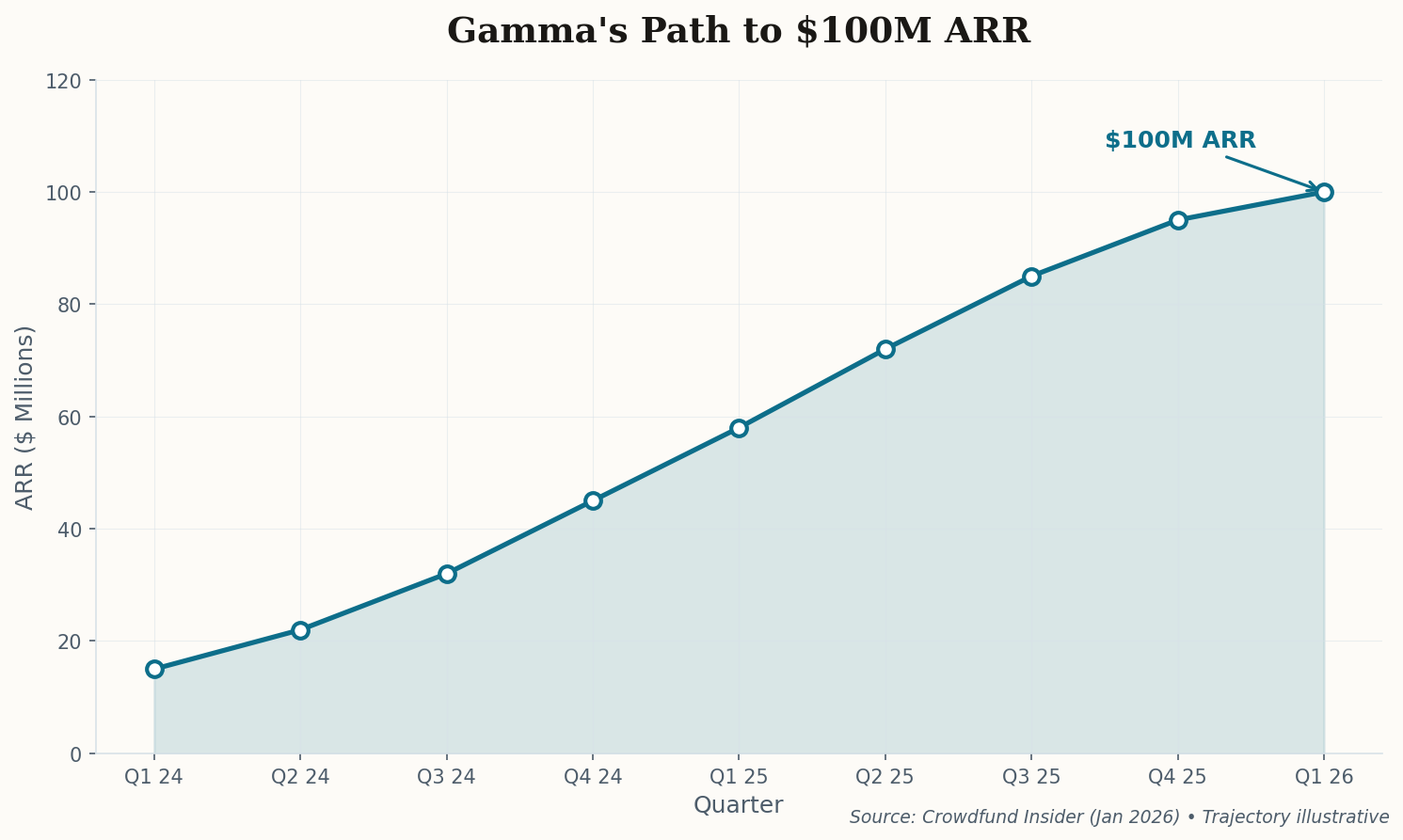
Gamma's ARR growth from $15M in Q1 2024 to $100M in Q1 2026
Gamma's trajectory from seed-stage to nine-figure ARR in under 24 months — faster than Canva's equivalent milestone.

What makes Gamma's approach different isn't just the AI — it's the rejection of the slide metaphor entirely. Their "web-native" format allows presentations to scroll, embed, and link like living documents while still exporting to .pptx when the C-suite demands it. The takeaway for builders: the constraint isn't "can AI make slides?" — it's "should the output even be slides?"

02

GitHub Copilot SDK: Documentation-as-Code Becomes Presentation-as-Code

Terminal code morphing into polished presentation slides

If you've ever converted a README into a sprint demo deck at 11 PM, this one's for you. GitHub's new Copilot SDK update introduces a reference architecture for turning technical documentation directly into presentation artifacts — no copy-paste, no reformatting, no "can you make that bullet point shorter?"

The three-stage pipeline — Content Extraction, Section Mapping, Slide Generation — isn't revolutionary in concept. What's new is that it's now an officially supported pattern with SDK hooks, not a weekend hack. Microsoft is positioning README-to-PPT as a "compilation target," treating presentations the way developers already treat deployments: as reproducible artifacts generated from source.

The builder insight: This pattern works because it constrains scope. The AI doesn't have to invent content — it transforms existing structured text. Tight input constraints lead to reliable output quality. If you're building presentation agents, start with well-structured source material, not blank canvases.

The strategic play here is clear: Microsoft wants every developer team's documentation pipeline to include a presentation step, automatically, without human intervention. Sprint demo decks generated from git commits. Architecture reviews synthesized from ADRs. The deck becomes a side effect of good documentation practices.

03

Forbes: The Pilot Phase is Over — Agents Get Job Descriptions Now

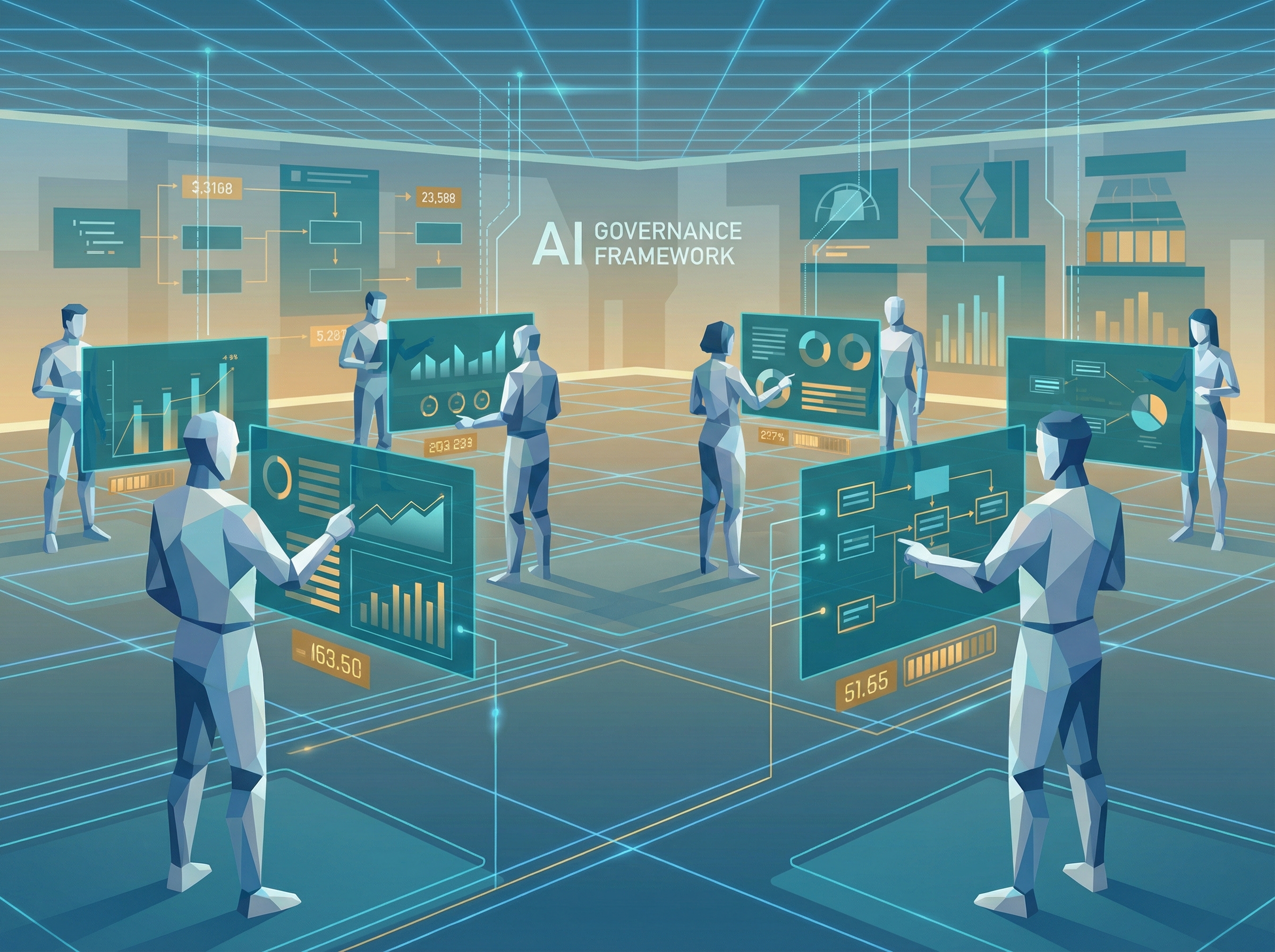
Abstract geometric figures working at floating dashboard screens in enterprise environment

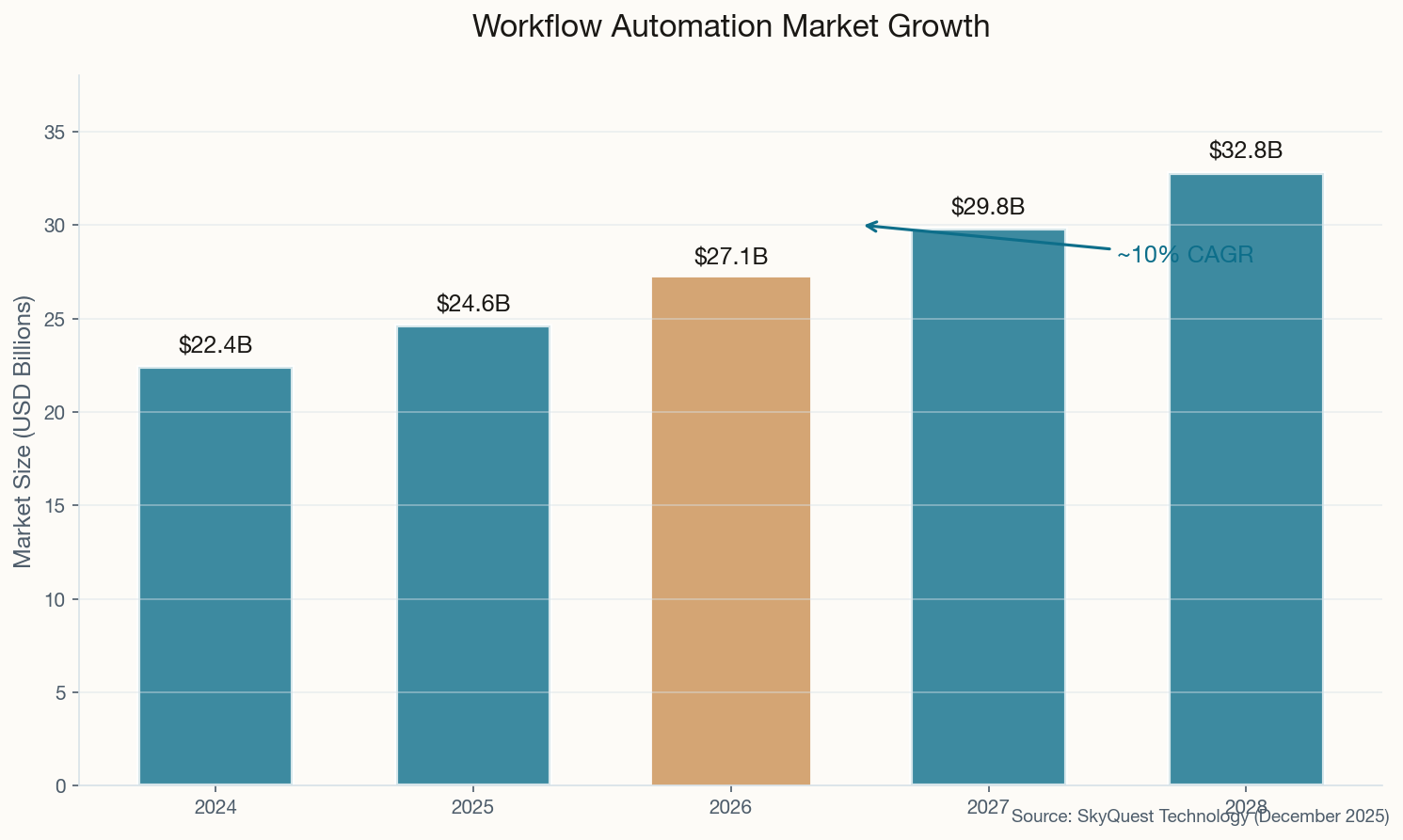
The language shift matters: enterprises have stopped asking "should we experiment with AI agents?" and started asking "which agents do we deploy, and who supervises them?" According to Forbes, the agentic AI market is projected to hit $8.5 billion this year — and presentation generation ranks among the top "early win" use cases for internal productivity deployments.

Agentic AI market projected to reach $8.5B in 2026, growing to $22B by 2028
The agentic AI market doubles year-over-year, with 2026 marking the crossover from pilot programs to production deployments.

Why presentations? They're high-frequency, time-consuming, and low-risk for autonomous generation. A mediocre AI-generated deck wastes a few minutes of review time. A mediocre AI-generated financial report could tank a stock price. Enterprises are picking their battles wisely, and "make the Tuesday standup deck" is a battle they're ready to delegate.

The governance angle is the real story, though. Corporate buyers now expect AI agents to have audit trails, permission boundaries, and something resembling a performance review. "The pilot phase is over; 2026 is the year agents get a job description" isn't just Forbes being clever — it's a preview of the procurement conversations every AI startup will face this quarter.

04

OpenAI's Prism: When Presentation Logic Meets LaTeX-Grade Precision

Floating LaTeX equations organizing into structured academic figures

OpenAI's new Prism workspace targets scientific paper writing, but the underlying technology — multimodal reasoning across text, equations, and layout — has direct implications for anyone building presentation systems. The hard problem isn't "generate text for a slide." It's "generate a figure that accurately represents this statistical relationship, position it correctly, and write a caption that doesn't lie about what it shows."

Prism demonstrates that LLMs can now handle the high-constraint layout environments that previously required human judgment. The "structured rigor of LaTeX" meets "the reasoning power of GPT-5.2" isn't marketing fluff — it's the capability barrier that kept AI out of serious scientific communication finally cracking open.

For presentation builders, the lesson is about constraint satisfaction. Slides with data visualizations, technical diagrams, or mathematical notation require the AI to respect hard constraints (this number must equal that calculation) while exercising soft judgment (should this be a bar chart or a line graph?). Prism's architecture suggests these are tractable problems if you build the right verification loops.

05

Stack AI's Architecture Taxonomy: Start with Pipelines, Graduate to Hierarchies

Interconnected nodes showing hierarchical AI agent system architecture

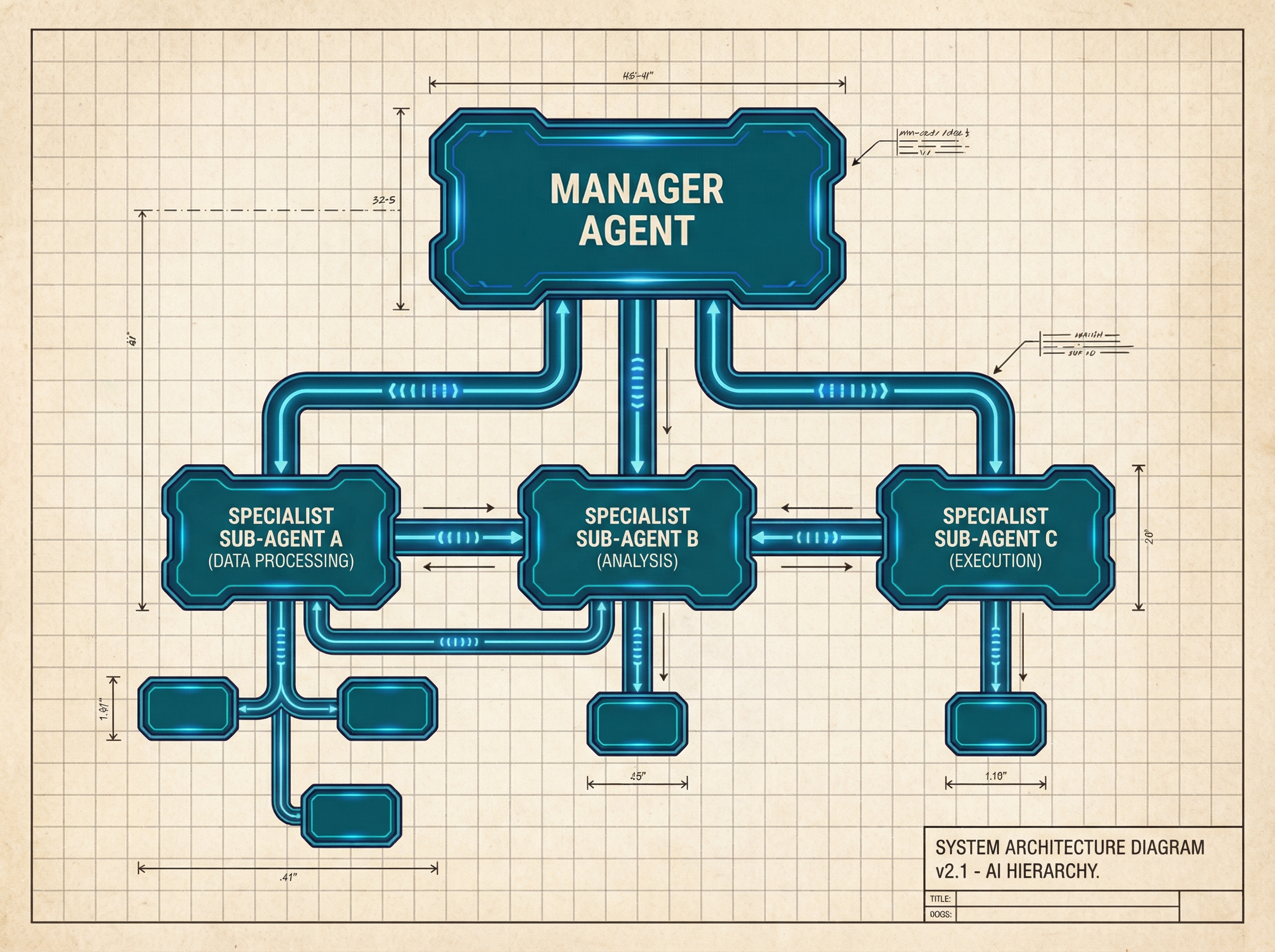
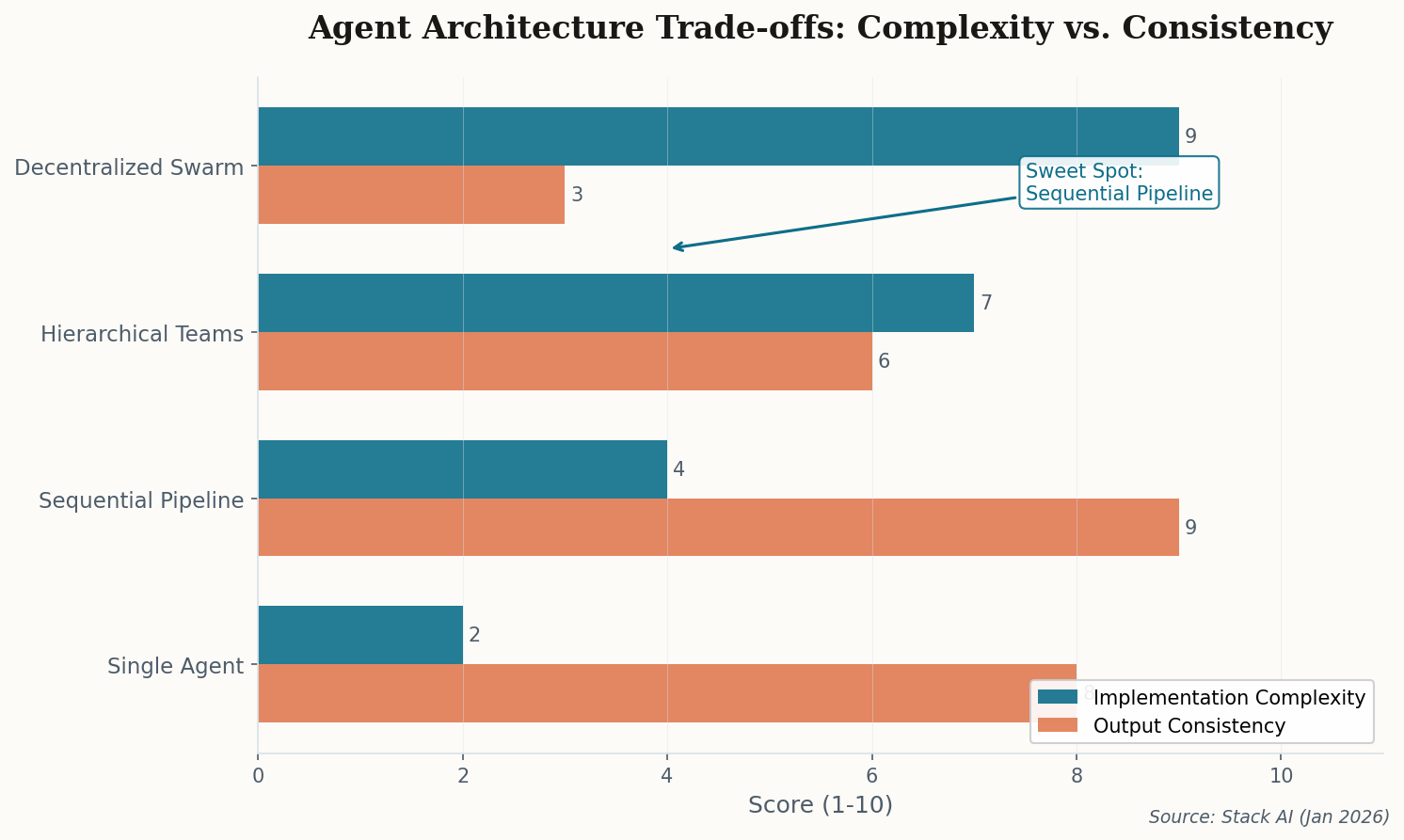
Stack AI's new guide offers the clearest taxonomy yet for agentic system design: Single Agent, Sequential Pipeline, Hierarchical Teams, and Decentralized Swarms. For presentation generation specifically, they recommend what they call "Layered Autonomy" — start with strict sequential pipelines (Outline → Content → Design), then selectively introduce agent autonomy only where it improves outcomes.

Agent architecture trade-offs showing Sequential Pipeline as the sweet spot for consistency
Sequential pipelines offer the best consistency-to-complexity ratio for most presentation generation use cases.

The counterintuitive insight: more agent autonomy doesn't mean better outputs. "Grant the smallest amount of freedom that still achieves the desired outcome" is their heuristic, and it explains why enterprise presentation tools consistently outperform hobbyist "fully autonomous" experiments. Predictability is the primary metric — not capability, not speed, not novelty.

Architecture decision tree: Building a text-to-deck MVP? Single Agent. Need consistent output quality? Sequential Pipeline. Complex decks with charts, images, and narrative? Hierarchical Teams with a "Manager" delegating to specialists. Swarms are for research papers, not production systems.

The "structured state" concept deserves attention: your system needs to track a presentation's evolution across model calls. What sections exist? What's been generated? What's been approved? Without explicit state management, agents lose context mid-generation and produce incoherent results. This is the infrastructure layer most DIY builders skip and most production systems require.

06

Canva + Claude: When the LLM Becomes the Design Interface

Chat message bubbles transforming into polished visual design elements

Canva's deep integration with Anthropic's Claude represents the logical endpoint of the "chat-to-deck" workflow: the LLM isn't generating slides — it's orchestrating an external design engine. You describe what you want in natural language inside a Claude conversation; Claude calls Canva's APIs as tools; fully formatted, on-brand presentations appear without you ever opening the Canva editor.

The architectural pattern here is tool use, not text generation. Claude isn't outputting slide markup — it's invoking Canva's "Magic Design" capabilities as a native tool call. This shifts the LLM's role from "content creator" to "orchestration layer," and it's the pattern that will define the next generation of presentation systems. The AI doesn't need to understand design principles; it needs to understand when to delegate to systems that do.

"By bringing Canva's visual power directly into Claude's reasoning engine, we are closing the gap between ideation and visualization." That gap — the friction between having an idea and seeing it realized — is where all the time goes. If the integration delivers on its promise, the limiting factor for presentations shifts from production time to ideation quality. Which, frankly, is where it should have been all along.

The Pattern is Clear

Build pipelines first, add autonomy sparingly, and treat the LLM as an orchestrator rather than a generator. The $8.5 billion agentic market isn't betting on artificial creativity — it's betting on artificial coordination. The deck is dealt; now it's about playing the hand well.