The Framework That Killed "Features & Benefits"

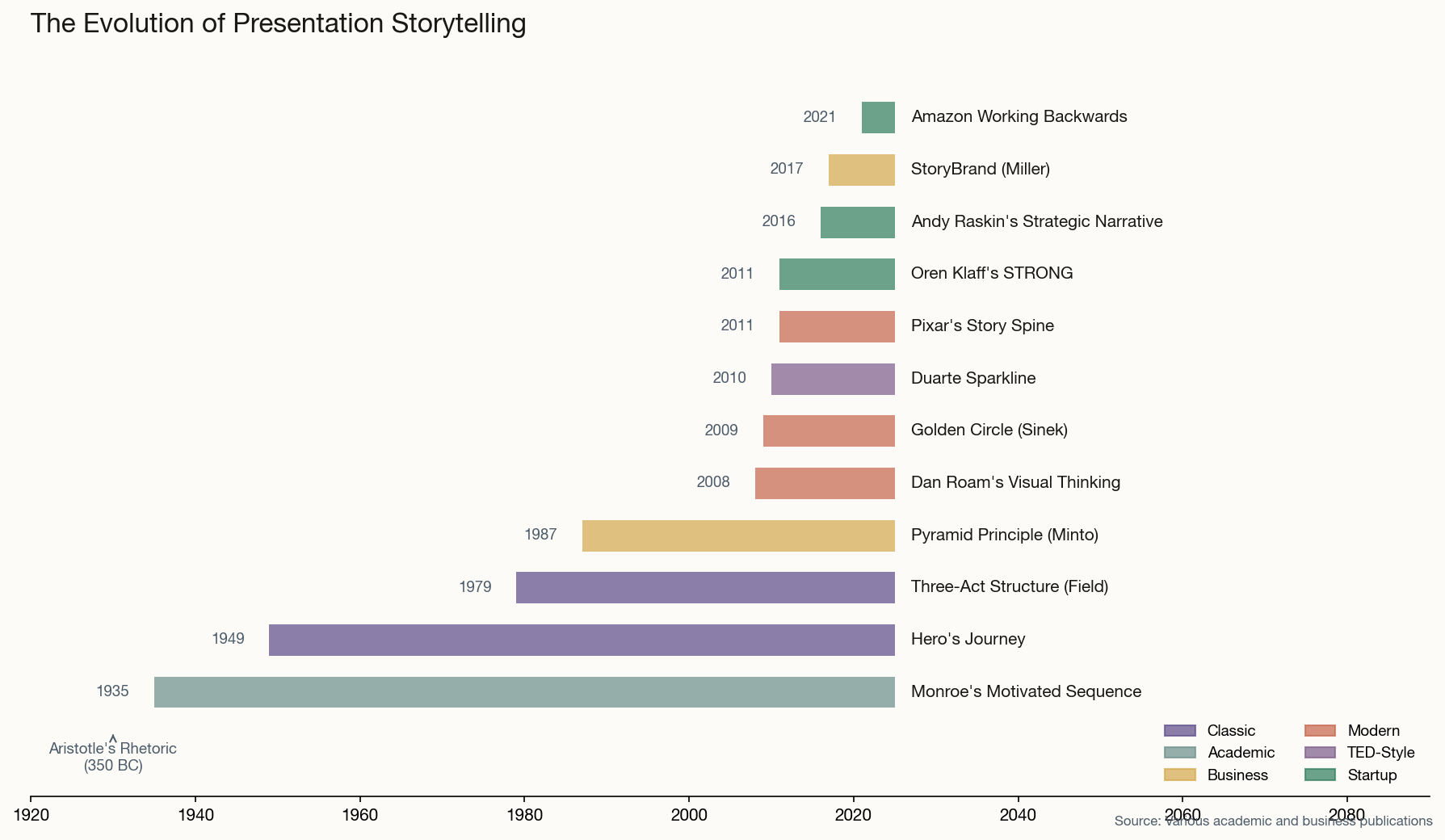
If you've pitched investors or sold enterprise software in the last five years, you've probably used Andy Raskin's Strategic Narrative structure—even if you didn't know it had a name. His 2016 analysis of Zuora's sales deck became the most-shared B2B presentation advice of the decade because it solved a problem everyone felt but couldn't articulate: why do feature-heavy pitches fall flat?
The answer is simple. Raskin's framework starts with a change in the world, not a problem with the customer. "Don't start with your product," he wrote. "Don't start with the customer's pain. Start with a shift so big that it creates winners and losers."
The five moves: (1) Name a big, relevant change, (2) Show winners and losers, (3) Tease the Promised Land, (4) Introduce magic gifts (your product), (5) Provide evidence it works.
The genius is psychological. You're not asking the buyer to admit they have a problem (defensive posture). You're asking them to be smart enough to recognize a wave that's already forming (flattering posture). Zuora didn't say "your billing is broken." They said "the subscription economy is eating everything—are you a winner or a loser?"
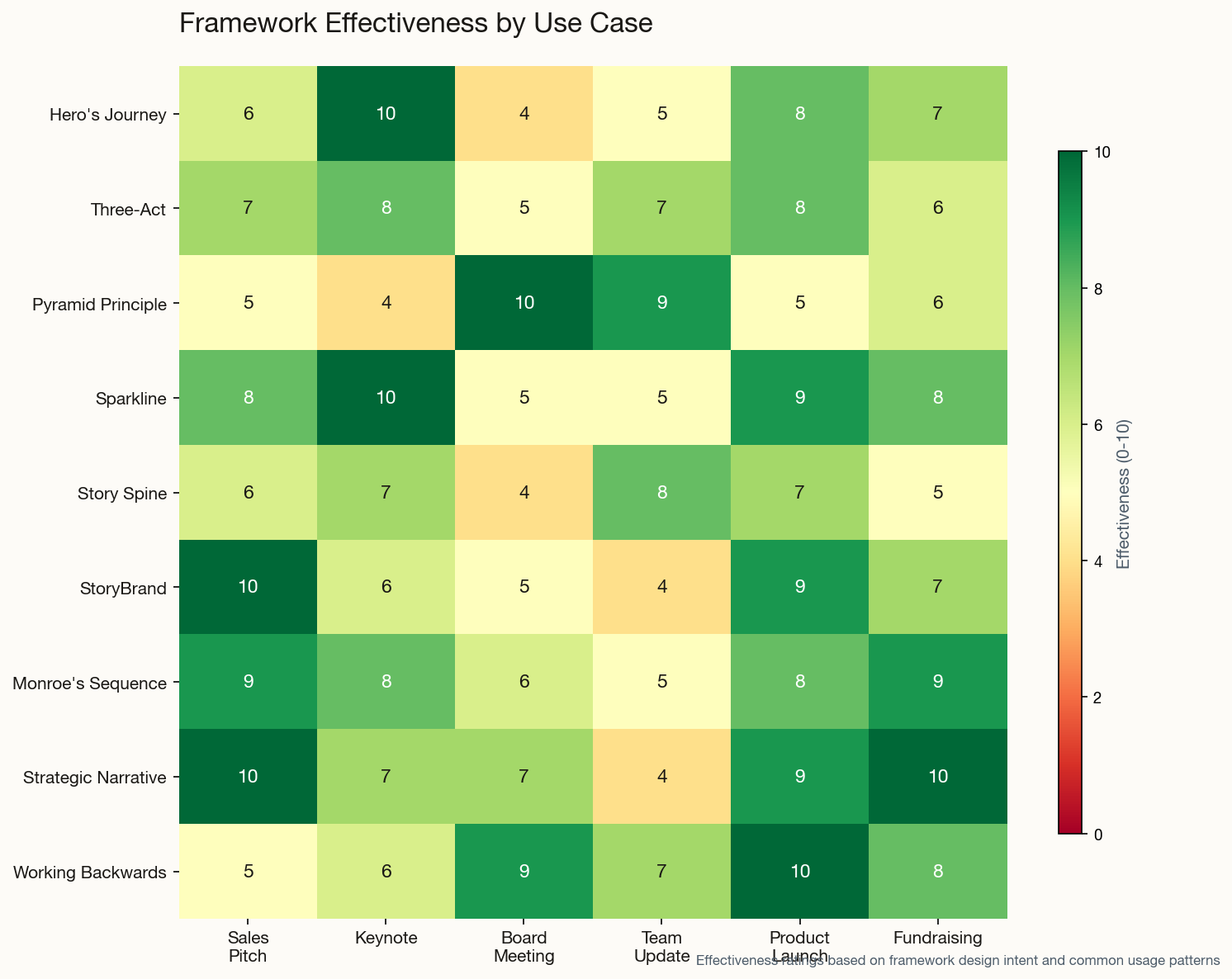
When to use it: B2B sales, fundraising, company-wide vision setting. Anywhere you need the audience to feel urgency about change rather than guilt about problems. If you're pitching to executives with limited time and high skepticism, this is your default.