E-Paper Displays

The Slow Display Revolution

Samsung enters the game with bio-resin displays, Goldman exits E Ink, and the refresh rate war heats up—a week that revealed where electronic paper is actually heading.

Listen
E-paper displays emerging from misty layers, soft graphite tones with amber accent light
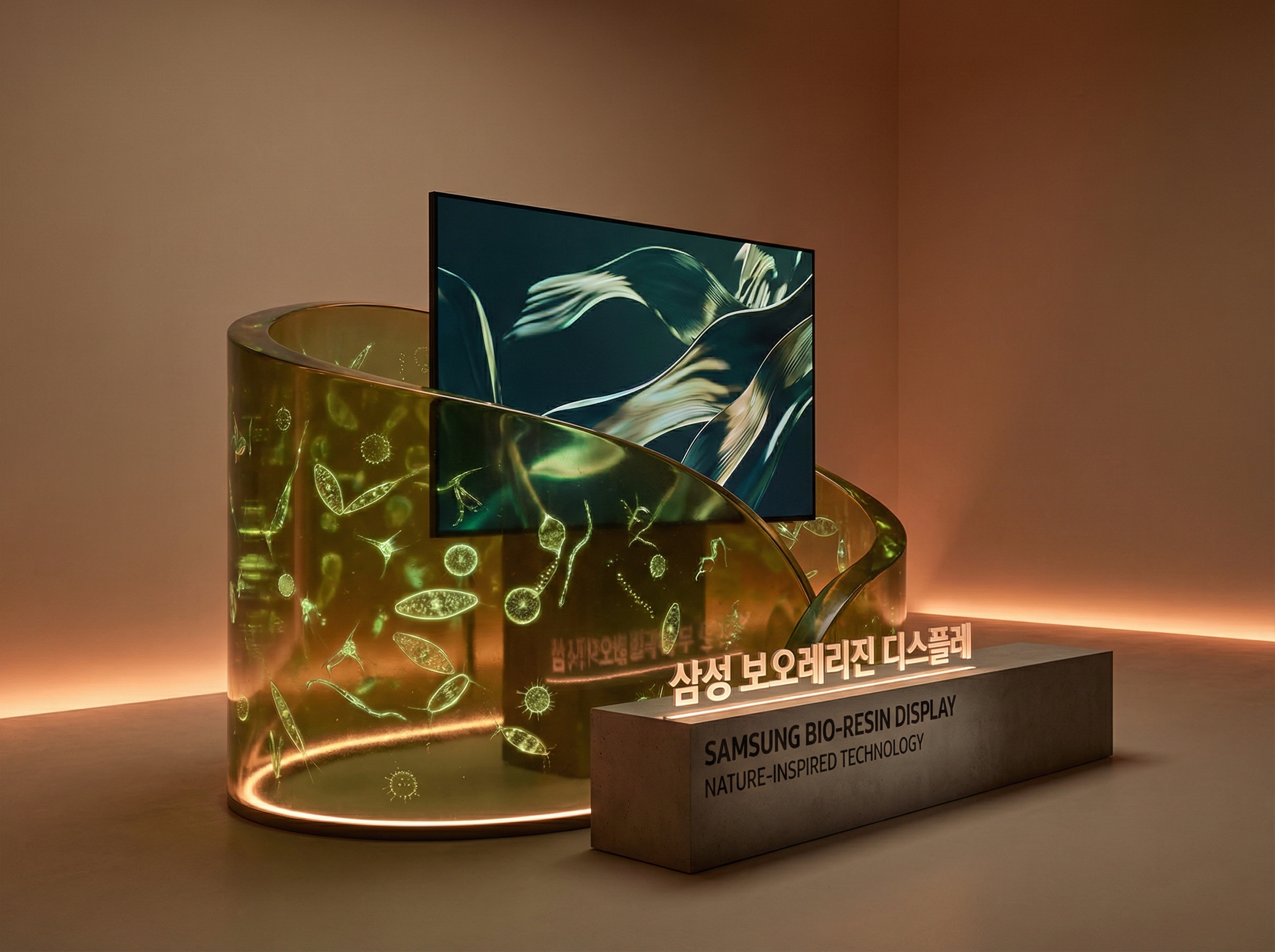
Samsung bio-resin e-paper display with phytoplankton-derived housing
01

Samsung's Bio-Resin Gambit Changes the Signage Equation

When Samsung launches a new display category, competitors take notice. Today's global release of the EM13DX—a 13-inch color e-paper display—isn't just another product announcement. It's Samsung's declaration that e-paper has graduated from niche to mainstream commercial infrastructure.

The headline spec isn't resolution or refresh rate. It's the housing: phytoplankton-derived bio-resin, a first for any commercial e-paper product. Samsung is betting that sustainability credentials will matter more to retail and corporate buyers than raw performance specs. Given ESG reporting requirements and consumer sentiment, that bet looks shrewd.

The 20-inch preview: Samsung already teased an expanded lineup for ISE 2026 in February. If that lands, they'll have signage solutions from tablet-sized to poster-scale within a single product family—something E Ink has struggled to achieve with their own branded products.

What's most interesting is what Samsung didn't announce: consumer devices. They're entering e-paper through the enterprise door, where margins are fatter and refresh rate complaints are irrelevant. A digital price tag doesn't need 60fps. It needs 10 years of service life and zero electricity bills. Samsung clearly did the math.

Abstract visualization of financial institution divesting from display technology
02

Goldman Sachs Walks Away—And That's Worth Understanding

Goldman Sachs Asset Management completely exited their E Ink Holdings position this week, citing "loss of conviction" and "misjudgment of investor perception." Translation: they thought the e-paper story would resonate with the market, and it didn't.

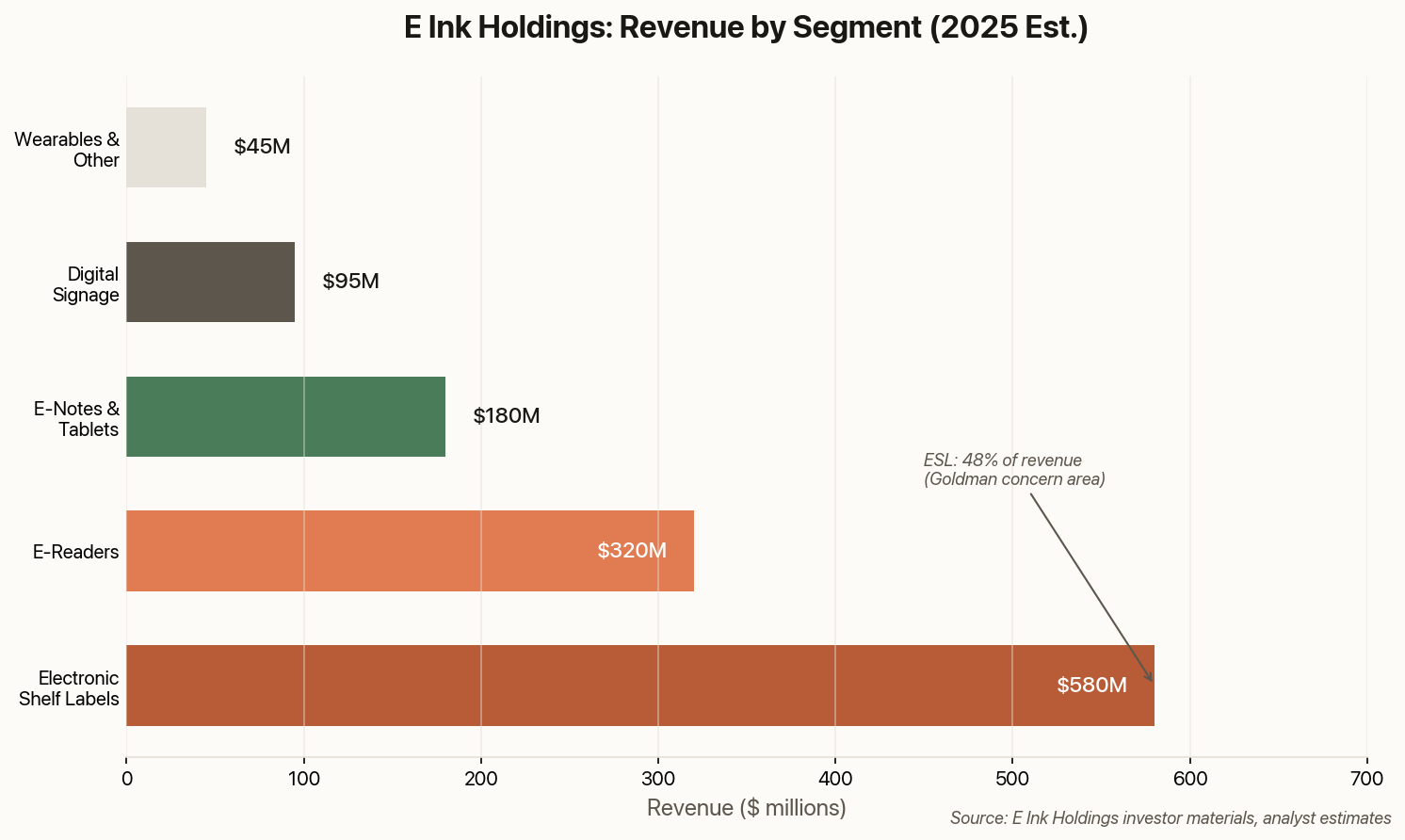
The specific concern is Electronic Shelf Labels (ESL), which represent nearly half of E Ink's revenue. Goldman's analysts apparently grew bearish on the macroeconomic tailwinds for retail digitization. Fewer stores remodeling means fewer ESL deployments. Simple math, uncomfortable conclusion.

E Ink Holdings revenue by segment showing ESL dominance at 48%
E Ink's revenue concentration in ESL explains Goldman's macro sensitivity. Consumer e-readers, once the core business, now contribute only 26% of revenue.

But here's the contrarian take: Goldman's exit might be precisely wrong. Samsung's entry today validates the commercial signage market that Goldman just lost faith in. When a chaebol the size of Samsung commits R&D resources to a category, they're usually not early—they're on time. Goldman may have sold at the moment of inflection.

Watch E Ink's next earnings call. If Samsung's entry drives ASP compression, Goldman was right to flee. If it expands the total addressable market faster than it compresses margins, they'll have exited at the bottom.

Open-source e-paper development kit with exposed circuit boards
03

Modos Ships the Dev Kit That Might Actually Matter

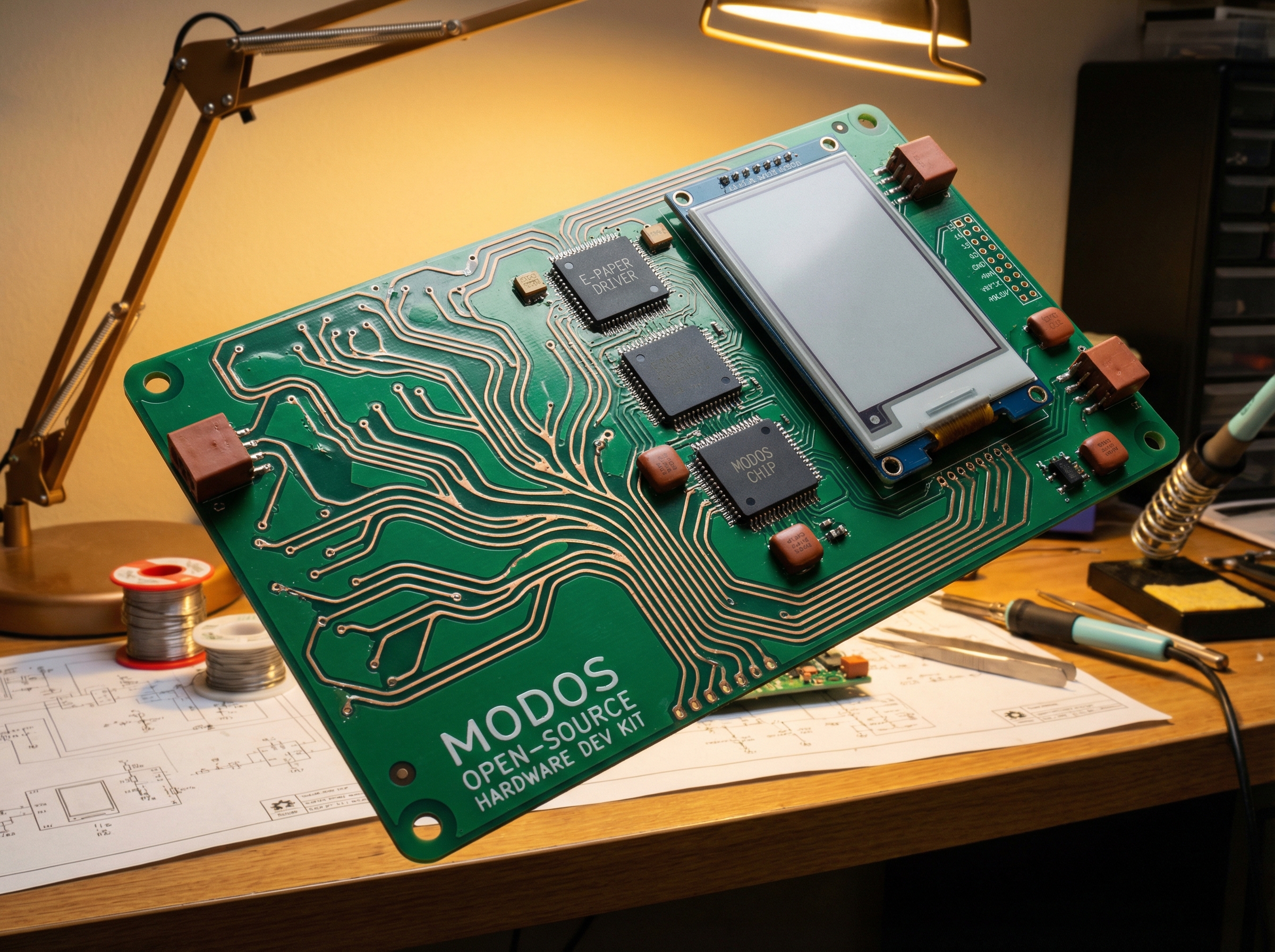
Modos pivoted. After canceling their ambitious e-ink laptop project, they're now shipping something arguably more important: an open-hardware e-paper development kit with 75Hz refresh rate capability in experimental modes.

Why does this matter? Because E Ink and its licensees have held the driver technology close. If you wanted to push e-paper beyond its documented specs, you needed either a corporate partnership or a willingness to reverse-engineer proprietary firmware. Modos is handing the keys to anyone with $500 and soldering skills.

E-paper refresh rate evolution from 2020-2026 showing dramatic improvements
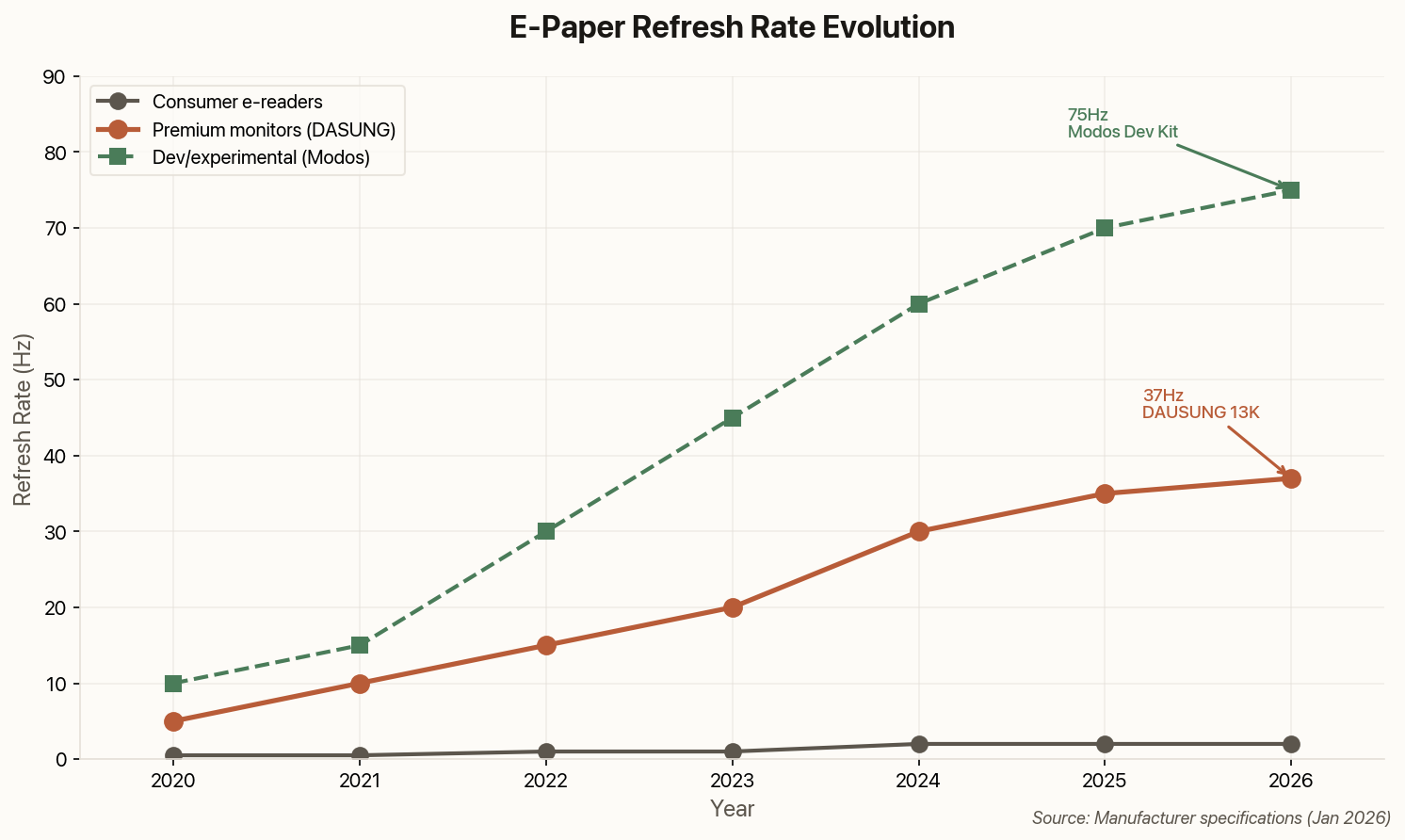
The refresh rate gap between consumer devices and developer-accessible hardware has never been wider. Modos' 75Hz kit could accelerate the trickle-down.

The 6-inch and 13-inch form factors suggest two target audiences: wearable/embedded developers and laptop/monitor experimenters. If someone in the open-source community cracks a stable 60Hz driver, it could obsolete the premium monitor segment overnight. DASUNG should be watching closely.

DASUNG portable color e-ink monitor with high refresh rate display
04

DASUNG Hits 37Hz in Color—The Usability Threshold

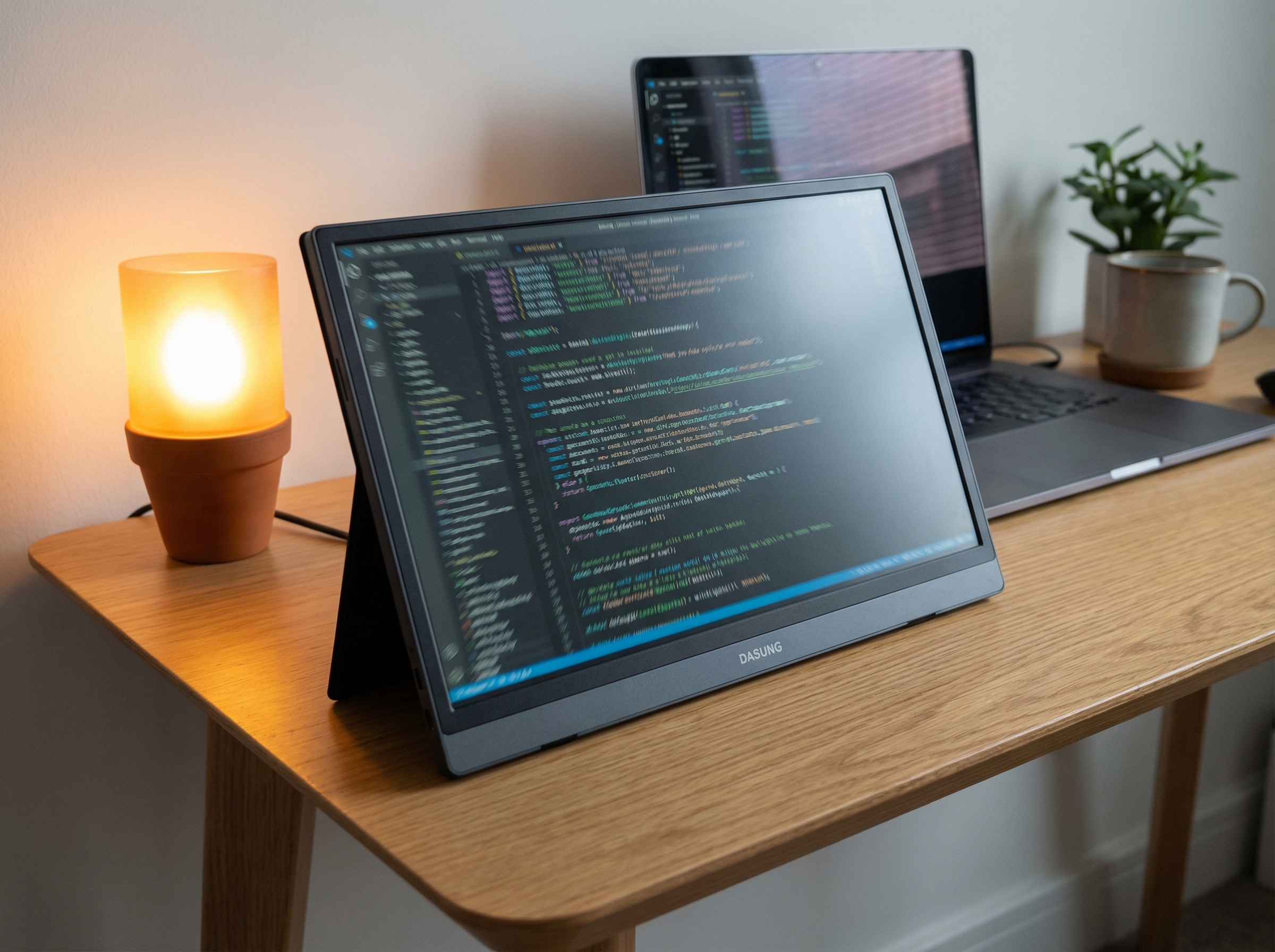
The DASUNG Paperlike 13K isn't just incrementally better—it's crossing a perceptual threshold. At 37Hz, a color e-ink display becomes genuinely usable for text editing, web browsing, and even light video. Not good for those tasks. Usable. The difference matters.

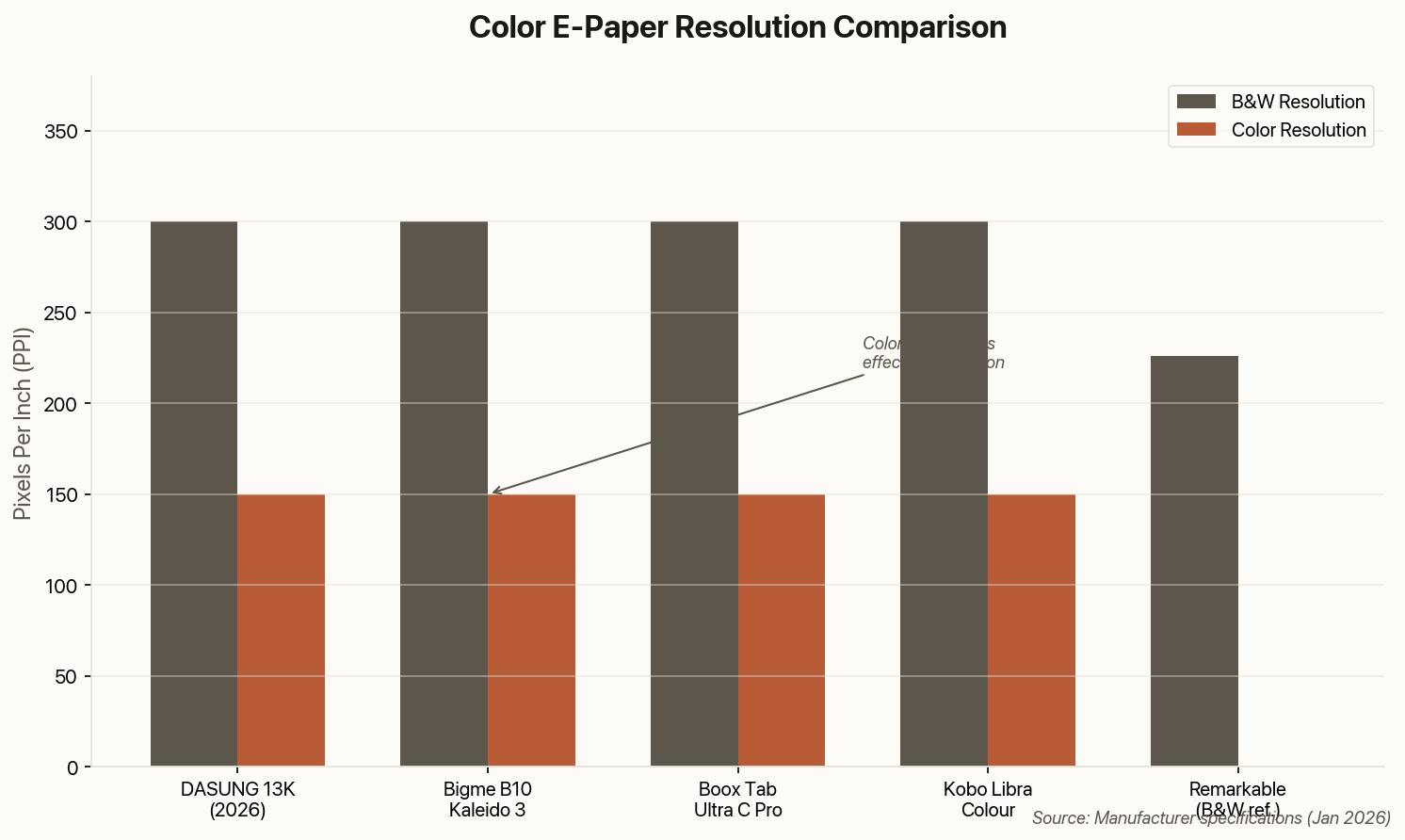
The specs reveal the engineering trade-offs: 300 PPI in black-and-white mode, halved to 150 PPI when the color layer activates. This is fundamental to how Kaleido and Gallery color technologies work—the color filter sits physically above the electrophoretic layer, stealing half your resolution. DASUNG's innovation is cramming enough total pixels that the color mode still looks acceptable.

Color e-paper resolution comparison across devices
The color resolution tax is universal—every color e-paper device halves its effective PPI when color mode activates. DASUNG's strategy: start with enough pixels that 150 PPI remains readable.

At $1,799 (estimated), this isn't a mass-market product. It's a tool for writers, researchers, and professionals who've calculated that reducing eye strain is worth a premium. The question is whether DASUNG can hold that premium position as Modos and others push refresh rates from below.

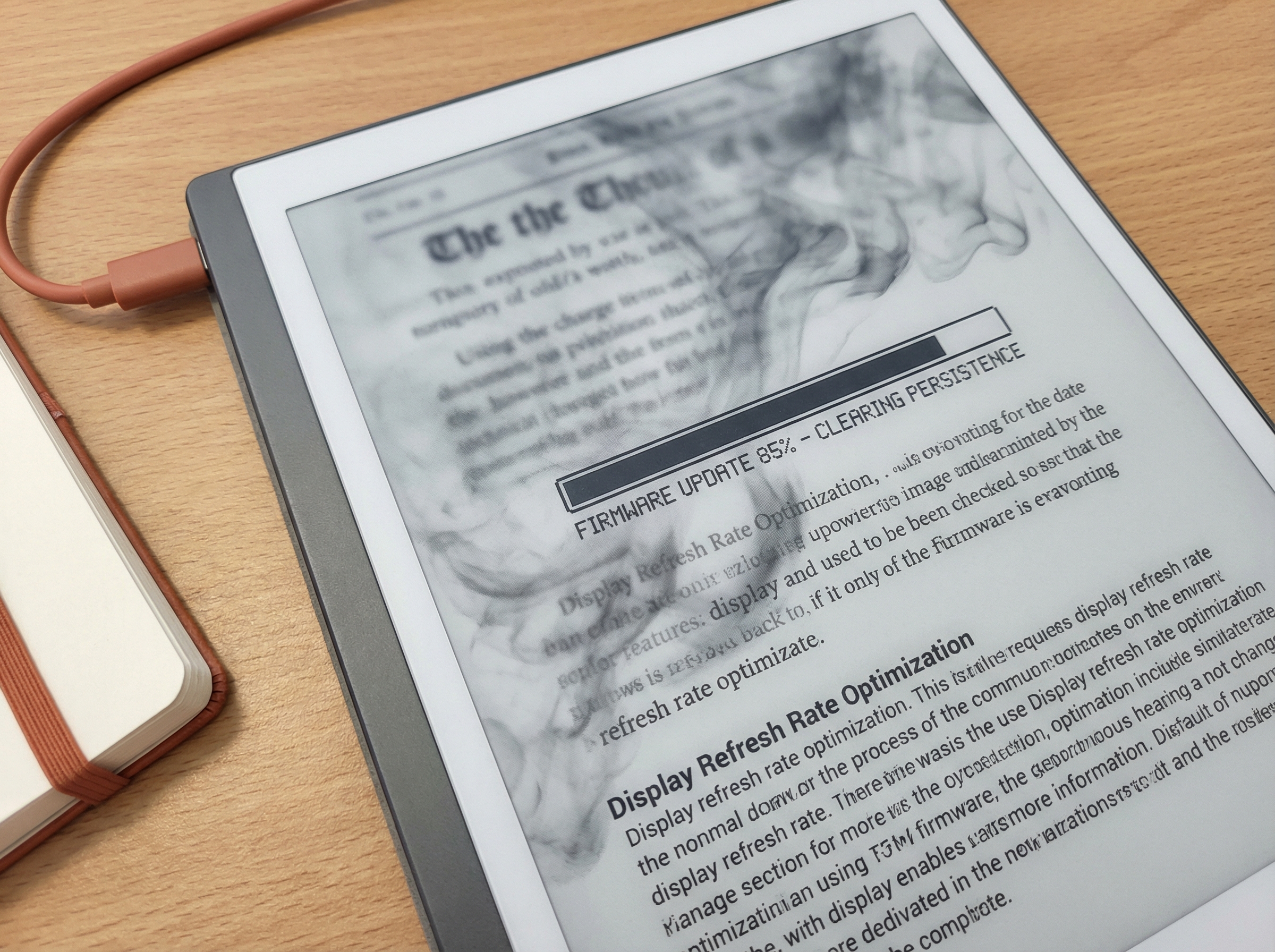
E-paper display showing ghosting artifacts fading away
05

The Ghosting Wars: Bigme's Battery Bargain

Bigme's firmware update 2.9.6 for the B7 color e-note reveals the dirty secret of e-paper development: you can't have everything. The update significantly reduces ghosting—those annoying afterimages that persist between page turns—but users immediately noticed increased battery drain.

The physics are straightforward. Ghosting happens when electrophoretic particles don't fully return to their rest state between refreshes. The fix? More aggressive refresh cycles that consume more power. Bigme chose image quality over battery life, betting that users plug in nightly anyway.

This trade-off illuminates why e-paper software matters as much as hardware. The same display panel can feel sluggish or responsive, ghosted or crisp, depending entirely on driver firmware. When you buy an e-note, you're not just buying hardware—you're betting on the manufacturer's ability to tune their software over years of updates.

Bigme's choice suggests they're listening to the enthusiast community, where ghosting complaints are louder than battery complaints. Whether that's representative of the broader market remains to be seen.

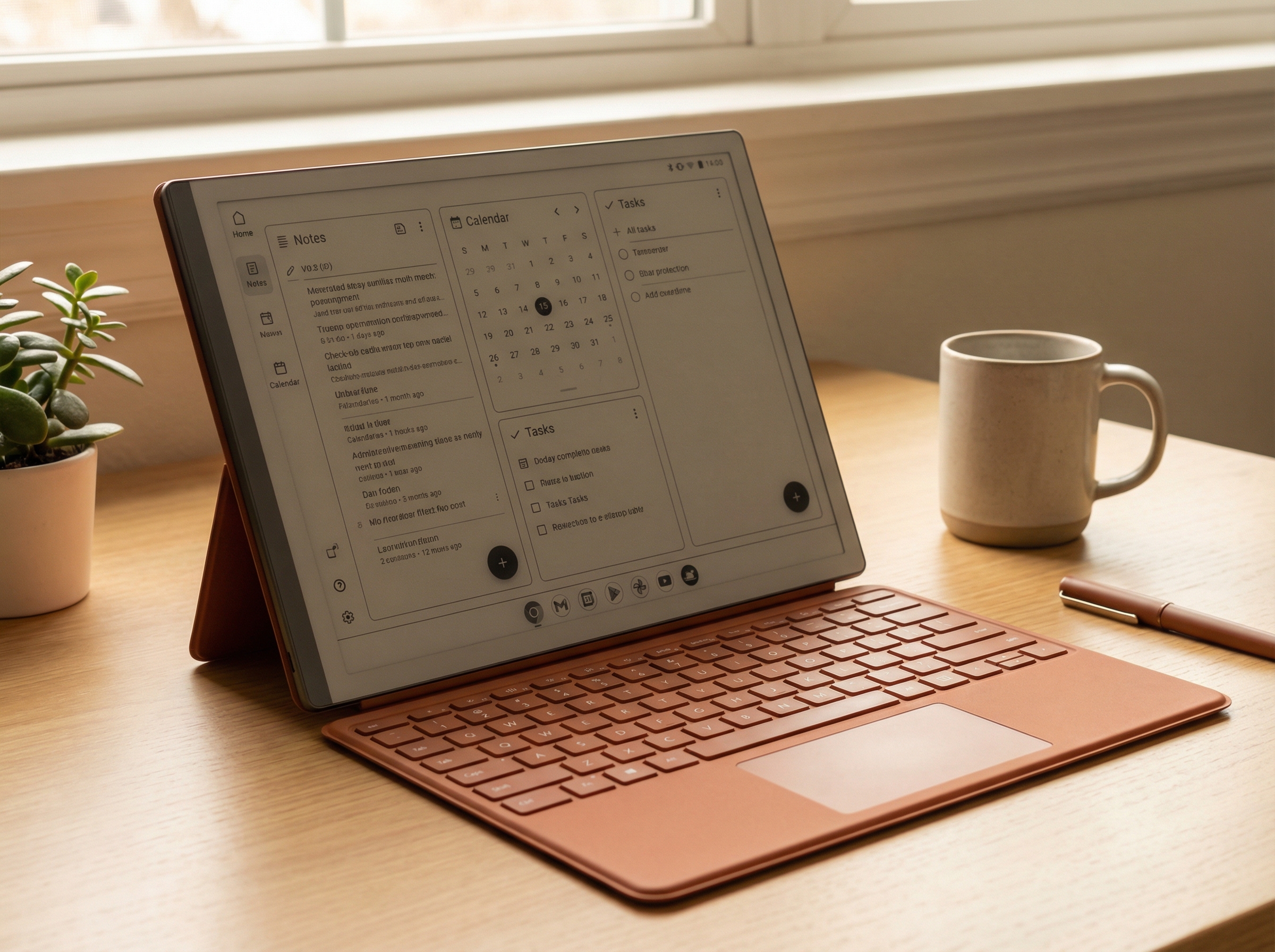
E-ink tablet with keyboard transforming into laptop workstation
06

The E-Ink PC Fantasy Gets Real Hardware

The Bigme B10 "Workstation" is the latest entry in a category that refuses to die: the e-ink laptop replacement. A 10.3-inch Kaleido 3 display, Android 14, 8GB of RAM, and a magnetic keyboard cover. The pitch is seductive: paper-like comfort for all-day writing, with enough horsepower to run real productivity apps.

Reality check: this is an Android tablet with a slow display and a keyboard attachment. It's not replacing anyone's MacBook. But it might replace the dedicated writing devices like Remarkable and Supernote for users who want more than note-taking. The ability to run Obsidian, Google Docs, or even SSH clients changes the value proposition.

The "Productivity Meets Paper-Like Comfort" tagline is doing a lot of work here. Bigme is positioning against both traditional e-notes (too limited) and traditional tablets (too eye-straining). Whether that middle ground is a lucrative niche or a "worst of both worlds" trap depends entirely on the user.

Ships February 10. If early reviews are strong, expect Boox and others to respond with their own keyboard-focused SKUs before Q2.

The Slow Revolution Continues

E-paper's future isn't about catching up to LCDs. It's about creating a parallel universe where "good enough" refresh rates meet "irreplaceable" benefits: zero eye strain, sunlight readability, weeks of battery life. This week showed both the technology's maturation and the market's uncertainty. Samsung validated commercial e-paper while Goldman questioned E Ink's trajectory. Both can be true. The displays are getting better; the investment thesis is getting more complicated.