The Paradox of Warming: Why a Hotter Arctic Means Colder Winters
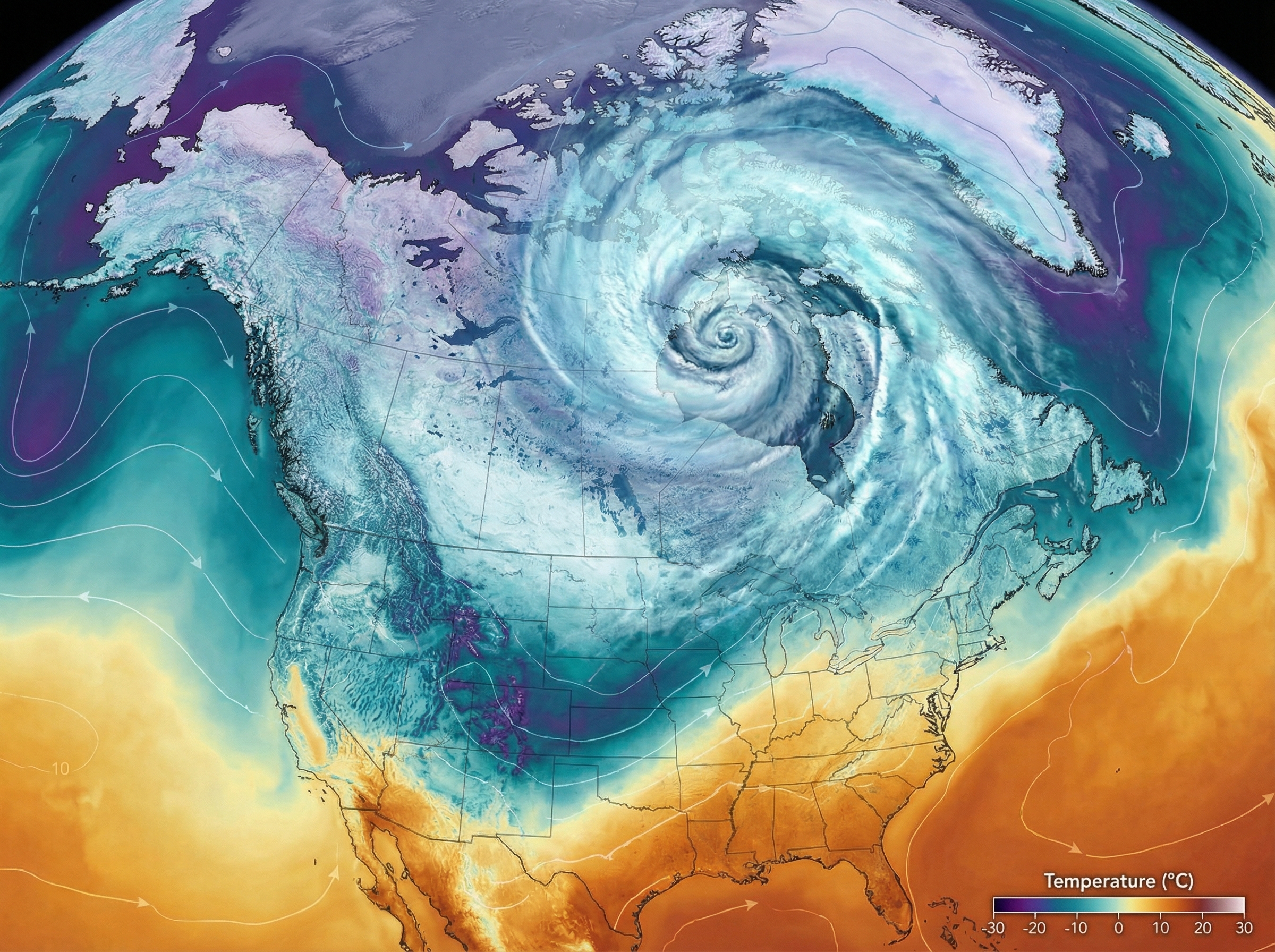
Winter Storm Fern tore through the United States this week with the subtlety of a freight train, affecting over 160 million Americans and delivering temperatures that would make a polar bear reconsider its life choices. But here's the twist that still confuses your uncle at Thanksgiving: this brutal cold snap may be another symptom of global heating.
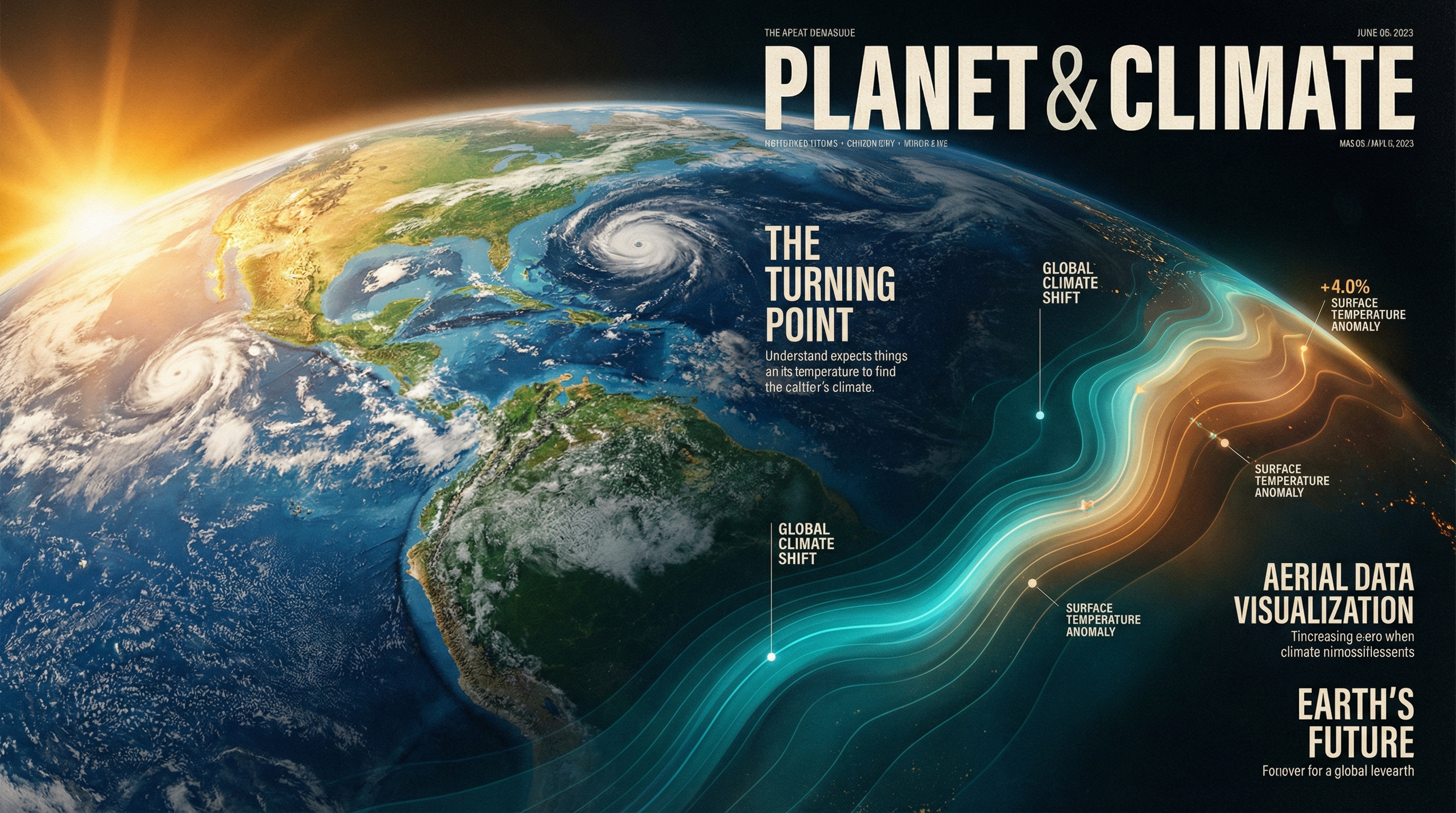
The mechanism is something scientists call Arctic amplification. The Arctic is warming roughly four times faster than the global average, which weakens the temperature gradient that normally keeps the stratospheric polar vortex spinning tight and contained. A wobbly vortex means Arctic air can slosh southward like water in an unsteady bowl. The result? Record cold in places that increasingly lack the infrastructure to handle it.
Attribution studies are still underway, but the pattern is consistent with models predicting more chaotic, extreme winter events in mid-latitude regions. "A paradox of warming," as one NOAA researcher put it: "a hotter Arctic may be unleashing colder, more chaotic winters on the mid-latitudes."
Why it matters: Extreme cold events are routinely weaponized against climate science by bad-faith actors. Understanding the physical link between Arctic warming and polar vortex disruption is essential for accurate public communication.