AI Presentations

The Story Wins

Design automation is now table stakes. The new battleground for AI presentation tools? Narrative coherence. This week, every major player made moves to prove they can tell a story, not just decorate slides.

Listen
Abstract visualization of narrative flow through presentation slides
01

The $4 Billion Bet That Slides Are Dead

AI avatar presenter emerging from digital streams

When Synthesia closed its $200 million Series E this week at a $4 billion valuation, the message was unmistakable: the era of the static slide deck is ending. Alphabet's GV led the round, with Nvidia and Accel participating.

The technology transforms text scripts into professional video presentations featuring realistic AI avatars. Think of it as the anti-PowerPoint: instead of bullet points on a screen, you get a human-like presenter delivering your message with eye contact, gestures, and vocal modulation.
AI presentation tool valuations comparison showing Synthesia at $4B
Synthesia's valuation dwarfs competitors, signaling investor confidence in presenter-led AI video

The implications for enterprise communications are significant. Training videos, sales pitches, investor updates—all the contexts where a human face builds trust but scheduling a live presenter is impractical. Synthesia's bet is that narrative delivered through a face beats narrative delivered through slides, full stop.

The question isn't whether AI can make pretty slides anymore. It's whether AI can make you care about what's on them.


02

Pitch Bets on Community Over Features

Community gathering around collaborative presentation

While competitors raced to announce AI features this week, Pitch announced... a conference. PitchCon 2026 runs January 29 through February 1, and the agenda tells you everything about their strategy: deep community engagement for high-stakes use cases.

In a market flooded with "AI generates slides" tools, Pitch is carving a defensible niche by focusing on contexts where narrative structure is critical. Fundraising decks. Board presentations. The moments where a generic AI output could cost you millions.

The counterintuitive insight: when every tool can generate a deck, the differentiator becomes knowing which deck to generate. That requires domain expertise. And domain expertise lives in communities, not models.

Watch for whether Pitch's community-first approach gains traction as a template for AI-era product strategy more broadly.

03

Microsoft Finally Learns to Count to 150

Narrative threads connecting slide thumbnails

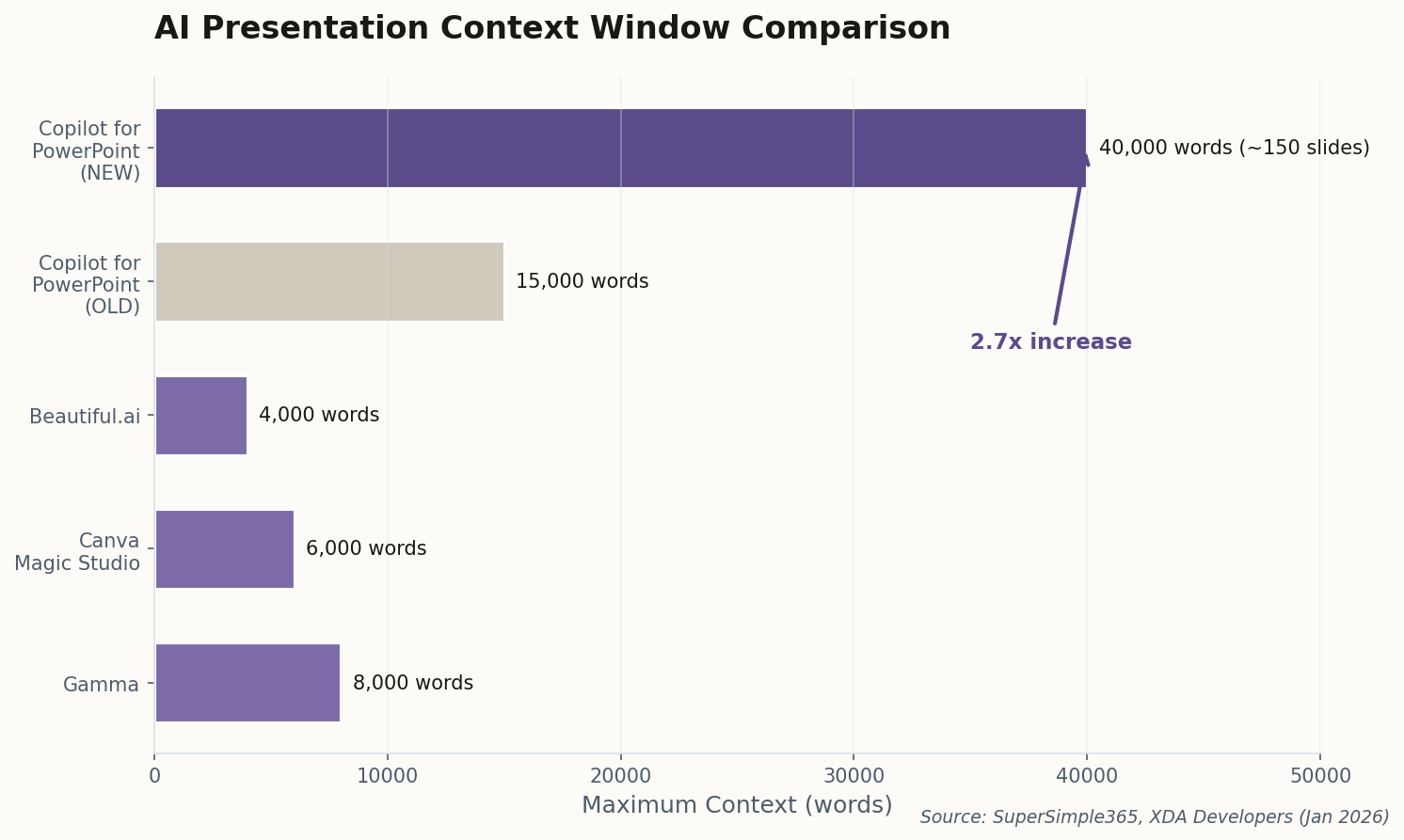
Microsoft Copilot for PowerPoint just got a memory upgrade: the Narrative Builder module now handles up to 40,000 words—roughly 150 slides—in a single context window. That's a 2.7x increase from the previous limit.

Context window comparison showing Microsoft's 40K word capacity
Microsoft's expanded context window addresses the core criticism of AI decks: fragmented narrative

Why does this matter? The common criticism of AI-generated presentations is that they lack coherence. Slide 1 doesn't connect to slide 15. The story fragments. By expanding the context window, Microsoft is attempting to let the AI "see" the entire presentation at once—and thus maintain logical flow from beginning to end.

New features include "connective tissue" text generation (the transitions that make a deck feel like a narrative rather than a list) and voice interaction for brainstorming. You can now literally talk to your deck.

The deeper signal: Microsoft is positioning narrative architecture, not visual design, as Copilot's core value proposition. The slides look fine. The question is whether they mean anything together.

04

Canva Declares "Perfect" Design Dead

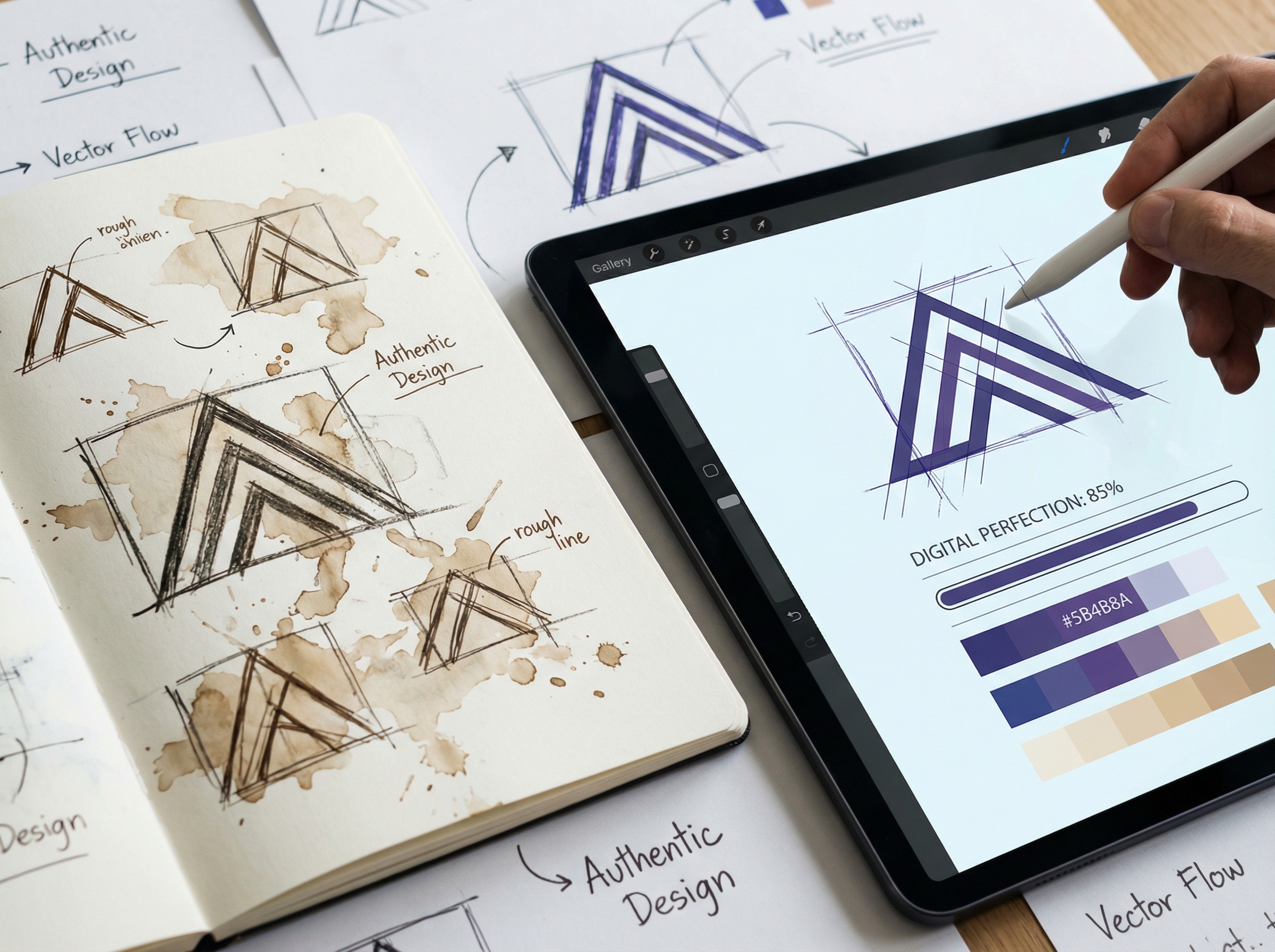
Hand-drawn aesthetic meeting digital perfection

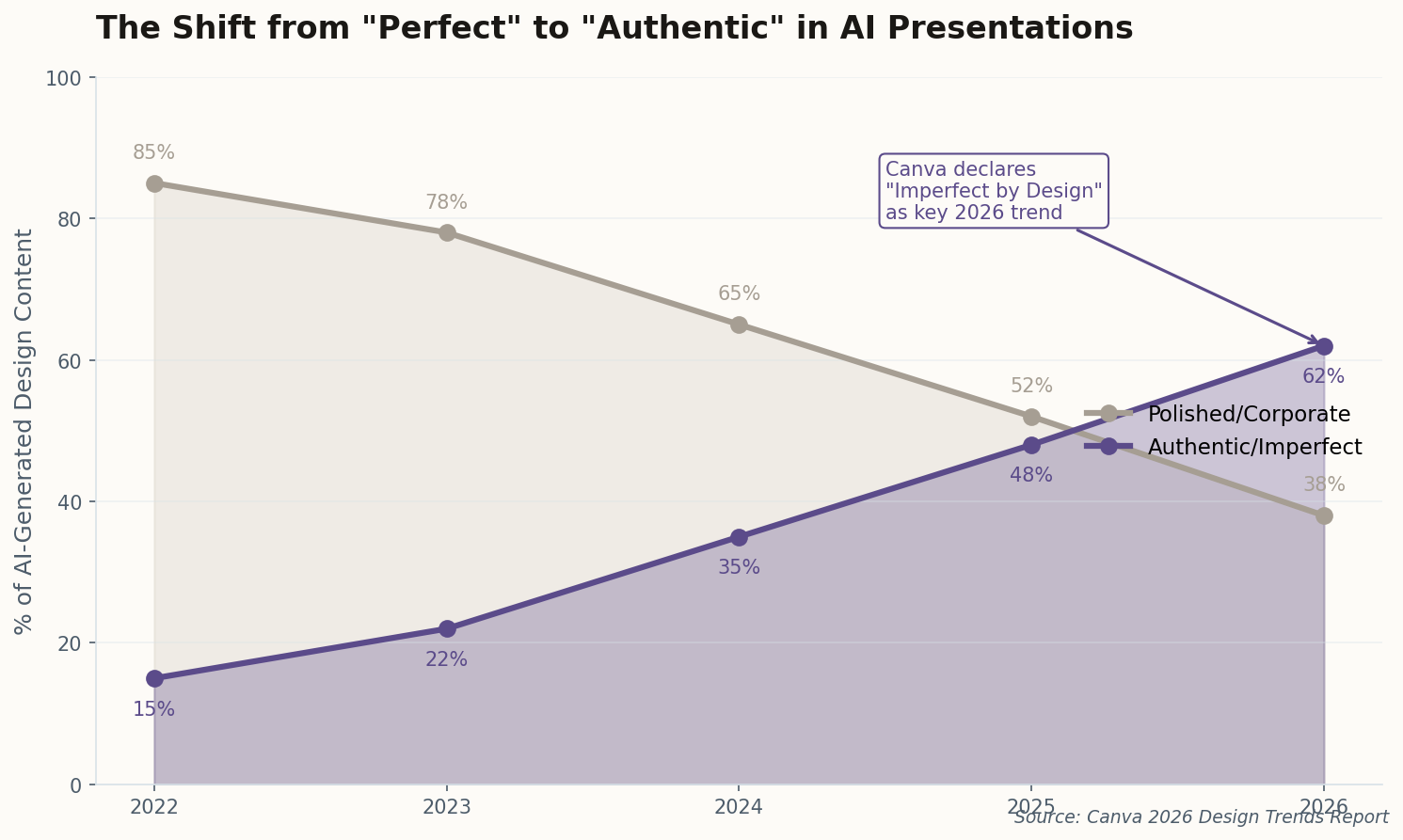
Canva's 2026 Design Trends Report identifies a paradox at the heart of AI-generated visuals: as polished, corporate aesthetics become trivially easy to produce, they've become worthless as differentiators. The trend they're betting on? "Imperfect by Design."

Chart showing shift from polished to authentic design trends
The authenticity premium: as AI makes "perfect" easy, imperfection becomes valuable

This isn't just aesthetic commentary—Canva has updated Magic Studio with features that deliberately introduce "authentic visual noise": hand-drawn elements, intentional roughness, the kind of texture that signals human involvement.

The storytelling implication is profound. A flawless AI deck now reads as "this person couldn't be bothered." A deck with human touches reads as "someone actually cared." The medium has become the message.

When AI can make anything look professional, "professional" stops meaning anything. The new marker of quality is looking like you meant it.

05

Adobe Solves the Wrong Problem (Brilliantly)

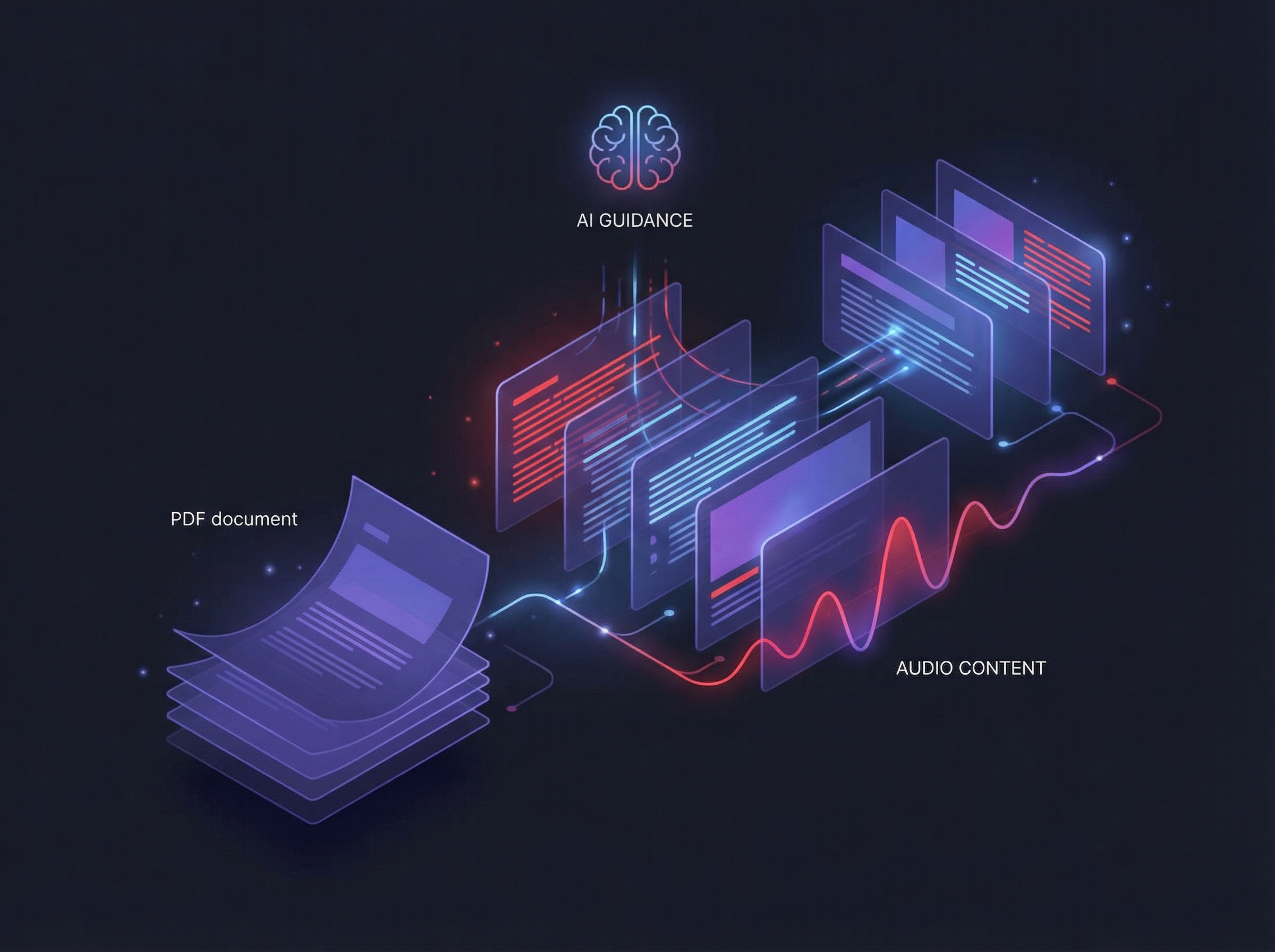
PDF document transforming into presentation

Adobe Acrobat Studio just shipped a feature that reframes the entire AI presentation problem: document-to-presentation conversion. Instead of helping you build a deck from scratch, it extracts narrative structure from existing PDFs and white papers.

The "blank slide" anxiety that plagues most AI presentation tools? Bypassed entirely. You already have content. Adobe's AI identifies the structure, extracts key points, and generates a presentation that flows logically—because the logic was already there in your source document.

Even more interesting: the tool generates podcast-style audio summaries alongside the visual deck. Same content, two delivery mechanisms. They're betting that the future of business communication is format-agnostic: the same narrative, rendered appropriately for slides, audio, or video depending on context.

It's a clever inversion. Most tools ask "what do you want to say?" Adobe asks "what have you already said that's worth repeating?"

06

Gamma Makes Presentations Programmable

Code transforming into animated presentations

Gamma's "Generate API" launch this week signals a fundamental shift in how we should think about presentations. The API allows developers to programmatically create decks, documents, and webpages from data sources.

The immediate use case: automated reporting. Sales dashboards that turn into slide decks. Analytics that become board presentations. The human in the loop moves from "making the deck" to "reviewing the deck."

But the deeper implication is about narrative at scale. When you can generate thousands of personalized presentations programmatically, the narrative architecture becomes code. The story structure is a template. The specifics are variables.

Gamma also shipped AI Animations this week—dynamic visuals that replace static stock photos. Combined with the API, you get presentations that are both generated and visually alive. The static corporate deck, rendered obsolete from two directions at once.

The shift from "human-using-tool" to "system-generating-report" is accelerating. The question for knowledge workers: which parts of narrative construction are truly human, and which are just tedious?

The Narrative Advantage

This week made something clear: the AI presentation wars have moved past design automation. Every tool can make slides look good. The new competitive advantage is making slides mean something—maintaining narrative coherence across an entire deck, connecting ideas in ways that resonate, telling a story that sticks. In 2026, the story wins.