Education & AI

The Diploma's Diminishing Monopoly

Is a college degree still worth it when AI can do the entry-level job you trained for? The answer is more nuanced—and more urgent—than you think.

Listen
A classical university building with columns dissolving into streams of digital data and neural network visualizations
01

What AI Still Can't Replicate: The Case for College
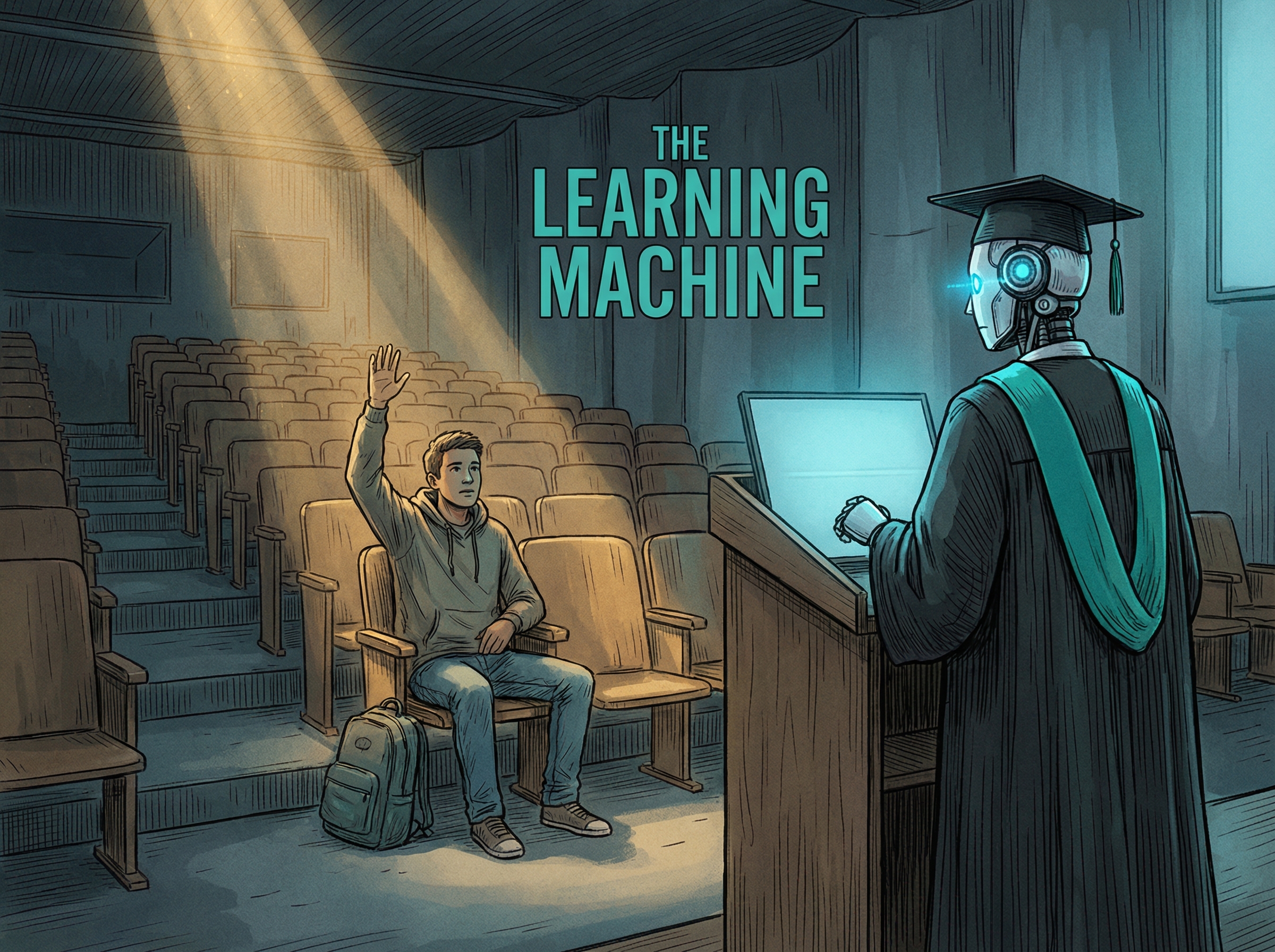
Robot professor in graduation attire at podium with single student raising hand

Here's a contrarian take in the anti-college zeitgeist: the skills that matter most in an AI-saturated economy are precisely the ones you can't learn from a YouTube tutorial. The World Economic Forum's Future of Jobs Report 2025 puts creative thinking at the top of essential skills—not prompt engineering, not Python, but the capacity to synthesize disparate ideas and challenge assumptions.

That's the kind of capability forged through late-night seminar debates, exposure to disciplines outside your comfort zone, and professors who push back on your half-baked theses. IBM's global study found 40% of the workforce will need to reskill within three years. The question isn't whether you'll need to learn new tools—you will. The question is whether you've developed the meta-skill of learning itself.

Active discussion and debate—the cornerstone of rigorous undergraduate education—remains the best training ground for creative thinking. AI excels at pattern recognition; humans excel at pattern breaking. The college classroom, at its best, teaches you to do precisely that. The keyword, of course, is "at its best." Not every program delivers this, which brings us to the real issue: it's not whether college is worth it, but which college and which major.

02

The Two-Tier Reality: Elite Schools Pull Ahead While Skepticism Soars

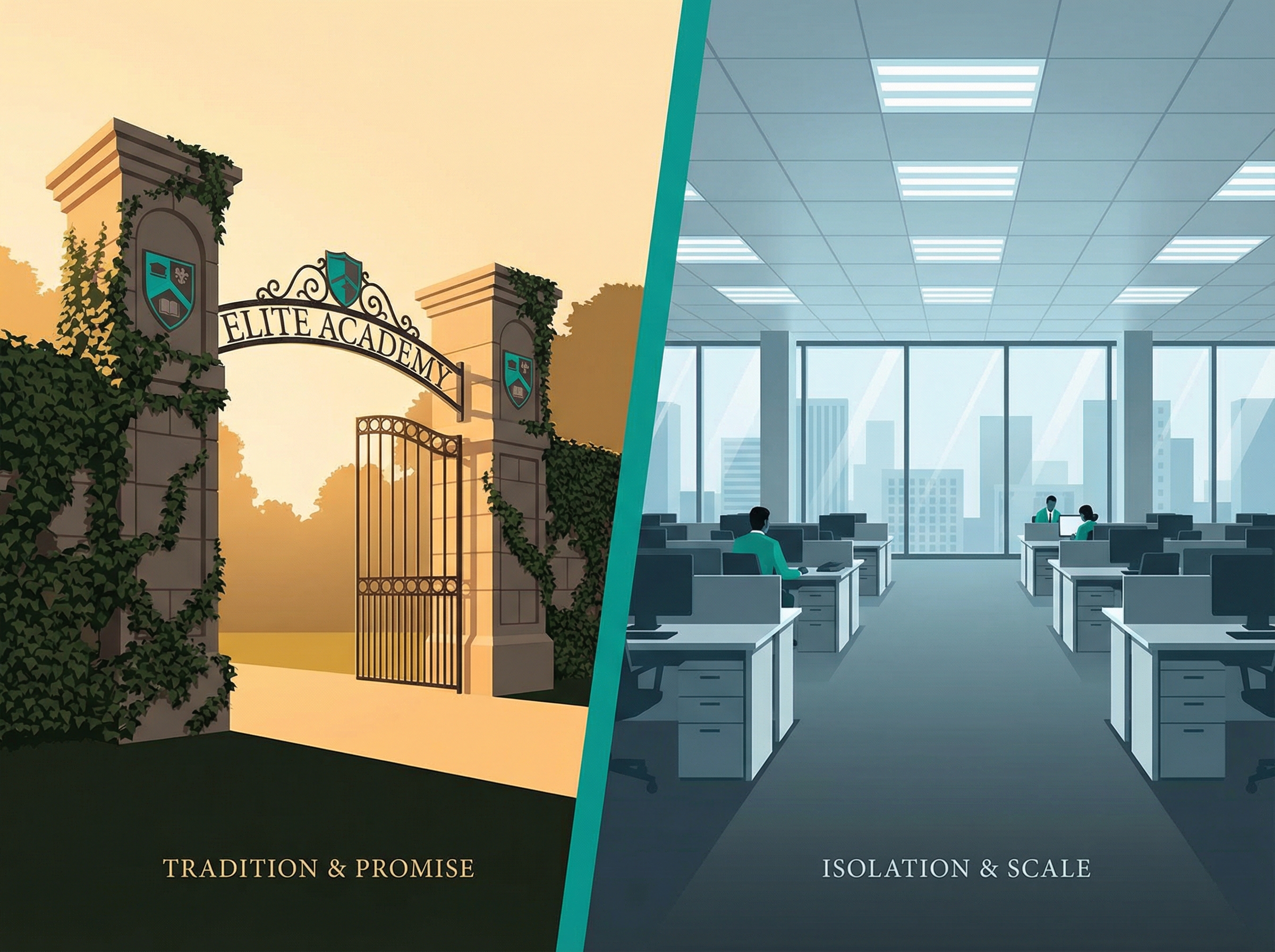
Split image of ivy league gates with crowds versus empty corporate office

Almost two-thirds of registered voters now say a four-year degree isn't worth the cost, according to a November 2025 NBC News poll. Just 35% of U.S. adults called college education "very important" in 2025—down from 70% in 2013. That's a stunning collapse in confidence over just twelve years.

But here's the twist that complicates the narrative: while public skepticism surges, elite institutions are actually strengthening their grip on hiring. A striking 26% of companies now recruit primarily from a brief selection of elite schools—up from 17% in 2022. The degree isn't dying; its value is concentrating.

The paradox: As faith in higher education plummets nationally, the Harvard-Stanford-MIT axis becomes more valuable, not less. We're watching the emergence of a two-tier credential system in real time.

Despite the skepticism, institutions still awarded nearly 2.2 million bachelor's degrees in 2025—up from 1.6 million in 2010. People are voting with their feet in both directions: more degrees awarded, but increasingly concentrated skepticism about whether the average degree delivers value. This bifurcation has profound implications for anyone choosing an educational path in 2026.

03

Universities Pivot to "AI as Institutional Strategy"

Modern university computer lab with VR headsets and traditional chalkboard

Universities aren't standing still. Over 100 institutions have launched AI-related credentials. AI-related degrees increased 120% between 2011 and 2023—and the acceleration continues. Ohio State launched an AI fluency initiative embedded directly in core undergraduate requirements. UC Berkeley, Florida, MIT, and University of Michigan have collectively invested nearly $2.5 billion in AI research infrastructure.

The U.S. Department of Education awarded $169 million for responsible AI use in teaching and learning. This isn't lip service—it's institutional survival instinct. Universities see the writing on the wall: graduates without AI literacy will be at a severe disadvantage in the job market. Stanford's AI Index 2025 found 78% of organizations now use AI in at least one part of their work.

Perhaps most telling: 92% of students globally now use AI tools—up from 66% just a year earlier. The students have already integrated AI into their learning process. Universities are racing to catch up, transforming AI from "a collection of pilots and curiosities" into "an essential part of institutional strategy." The question is whether traditional four-year programs can adapt fast enough to justify their time and cost premium over faster alternatives.

04

The Enrollment Cliff Arrives: Up to 80 More Colleges Could Close

Abandoned college building with ivy and FOR SALE banner at sunset

The demographic reckoning is no longer theoretical. At least 16 nonprofit institutions announced closures in 2025—and a Federal Reserve Bank of Philadelphia model predicts up to 80 additional colleges could close with an abrupt 15% enrollment decline between 2025 and 2029. Three credit rating agencies have issued unfavorable outlooks for higher education in 2026.

The roots trace back to 2008: birth rates plummeted during the Great Recession, and those missing babies would have been college freshmen starting this year. The Western Interstate Commission projects a 13% decline in high school graduates from 2025 through 2041. That's 16 years of demographic headwind.

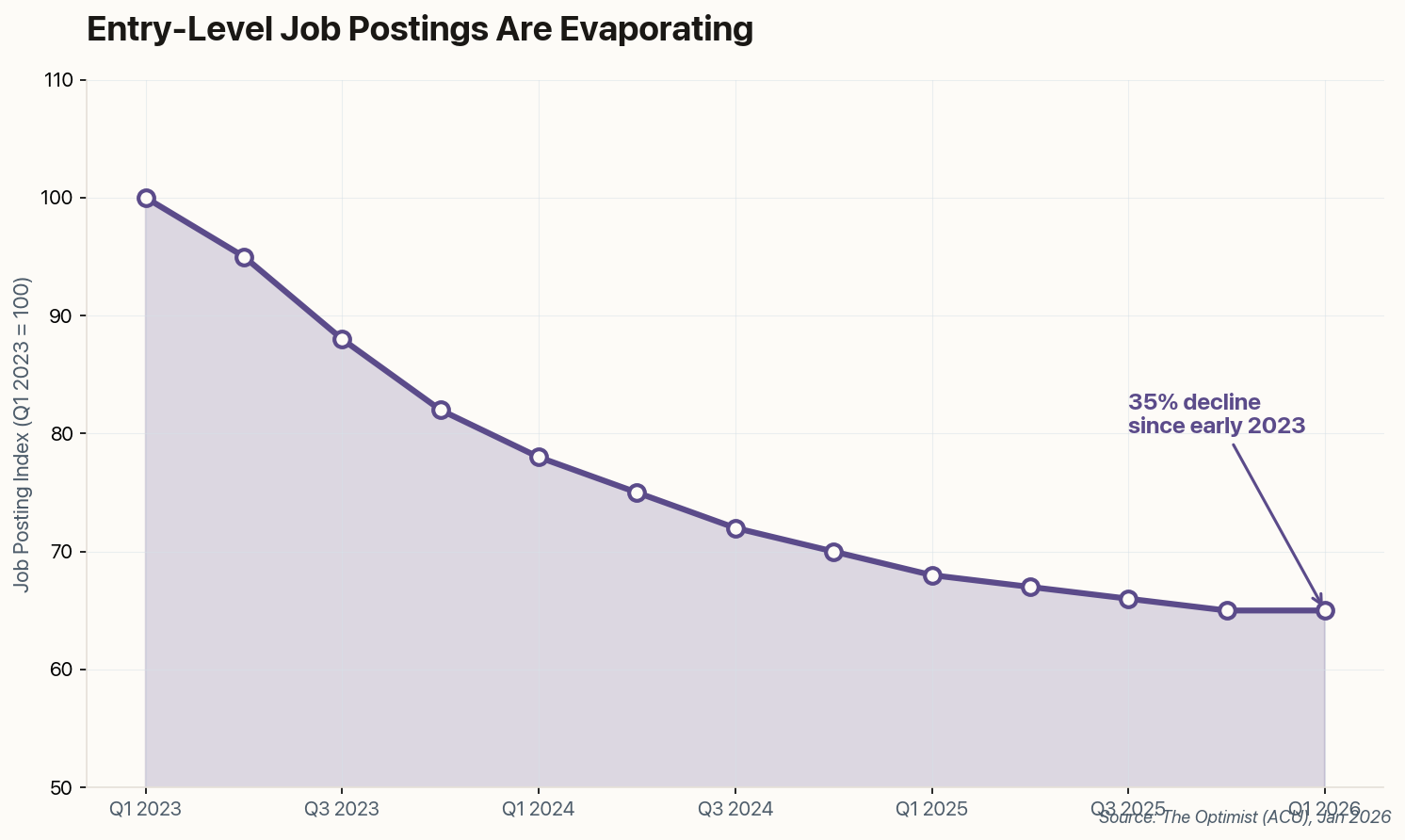
Chart showing entry-level job postings declining 35% since January 2023
Entry-level job postings have fallen 35% since 2023, with tech sector hit even harder at 52% decline.

Small private colleges are the most vulnerable—institutions where tuition may simply be too expensive relative to the value students perceive. Trinity Christian College near Chicago announced closure for the end of the 2025-26 academic year. It won't be the last. The AI-driven uncertainty in the job market compounds the demographic pressure: why take on $150,000 in debt for a degree when entry-level jobs are disappearing and alternative credentials are gaining legitimacy?

05

Alternative Pathways Go Mainstream: Google's Apprenticeship and the Credential Flip

Young professional at laptop with certificate badge and tech logos

Google has officially opened applications for its 18-month Apprenticeship Program starting March 2026. The requirements: high school diploma or GED, less than one year of relevant experience, and you must not be enrolled in or have completed a degree in the related field. Upon completion, apprentices receive a credential certified by the U.S. Department of Labor. This isn't a consolation prize—it's an explicit alternative to the four-year track.

The numbers tell the story: certificate enrollment soared 28% while master's degrees dropped 1.2%. Trade schools are gaining enrollment share. Average coding bootcamp cost: roughly $14,000 versus $100,000+ for a four-year degree at a private institution. Some AI jobs now require only 2-4 weeks of training, according to an EIT Campus study.

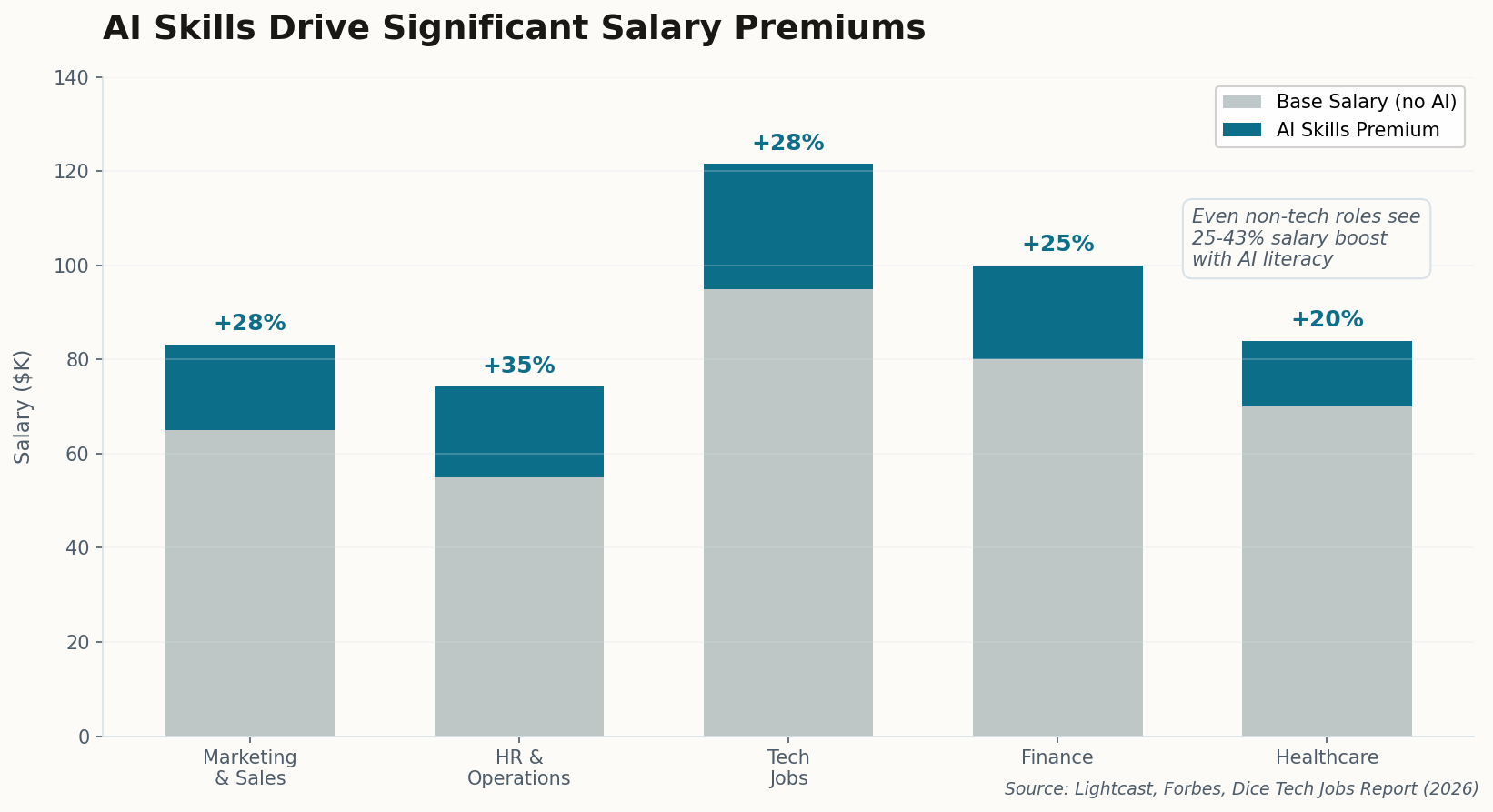
Chart showing AI skills drive 25-43% salary premiums across fields
AI literacy drives significant salary premiums even in non-tech fields like HR and marketing.

Entry-level AI positions at Amazon, Tesla, and Microsoft range from $45,000 to $85,000—and many don't require degrees. We're witnessing what some call the "Credential Flip": verified skills becoming as valuable as traditional degrees. A 2026 CS graduate might understand the theory of neural networks, but a candidate with a specialized "GenAI Deployment" certificate knows how to ship them today.

06

The ROI Reality: From 1,800% Returns to Negative Outcomes

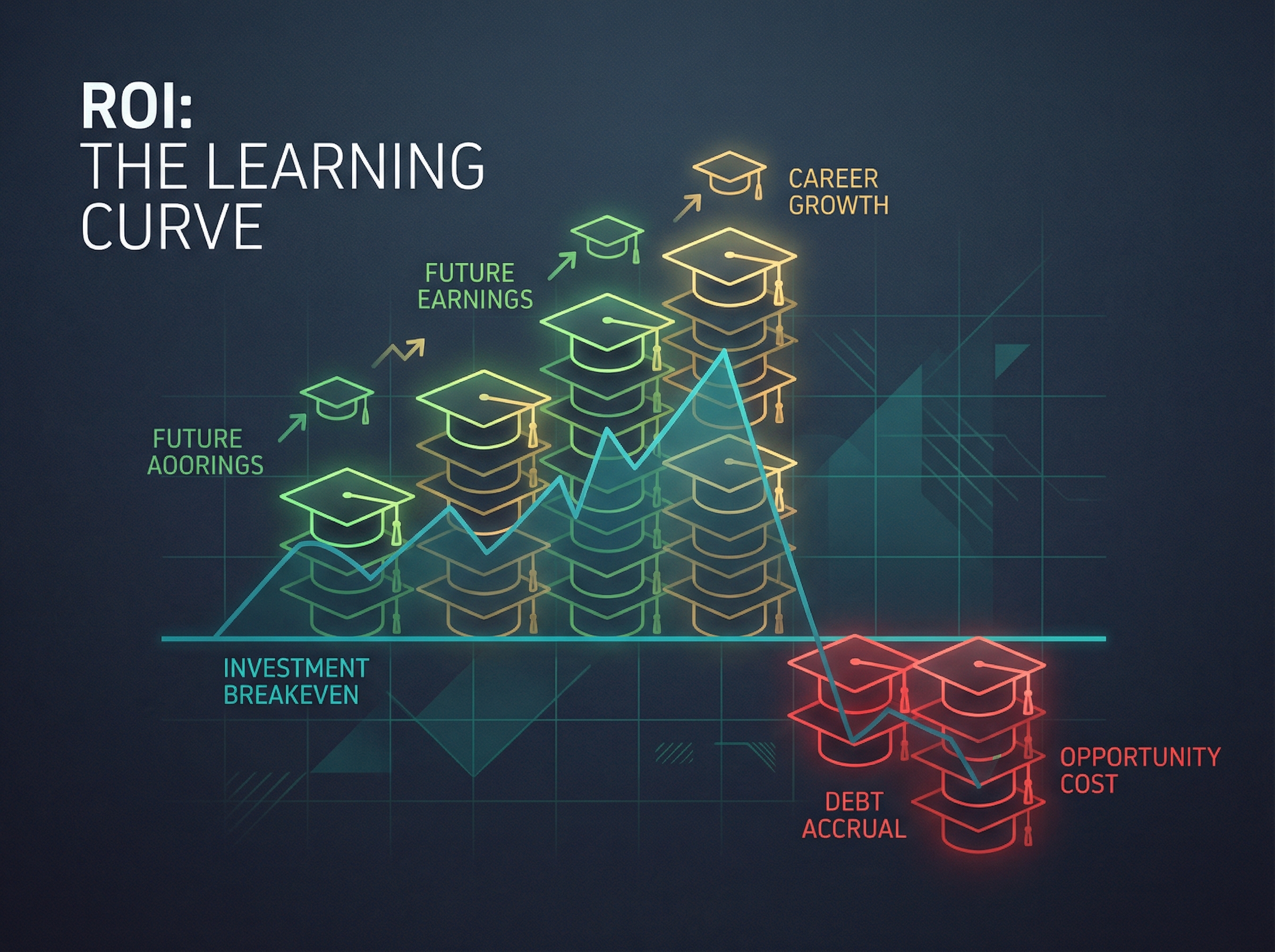
Abstract visualization of graduation caps as rising and falling ROI bars

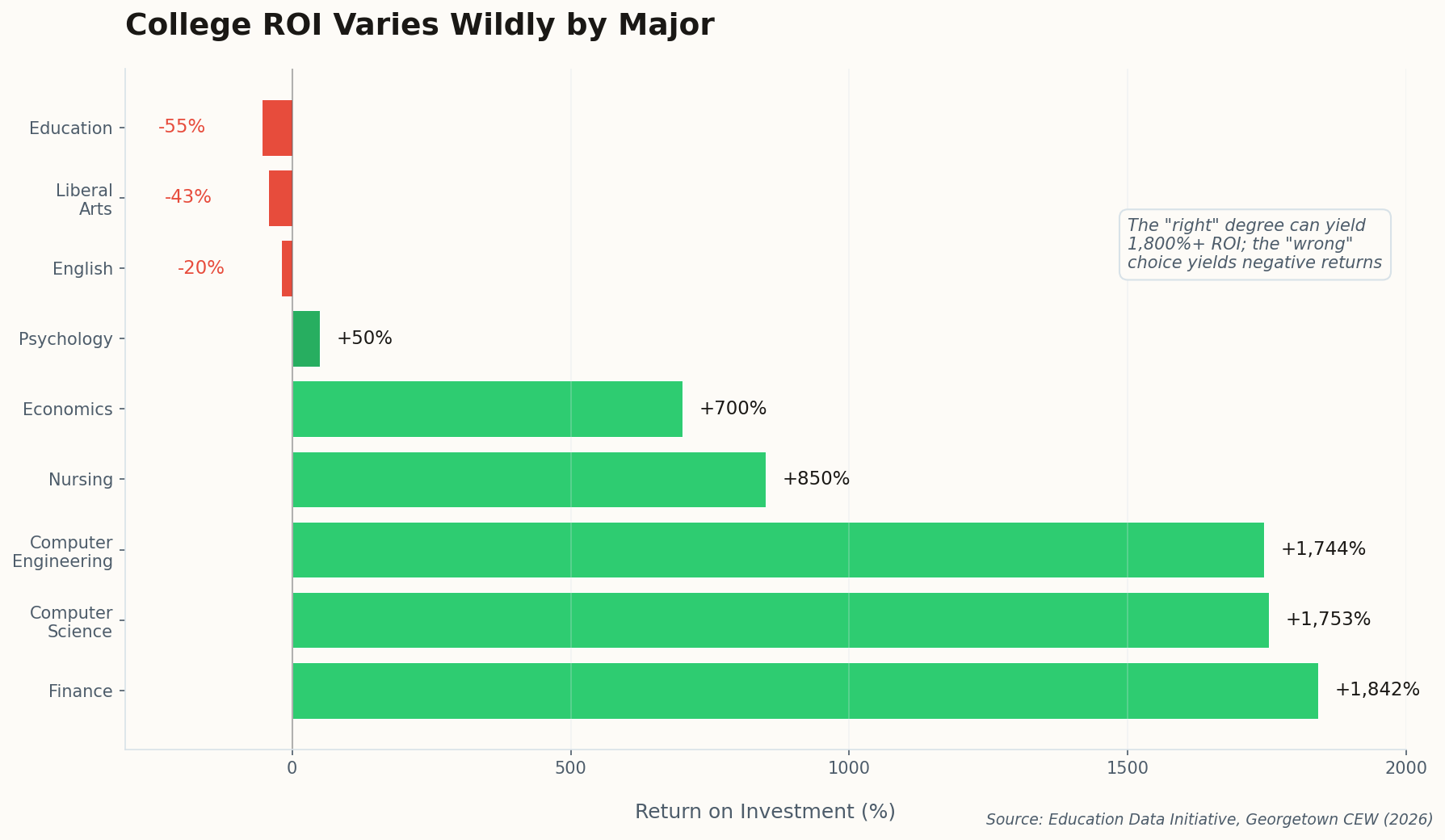
The framing of "is college worth it?" is fundamentally wrong. Median bachelor's degree ROI is $160,000—but that average obscures enormous variation. Finance delivers 1,842% ROI. Computer Science: 1,753%. Computer Engineering: 1,744%. These are life-changing returns.

Then there's the other end. Education majors face -55% ROI. Liberal Arts and Humanities: -43%. Psychology, English, Fine Arts: smaller payoffs or outright negative returns. Over 30% of graduates report they are not better off financially, according to a Nexford University report. Undergraduate certificates in technical trades often outperform the median bachelor's degree ROI.

Horizontal bar chart showing ROI ranging from +1,842% for Finance to -55% for Education
College ROI varies by nearly 1,900 percentage points depending on major choice.

The decision to attend college is less important than the choices that come next: which school and which subject. Engineering, CS, nursing, economics payoff at $500,000+. The "wrong" choices can leave students worse off than if they'd never attended—burdened with debt and a credential that doesn't open doors in the AI economy. This is the uncomfortable truth that both college boosters and college skeptics often elide.

The Decision Isn't Yes or No—It's Which Path and Why

College isn't dead, but its monopoly is over. The right degree from the right institution still pays off enormously. The wrong choice yields negative returns. In 2026, prospective students must evaluate field of study, institution quality, alternative options, AI skill integration, and career flexibility—all with clear-eyed realism about an economy where the entry-level rung of the ladder may no longer exist. The ability to learn, unlearn, and relearn will be essential. The only question is where you build that capability.