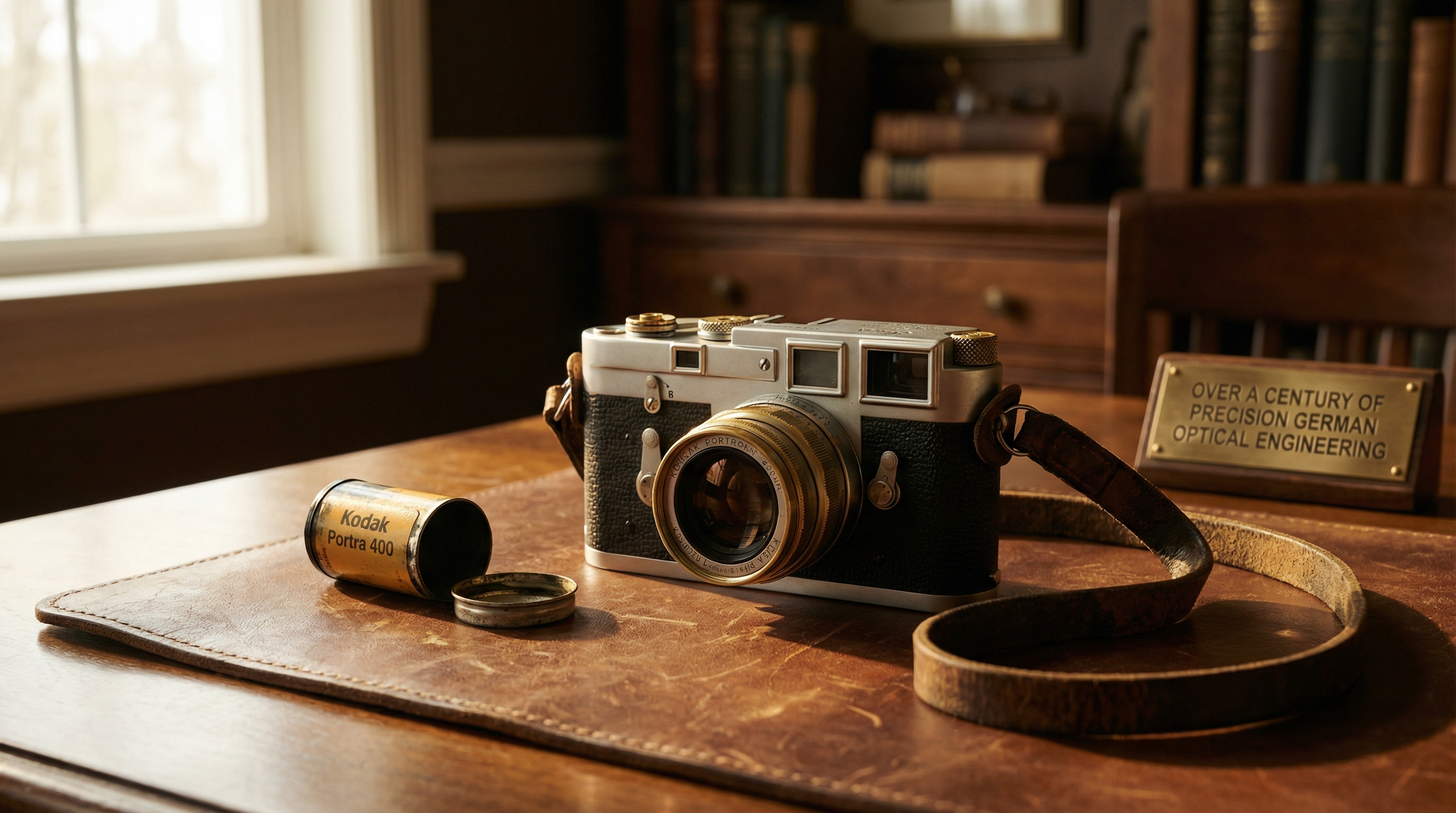
An Asthmatic's Invention Changes Photography Forever
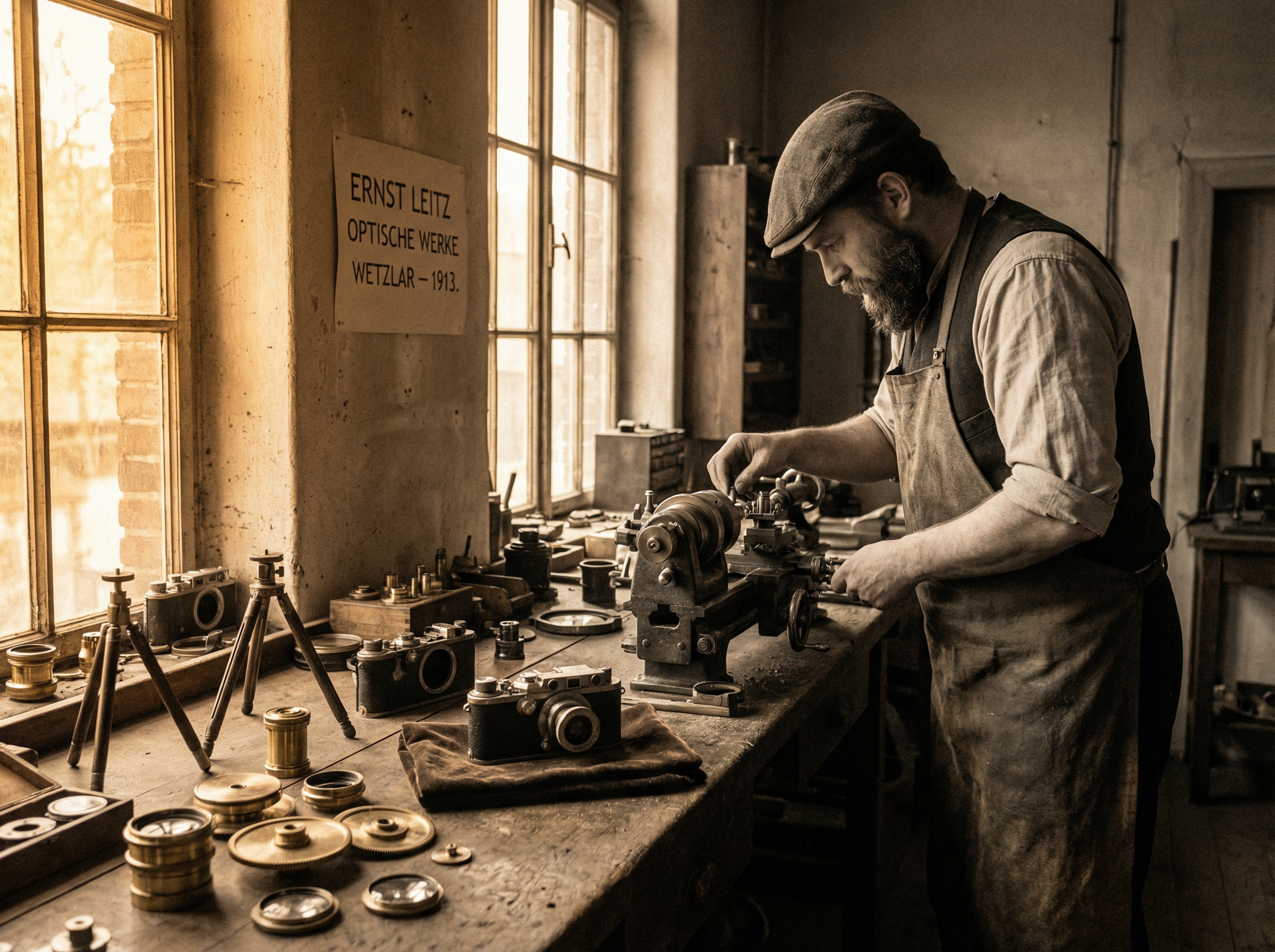
Oskar Barnack had a problem. As an engineer at the Ernst Leitz optical works in Wetzlar, Germany, he was passionate about photography. But his asthma made carrying the heavy plate cameras of the era nearly impossible. So in 1913, he did what engineers do: he built something better.
Barnack's insight was radical. Instead of shrinking the camera, he shrank the film. He took standard 35mm cinema film, turned it sideways, and created a format that exposed frames at 24x36mm—a decision that would define photography for a century. The "Ur-Leica" prototype was rough, barely functional, but it proved the concept.
Then came the war, then hyperinflation, then depression. The prototype sat. It wasn't until 1924 that Ernst Leitz II made his famous gamble. With Germany in economic freefall, mass-producing an untested camera seemed insane. His response: "I hereby decide: It will be risked."
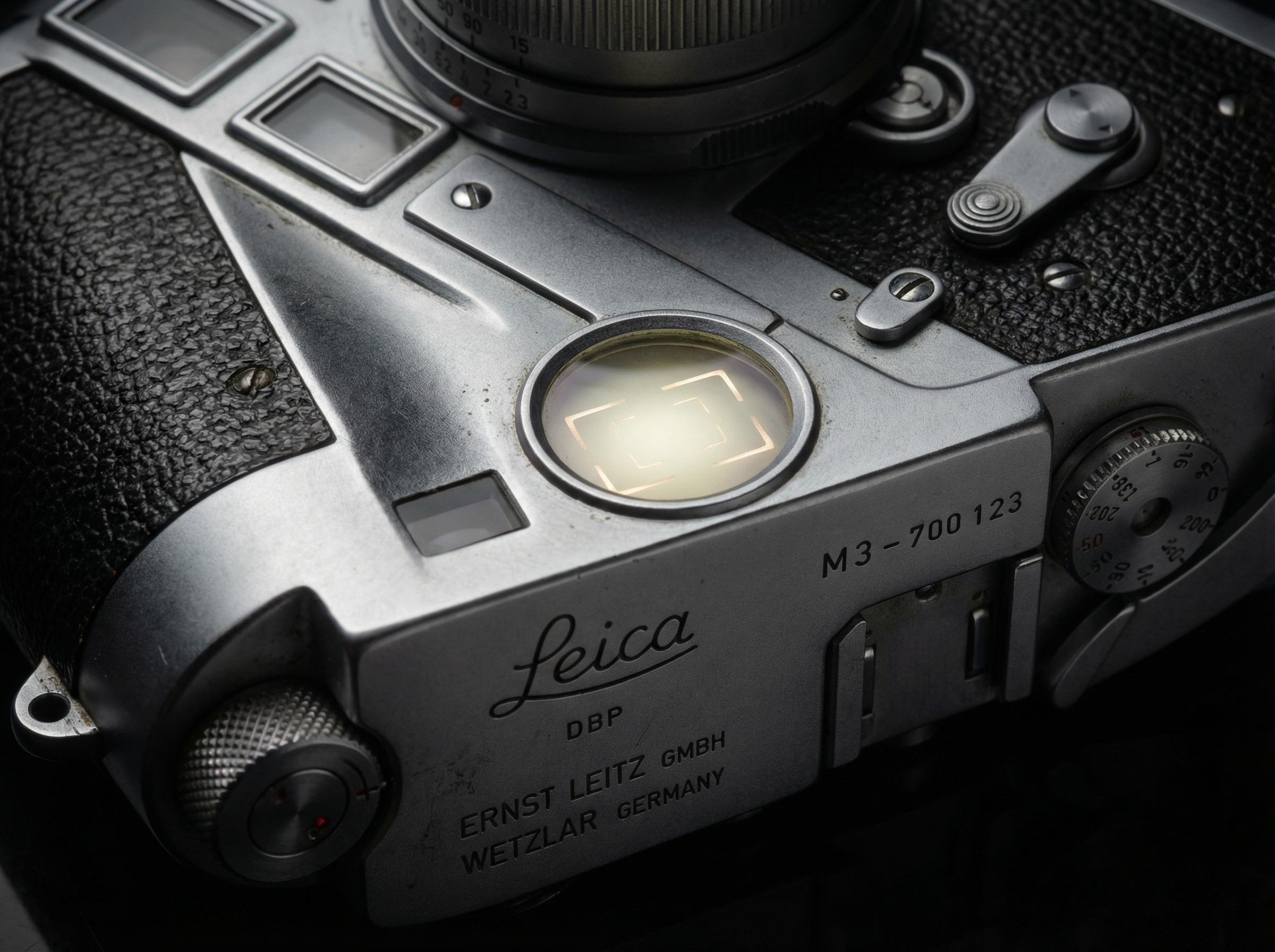
The Leica I debuted at the 1925 Leipzig Spring Fair. Within a decade, it would transform how humans document reality.