Swift Programming

When the Cloud Goes Dark

This week in Swift: Xcode Cloud's stumble, Android ambitions, malware that passed code review, and the proposals reshaping concurrency.

Listen
Abstract visualization of Swift programming language with flowing code streams
01

Xcode Cloud Goes Down, Takes Your CI/CD With It
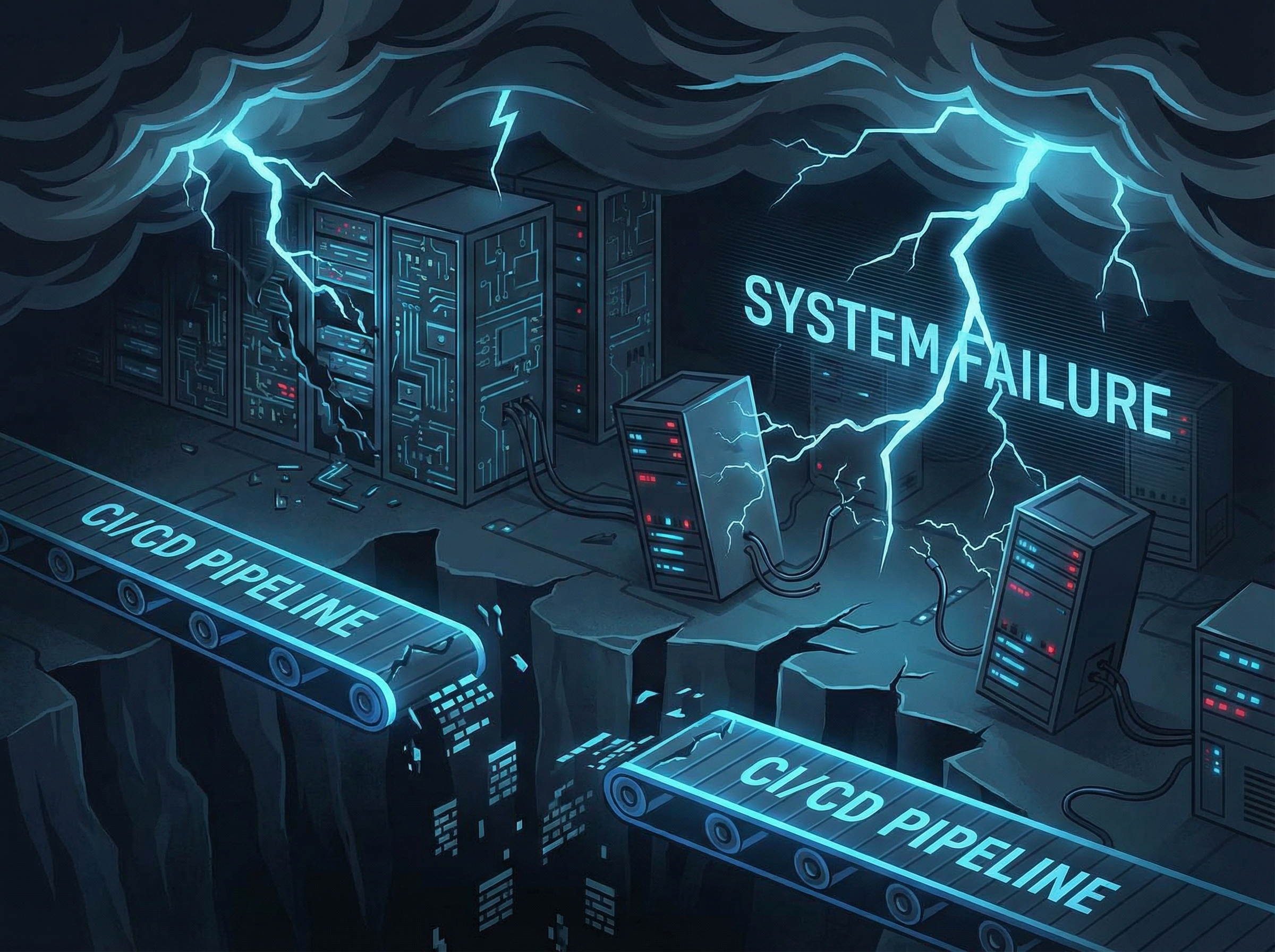
Digital storm clouds with lightning, representing cloud infrastructure failure

Monday morning brought a reminder that "the cloud" is just someone else's servers—and those servers can have very bad days. Xcode Cloud, App Store Connect, and TestFlight all went down simultaneously, leaving developers staring at spinning indicators where their build pipelines used to be.

The outage lasted several hours, during which no one could upload binaries, manage metadata, or—critically—ship hotfixes. By early Tuesday morning, services were restored, but the incident raises uncomfortable questions about single-vendor CI/CD dependencies.

The takeaway: If your release workflow has a single point of failure at Apple's infrastructure, you don't have a disaster recovery plan. You have a wish.

Teams running mission-critical apps would do well to maintain parallel build capabilities. GitHub Actions, Bitrise, or even a Mac mini in a closet can mean the difference between "we're monitoring the situation" and "we shipped the fix."
02

Swift on Android: No Longer Just a Party Trick

Swift bird and Android robot bridging two platforms

The community-led Android Workgroup dropped a significant update to the Swift SDK for Android this week, stabilizing the toolchain enough that cross-platform development is now "viable" rather than "theoretically possible."

New nightly builds support a wider range of Android NDK versions and improve interoperability with Kotlin. The goal, as the workgroup puts it: "Make Swift a first-class citizen on Android, strictly for the logic layer."

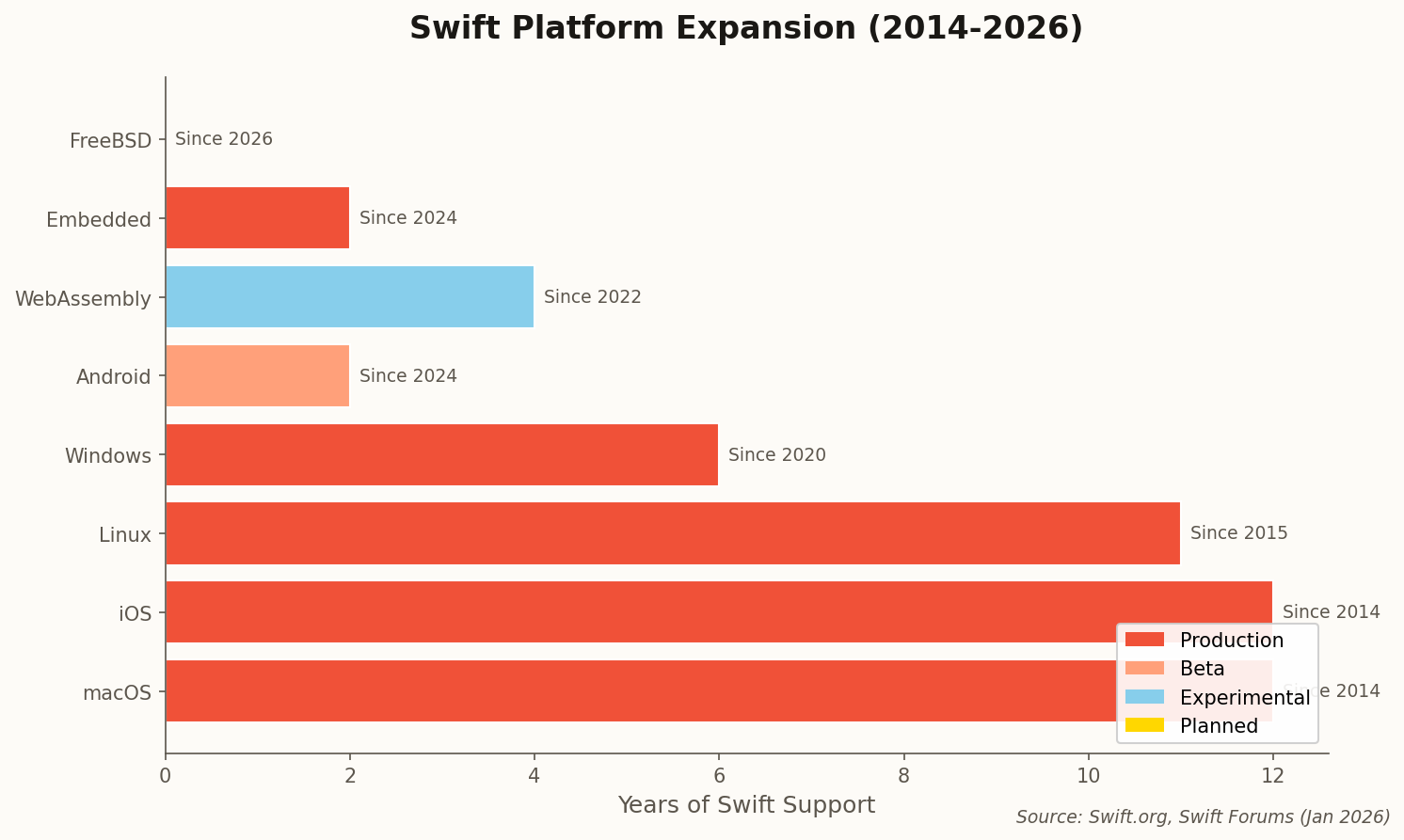
Chart showing Swift platform support maturity levels
Swift's reach is expanding, but iOS/macOS remains the only fully mature target.

This isn't a play to replace Kotlin Multiplatform or write UI code in Swift for Android. It's about sharing business logic—networking, data processing, domain models—between platforms without maintaining parallel implementations in different languages.

For teams already deep in Swift, this could reduce the C++ tax that cross-platform logic often demands. At 45% feature maturity, it's not ready for production. But it's no longer a curiosity project, either.

03

Apple's New Tutorials Quietly Bury UIKit

Open book transforming into SwiftUI code, representing learning

Apple released refreshed "Develop in Swift" tutorials this week, and the curriculum says everything about where the platform is headed. UIKit is almost entirely absent. The @Observable macro and structured concurrency are taught from day one. There's a new chapter dedicated to SwiftData.

This isn't subtle. Apple's official educational materials now treat SwiftUI and Swift 6 patterns as the baseline for beginners, not as advanced topics to graduate toward.

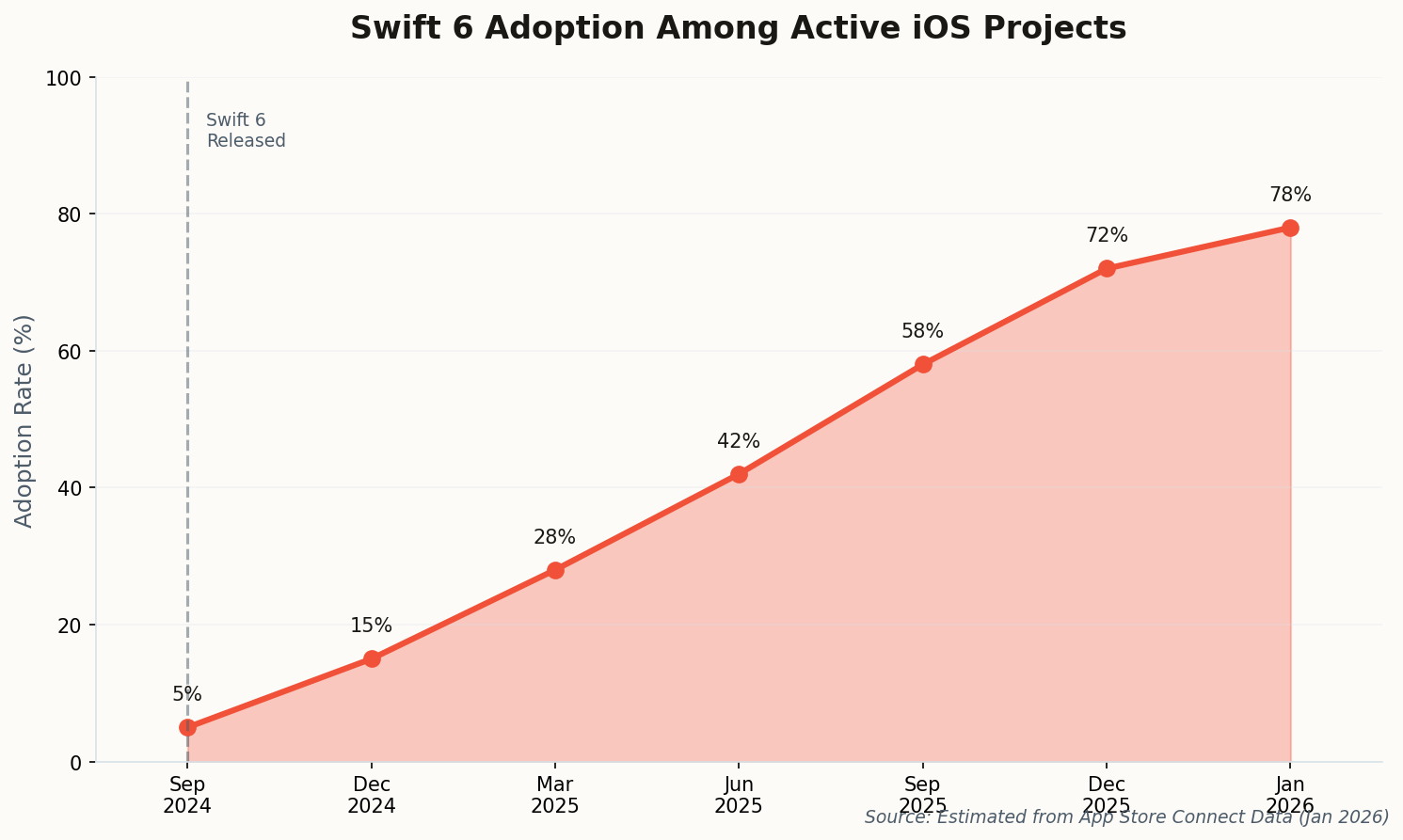
Chart showing Swift 6 adoption curve from September 2024 to January 2026
Swift 6 adoption has climbed steadily, now at 78% of active projects.

For hiring managers: new graduates will speak Swift 6 natively. For senior developers: the patterns you're still "migrating toward" are now the patterns Apple teaches first. The curriculum shift confirms what the adoption numbers already suggested—Swift 6's strict concurrency model is no longer optional. It's the expectation.

04

Signed, Notarized, Malicious: The MacSync Problem

Digital trojan horse made of code, representing signed malware

Jamf Threat Labs identified a new information-stealer this week called "MacSync"—and it arrived as a fully notarized Swift application. The malware passed Gatekeeper, displayed no warnings, and used a valid Apple Developer Team ID (since revoked) to steal credentials and cryptocurrency wallet data.

The implications are unsettling. Code signing and notarization are supposed to be trust signals. When malware routinely obtains valid signatures, either through compromised accounts or social engineering, those signals become noise.

For developers: Enable two-factor authentication on your Apple Developer account. Consider hardware security keys. Your signing identity is now a high-value target.

Expect Apple to tighten notarization requirements. The alternative—users learning to ignore security prompts because "everything passes anyway"—is worse.

05

Concurrency Gets Granular: Two Proposals Worth Watching

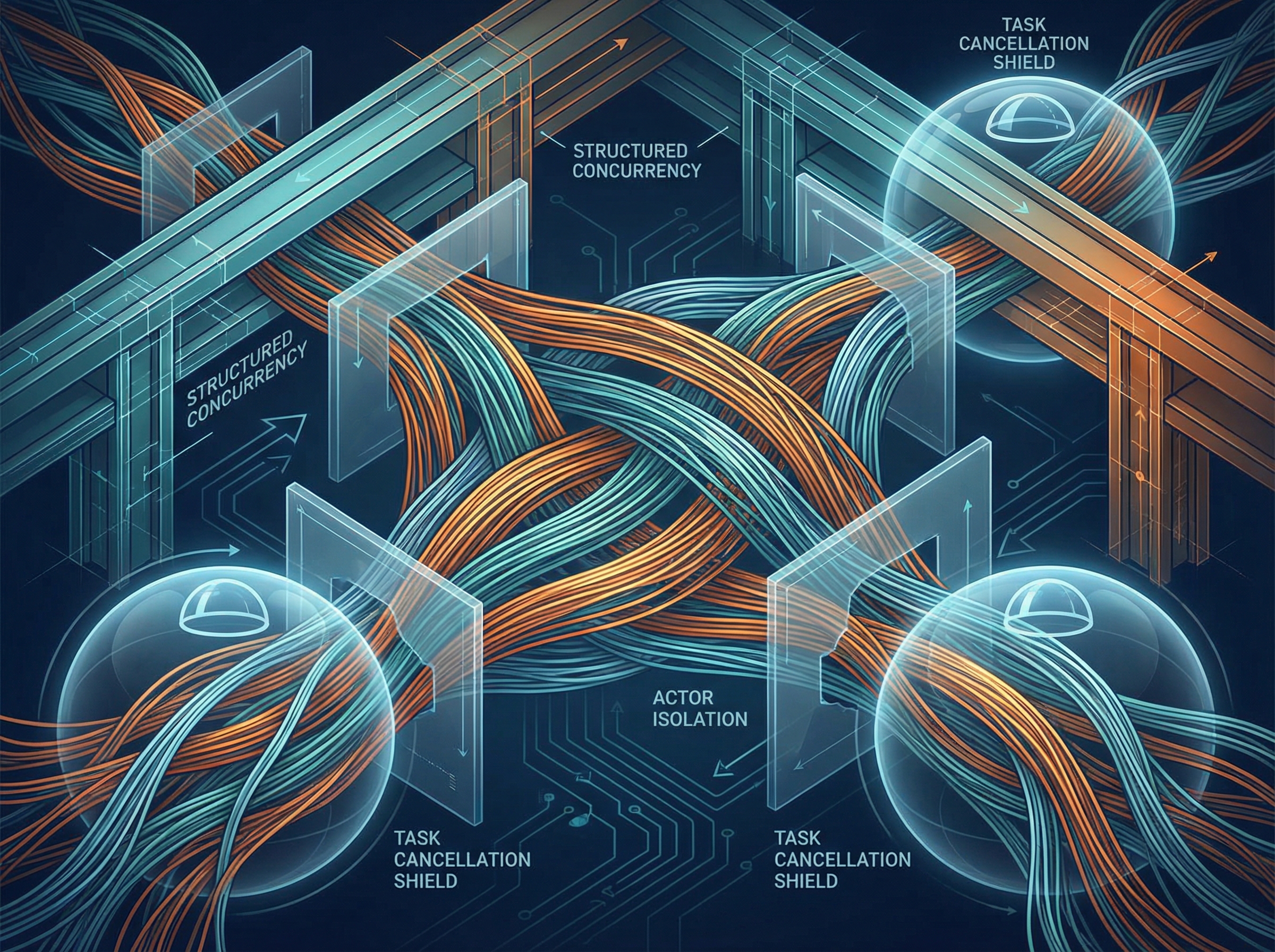
Abstract visualization of concurrent tasks as interweaving threads

Two proposals currently in review address long-standing pain points in Swift's concurrency model:

SE-0505: Delayed Enqueuing for Executors optimizes how tasks are scheduled on custom executors. For server-side Swift applications handling thousands of concurrent connections, this could meaningfully reduce scheduling overhead.

SE-0504: Task Cancellation Shields introduces structured ways to protect critical code sections from immediate cancellation. If you've ever debugged a race condition where a task was cancelled mid-write to a database, you understand why this matters.

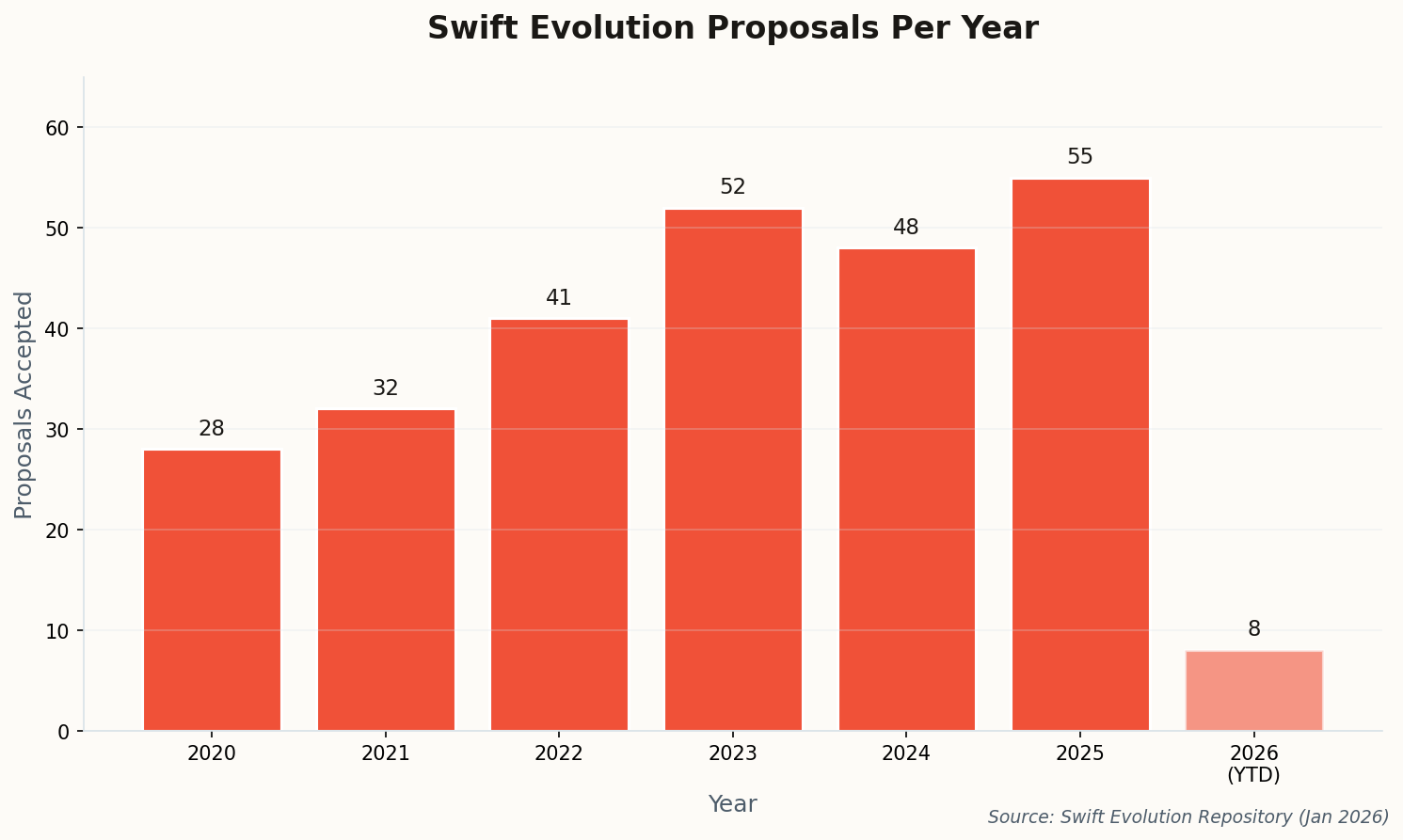
Chart showing Swift Evolution proposals per year from 2020-2026
Proposal activity remains strong, with 2025 seeing the highest count yet.

Neither proposal is glamorous. Both address the kind of edge cases that only matter when you're operating at scale. That's exactly where Swift needs refinement as it matures into a serious server-side language.

06

Your January 31 Deadline: Age Assurance Updates

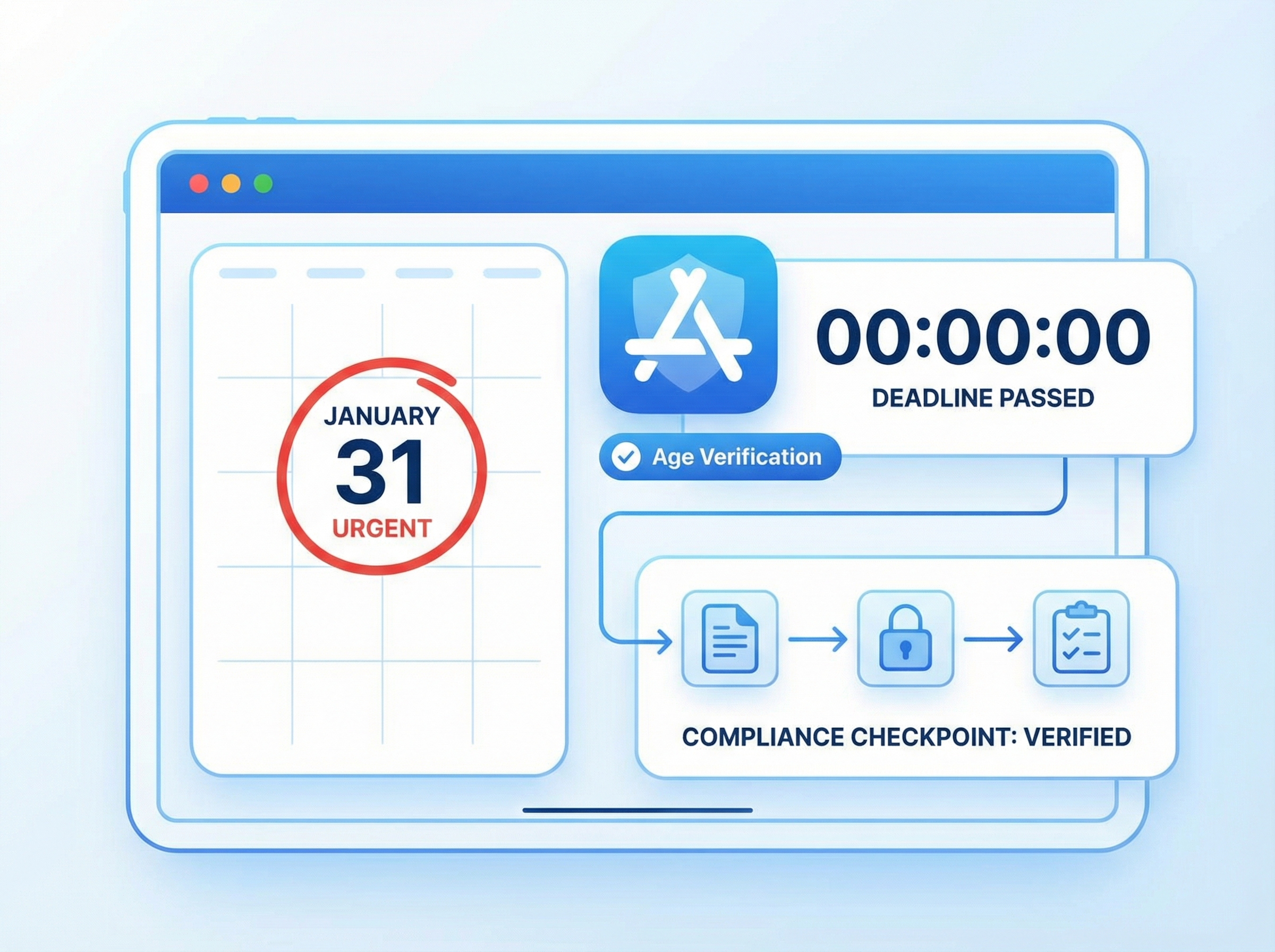
Calendar with January 31 circled, representing deadline

Apple reminded developers this week that all Age Rating settings in App Store Connect must be updated by January 31, 2026. This isn't optional housekeeping—it's compliance with new digital safety laws in Texas (SB2420) and the EU.

Starting February 1, apps that haven't updated these settings will be blocked from new submissions. If your continuous delivery pipeline pushes updates automatically, a missed deadline means a blocked pipeline.

Action required: Log into App Store Connect, review your app's Age Rating settings, and update them. Do it this week. Don't be the person filing support tickets on February 2.

The age assurance requirements reflect a broader regulatory trend. Governments are increasingly treating app stores as utilities with compliance obligations. Expect more of these deadlines, not fewer.

Until Next Week

Swift continues its evolution from "Apple's language" to a genuinely cross-platform option—though iOS remains home base. The strict concurrency model that felt aggressive in 2024 is now table stakes. Build systems fail, malware adapts, and compliance deadlines arrive whether you're ready or not. The language grows more capable. The ecosystem grows more complex. Both are true.