Art & Culture

The Eternal Demolition Man

Pablo Picasso shattered the rules of art so thoroughly that we're still picking up the pieces—and paying record prices for them.

Listen
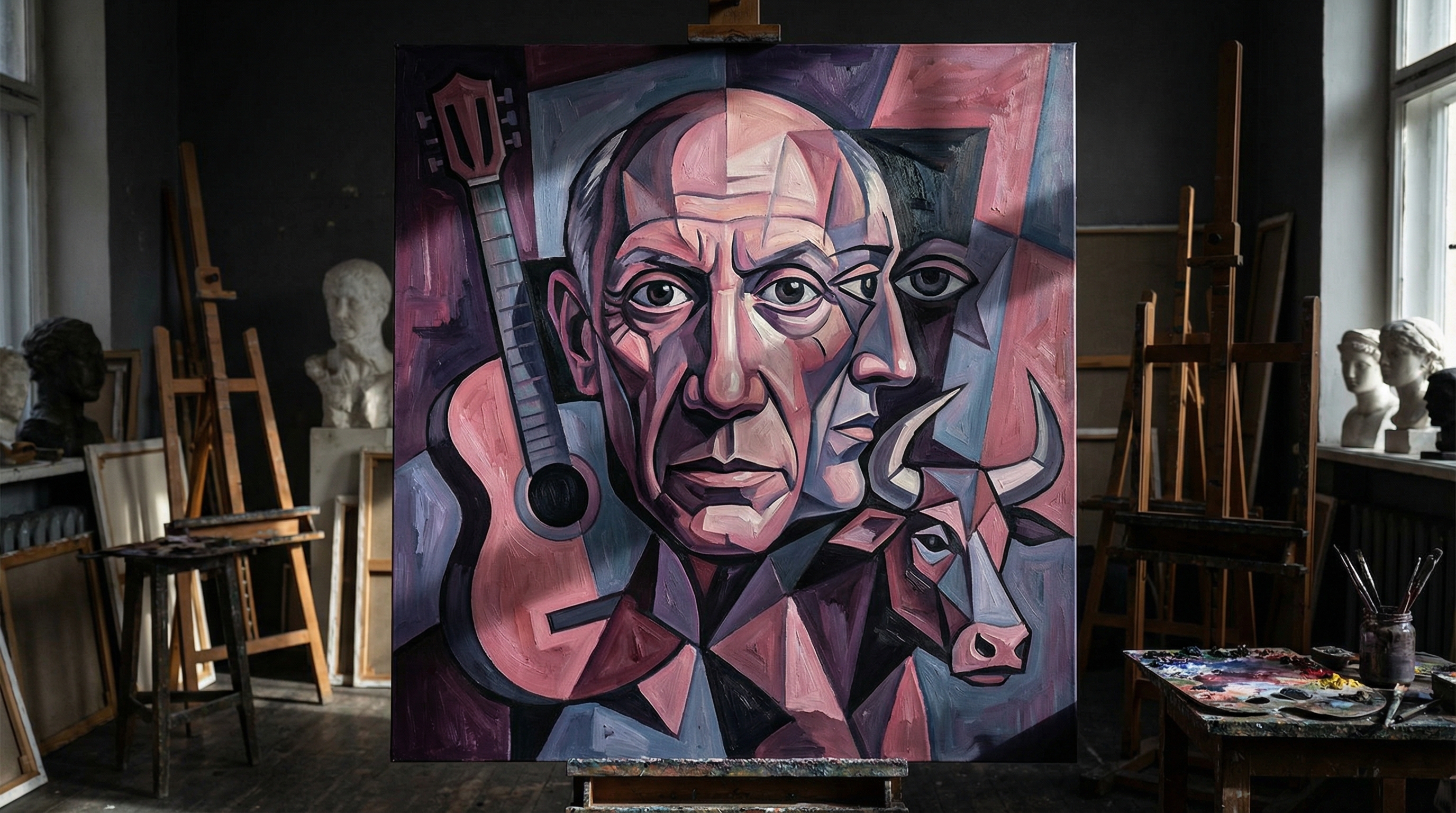
Pablo Picasso reimagined in his own Cubist style, fractured face with multiple perspectives
01

Abu Dhabi's Desert Masterpiece Gets Its Picasso Moment
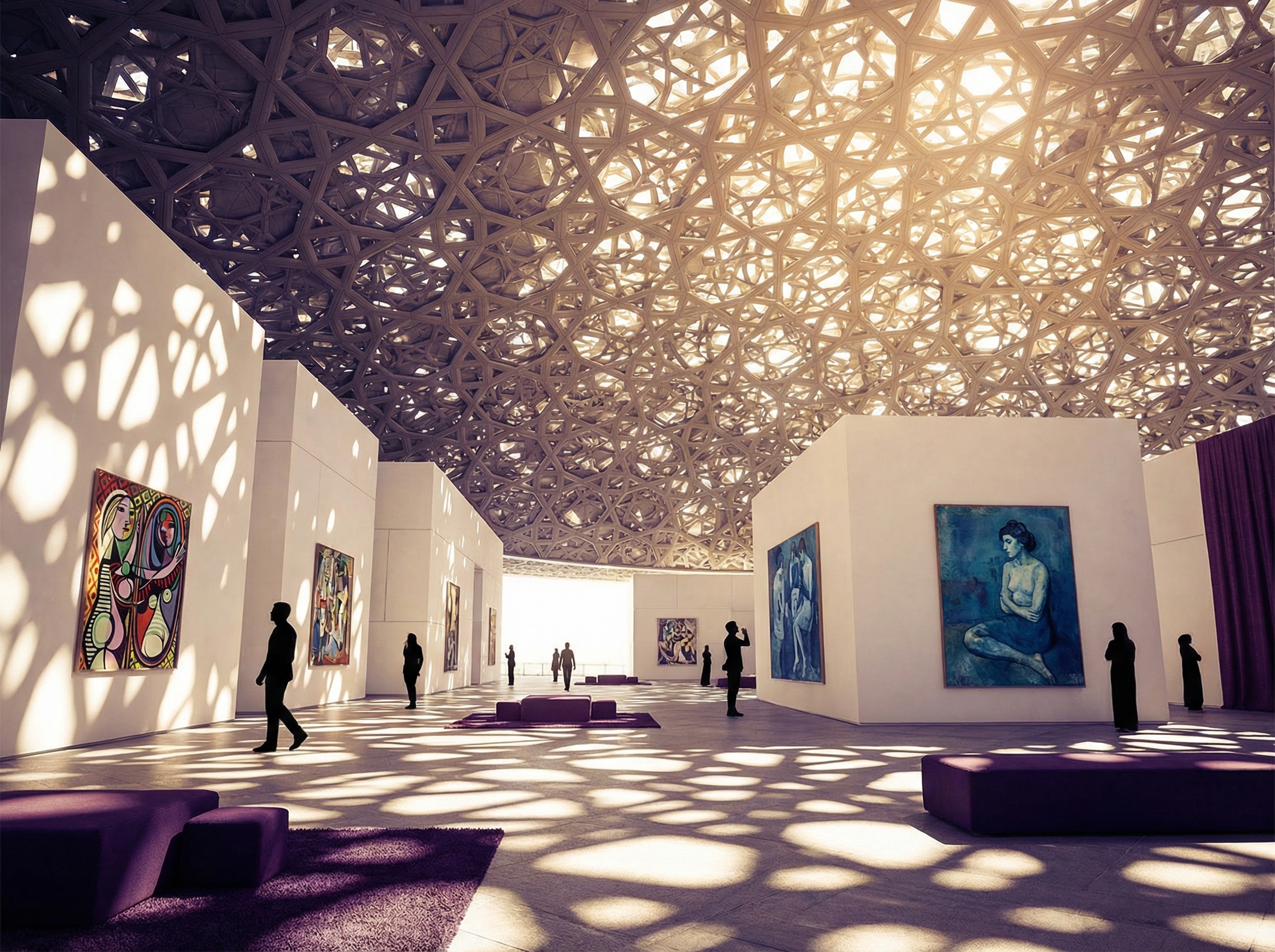
Interior of Louvre Abu Dhabi with geometric dome casting light patterns over Picasso exhibition

Fifty-three years after Picasso's death, his obsession with the human form has found a new home beneath Jean Nouvel's perforated dome in the UAE. The Musée National Picasso-Paris has partnered with Louvre Abu Dhabi for "Picasso, the Figure"—a 130-work exhibition that traces how one artist spent seven decades taking the human body apart and reassembling it in ways that still unsettle.

What makes this show more than a greatest-hits tour: curators have positioned Picasso's work alongside contemporary Arab artists who've absorbed his influence. It's a bold curatorial choice that acknowledges something critics often ignore—Picasso's own documented fascination with Islamic geometric patterns and African masks shaped Cubism as much as Cézanne did. The colonizer's gaze becomes, in Abu Dhabi, something more complicated and interesting.

The exhibition runs through April and represents the most significant Picasso show in the Gulf region to date. For a museum that's staked its reputation on being a bridge between civilizations, this is the kind of programming that justifies the ambition. Whether it moves the needle on how we understand Picasso's debt to non-Western art remains to be seen—but at least someone's asking the question.
02

The Imaginary Portrait Market Heats Up

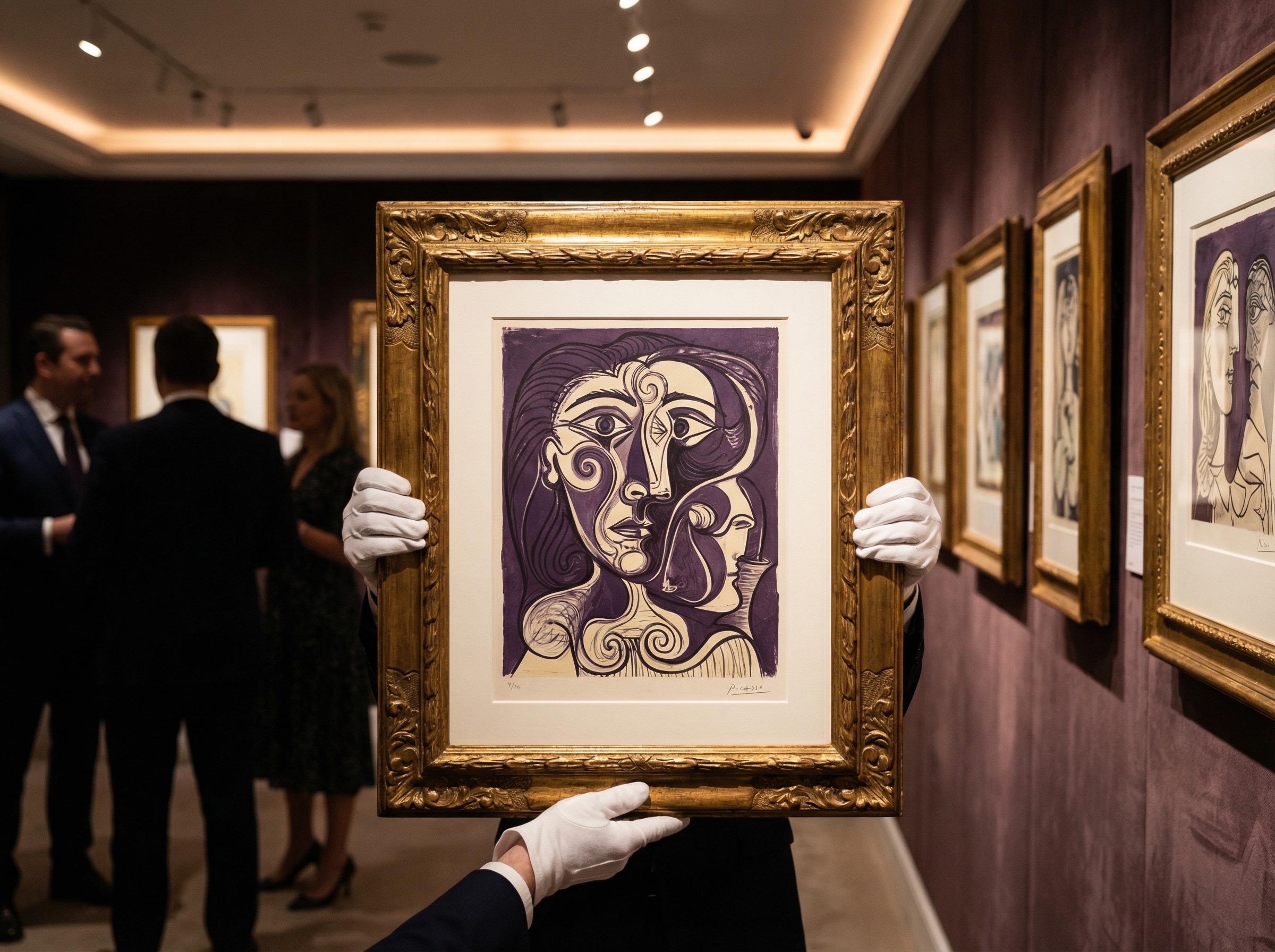
Portrait lithograph prints in ornate frames being inspected at auction house

Phillips is sending a set of Picasso's "Portraits imaginaires" lithographs across the block this Friday, and collectors who've been priced out of his paintings should pay attention. These late-career prints from the early 1970s—wild, confident renderings of faces that never existed—have become a barometer for the "accessible Picasso" market.

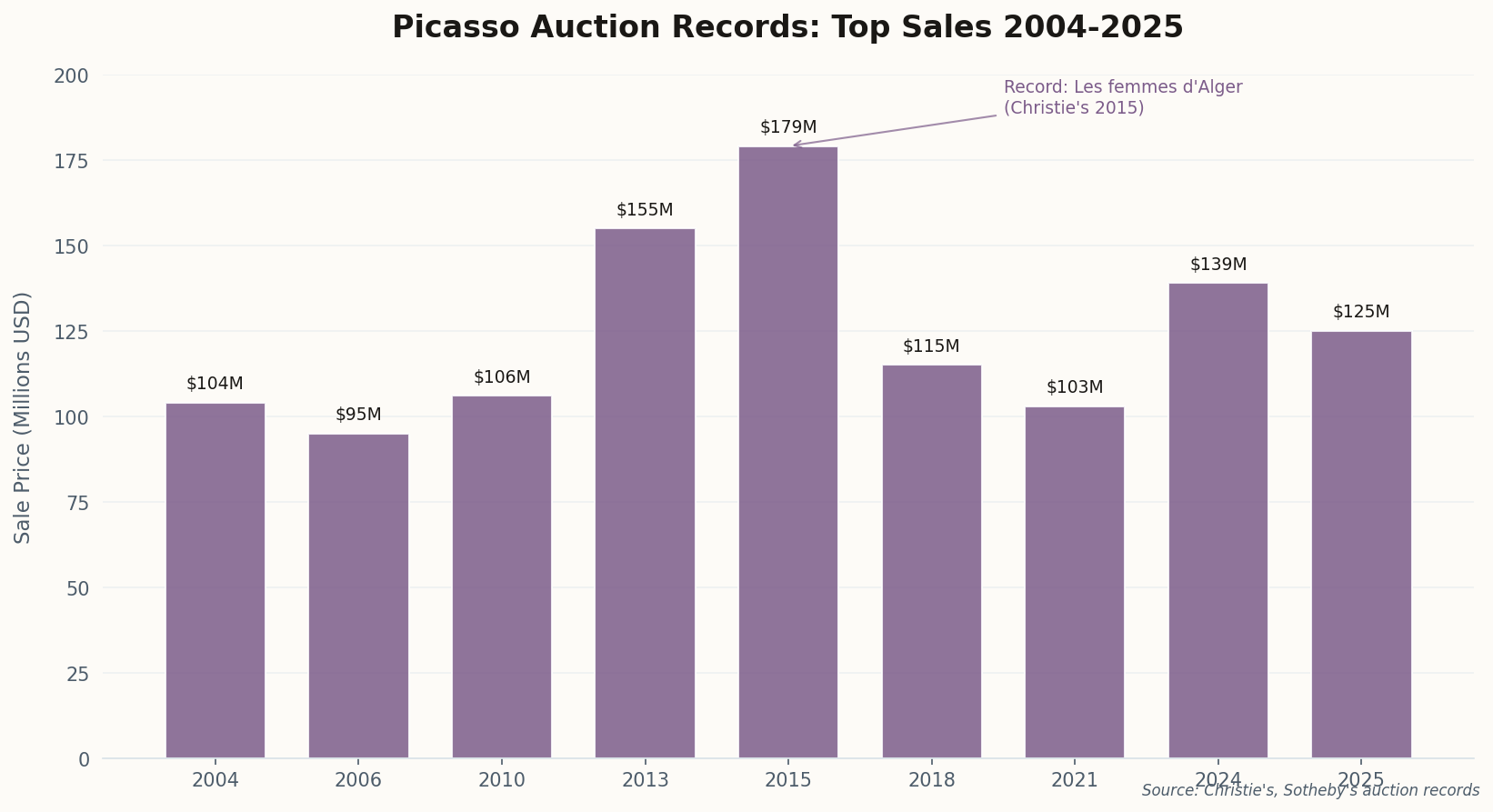
Here's why this matters: while his major canvases regularly clear $100 million, the print market operates on different physics. A strong Portraits imaginaires suite can move for under $50,000, making it one of the few ways someone without generational wealth can own a genuine Picasso. The catch? Authentication is paramount, and the print market is littered with reproductions marketed as originals. Phillips has done its homework on provenance, which is half the reason serious collectors are circling.

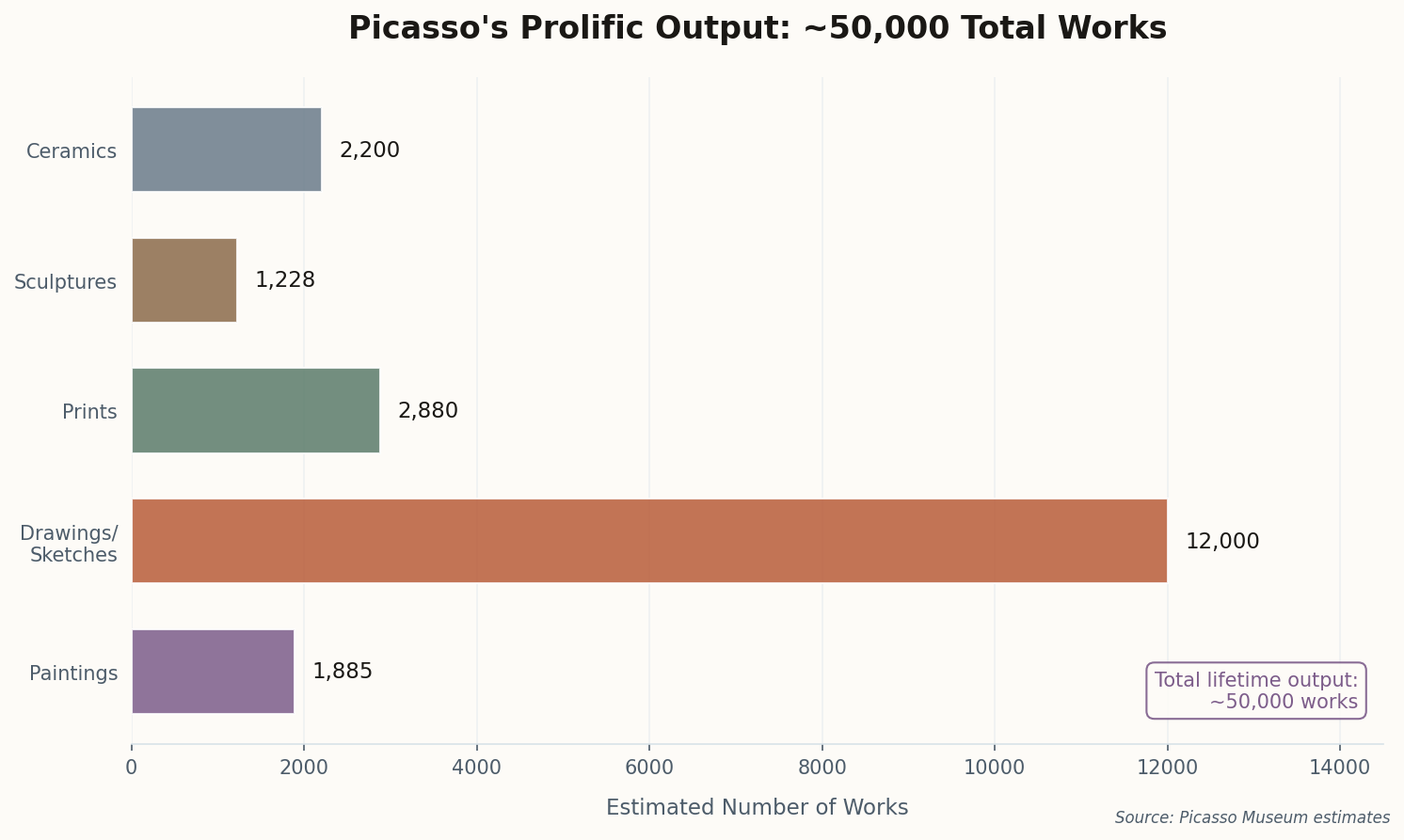
The broader signal: when middle-tier Picasso works command this much auction house attention, it suggests continued confidence in his market even as other Modern masters face softening demand. Picasso's output—an estimated 50,000 works across his lifetime—means there's almost always supply to meet demand, yet prices keep climbing. That's a remarkable testament to the durability of his brand.

Bar chart showing Picasso auction records from 2004 to 2025, with prices ranging from $95M to $179M
Picasso auction records have remained consistently above $100M for major works over two decades.
03

The Nice Art Theft Ring Meets Justice

Dramatic courtroom scene with stolen masterpieces as evidence behind glass

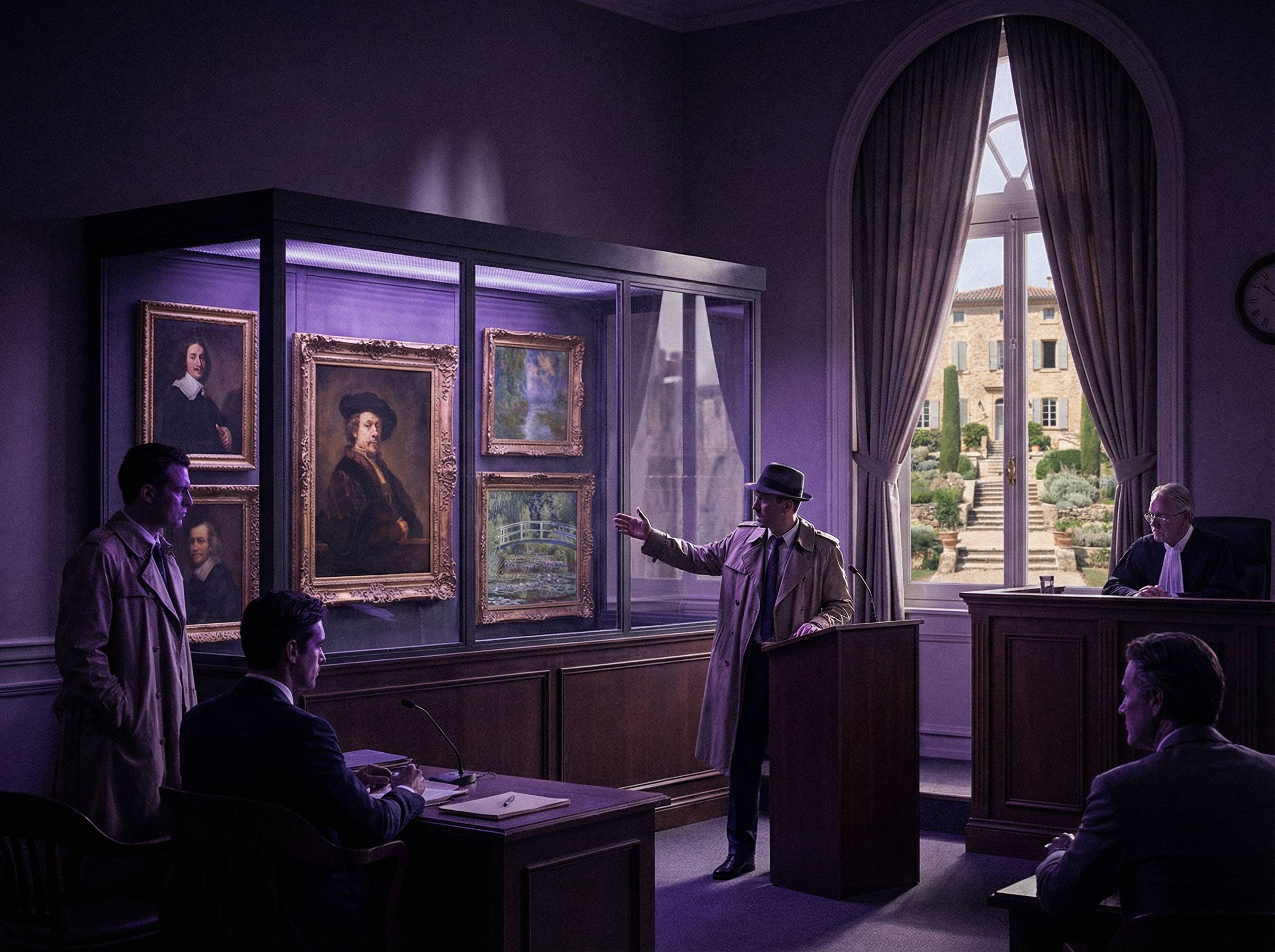
A French court delivered its verdict this week in one of the more audacious art theft cases in recent memory—a ring that trafficked in stolen masterpieces including Picasso's "Le Vieux Roi" and "Le Clown." The works were recovered in 2017 from a villa in Peillon, a medieval village perched above Nice, after an undercover operation that reads like a heist film in reverse.

The case illuminates the shadowy secondary market for stolen art. Unlike cash or jewelry, a Picasso can't be fenced at a pawnshop. These works likely cycled through shell companies and private sales, staying off the radar until a collector's conscience—or the police—intervened. The provenance records for "Le Vieux Roi" and "Le Clown" will now carry this chapter forever, a permanent asterisk on their exhibition histories.

For Picasso's market, the resolution is a net positive. Unclear provenance depresses values, and every recovered work with clean legal status strengthens the overall market. But the case also reveals how much unrecovered art might still be circulating—Interpol's database lists hundreds of missing Picassos. Somewhere, a collector is looking at one of them on their wall, wondering if the knock is coming.

04

Riyadh Bets Big on Blue-Chip Art

Auction podium with Picasso landscape painting illuminated by spotlight, Middle Eastern architecture in background

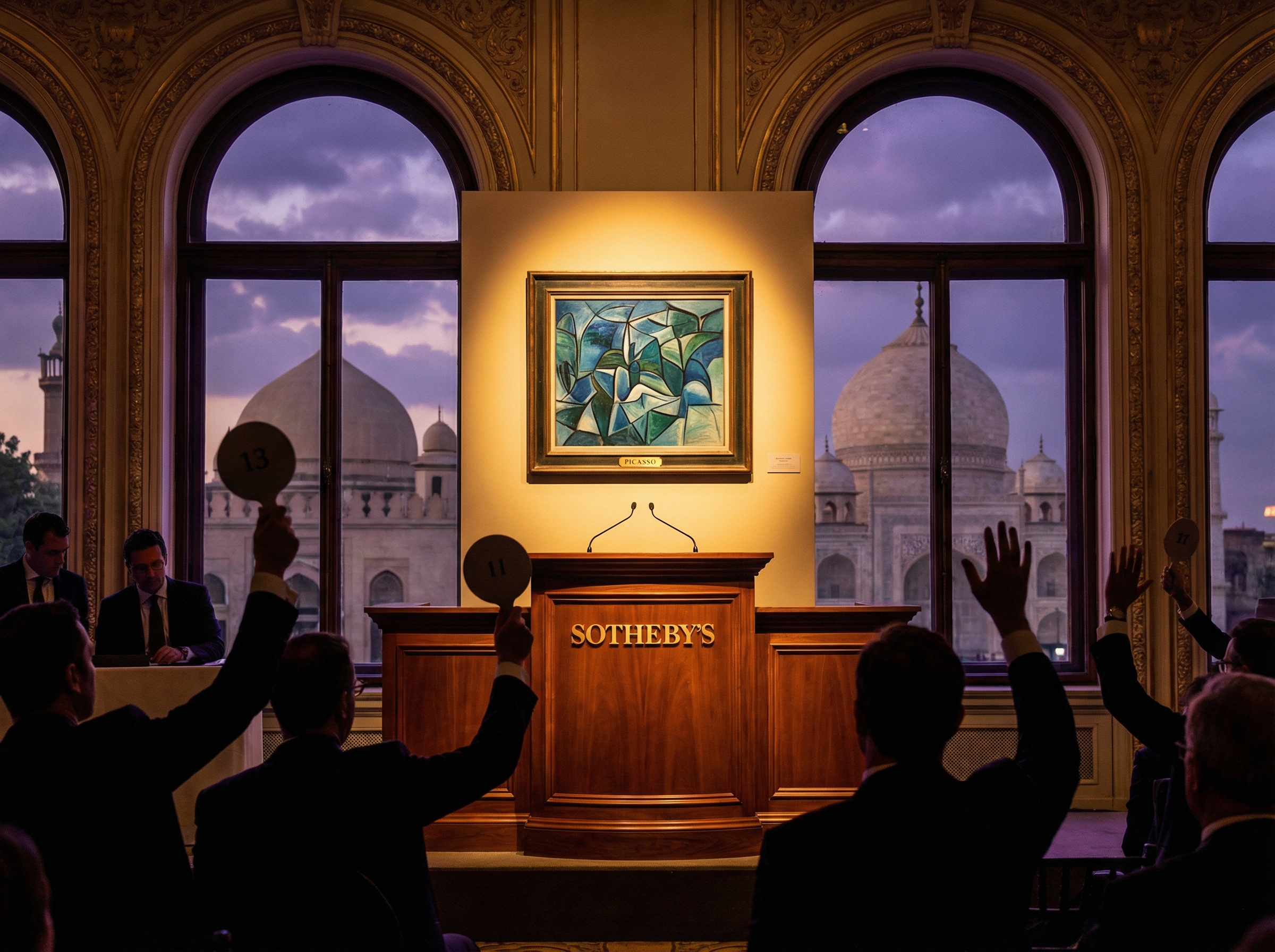
Sotheby's is heading to Riyadh on January 31 with a Picasso-led "Origins II" auction that signals the Gulf's growing influence in the Western art market. The headline lot: "Paysage," a 1965 landscape estimated at $2-3 million. Also on offer is "Tête d'homme," a double-sided work that's attracting competitive pre-auction interest.

Saudi Arabia's Vision 2030 has explicitly targeted cultural tourism and collecting as economic diversification plays. The kingdom has poured billions into museums, entertainment, and arts infrastructure. What they haven't had is a robust secondary market for Western masterworks—until now. Sotheby's staging a formal auction in Riyadh rather than just courting Gulf collectors at their London and New York sales marks a strategic shift.

The $2-3M estimate for "Paysage" is conservative for a mature Picasso landscape, suggesting Sotheby's is pricing to move rather than fishing for a record. Smart play: establishing Riyadh as a reliable venue matters more than extracting maximum value from a single lot. If the auction succeeds, expect to see Christie's and Phillips eyeing similar Gulf expansions. Picasso, once again, is the wedge that opens new markets.

05

The Renaissance Man and the Cubist Walk into a Lab

Split composition showing Da Vinci's Vitruvian Man and Picasso's cubist figure, scholarly books in foreground

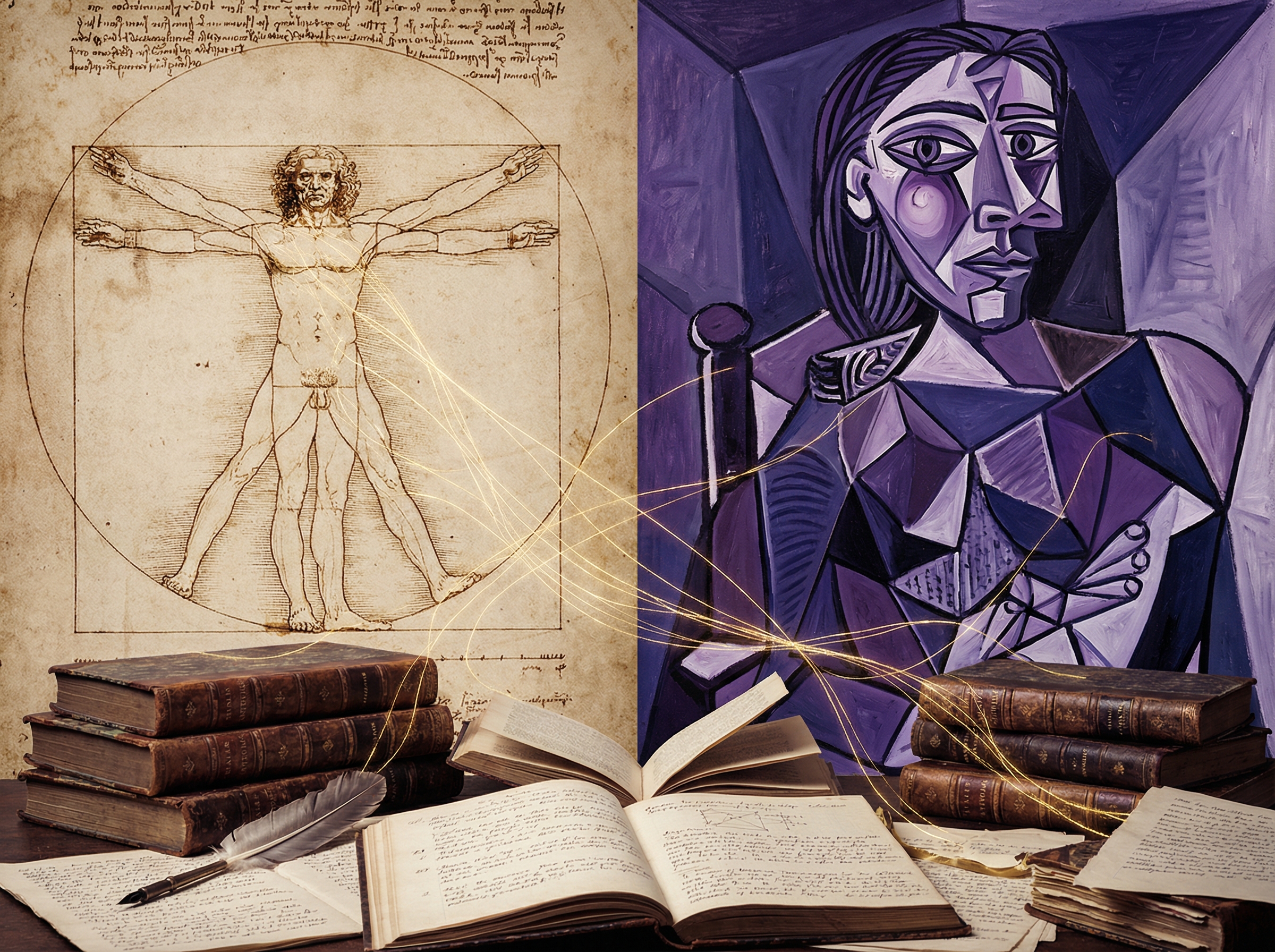
New scholarship in the January-February issue of the International Journal of Research and Management draws unexpected parallels between Leonardo da Vinci and Pablo Picasso—not in style, obviously, but in methodology. The research argues that both artists approached the natural world as a laboratory, systematically deconstructing observed phenomena to understand underlying structures.

It's a provocative thesis that cuts against the popular narrative of Picasso as pure intuitive rebel. Da Vinci filled notebooks with anatomical studies, engineering sketches, and geometric proofs. Picasso, the research suggests, conducted similar experiments—just with paint instead of pen. His Cubist period wasn't a rejection of observation but an intensification of it, an attempt to show all angles of a subject simultaneously through rigorous analysis.

The scholarly trend here is significant: positioning Picasso in direct dialogue with Old Masters reinforces his canonical status. Each generation of art historians has to re-justify why certain artists matter. Linking Picasso to da Vinci places him in the lineage of artist-scientists who changed how we perceive reality itself. It's a heavy crown, but 53 years after his death, it seems to fit.

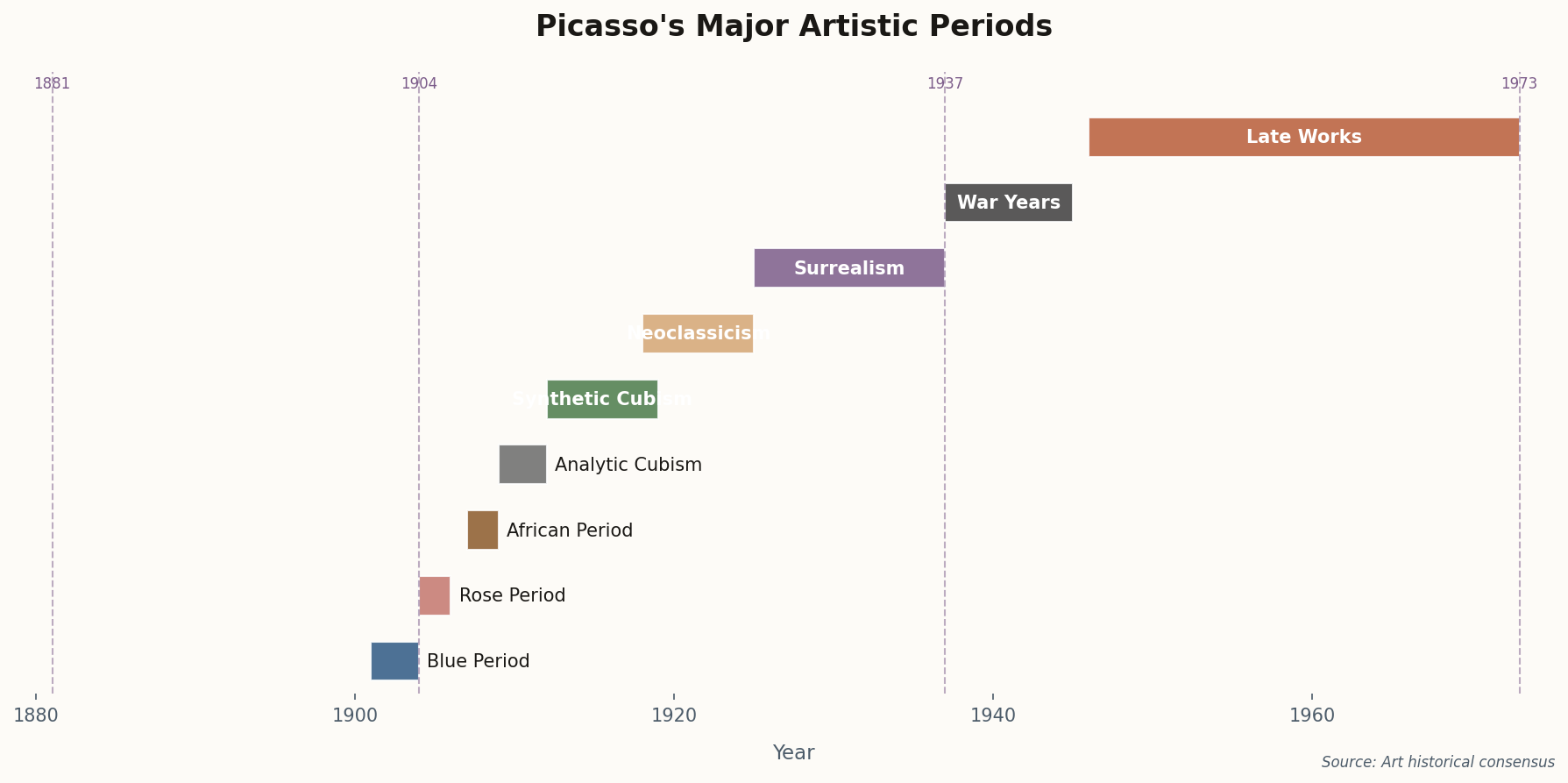
Timeline showing Picasso's major artistic periods from 1901 to 1973
Picasso reinvented his style approximately every decade, an unmatched record of artistic evolution.
06

The Mediterranean Potter You Forgot About

Picasso ceramic plates and vases displayed in sunlit garden with Mediterranean plants

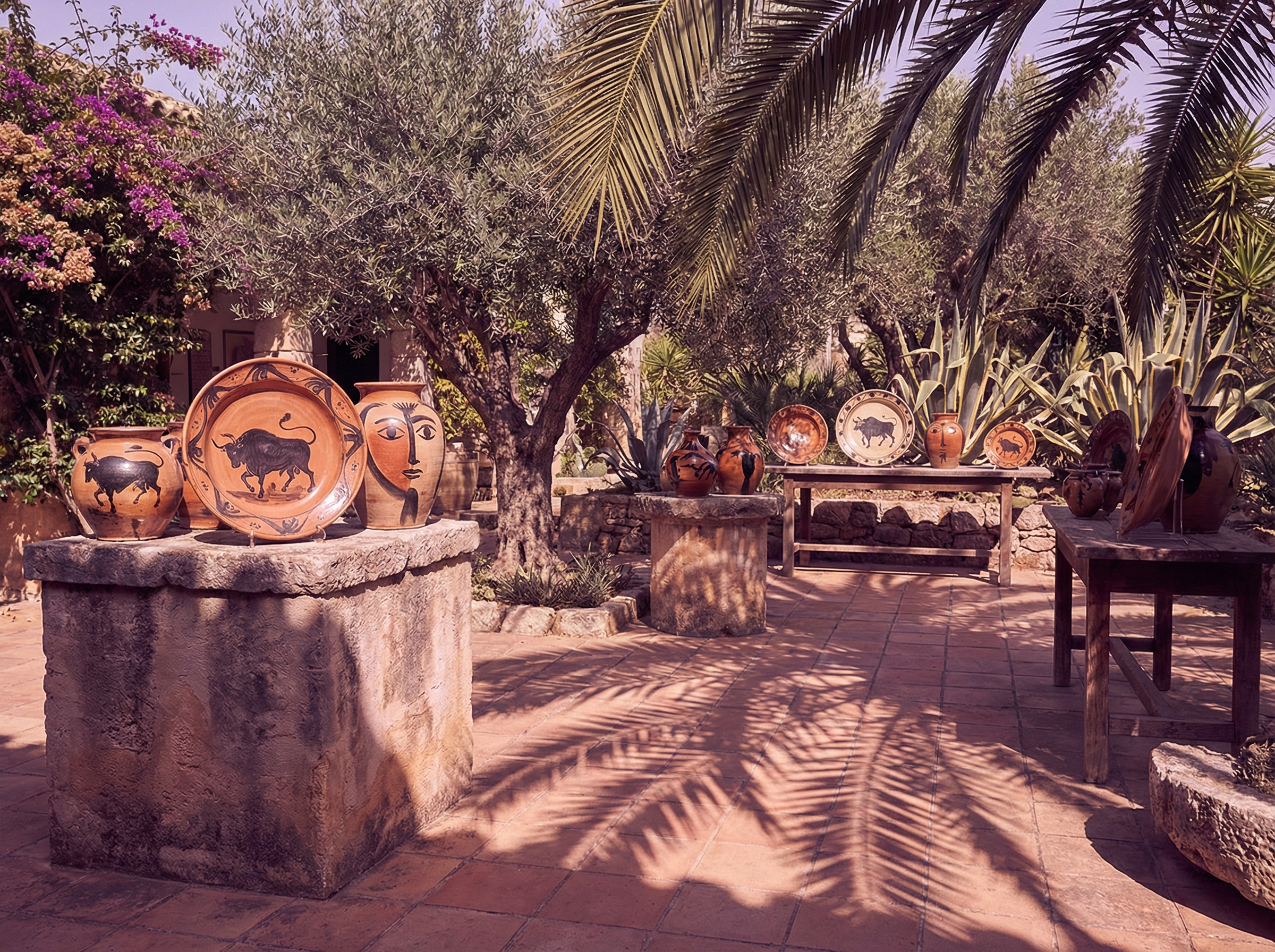
If you only know Picasso from his paintings, you're missing a whole chapter. "Clay, Line and Legacy" at Ann Norton Sculpture Gardens in West Palm Beach focuses on the 633 ceramic editions he created in the French village of Vallauris between 1947 and 1971. That's not a side project—that's a career's worth of work in clay.

Picasso came to ceramics relatively late, in his mid-60s, after meeting the Ramié family at the Madoura pottery workshop. What started as curiosity became obsession. He didn't just paint on existing forms; he warped and sculpted them, turning functional plates into distorted faces and pitchers into owls. The work bridges his two-dimensional mastery with his sculptural experiments, showing how fluid the boundaries between mediums were in his practice.

For collectors, Picasso ceramics represent an undervalued segment. While his paintings command nine figures, quality ceramic pieces can be acquired in the low six figures—still expensive, but attainable for serious collectors. The Florida show, running through March 15, arrives as the ceramics market shows fresh momentum. If you're in Palm Beach and want to see a different Picasso, this is the moment.

Horizontal bar chart showing Picasso's output by medium: drawings, prints, ceramics, paintings, sculptures
Picasso's estimated 50,000 works span every medium, with drawings and sketches comprising the largest category.

The Permanent Revolution

Picasso died in 1973 with a brush in his hand, still working at 91. Five decades later, his market is hotter than most living artists', his influence is embedded in how we see, and scholars are still finding new connections in his sprawling archive. He wasn't just prolific—he was relentless. Every period of his life brought a new destruction of his own previous work. Perhaps that's the lesson: the only way to stay relevant is to keep demolishing what you've built.