Home Energy Storage

Your Brain's Backup Battery

The home battery market is being rewired. New players are dethroning incumbents, prices are in freefall, and your utility wants to rent your electrons. This week's developments signal a fundamental shift in who controls your home's power.

Listen
Modern home battery system with emerald accent lighting integrated into living space at dusk
01

The King Is Dead: Sigenergy Dethrones Tesla in Australia
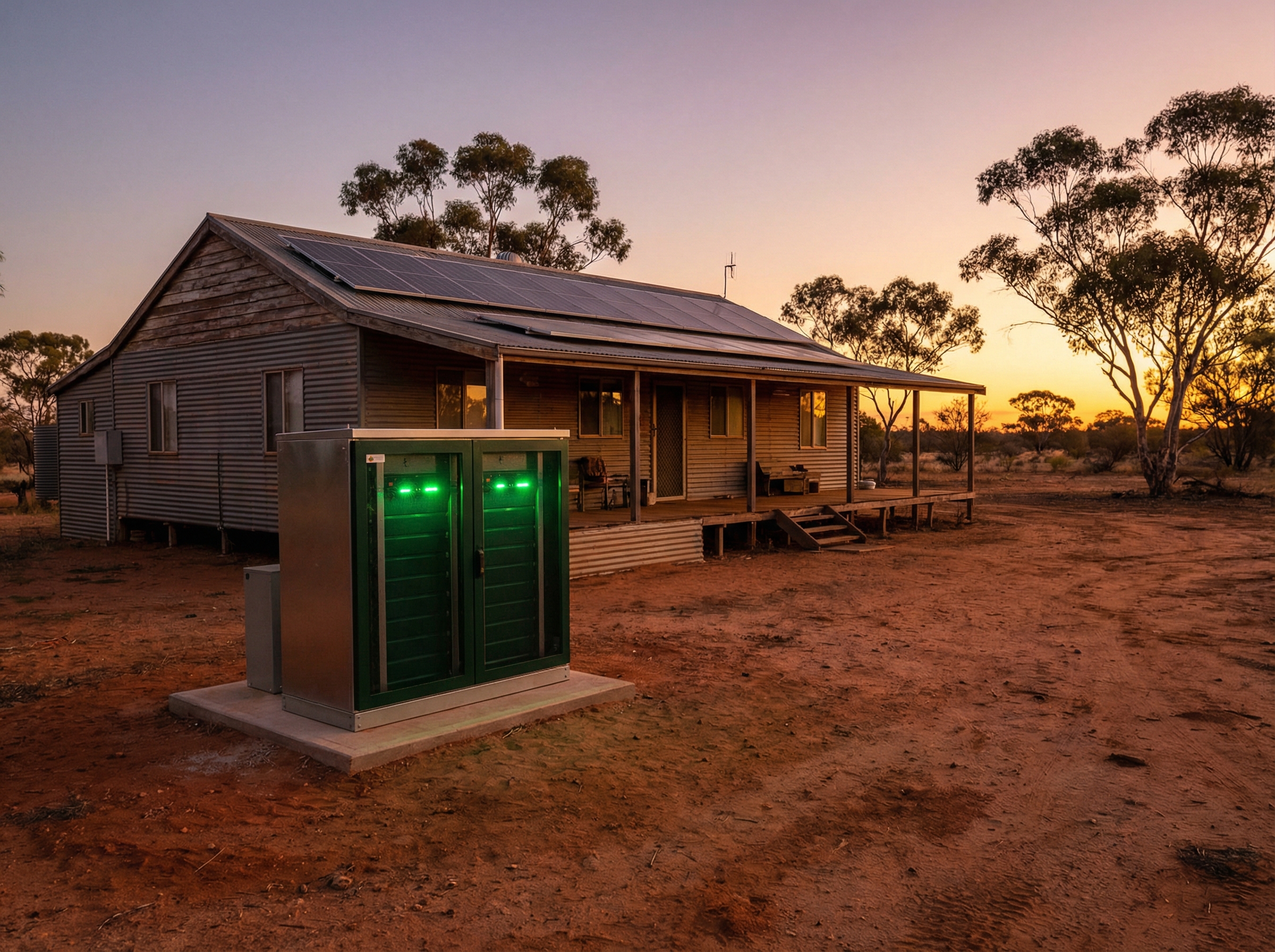
Australian home with solar panels and battery storage in outback setting

Tesla's decade-long grip on the Australian home battery market has officially ended. Sigenergy, a Chinese manufacturer most Americans have never heard of, now commands 25% of Australia's residential storage market—surpassing both Tesla and Sungrow after holding the top spot for ten consecutive months.

Why should you care about what happens in the Outback? Because Australia is the world's crystal ball for residential energy storage. With the highest per-capita rooftop solar penetration on Earth and some of the most volatile electricity prices, Australian consumers make buying decisions today that predict what American homeowners will face tomorrow.
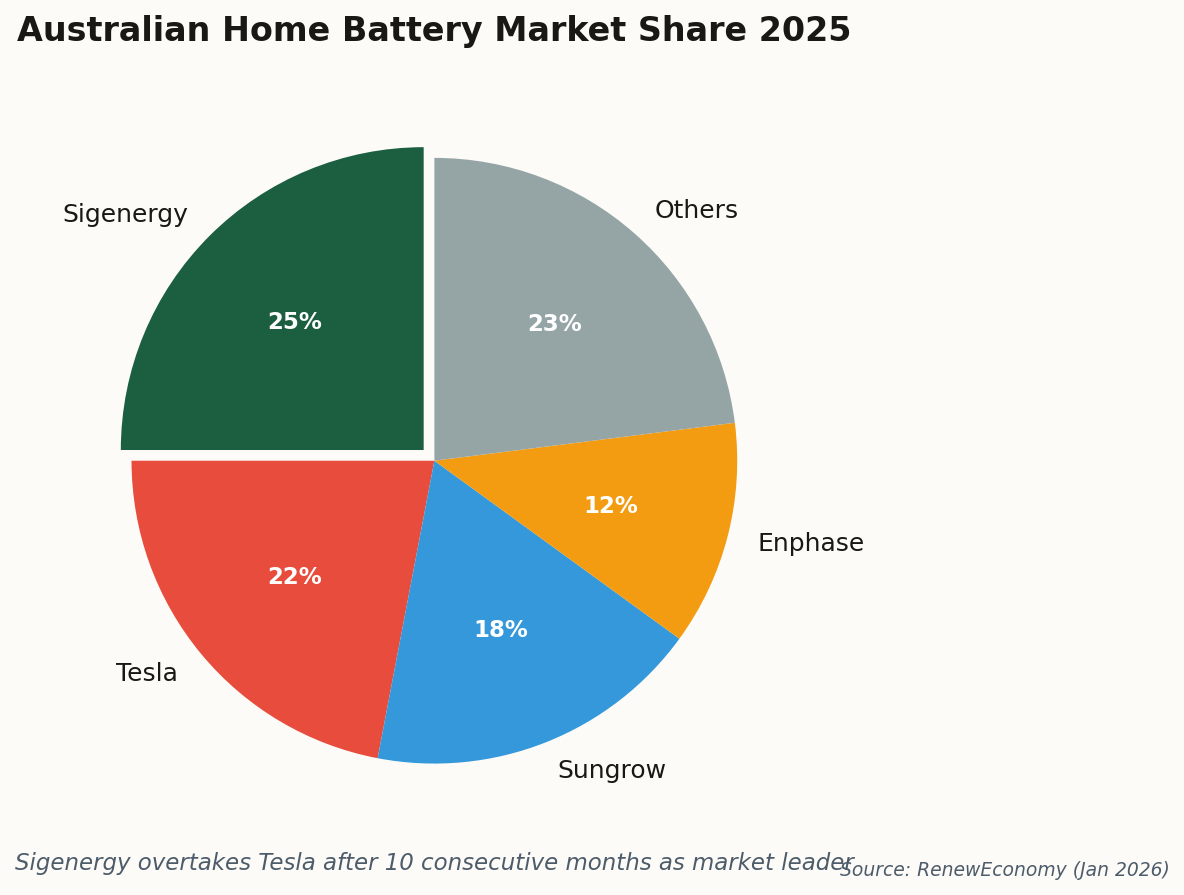
Pie chart showing Australian home battery market share with Sigenergy at 25%, Tesla at 22%, Sungrow at 18%
Australian home battery market share 2025. Sigenergy peaked at 31.4% in May.

Sigenergy's secret? A hybrid inverter architecture that plays nice with any solar panel configuration and doesn't require proprietary ecosystem lock-in. Tesla's walled garden approach—brilliant for vertically integrated EV buyers—is proving less compelling for homeowners who just want their lights to stay on.

The bottom line: If you're shopping for a home battery in the US right now, Sigenergy should be on your shortlist. They're coming for this market next.
02

New Jersey Just Made Your Battery a Grid Asset

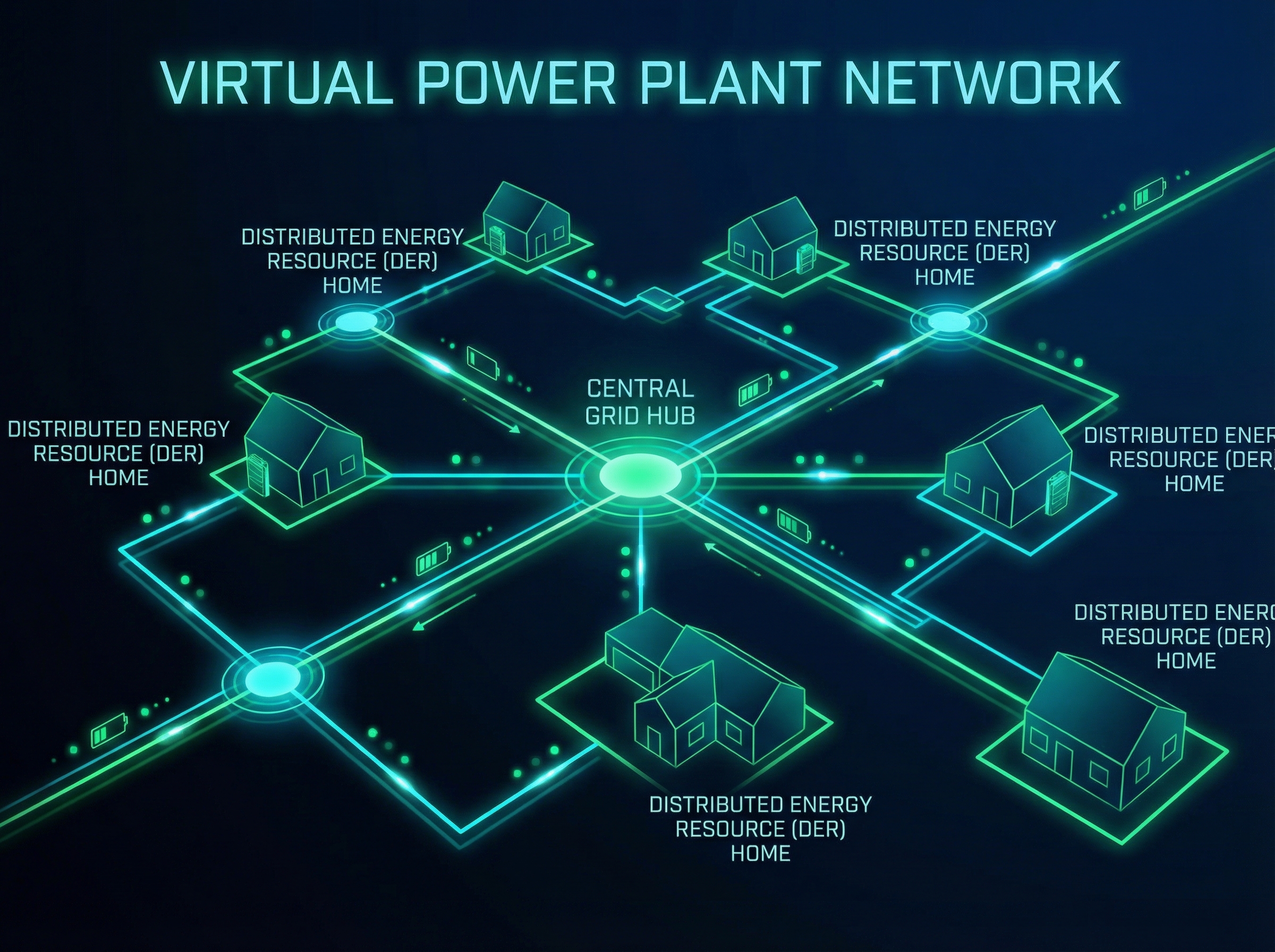
Abstract visualization of homes connected by green energy lines forming a virtual power plant network

New Jersey's governor signed an executive order this week establishing the state's first Virtual Power Plant (VPP) program—and it fundamentally changes the economics of home battery ownership.

The concept is elegant: instead of building a new peaker plant that runs a few hundred hours a year, utilities aggregate thousands of home batteries into a "virtual" power plant that can discharge on command during peak demand. Homeowners get paid. The grid gets stabilized. New gas plants don't get built.

What this means for you: If you own a compatible home battery in New Jersey, your utility will soon be able to "rent" your stored electricity during peak demand—and you'll earn revenue for participating. Early VPP programs in other states have paid homeowners $50-150/month.

This isn't charity. Grid operators are desperate. The combination of EV adoption, AI data centers, and extreme weather is straining transmission infrastructure that was designed for the 1970s. Distributed storage is increasingly the only option that pencils out.

California, Texas, and Hawaii have already pioneered VPP programs. New Jersey's move signals that the model is going mainstream on the East Coast. If your state doesn't have one yet, it will.

03

Anker Wants You to Install Your Own Battery

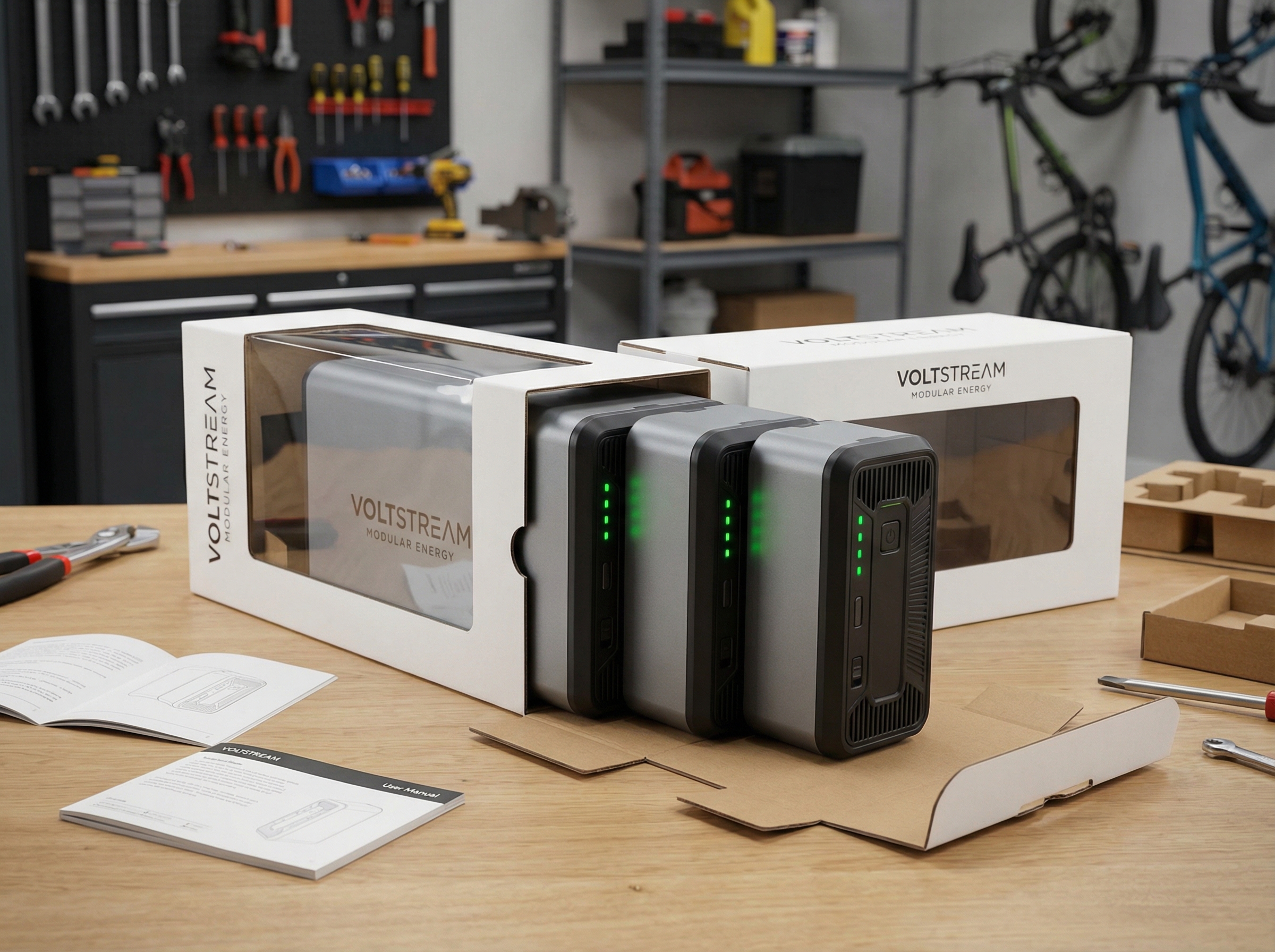
Modular battery system being unboxed with green LED indicators in garage setting

Anker's SOLIX E10 is now in pre-order, and the company is attempting something audacious: selling whole-home battery backup systems like consumer electronics.

The traditional home battery installation is a nightmare. You get three quotes from local installers, each using different equipment and wildly varying prices. Installation takes a full day. Permitting drags on for weeks. The total cost—equipment plus labor plus permits—often exceeds $15,000 for a single-battery system.

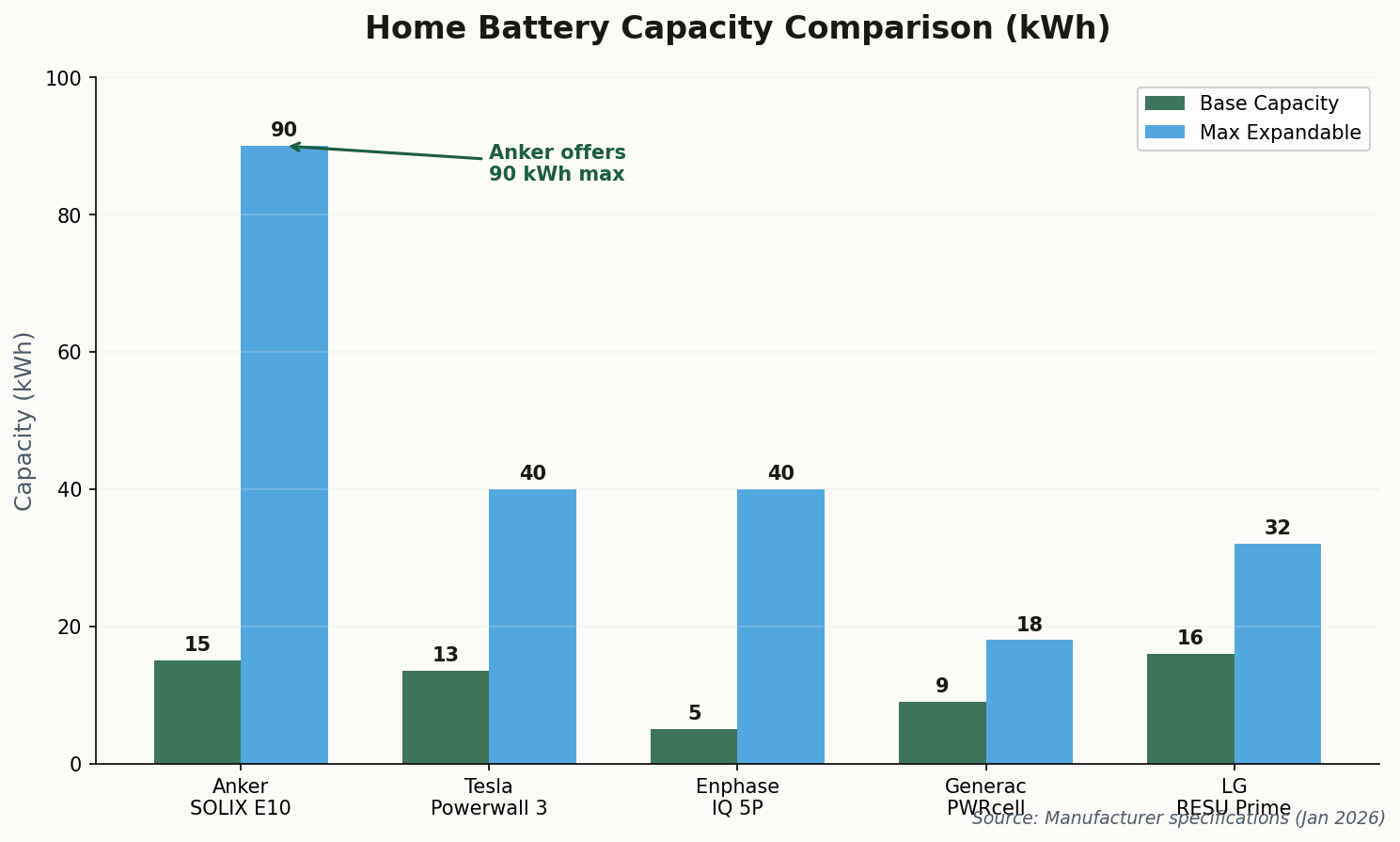
Anker is betting you'll buy directly from them instead. The E10 ships to your door. You stack the modular units yourself. Their "one-stop installation service" handles the electrical connection. Total capacity scales up to a jaw-dropping 90 kWh with 10 kW continuous output.

Bar chart comparing home battery capacities - Anker SOLIX E10 leads with 90 kWh maximum expandable capacity
Home battery capacity comparison. The E10's 90 kWh max dwarfs competitors.

The gamble: most homeowners want this level of involvement with their electrical system about as much as they want to perform their own root canal. But if Anker can make the experience genuinely hassle-free, they could demolish the dealer-installer model that companies like Generac and Enphase depend on.

Watch this space. If the E10 launch goes smoothly, expect Tesla to release a "DIY-friendly" Powerwall variant within 18 months.

04

Tesla Loses Homes, Wins Grids

Massive Tesla Megapack battery installation at dawn with rows of white containers

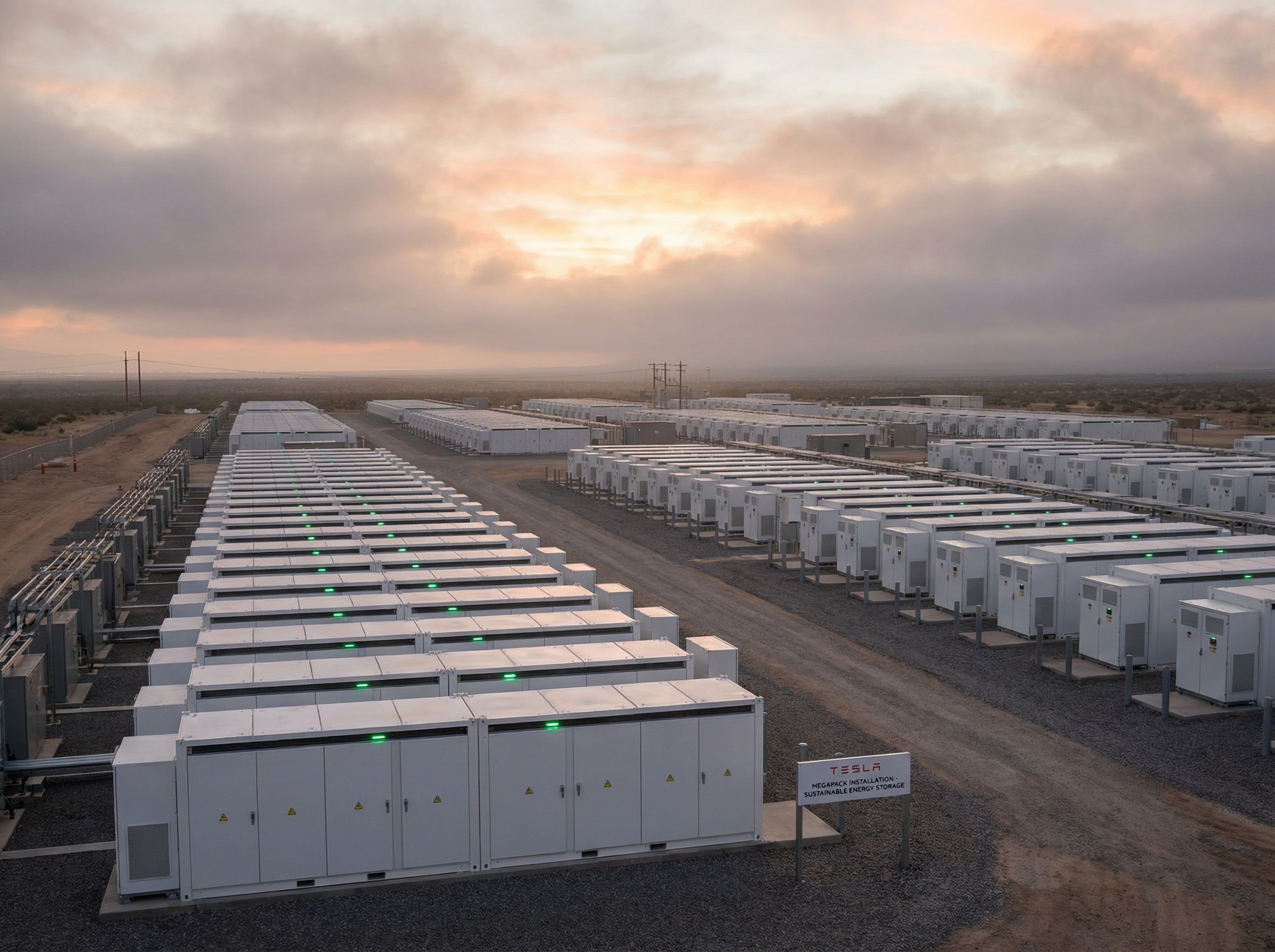
While Tesla is losing residential market share in Australia, they just demonstrated why they're still the 800-pound gorilla in grid-scale storage: a 205 MW / 410 MWh Megapack installation went online in Queensland five months ahead of schedule.

That's not a typo. Five months early, on a $110 million infrastructure project. In the energy industry, where cost overruns are tradition and schedule slippage is practically guaranteed, Tesla's execution speed is genuinely remarkable.

The project directly supports grid reliability for Southeast Queensland's residential customers. When demand spikes or a coal plant trips offline, this battery bank can inject 205 megawatts into the grid almost instantaneously—fast enough to prevent cascading outages.

Here's the strategic play: even as smaller competitors nibble at Tesla's Powerwall market share, Megapack cements Tesla's relationship with the utilities who will ultimately decide which residential products get priority interconnection. It's a classic platform play—dominate the infrastructure layer, and the consumer products become easier sells.

05

GM Is Betting Your Car Is Also Your Battery

Electric vehicle plugged into home with bidirectional energy flow visualization

GM Energy is doubling down on home storage, and their angle is different from everyone else's: they want your car to be your battery.

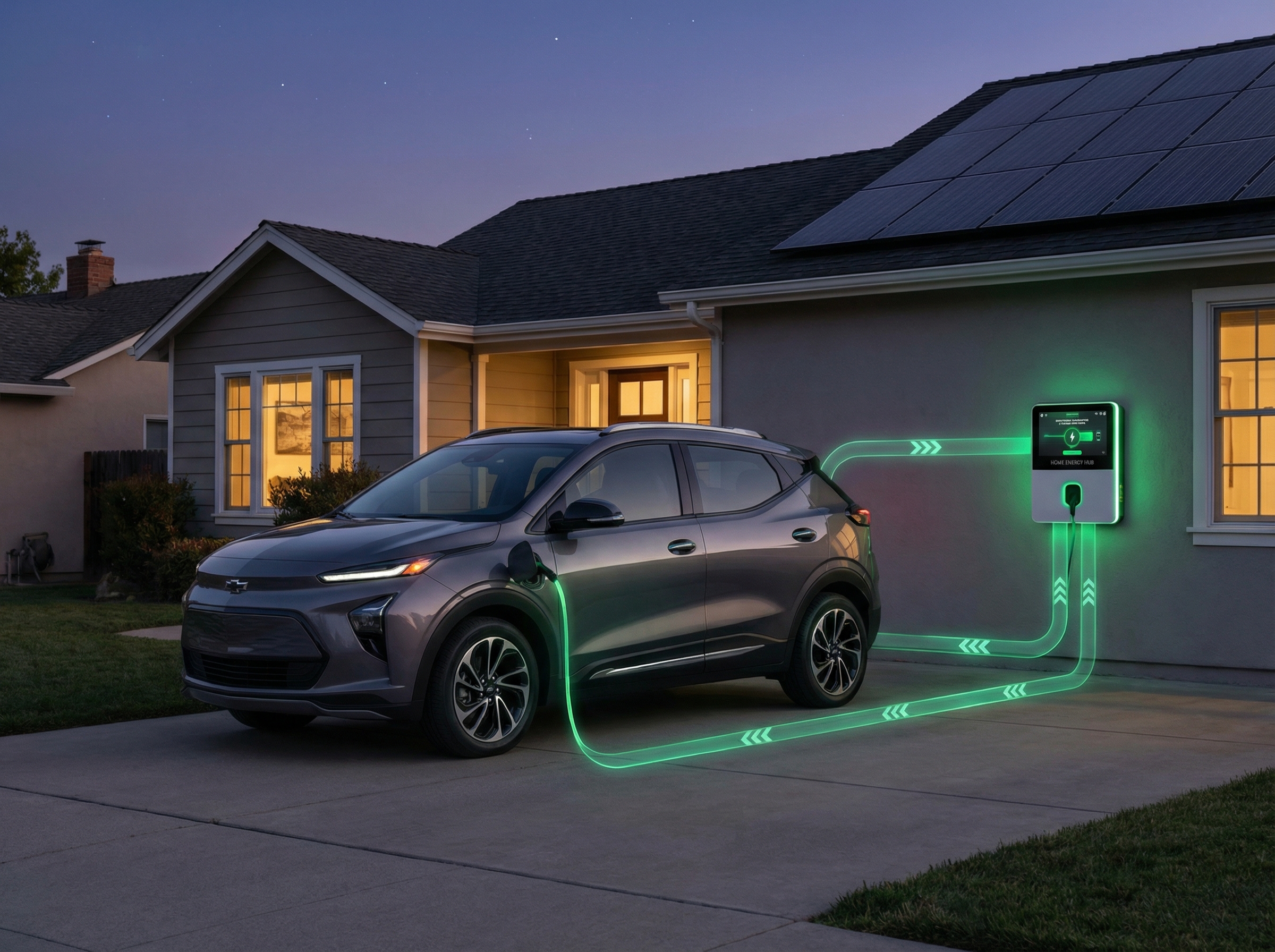
The average American car sits parked 95% of the time. If that car has a 100 kWh battery pack and bidirectional charging capability, it can power your home during outages—or feed electrons back to the grid during peak demand.

GM's "PowerBank" strategy combines stationary home batteries with vehicle-to-home (V2H) integration. During a power outage, your Ultium-platform EV becomes a backup generator with zero emissions and zero noise. During normal operation, it participates in VPP programs and earns you revenue.

The 2025 numbers look solid: GM Energy's revenue grew substantially, suggesting that EV buyers are actually purchasing the home integration accessories. This isn't vaporware.

The caveat: Bidirectional charging does cycle your EV's battery more aggressively, which raises warranty and longevity questions. GM claims their battery management system handles it gracefully. The long-term data doesn't exist yet.

06

The Price Collapse Nobody Saw Coming

Abstract visualization of battery cells cascading downward representing falling prices

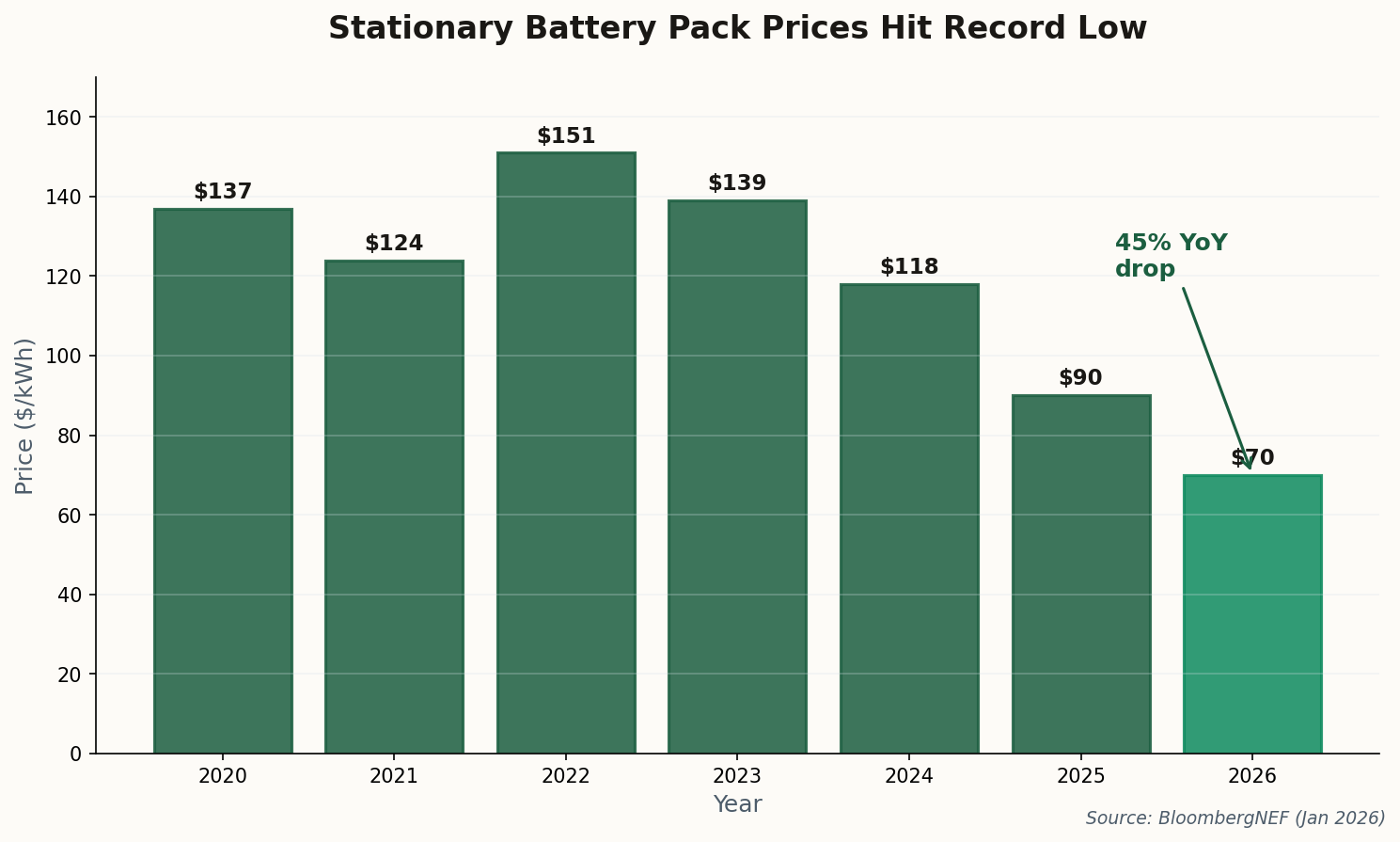
Stationary battery pack prices have hit a record low: approximately $70 per kilowatt-hour, representing a 45% year-over-year decline. This is the most dramatic cost reduction in the history of energy storage.

Bar chart showing battery pack prices from 2020-2026, dropping from $137 to $70 per kWh
Stationary battery pack prices ($/kWh), excluding installation and inverter costs. The 2022 spike reflected pandemic supply chain chaos.

What's driving this? Massive manufacturing overcapacity in China, combined with cratering lithium prices. Battery factories that were built to supply an explosive EV market are now competing ferociously for stationary storage contracts.

This matters for homeowners because these pack-level savings are finally trickling down to retail. A home battery system that cost $12,000 two years ago might be $7,500 today for equivalent capacity. Combined with the 30% federal tax credit, the ROI calculation has fundamentally shifted.

If you've been waiting: This is the moment. Battery prices are unlikely to drop this steeply again (we're approaching manufacturing cost floors), but they're not going back up either. The calculus for home backup—once a luxury—now pencils out for middle-class homeowners in most markets.

The only question left is whether you trust the grid enough to wait.

The Grid Is Becoming Optional

We're witnessing a fundamental power shift—pun intended. The combination of plummeting battery costs, VPP incentives, and increasing grid instability is creating a future where your home's relationship with the utility is a choice, not a necessity. The question isn't whether home batteries make sense anymore. It's which one, and how big.