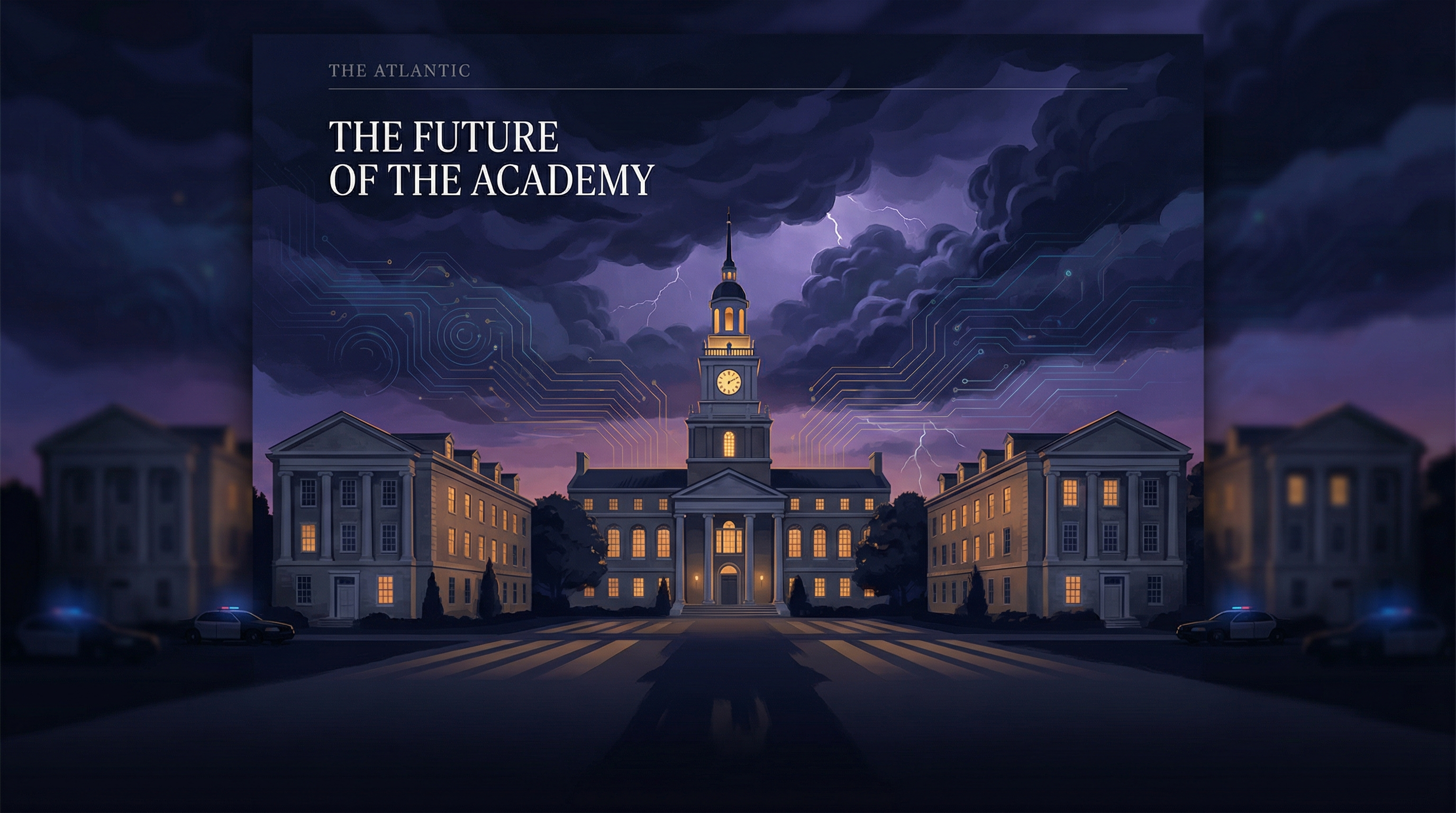
Walking Underground to Avoid ICE
When thousands of ICE officers descended on Minnesota last month for "Operation Metro Surge," students at Augsburg University and the University of Minnesota-Twin Cities didn't just feel fear—they changed how they physically move through their world. Scott Carlson's reporting reveals students now stick to skyways and underground tunnels between buildings, avoiding the open air where enforcement visibility is highest.
This isn't paranoia. It's adaptation to a new reality where ICE has made clear that college campuses are no longer treated as sensitive locations deserving special consideration. The psychological toll extends far beyond undocumented students—even those with legal status describe a "perception of danger everywhere."
The real question: What happens to the educational mission when students are too afraid to walk across their own quad? When the simple act of going to class becomes a calculated risk assessment?
Universities face an impossible position: they can't promise protection they can't deliver, yet their silence feels like abandonment. Some are posting "know your rights" resources. Others are training staff on what to do if ICE arrives. None of it addresses the fundamental shift: for many students, campus no longer feels like sanctuary. It feels like territory.