Political Economy

Systems of Power: Communism, Fascism, and Capitalism Compared

In an era of renewed ideological friction, understanding the foundational mechanics of the 20th century's dominant systems has never been more critical. A deep dive into the economic machinery, human toll, and modern relevance of three world-shaping ideologies.

Listen
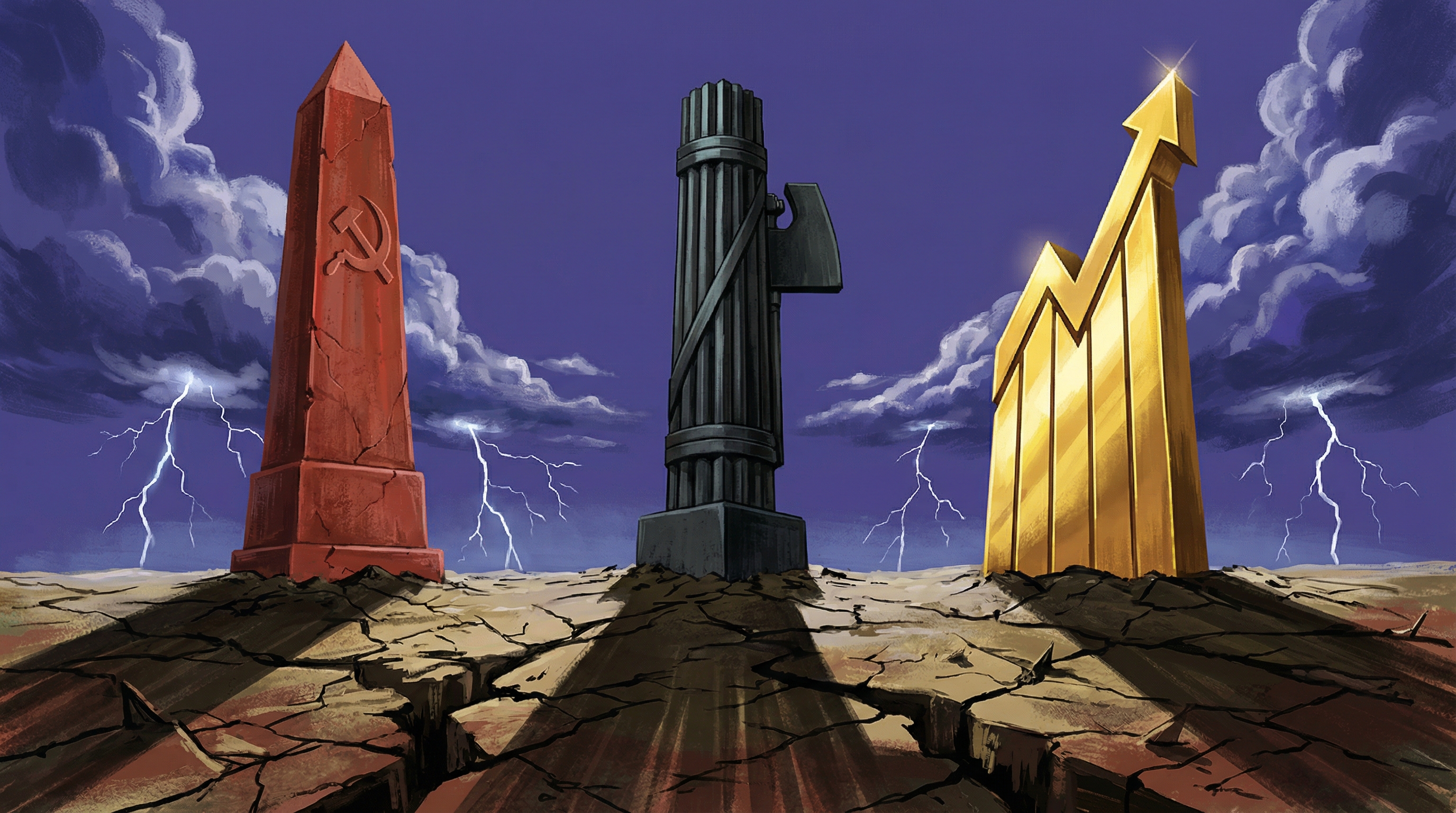
Three towering monoliths representing communism, fascism, and capitalism against a stormy indigo sky
01

The Theoretical Divide: What Each System Promises
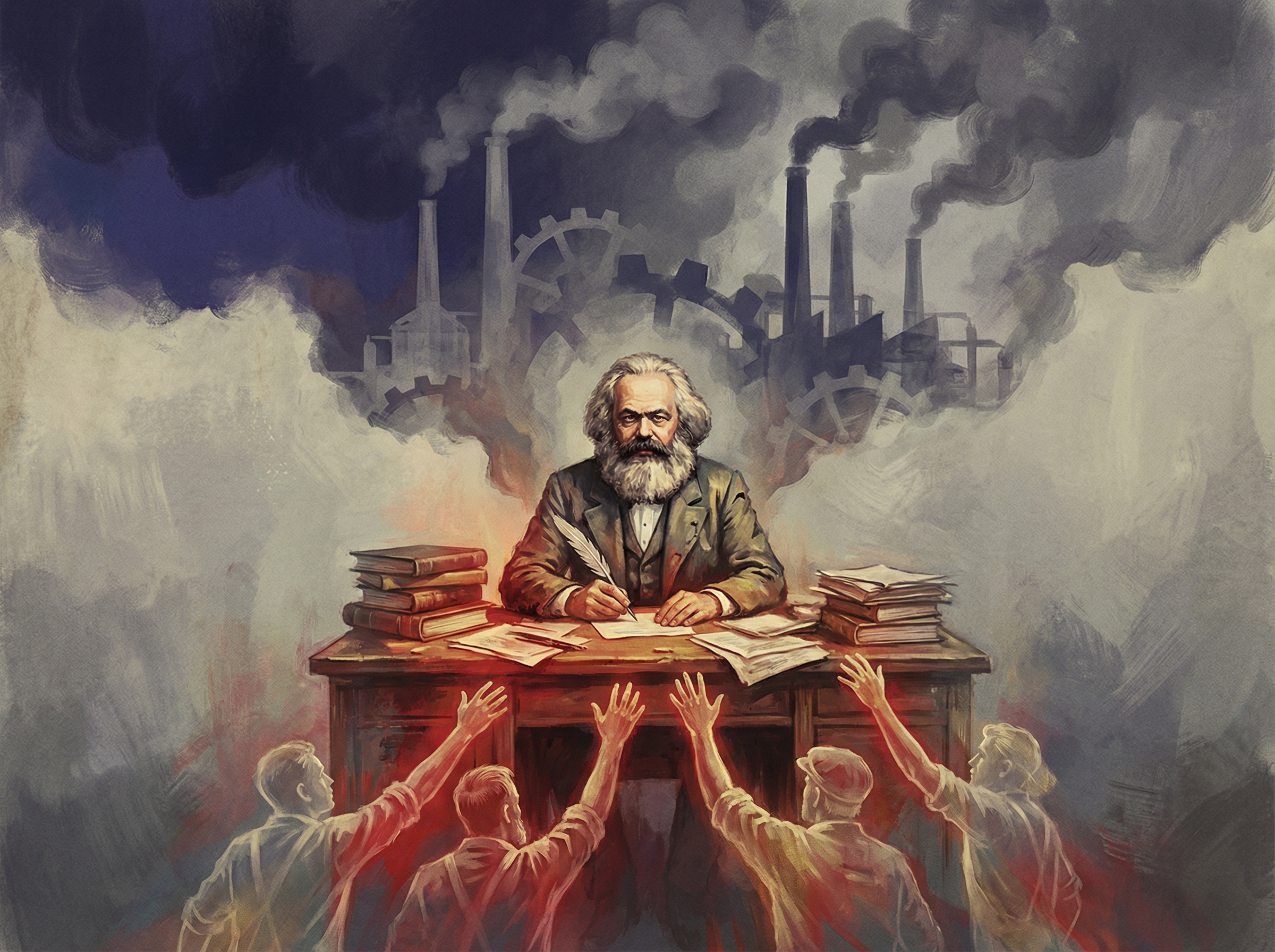
Karl Marx writing with factory smokestacks in the background

Every political system begins as an answer to a question: Who should own what, and who decides? The answers diverge radically.

Karl Marx and Friedrich Engels saw history as class struggle. Their solution: abolish private property entirely. The means of production belong to everyone; the state exists only temporarily as a "dictatorship of the proletariat," eventually withering away into a classless utopia. "From each according to his ability, to each according to his needs."

Benito Mussolini offered a different answer: the State is everything. Fascism rejects both liberal individualism and Marxist class conflict, replacing them with ultranationalist unity. Property exists, but serves national power. "Everything within the State, nothing outside the State, nothing against the State."

Adam Smith's capitalism starts from the individual. Private ownership, voluntary exchange, and price mechanisms allocate resources. The butcher and baker serve you not from benevolence, but from self-interest—and that's the point. The state's role varies from minimal (laissez-faire) to substantial (social democracy), but private property remains sacrosanct.

The core tension: Communism prioritizes equality over freedom. Fascism prioritizes the nation over both. Capitalism prioritizes freedom over equality—betting that markets will eventually lift all boats.
02

The Soviet Experiment: When Theory Met Reality

Constructivist Soviet-style artwork with brutalist architecture

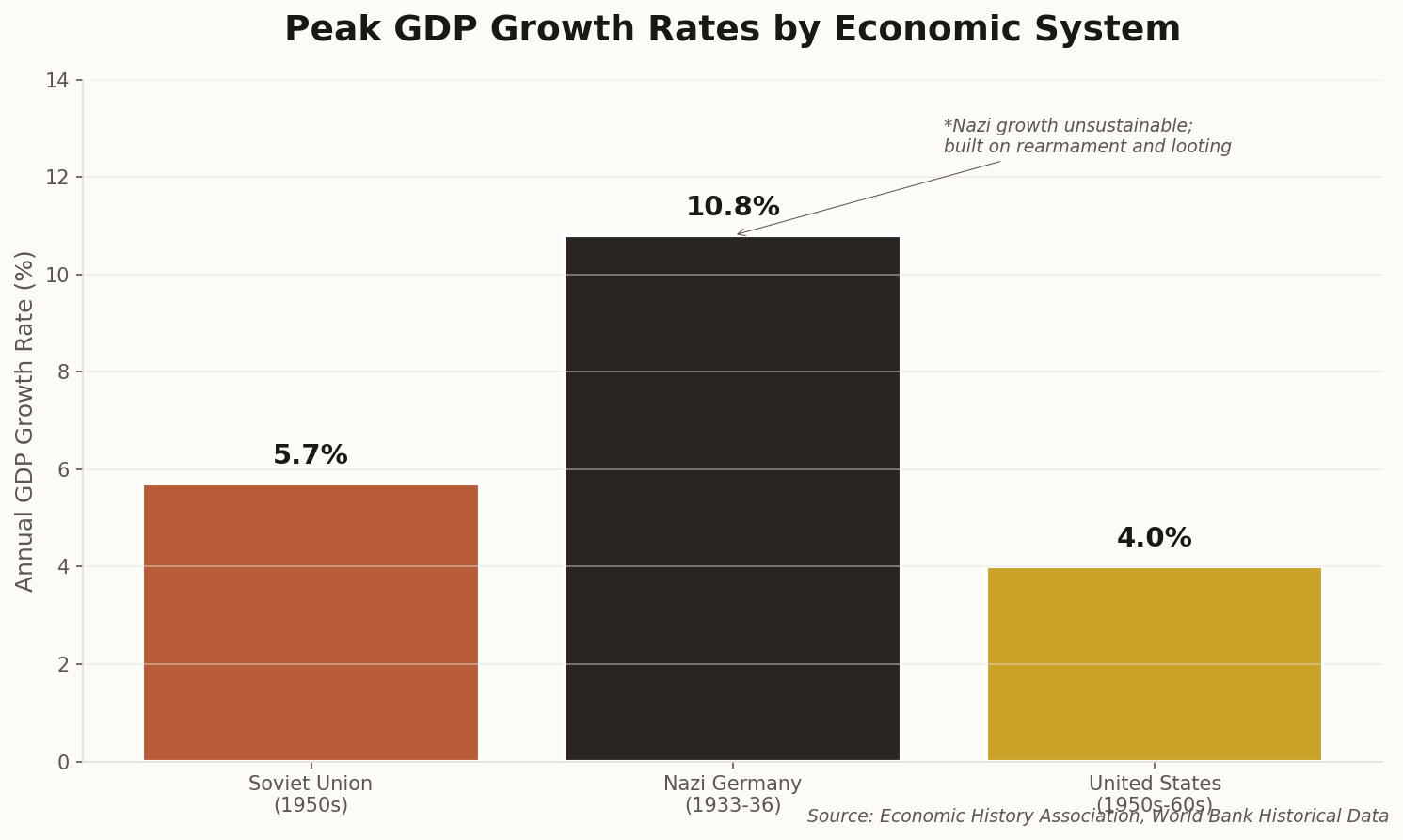
The Soviet Union was history's largest-scale attempt to implement Marx's vision. A peasant society became a nuclear superpower in decades. The 1950s saw GDP growth of ~5.7% annually—impressive by any measure.

But central planning has a fatal flaw: without price signals, no planner can know what 280 million people actually need. By the 1980s, growth had collapsed to ~2.0%. Factories produced goods nobody wanted while citizens queued for bread.

Bar chart comparing GDP growth rates across economic systems
Peak GDP growth rates: Nazi Germany's explosive growth was built on unsustainable rearmament.

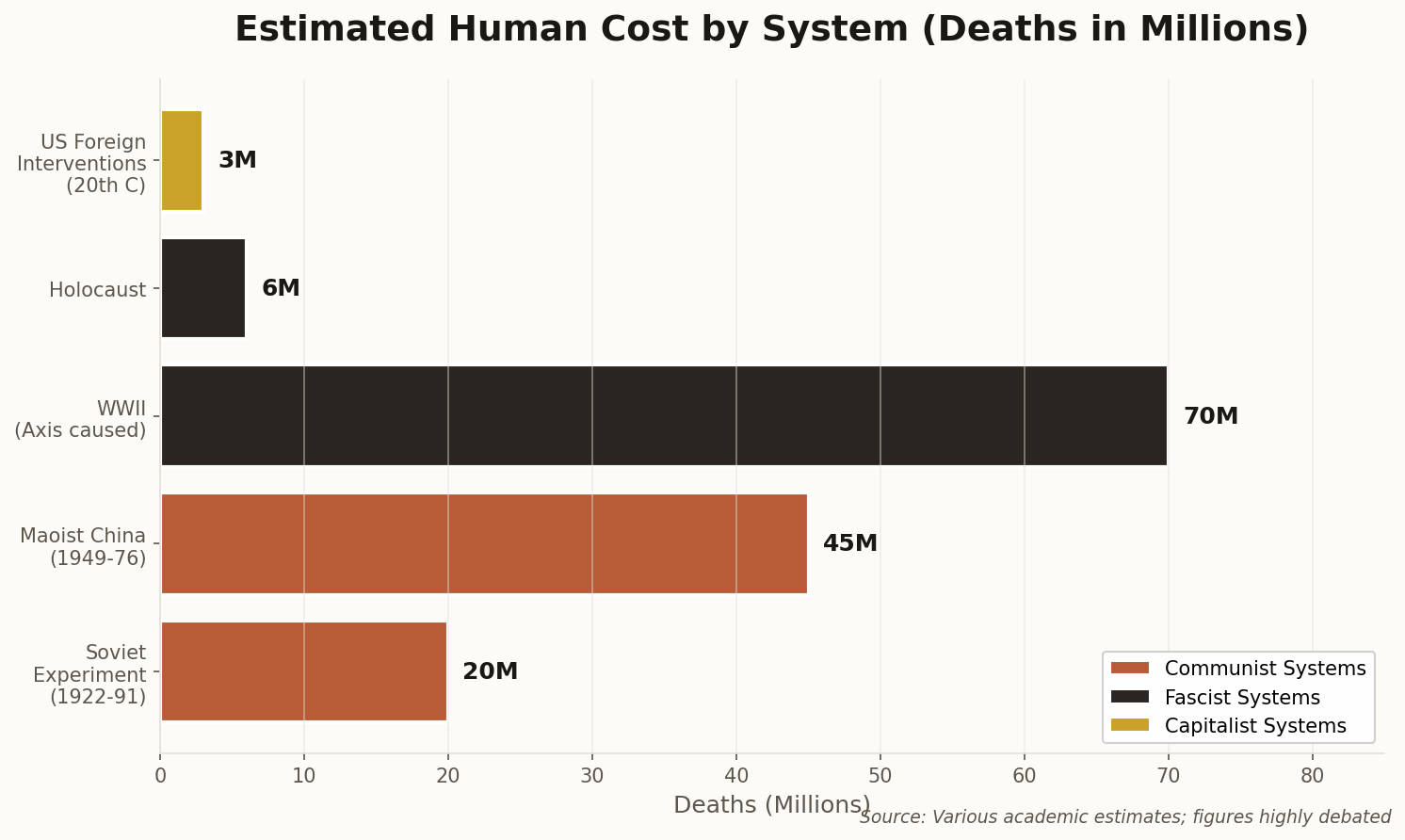
The human cost remains staggering. The Holodomor (1932–33) killed 3.5–5 million Ukrainians. The Gulag system imprisoned millions. Academic estimates of total excess mortality under Soviet communism range from 10–20 million, depending on methodology.

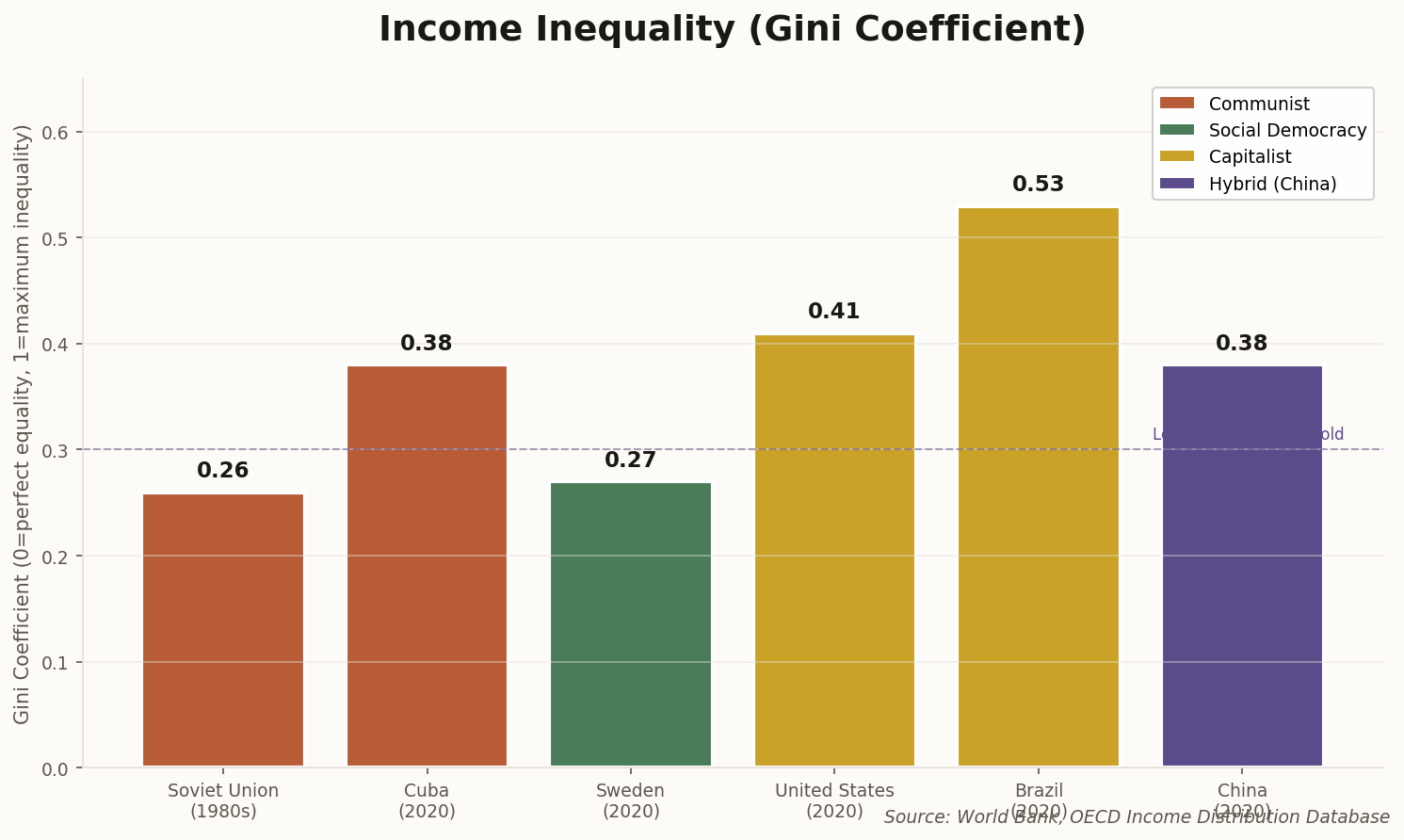
Paradox of equality: The Soviet Union achieved remarkably low inequality (Gini ~0.26)—but at the cost of political freedom and economic dynamism.

03

Twelve Years That Changed Everything: The Third Reich

Dark monumental architecture with imposing columns and dramatic shadows

Nazi Germany remains the test case for what happens when fascist ideology takes total power. Hitler's economic miracle—10.8% annual GDP growth from 1933–36—looked impressive on paper. The Autobahn, public works, rapid rearmament: Germany rose from Depression ruin.

But the economy was a house of cards built on looted gold, slave labor, and war preparation. It could only sustain itself by conquest. When conquest failed, it collapsed.

Horizontal bar chart showing human cost by system in millions of deaths
Estimated human cost by system. WWII, triggered by Axis aggression, resulted in 70–85 million deaths globally.

The Holocaust murdered 6 million Jews and millions of others—Romani, disabled people, political opponents. World War II, instigated by Axis powers, killed 70–85 million people worldwide. Fascism's 12-year experiment ended in total defeat and moral bankruptcy.

The lesson: Rapid economic growth means nothing when built on war, genocide, and looting. Fascism failed catastrophically—not despite its methods, but because of them.

04

The American Model: Capitalism's Longest Run

Wall Street and Main Street intersection conceptual artwork

The United States represents capitalism's longest uninterrupted experiment. From industrial robber barons to the post-WWII mixed economy, America evolved a system that combines private enterprise with varying degrees of regulation.

The results: sustained ~3.15% average GDP growth (1948–2025), the world's largest consumer economy, and unparalleled innovation in technology, medicine, and culture. Silicon Valley, Wall Street, Hollywood—American capitalism's cultural exports dominate globally.

Bar chart comparing Gini coefficients across different countries and systems
Income inequality varies dramatically by system. Sweden achieves Soviet-level equality while maintaining market freedoms.

But the costs are real. Inequality has surged: the U.S. Gini coefficient (~0.41) rivals developing nations. The legacy of slavery, periodic financial crises, and foreign interventions (Vietnam, Latin America) each carry their own body counts—millions over centuries. Thomas Piketty and Joseph Stiglitz argue wealth concentration now threatens democratic institutions themselves.

The trade-off: Capitalism generates growth and innovation but tolerates inequality. Whether that's a feature or a bug depends on your values—and your position in the hierarchy.

05

The China Question: A New Hybrid Emerges

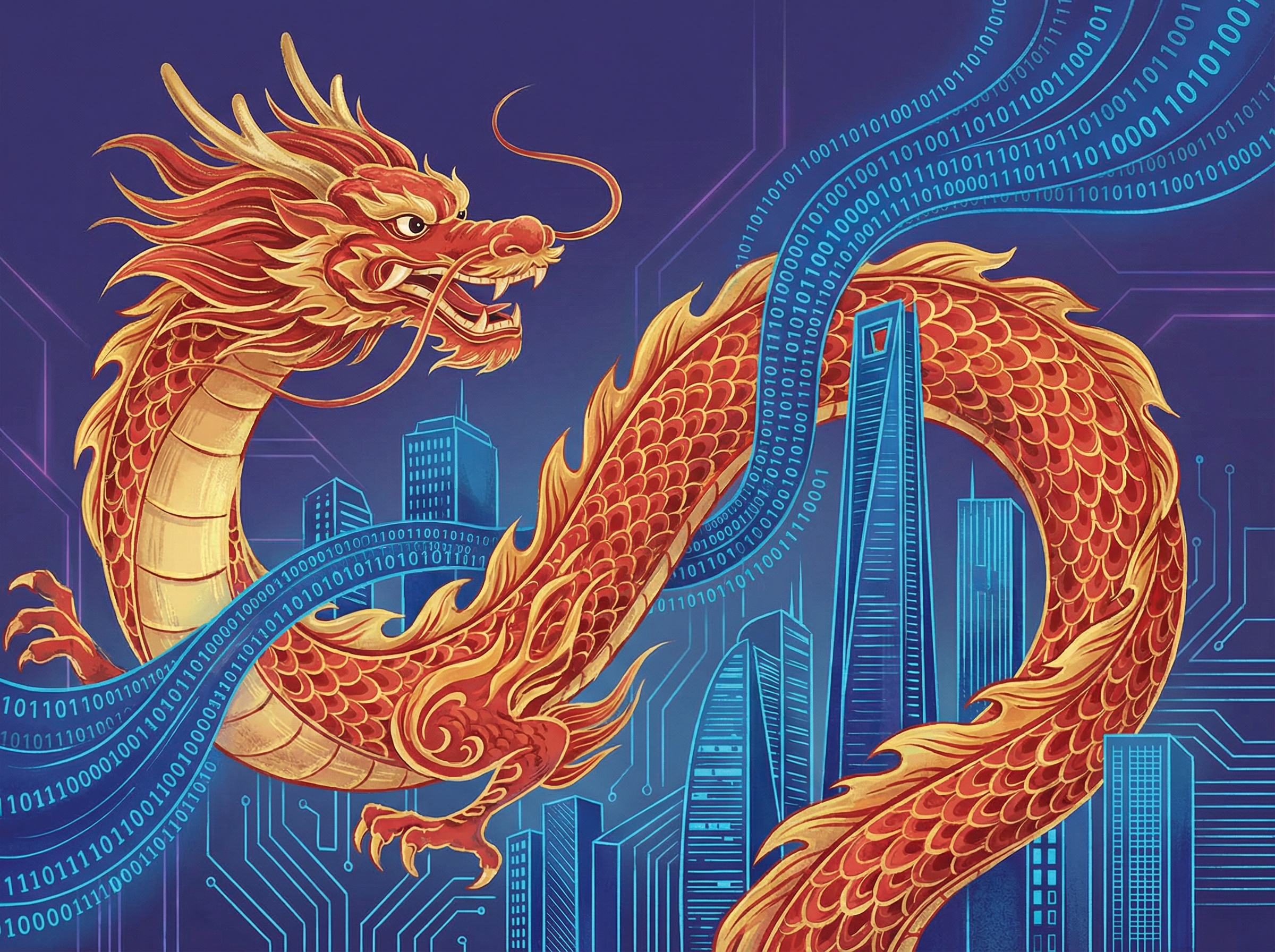
Chinese dragon intertwined with circuit boards and skyscrapers

The Chinese Communist Party's "Socialism with Chinese Characteristics" defies easy categorization. Is it communist? State capitalist? Something entirely new?

Since Deng Xiaoping's 1978 reforms, China has lifted 800 million people out of poverty while maintaining Leninist political control. The economy runs on hyper-capitalist principles: private enterprise, global trade, market pricing. But the Party retains veto power over everything—including which billionaires survive.

Scholars like Francis Fukuyama once declared liberal democracy's inevitable triumph. China's rise challenges that thesis. A Leninist political structure managing a capitalist economic engine might represent a durable new model—or a contradiction waiting to explode.

The 2024–25 debate: Can authoritarian capitalism sustain itself? China's model has admirers across the developing world, but critics point to Xinjiang, Hong Kong, and demographic collapse as evidence of inherent fragility.

06

The Strange Convergence: Where All Roads Lead

Three paths converging at a misty crossroads with dawn breaking

Here's the paradox of 2026: left and right are converging on economic nationalism. Tariffs, industrial subsidies, "reshoring"—policies that echo the early 20th century are suddenly bipartisan in America, embraced from Trump to Bernie Sanders.

Meanwhile, Yanis Varoufakis and others argue we've moved beyond capitalism entirely into "techno-feudalism." Big Tech platforms operate like digital fiefdoms: Amazon, Meta, and Google extract rent from users who create value on their "land." It's not socialism, not quite capitalism—something stranger.

The critical distinction for progressives remains democratic socialism (replacing capitalism via democratic means) versus social democracy (capitalism with a robust safety net). The Nordic model—Sweden, Denmark, Norway—achieves Soviet-level equality (Gini ~0.27) while maintaining market dynamism. It remains the dominant progressive blueprint in the West.

The question for our era: Can democratic societies reconcile freedom, equality, and sustainability? Or will the 21st century produce its own monstrous ideologies—born from climate crisis, AI displacement, and fracturing consensus?

History suggests ideologies never die cleanly. They mutate, merge, and return in new forms. Understanding their origins isn't academic exercise—it's armor against their worst manifestations.

The Contest Continues

Communism, fascism, and capitalism aren't just historical artifacts—they're templates that shape how we imagine alternatives. Understanding their mechanics, their promises, and their body counts is essential equipment for navigating what comes next.