Autoimmune Health

Your Thyroid Is Lying to Your Doctor

Why Hashimoto's syndrome hides in plain sight—especially in men—and what you can actually do about it.

Listen
Artistic rendering of a butterfly-shaped thyroid gland in teal and copper tones, surrounded by immune cell particles
01

The FDA Is Coming for Your Natural Thyroid Meds
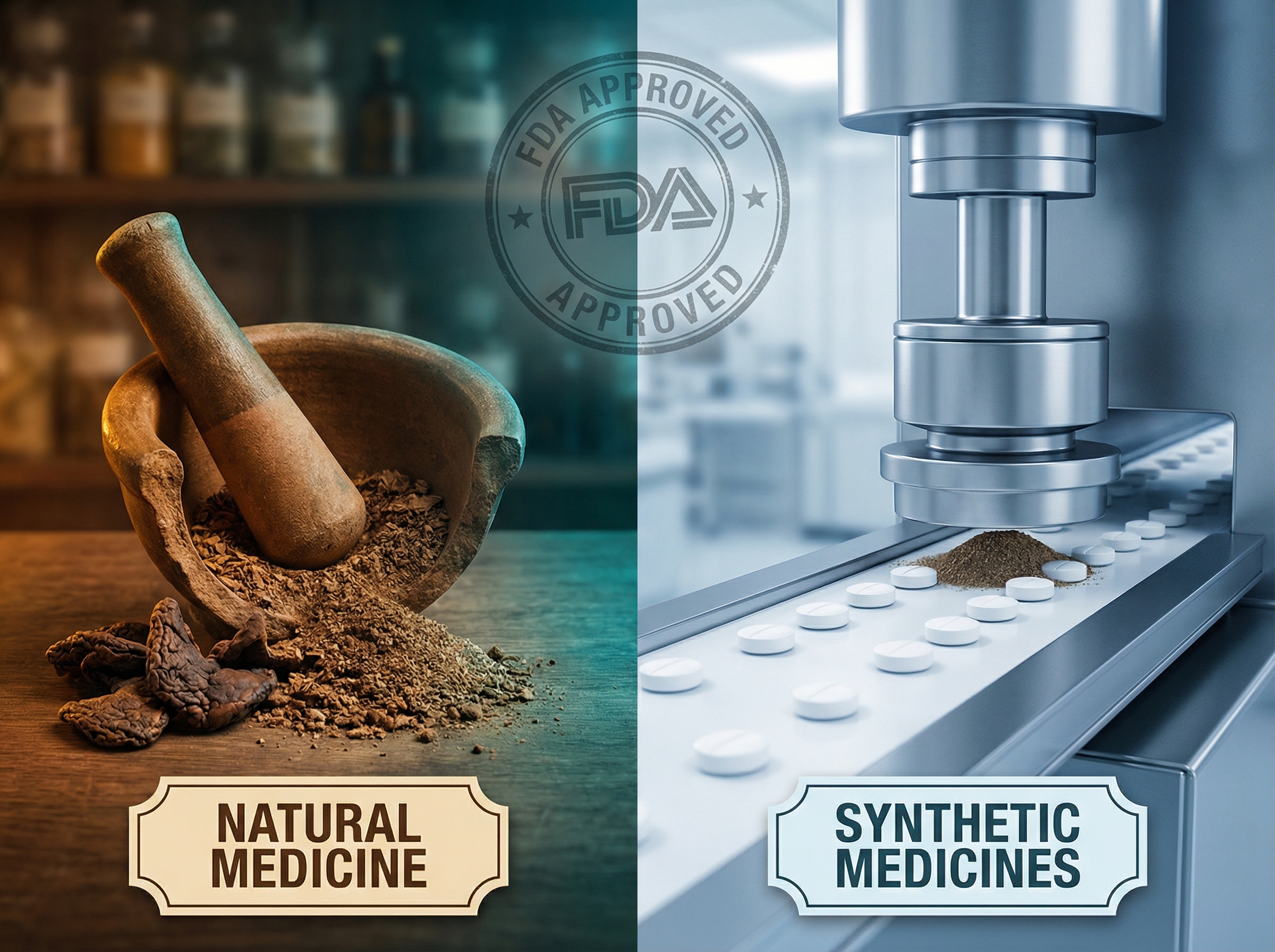
Mortar and pestle crushing natural thyroid glands transforming into pharmaceutical pills

If you're one of the millions who swear by Armour Thyroid or NP Thyroid because synthetic levothyroxine left you feeling like a zombie, you should know the FDA just moved to reclassify these natural desiccated thyroid (NDT) medications as "biologics." That sounds benign until you realize manufacturers now need to submit entirely new drug applications—by a 2026 deadline—or face removal from the market.

The timing is revealing. NDT medications have been used since the 1890s, long before the FDA existed. They were "grandfathered" in precisely because they had a century-long track record. Now the agency wants modern trials, modern manufacturing oversight, and modern prices. For patients who've spent years finding a medication that actually works, this isn't regulatory housekeeping—it's an existential threat to their treatment protocol.

The practical reality: Patients currently stable on NDT may face significant access challenges. If you're on Armour or NP Thyroid, now is the time to have a backup conversation with your endocrinologist about synthetic alternatives—not because they're better, but because they might be your only option.

The larger issue here is that NDT works differently than synthetic T4. It contains both T4 and T3—the active hormone that your cells actually use. For the 15-20% of patients who can't efficiently convert T4 to T3, NDT isn't a lifestyle choice. It's the difference between functioning and not functioning. The FDA's move treats all patients as identical when the endocrine system is anything but.
02

Red Light Therapy: Snake Oil or Legitimate Tool?

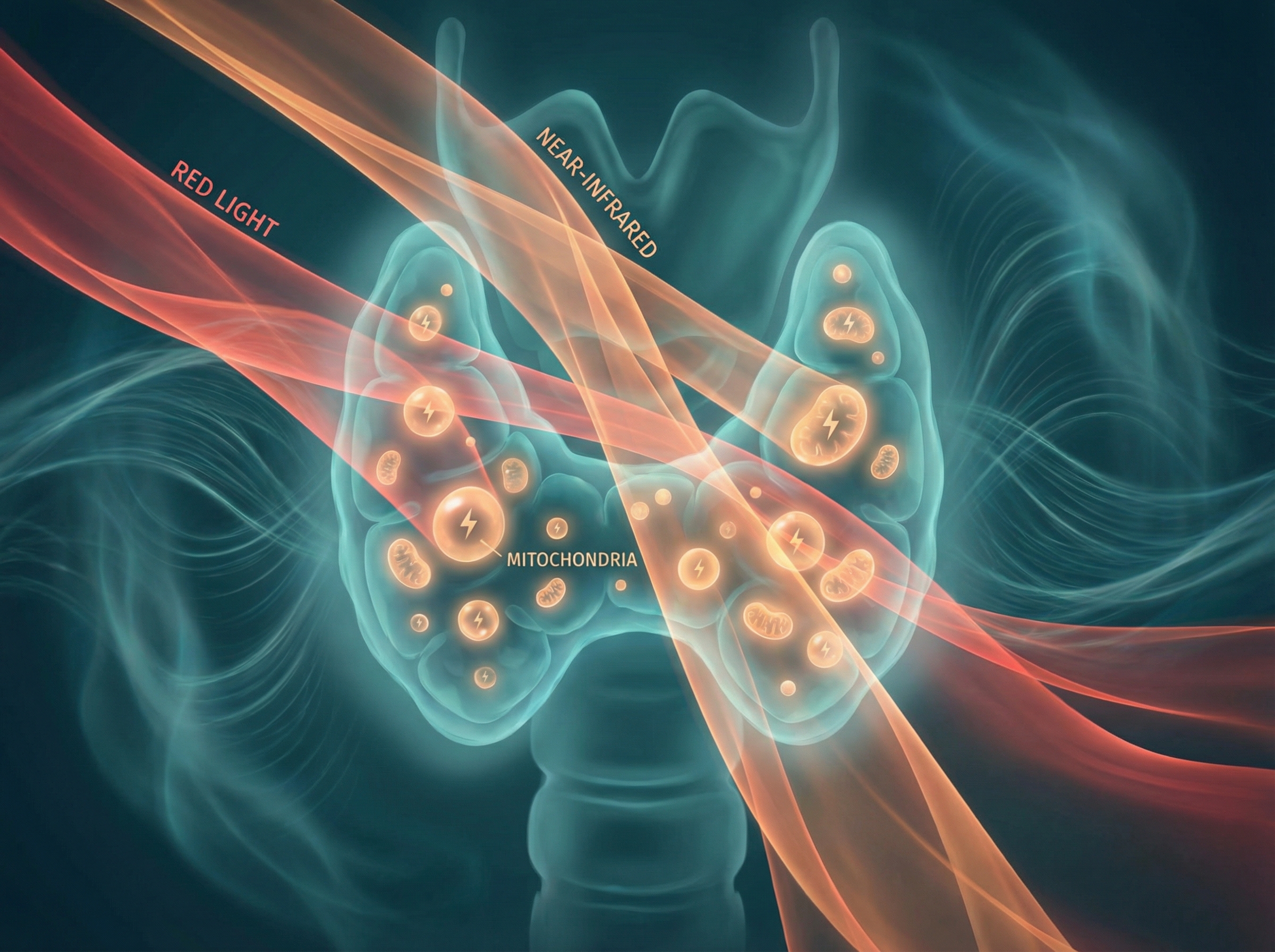
Abstract visualization of red light therapy waves penetrating thyroid tissue

New clinical data on photobiomodulation (red light therapy) for thyroid autoimmunity is emerging, and it's more interesting than the Instagram wellness crowd would have you believe. The mechanism isn't magic: specific wavelengths of red and near-infrared light penetrate tissue and stimulate mitochondrial function. In thyroid tissue, this appears to reduce pro-inflammatory cytokines and improve blood flow to the gland.

The relevant finding for Hashimoto's patients: multiple studies now show measurable reductions in TPO antibody levels after consistent red light therapy protocols. We're not talking about curing the disease—we're talking about potentially slowing the autoimmune destruction of your thyroid tissue.

Here's the caveat that wellness influencers won't tell you: this is complementary therapy, not replacement therapy. You still need your medication. You still need your endocrinologist. But if you're looking for something that might slow the progression while your doctor monitors, the evidence is moving from "probably useless" to "worth considering." The risk profile is essentially zero—it's light.

If you try it: Look for devices with wavelengths between 630-850nm, applied to the anterior neck for 5-10 minutes daily. Results in studies took 3-6 months to manifest. Don't expect miracles; expect modest improvement at best.

03

Your All-Nighters Are Feeding the Autoimmune Fire

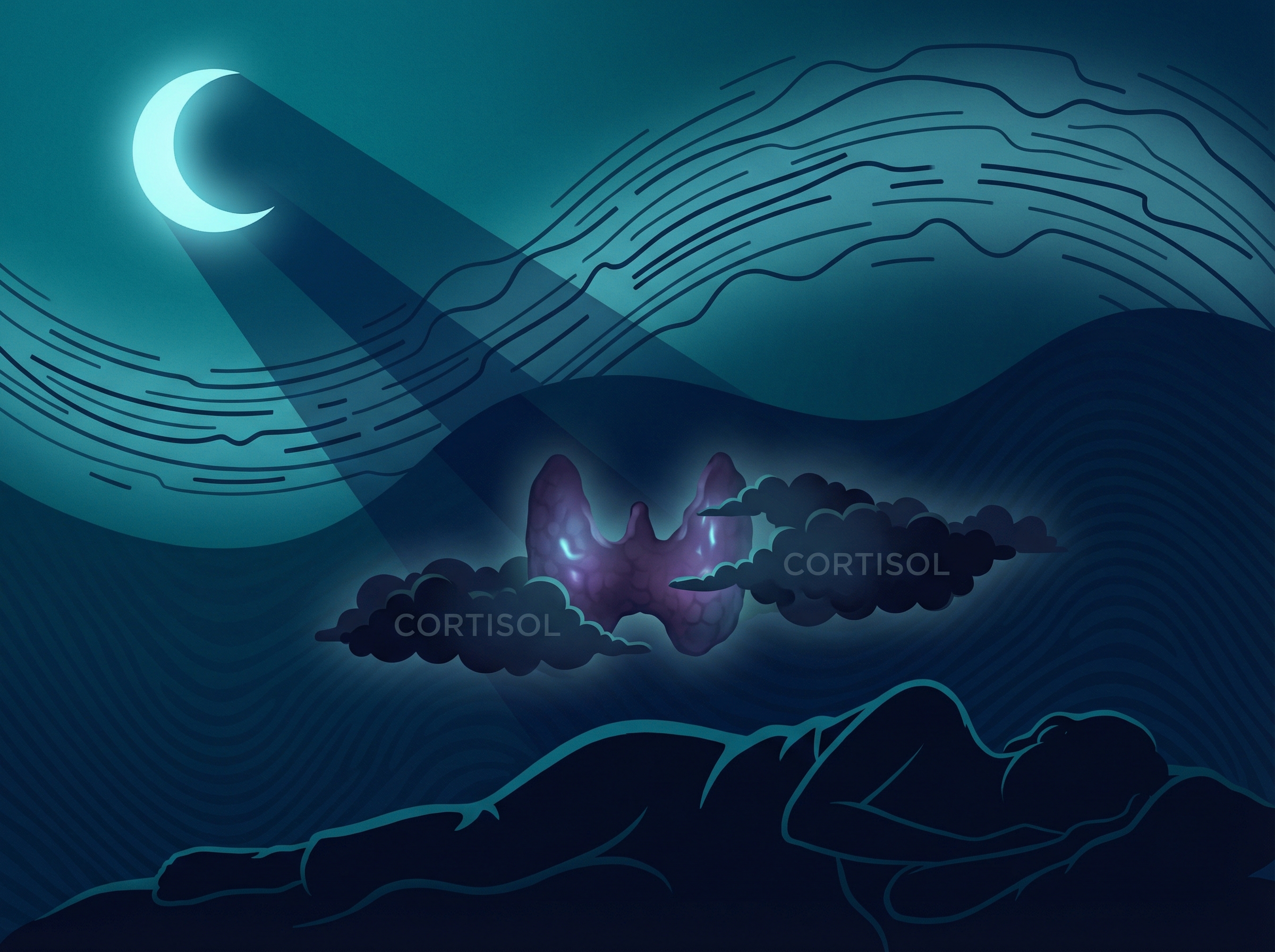
Crescent moon over disrupted circadian rhythm visualization with struggling thyroid gland

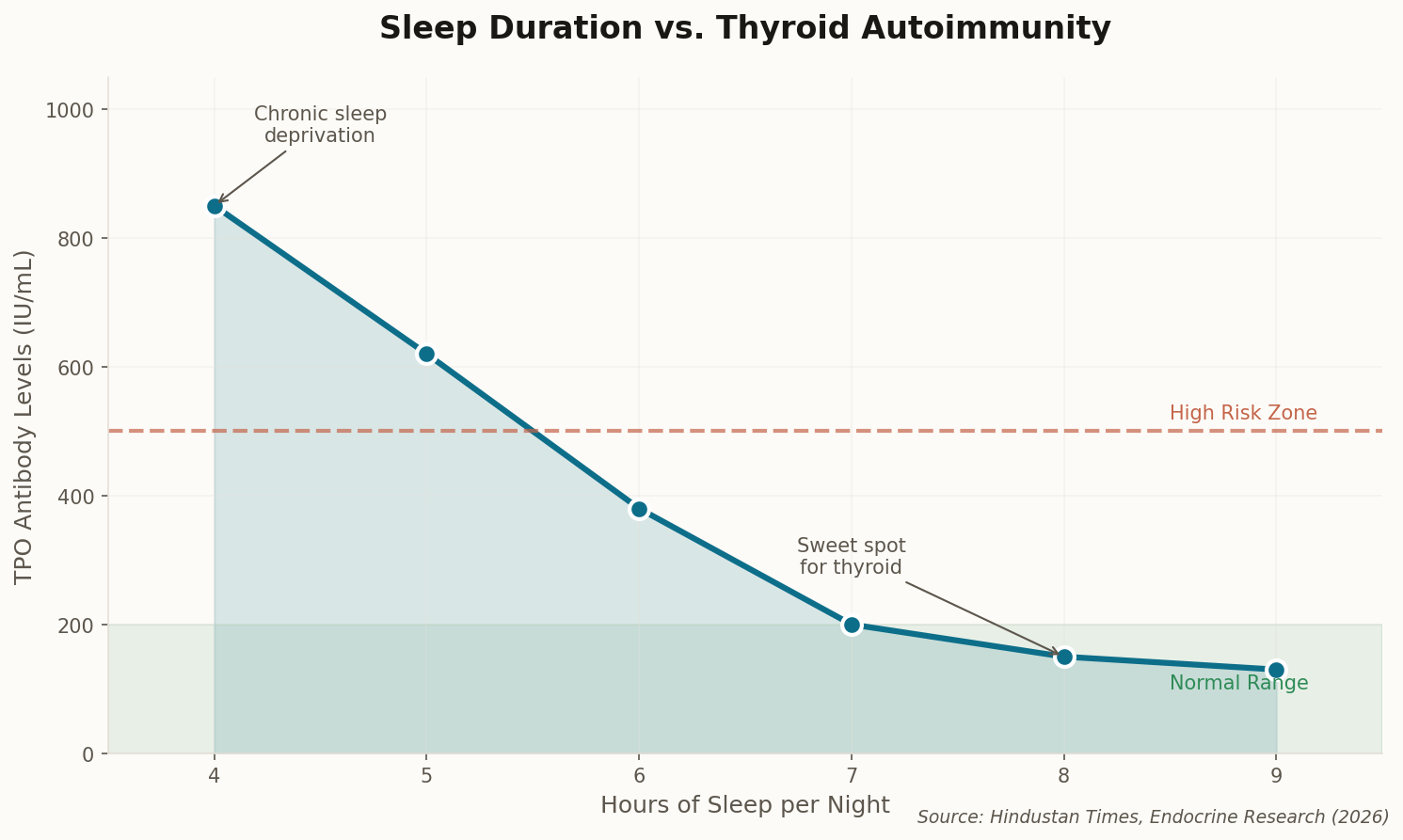
Endocrinologists are now highlighting data that should concern every Hashimoto's patient who thinks they can get by on six hours of sleep. The correlation between chronic sleep deprivation and thyroid antibody flares isn't subtle—it's direct and measurable.

Chart showing sleep duration inversely correlated with TPO antibody levels
TPO antibody levels rise dramatically as sleep drops below 7 hours per night. The relationship is nonlinear—each lost hour hurts more than the last.

The mechanism involves TSH secretion, which follows a circadian rhythm. When you disrupt that rhythm with chronic sleep debt, you're not just tired—you're actively dysregulating the feedback loop that controls thyroid hormone production. Add in elevated cortisol from sleep deprivation (cortisol blocks T4-to-T3 conversion), and you're essentially sabotaging your medication while creating an inflammatory environment that accelerates autoimmune attack.

This is particularly brutal for middle-aged men, who already tend toward worse sleep quality due to declining melatonin production and increased sleep apnea prevalence. If you have Hashimoto's and you're not treating sleep as a medical priority, you're leaving your thyroid undefended.

The prescription: 7-8 hours minimum, same time every night. Sleep apnea screening if you snore or wake unrested. Blue light blocking after 8pm isn't wellness theater—it protects melatonin production, which is essential for TSH regulation.

04

The T3 Question: UConn Launches the Trial That Should've Happened Decades Ago

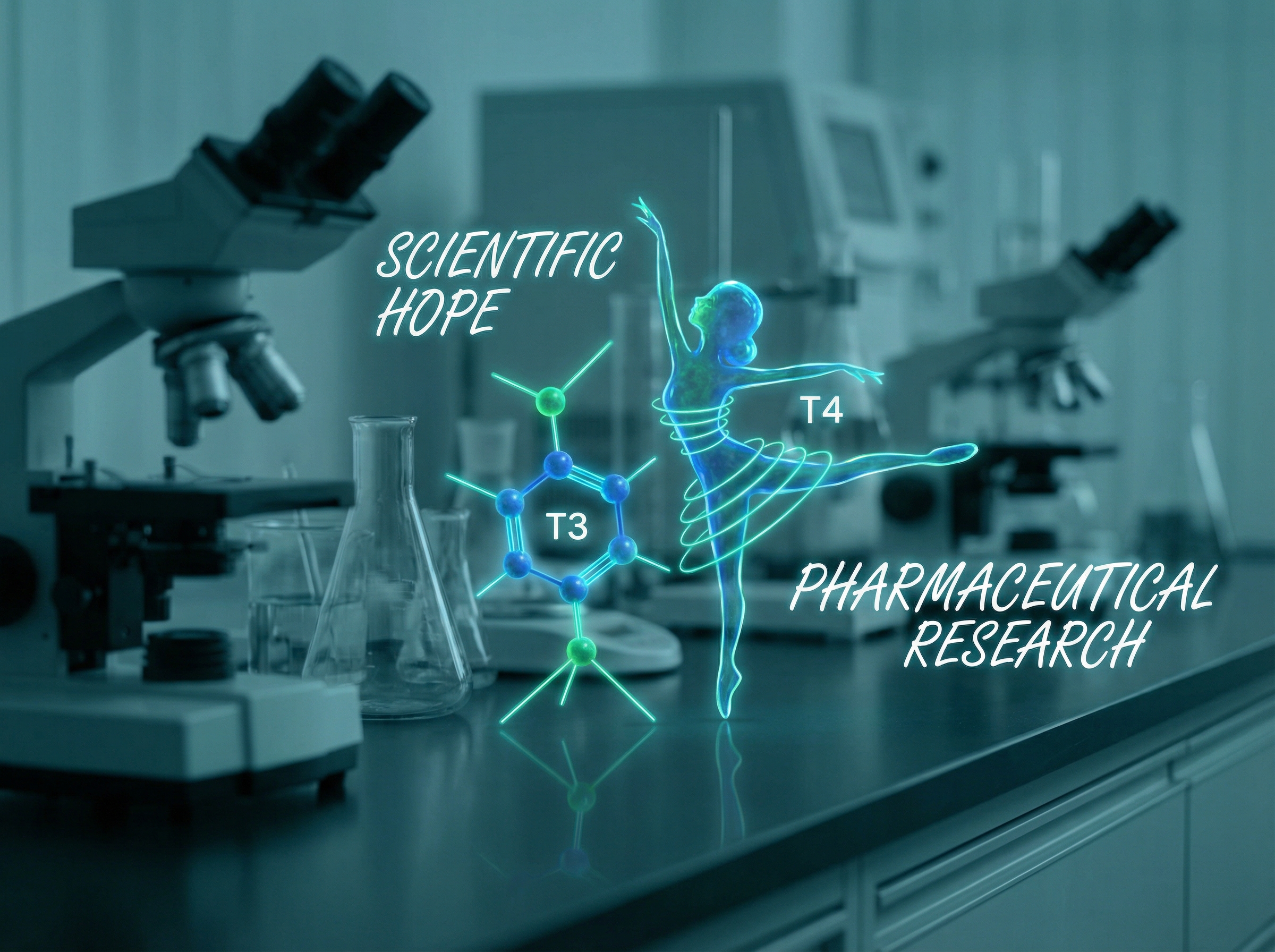
T3 and T4 molecular structures dancing together in a clinical research setting

The standard of care for hypothyroidism has been T4-only therapy (levothyroxine) for decades. The assumption: your body will convert T4 to the active hormone T3 as needed. The problem: 15-20% of patients can't do this efficiently, and they've been told their "normal" lab results mean their symptoms are psychological.

UConn Health just launched a clinical trial investigating what many functional medicine practitioners have advocated for years: adding synthetic T3 (Cytomel) to standard T4 therapy. The study specifically targets outcomes that T4-only skeptics have long complained about—weight gain, elevated cholesterol, and persistent fatigue despite "optimal" TSH levels.

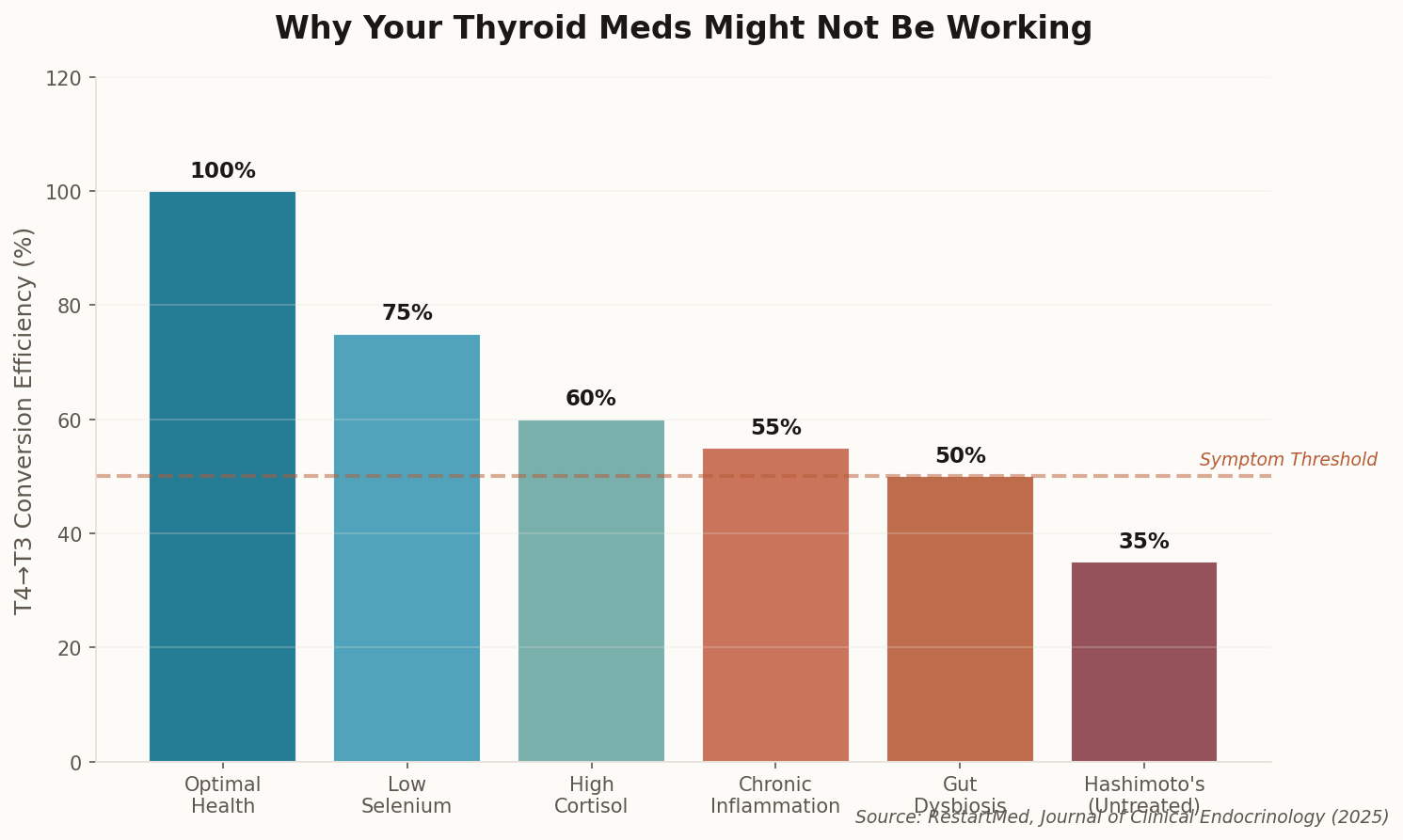
Chart showing T4 to T3 conversion efficiency drops dramatically under various conditions
Multiple factors impair T4-to-T3 conversion. Many Hashimoto's patients have several of these simultaneously.

The implications are significant. If the trial shows benefit, it provides the evidence base that insurance companies require to cover combination therapy. It also gives endocrinologists who've been hesitant to prescribe T3 the data they need to justify it. The current situation—where patients who respond to combination therapy can only access it through expensive compounding pharmacies or sympathetic doctors—is a market failure that good research can fix.

Don't expect results for 2-3 years. But if you've felt dismissed by doctors who told you your TSH is fine when you clearly aren't, know that the scientific establishment is finally asking the right questions.

05

Why Your "Low T" Might Actually Be Your Thyroid

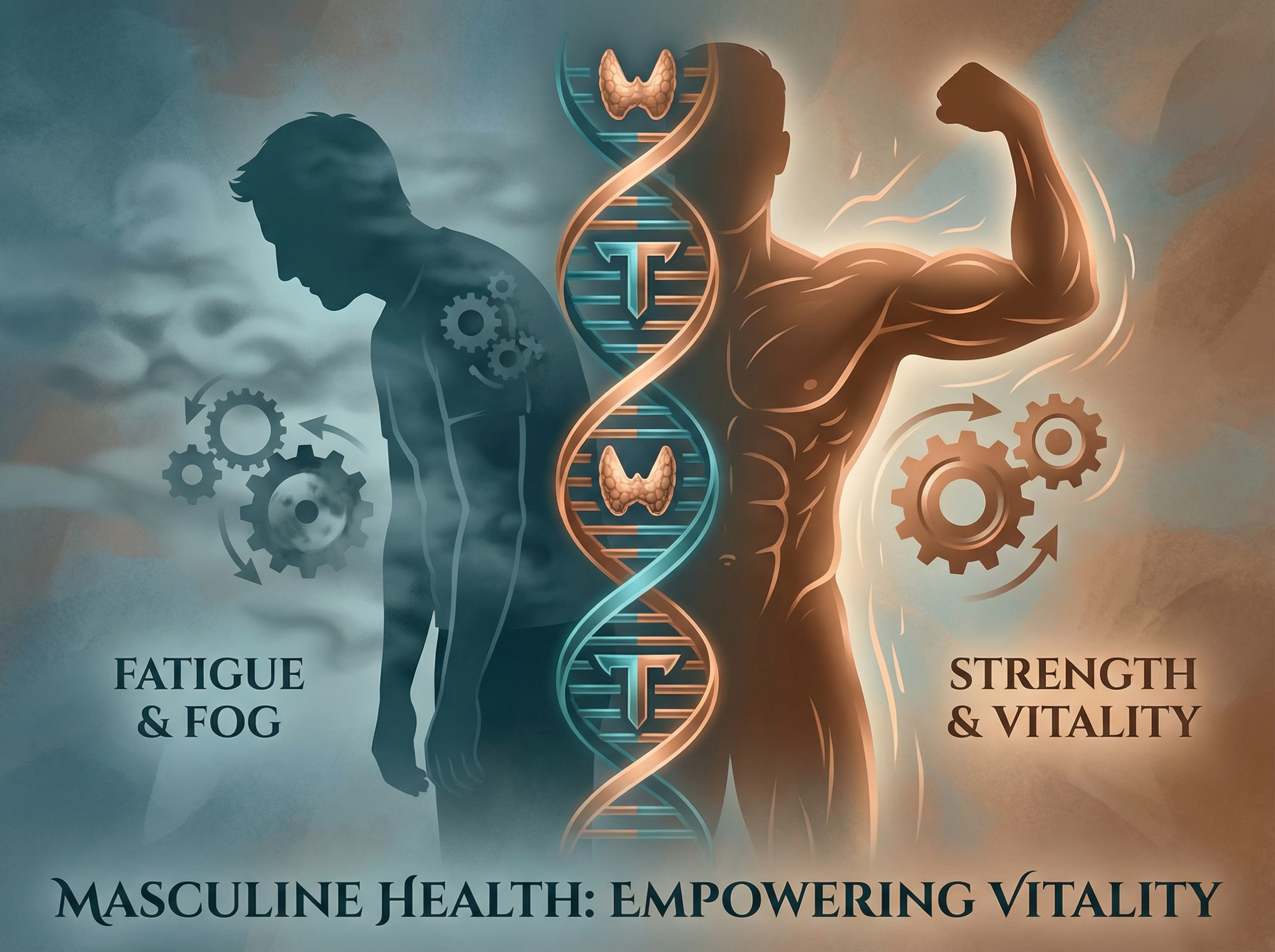
Middle-aged man's silhouette split between fatigue and vitality, with hormone symbols intertwining

Here's the uncomfortable truth that endocrinologists know but testosterone clinics don't advertise: hypothyroidism and low testosterone create a vicious cycle, and chasing testosterone replacement while ignoring your thyroid is like treating a fever without finding the infection.

The bidirectional relationship works like this: hypothyroidism directly suppresses testosterone production by impairing the hypothalamic-pituitary-gonadal axis. Simultaneously, low testosterone increases inflammatory cytokines that accelerate autoimmune thyroid destruction. Treat one without the other, and you're running on a hamster wheel.

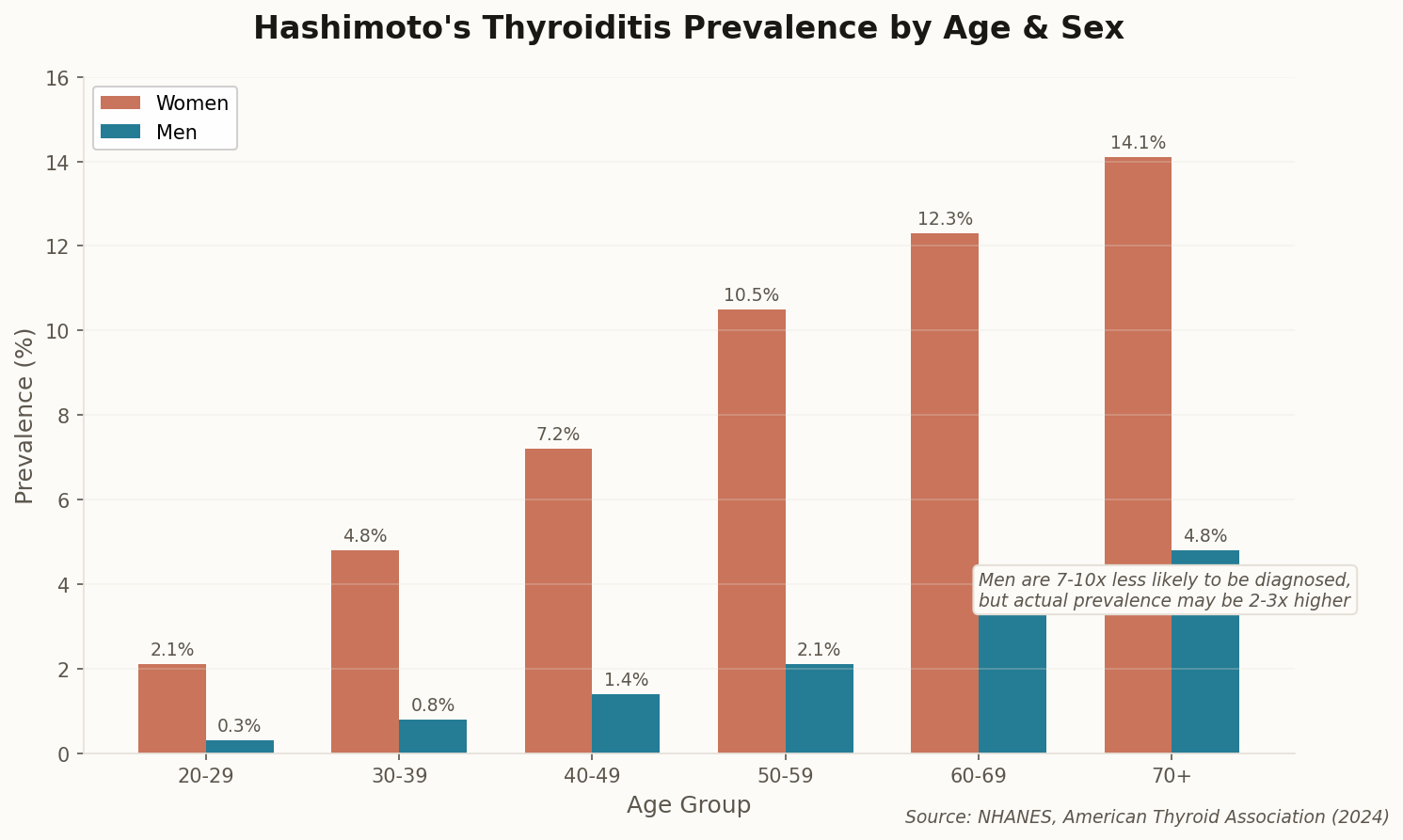
Chart showing Hashimoto's prevalence by age and sex, with men significantly underdiagnosed
Men are diagnosed with Hashimoto's at 7-10x lower rates than women—but the actual prevalence gap may be much smaller. Symptoms present differently in men, leading to systematic underdiagnosis.

The presentation in men differs from the classic female pattern. Instead of cold intolerance and weight gain as primary complaints, men often present with:

  • Erectile dysfunction and low libido (misattributed to "aging")
  • Muscle weakness and slow exercise recovery (misattributed to "overtraining")
  • Depression and cognitive fog (misattributed to "stress")
  • Loss of morning erections (often the earliest sign)

Men are also less likely to have a visible goiter. Instead, Hashimoto's in men often presents with atrophic (shrunken) thyroid tissue—invisible from the outside, only detectable on ultrasound.

The test you need: Don't just check TSH. Request a full panel: TSH, Free T4, Free T3, TPO antibodies, and thyroglobulin antibodies. If your doctor refuses, find one who won't. Early detection prevents irreversible thyroid damage.

06

The Anti-Inflammatory Protocol That Actually Has Evidence

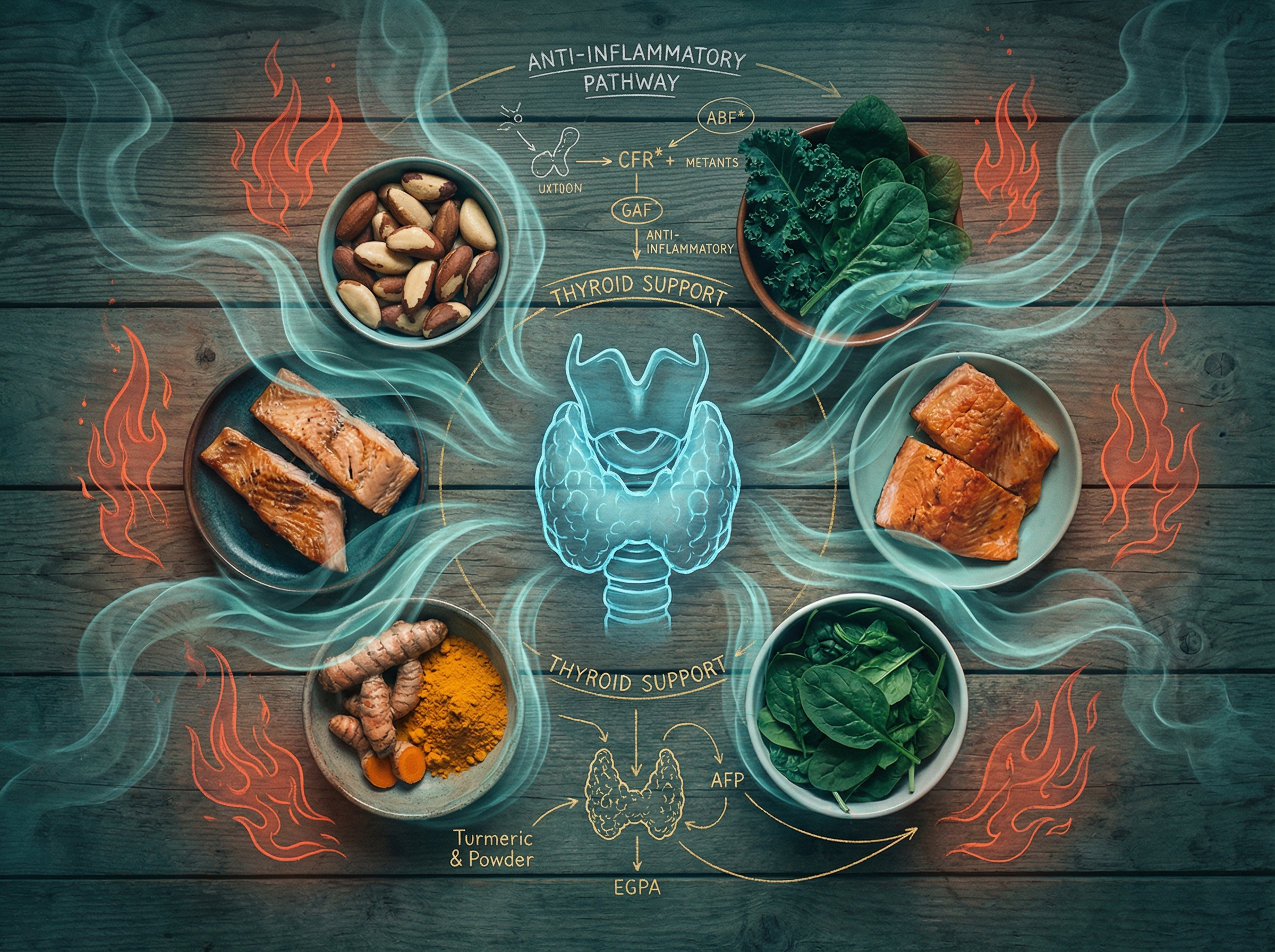
Anti-inflammatory foods arranged around a calm thyroid gland with receding inflammation

The wellness industry has made "anti-inflammatory diet" meaningless through overuse. But for Hashimoto's specifically, there are interventions with actual evidence behind them—and some popular recommendations that are actively harmful.

What works:

  • Selenium (200mcg/day): Essential for T4-to-T3 conversion. Brazil nuts are the most bioavailable source—2-3 per day is sufficient. Multiple studies show reduced TPO antibodies with selenium supplementation.
  • Gluten elimination: The molecular mimicry theory is real—gluten proteins resemble thyroid tissue closely enough to trigger cross-reactive immune responses. Not everyone responds, but the responders see dramatic antibody reductions.
  • Omega-3 fatty acids: 2-4g daily of EPA/DHA from fish oil or fatty fish reduces inflammatory markers across multiple pathways.

What doesn't work (or hurts):

  • Iodine supplementation: This is the big one. Unlike simple iodine-deficiency goiter, Hashimoto's is an autoimmune condition where excess iodine accelerates thyroid destruction. If someone recommends iodine for your Hashimoto's, find a different advisor.
  • Extreme low-carb diets: Carbohydrates are necessary for T4-to-T3 conversion. Chronic keto can worsen hypothyroid symptoms even if your TSH looks fine.

The exercise paradox: Movement is essential, but the wrong type makes things worse. High-intensity interval training (HIIT) and chronic cardio spike cortisol, which blocks T4-to-T3 conversion. For Hashimoto's patients, the prescription is resistance training (builds metabolism-boosting muscle) and Zone 2 cardio (improves mitochondrial function without cortisol spikes). Save the intense workouts for when your thyroid is optimized.

The bottom line: Medication handles the hormone deficiency. Lifestyle handles the autoimmune component. You need both. Anyone who tells you diet alone can "cure" Hashimoto's is selling something other than health.

The Invisible Epidemic

Hashimoto's affects millions but hides behind "normal" lab results and symptoms that get attributed to aging, stress, or psychological issues. For middle-aged men especially, the disease often goes undetected until significant thyroid damage has already occurred. The good news: with proper testing, medication optimization, and evidence-based lifestyle interventions, most patients can return to full function. The challenge is getting taken seriously in the first place. Be your own advocate. Demand the full panel. And remember—your symptoms are real, even when the TSH says otherwise.