Women's Brain Health

Your Brain's Backup Battery

This week's research makes it undeniable: exercise isn't just good for your body—it's your brain's most powerful protector. And for women, the stakes are higher than we knew.

Listen
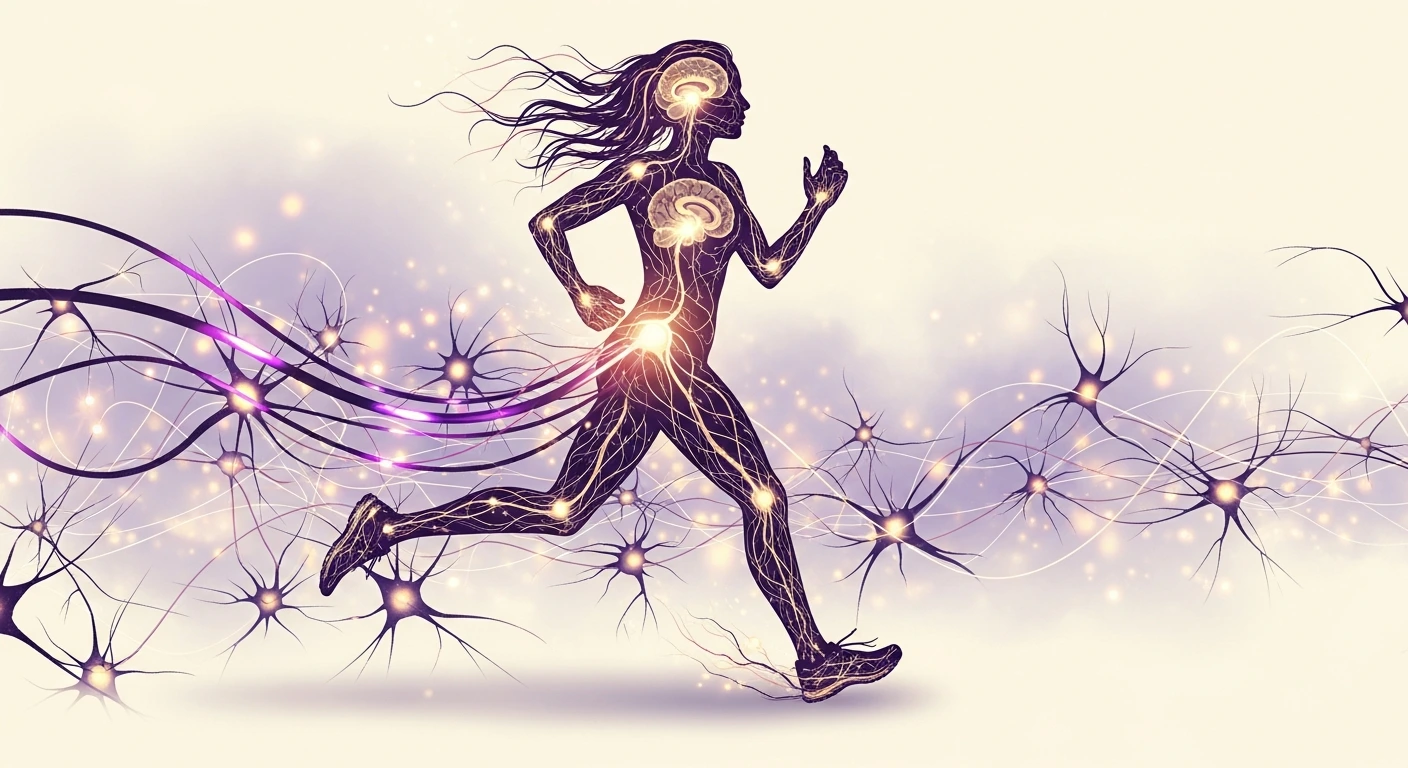
Luminous neural pathways forming the silhouette of a woman in motion, running through glowing synapses
01

The Nine-Month Window That Could Save Your Brain
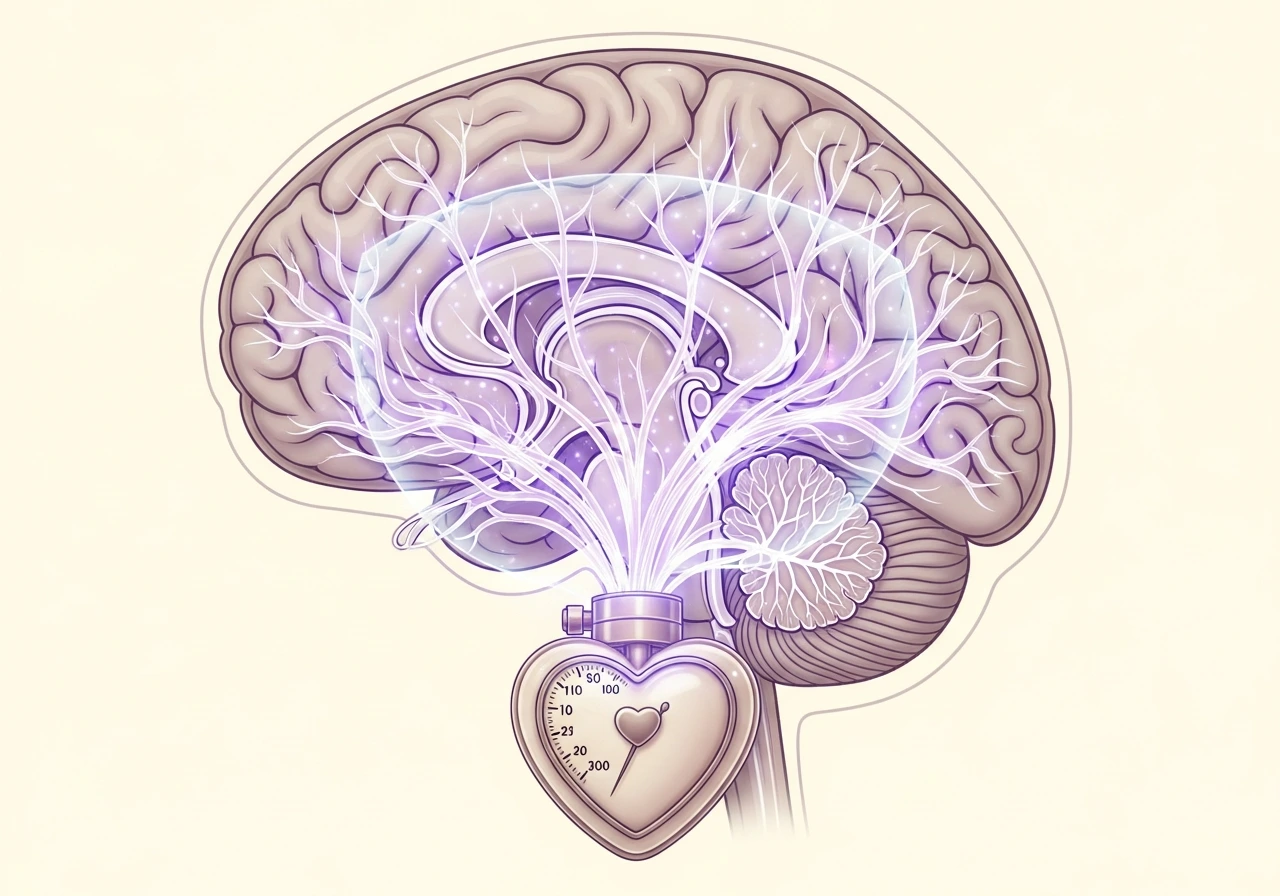
Brain white matter with blood pressure monitor, postpartum theme

Here's a finding that should reshape postnatal care: women who had hypertensive pregnancies and self-monitored their blood pressure afterward showed significantly larger white matter volumes nine months postpartum. That's not a marginal improvement—it's structural brain preservation.

The JAMA Neurology study from Oxford identifies a critical intervention window that most healthcare systems completely miss. Right now, after a complicated pregnancy, women are typically sent home with a baby and vague instructions to "rest." Meanwhile, their cardiovascular system is deciding whether to heal properly or set up decades of vascular damage.

The intervention itself is almost absurdly simple: a blood pressure cuff and regular monitoring. The implications are not. White matter integrity is essential for cognitive function and processing speed—the very things that deteriorate in dementia. This is concrete, actionable, non-pharmaceutical protection.

The takeaway: If you've had preeclampsia or gestational hypertension, advocate for structured BP monitoring in your first year postpartum. Your brain will thank you in thirty years.

02

HRT Is Officially "Neuro-Neutral"—And That's Good News

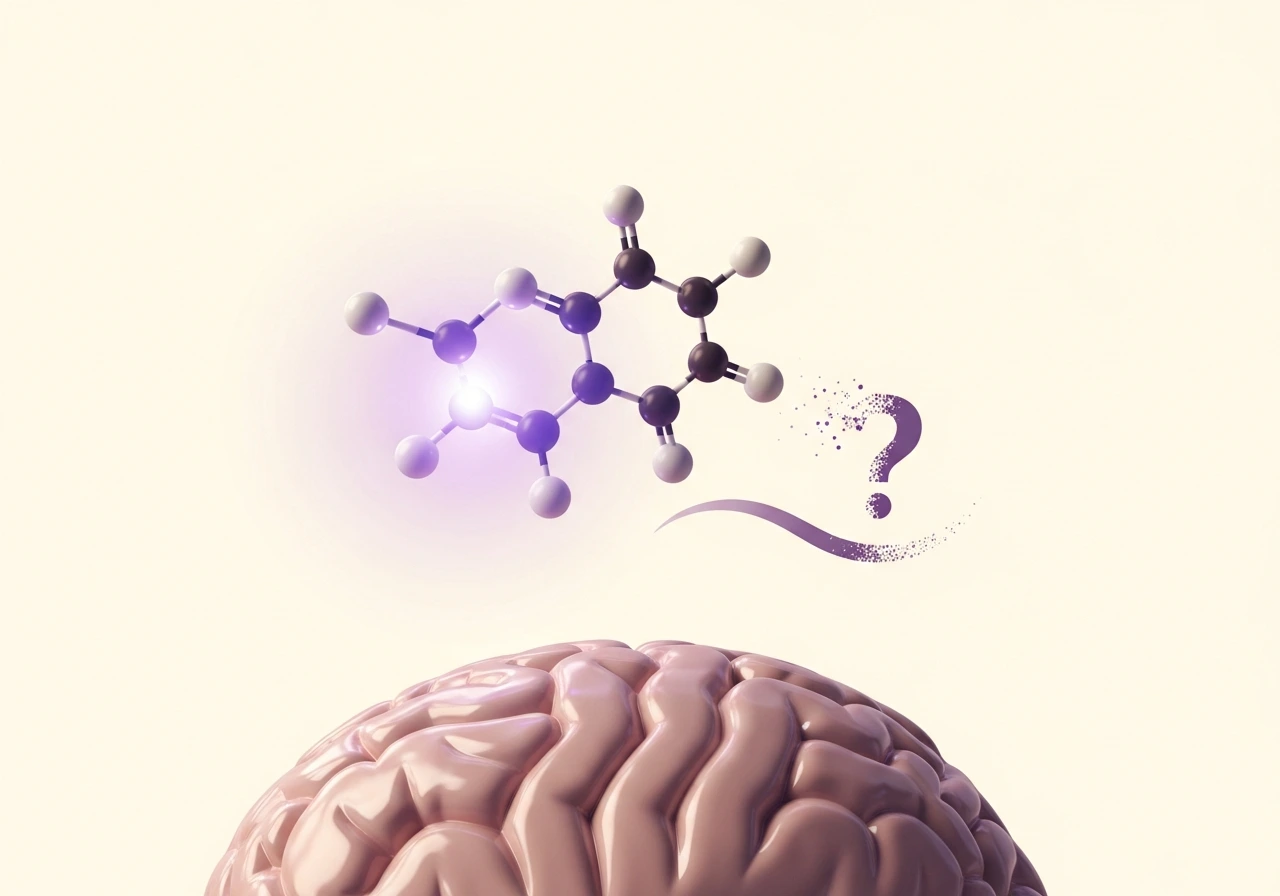
Estrogen molecule floating above calm brain surface

For years, the dementia question has haunted hormone replacement therapy. Does estrogen protect the aging brain? Does it accelerate decline? The uncertainty kept millions of women either suffering through menopause symptoms or agonizing over the decision.

A major new study in The Lancet Healthy Longevity finally delivers an answer: HRT neither increases nor decreases dementia risk. It's neuro-neutral. That might sound anticlimactic, but it's actually liberating. Women can now make the HRT decision based on symptom relief alone—without the cognitive fear tax.

This matters because menopausal symptoms themselves—sleep disruption, brain fog, anxiety—are cognitively expensive. If HRT eliminates those symptoms without adding dementia risk, the net effect on brain function is likely positive. The researchers were explicit: "Women can be reassured that taking HRT to relieve menopausal symptoms does not detrimentally affect their long-term cognitive health."

One caveat: HRT isn't a brain protection strategy either. For that, keep reading.

03

The Nottingham Consensus: Prevention Is the Only Cure

Policy umbrella protecting women silhouettes, brain health symbols

An international policy consensus released this week is unusually blunt: we cannot treat our way out of the dementia epidemic. Prevention is the only cure we have.

The Nottingham Consensus calls on governments to target modifiable risk factors—and explicitly highlights those that disproportionately affect women. Social isolation. Specific cardiovascular vulnerabilities. The hormonal transitions that reshape brain chemistry. These aren't footnotes; they're central to the document's recommendations.

Most importantly, the consensus argues that "brain health" should be integrated into midlife women's health checks—not delayed until geriatric care when it's too late to build cognitive reserve. Think of it as a retirement account for your neurons: the earlier you start investing, the more you'll have when you need it.

The policy implications are significant. We're being asked to shift from treating dementia as an inevitable decline to treating it as a preventable condition—one where the prevention window is middle age, not old age.

04

The Female Brain Is Not a Smaller Male Brain

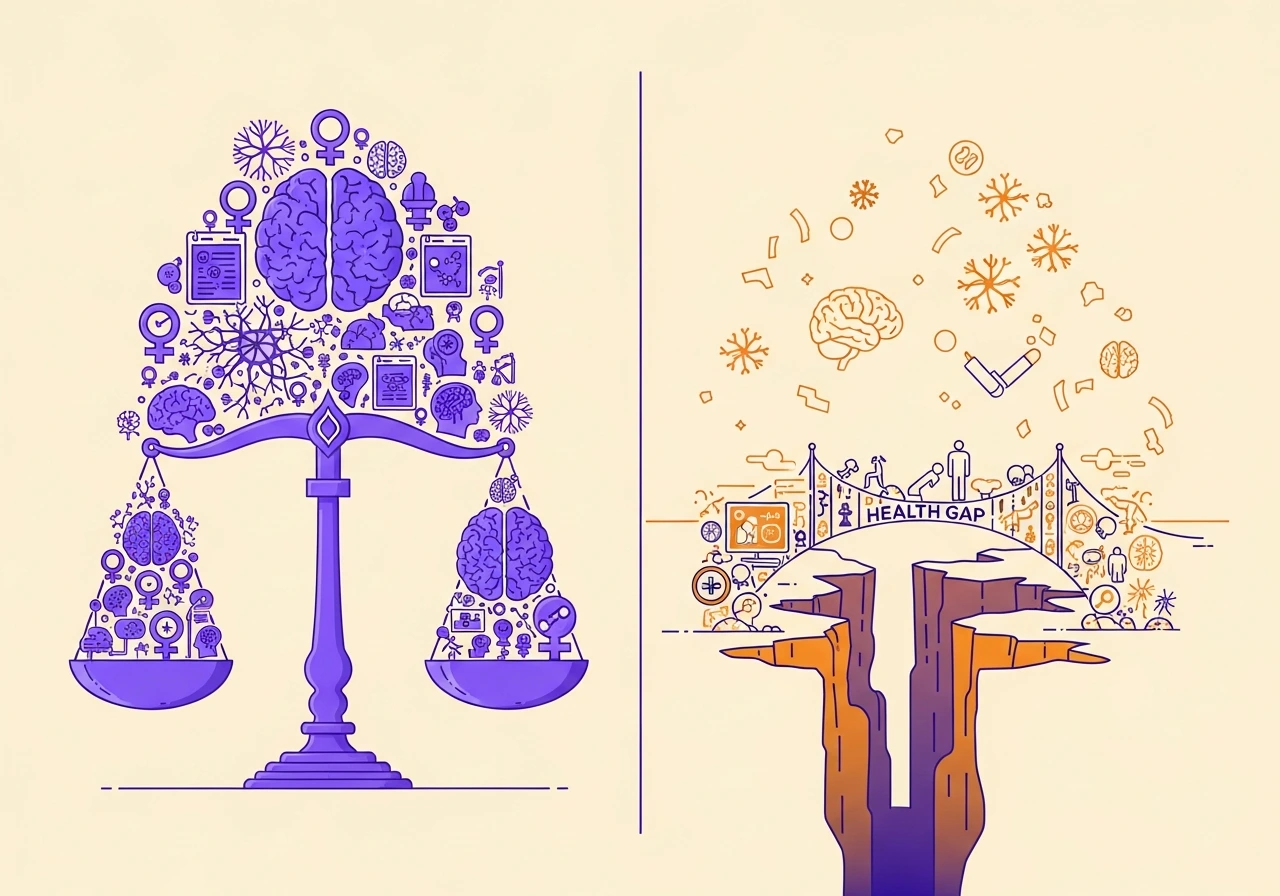
Health gap canyon being bridged, scales showing imbalance

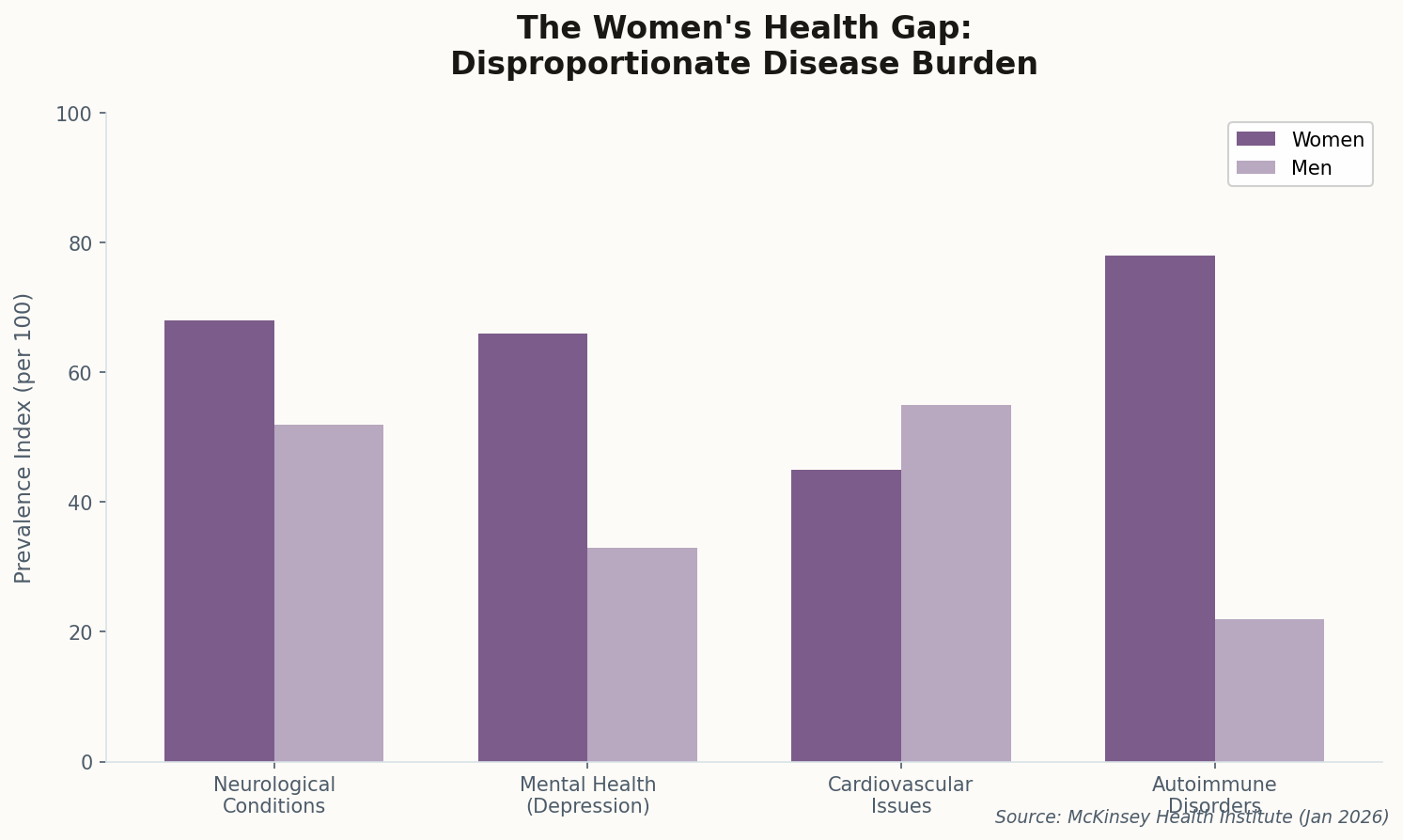
Women spend 25% more of their lives in "poor health" compared to men. That's not a minor statistical quirk—it's a systematic gap in how we research, fund, and treat women's health. And the brain is ground zero for this failure.

Chart showing disproportionate disease burden between women and men
Women face higher prevalence in neurological, mental health, and autoimmune conditions. Source: McKinsey Health Institute, January 2026.

A new McKinsey Health Institute report puts it bluntly: "The female brain is not just a smaller male brain; it ages differently and requires distinct support." The menopausal transition isn't merely uncomfortable—it's a "neurological inflection point" where estrogen loss accelerates brain aging.

The report calls for exercise protocols specifically timed to the menstrual cycle and menopausal stage to maximize neuroprotection. This isn't speculation; it's based on emerging research showing that exercise timing can amplify or diminish its cognitive benefits depending on hormonal state.

Generic fitness advice has failed women. The science is finally catching up to what many suspected: female physiology demands female-specific protocols.

05

60 Days to Clear the Fog

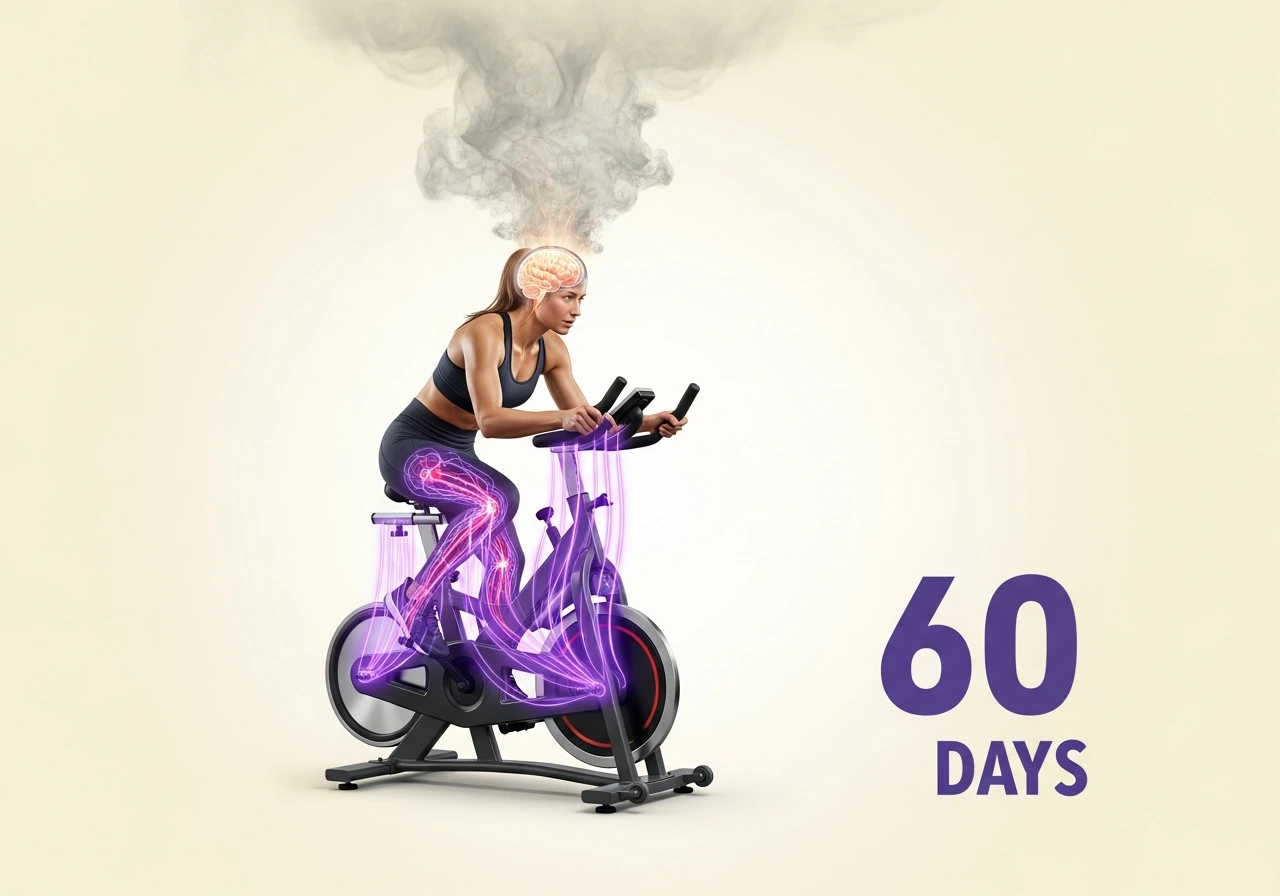
Woman on stationary bike with fog lifting from her head

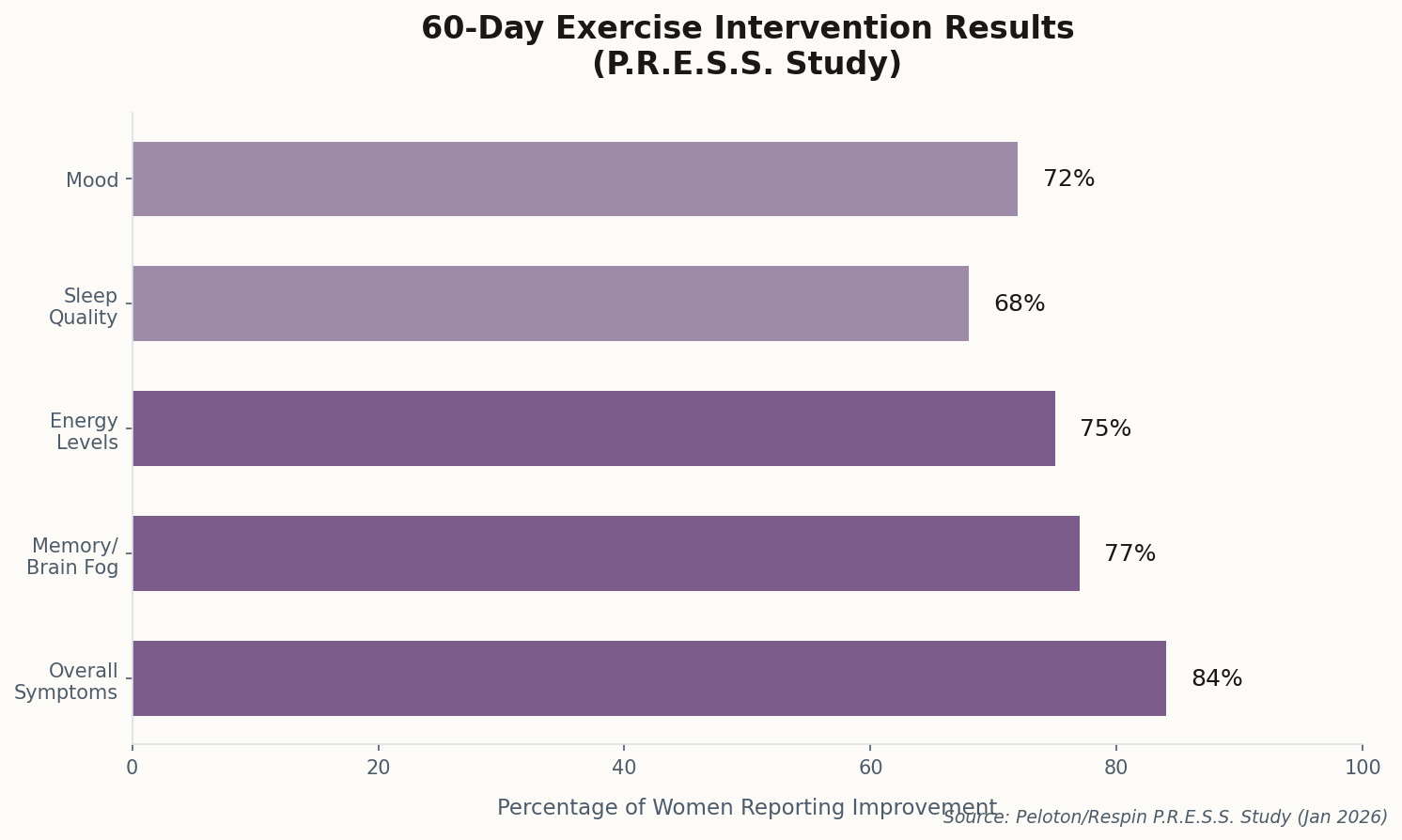
The P.R.E.S.S. Study (Peloton Respin Exercise & Strength Study) just released results that should be tattooed on every gym wall: 77% of menopausal women who struggled with memory and brain fog reported significant cognitive improvements after just 60 days of structured exercise. The average improvement? 39%.

Bar chart showing improvement percentages across different symptoms
60-day exercise intervention results showing improvement rates across key menopausal symptoms. Source: P.R.E.S.S. Study, January 2026.

This wasn't casual walking. The multi-modal program from Peloton and Respin combined strength training, cardio, and flexibility work. But the key insight is the speed of results. Two months. Not years of uncertain discipline—just eight weeks of consistent effort.

84% of participants reported overall symptom improvement, including energy levels, sleep quality, and mood. But the memory finding is the headline: "brain fog" isn't inevitable. It's responsive to intervention. The fog can lift.

What the data shows: If you're struggling with cognitive symptoms in perimenopause or menopause, 60 days of consistent exercise may be more effective than waiting for it to "pass."

06

Exercise: The Antidepressant Without the Prescription

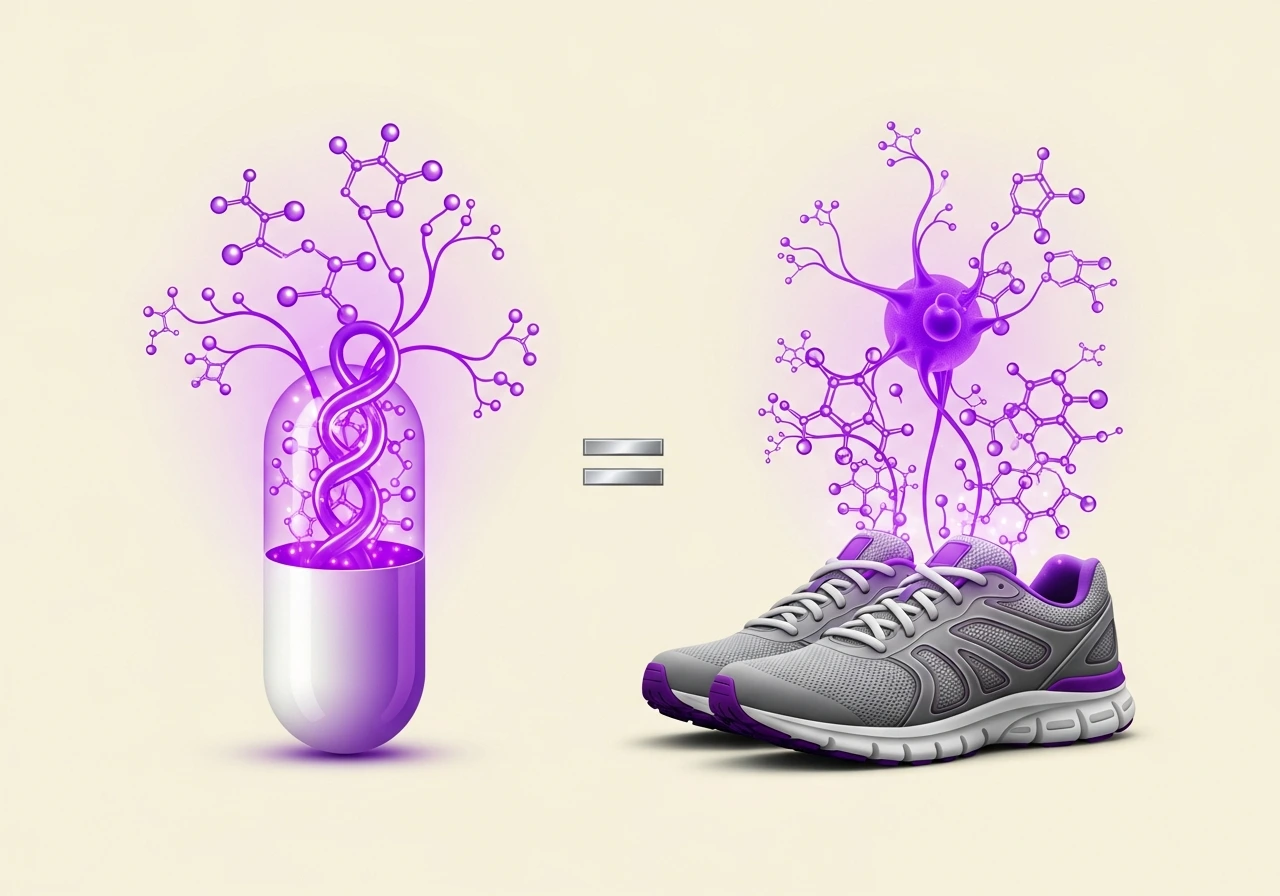
Pill capsule and running shoes both emitting serotonin molecules

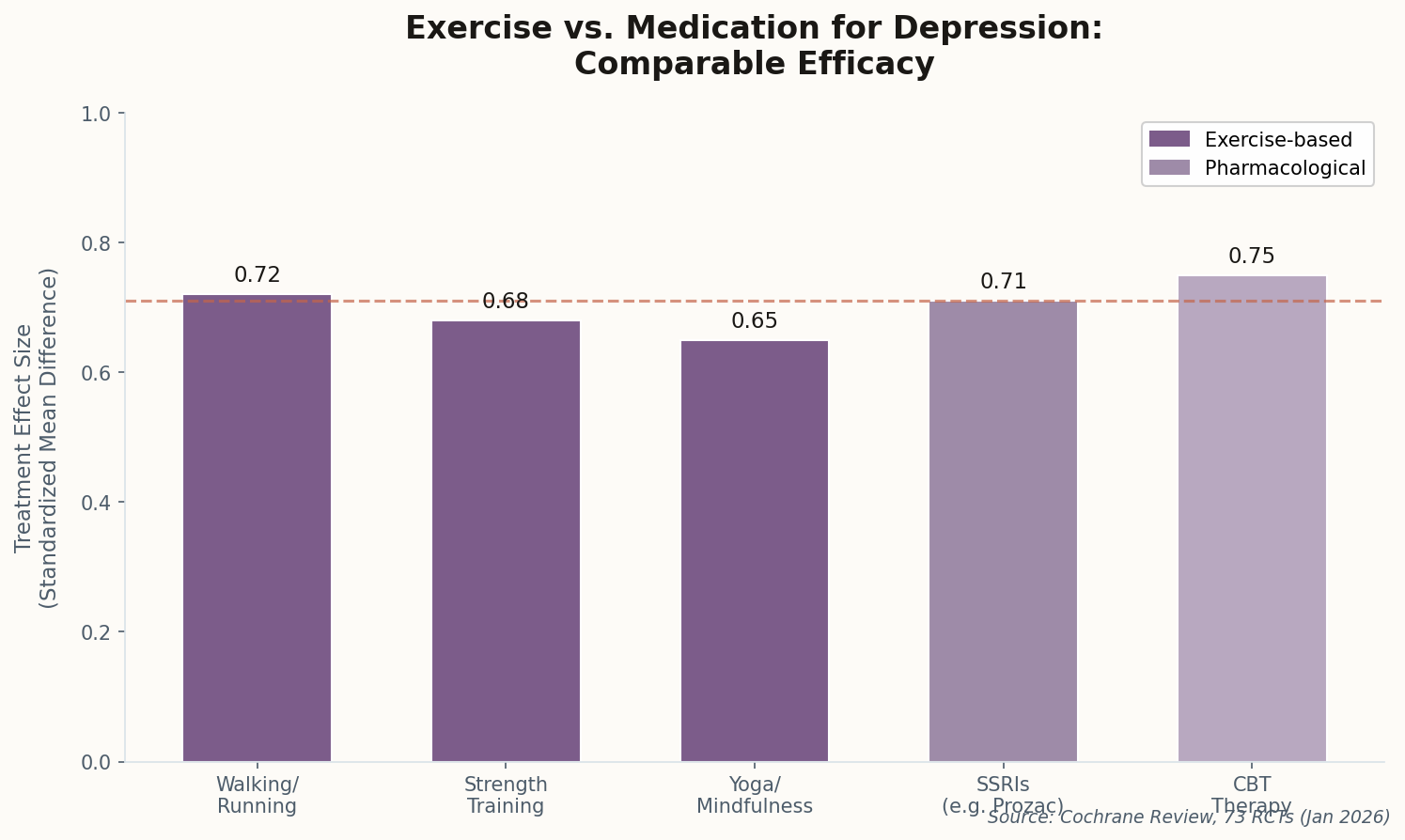
A massive new Cochrane Review analyzing 73 randomized controlled trials has confirmed what many have suspected: exercise is as effective as pharmaceutical antidepressants for treating non-severe depression. Not "almost as good." Equivalent.

Bar chart comparing treatment effect sizes of exercise types versus medication
Treatment effect sizes across modalities show exercise-based interventions matching pharmacological treatments. Source: Cochrane Review, 73 RCTs, January 2026.

The mechanisms are now well understood: exercise boosts neuroplasticity (the growth of new brain connections), releases dopamine and serotonin, and reduces inflammatory markers that contribute to depression. This is not a placebo effect or wishful thinking—it's measurable changes in brain chemistry and structure.

The implications are particularly significant for women, who experience depression at roughly twice the rate of men. The review's authors didn't mince words: "Exercise should be considered a first-line treatment option."

This doesn't mean throwing away your Prozac. It means that for many people, especially those with mild to moderate symptoms, a structured exercise program might be the intervention that actually works—without the side effects, without the stigma, and with a cascade of secondary health benefits that no pill can match.

The Common Thread

Every study this week points to the same conclusion: the female brain isn't a passive passenger in your body. It's actively shaped by what you do—especially in midlife. Exercise, blood pressure management, and understanding your hormonal landscape aren't luxury self-care. They're infrastructure investments in your future cognitive self. The research is clear. The window is now.