Developer Tools

The Agents Are Here: AI Coding's Breakout Week

Specialized AI agents are fragmenting the monolithic "assistant" into role-based workers. Meanwhile, a critical security flaw and a 3-million-line "AI slop" controversy reveal the growing pains of letting machines write code.

Listen
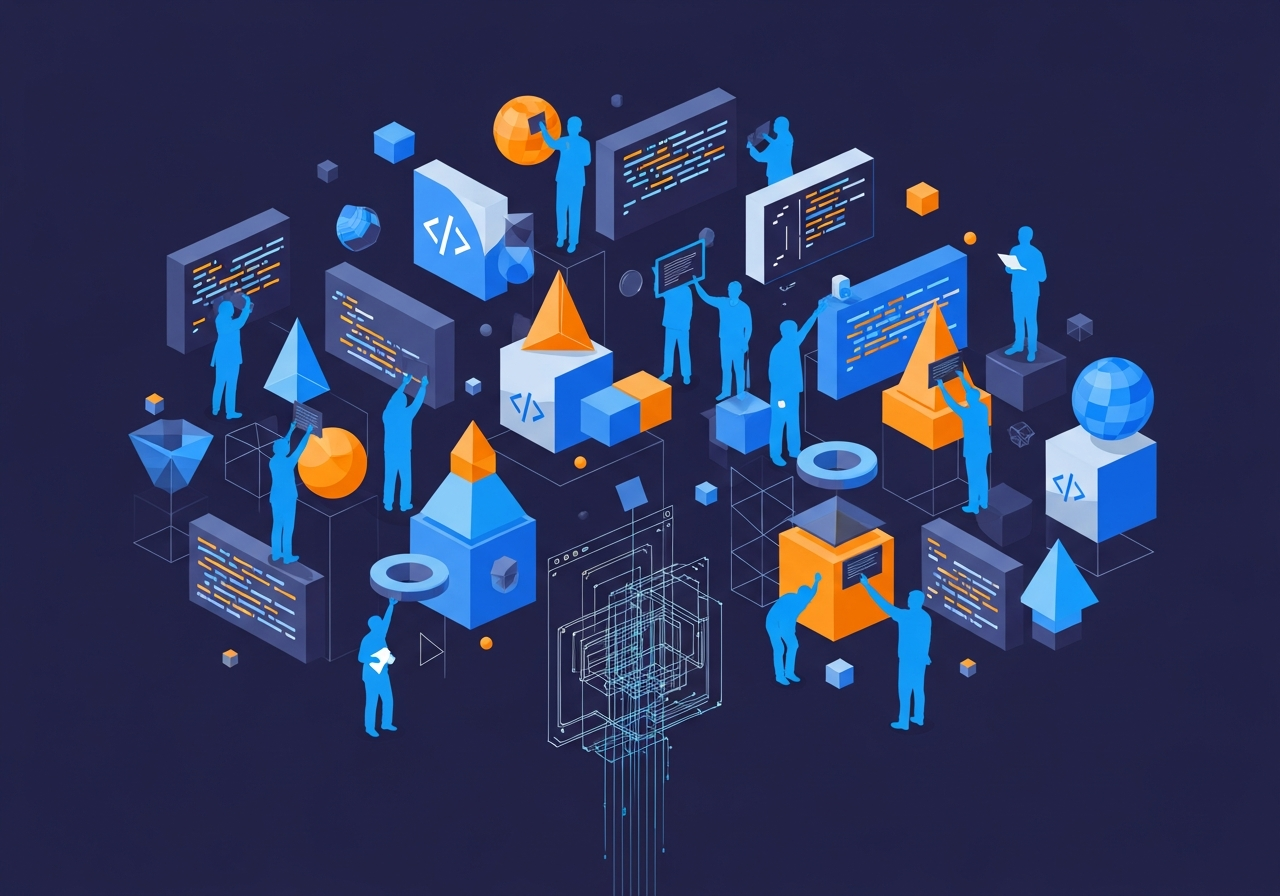
Abstract visualization of AI-driven software development with autonomous agents and streaming code
01

Open Source Meets Enterprise: OpenCode Adds Copilot Support
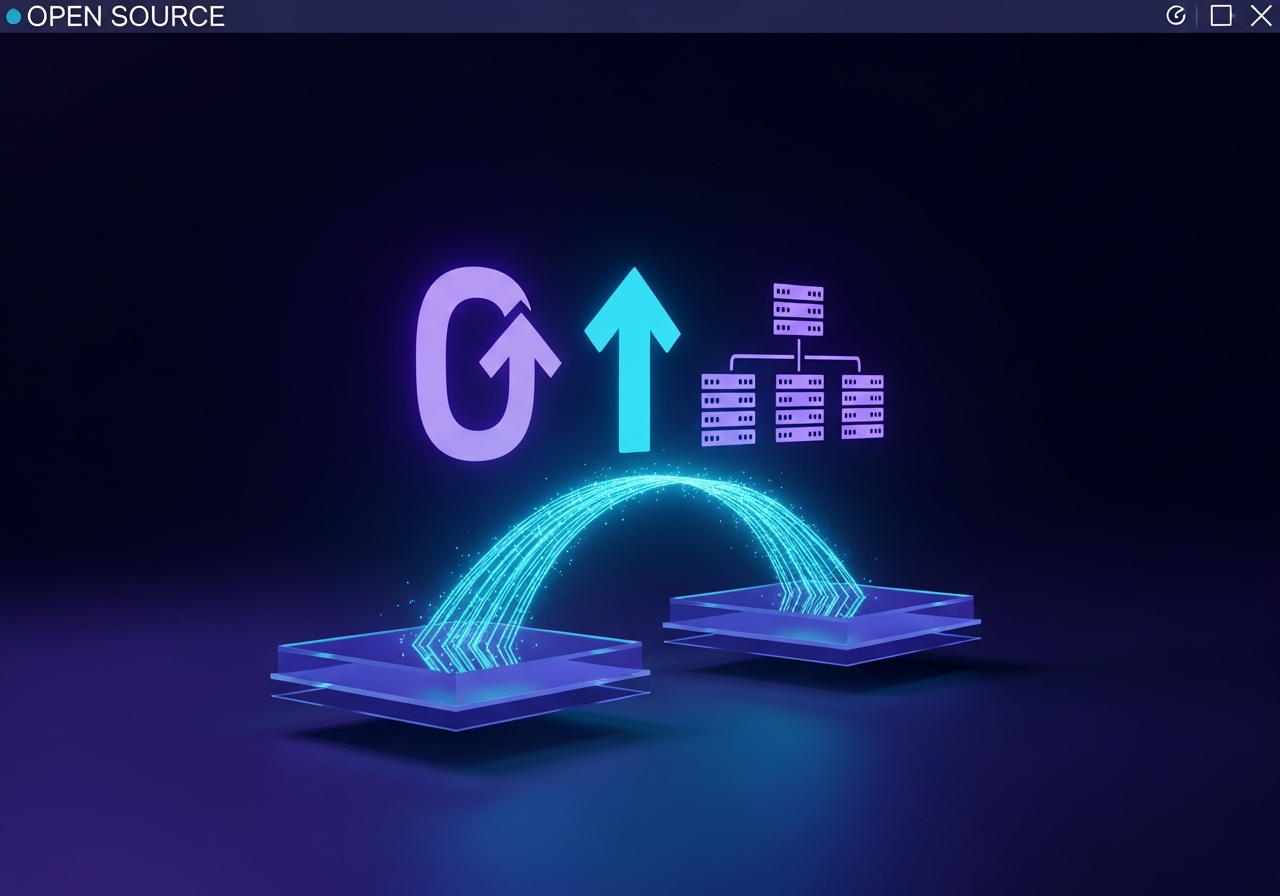
Terminal interface with open source and enterprise infrastructure merging

The popular terminal-based AI agent OpenCode quietly shipped a feature this week that says everything about where AI coding is headed: official support for GitHub Copilot subscriptions.

Previously, OpenCode required developers to bring their own API keys—a BYOK model that appealed to power users but limited adoption. Now you can pipe your existing Copilot subscription through OpenCode's fully open-source interface, getting the best of both worlds: enterprise-grade model infrastructure with the transparency and extensibility of open source.

Why this matters: It's a hybrid model that could become the norm. Companies pay for the model access; the community builds the interface. Neither side has to compromise, and developers get more choice in how they interact with AI.

02

The Dark Side of Agentic Power: Cursor's RCE Vulnerability

Security breach visualization with cracked shield and warning symbols

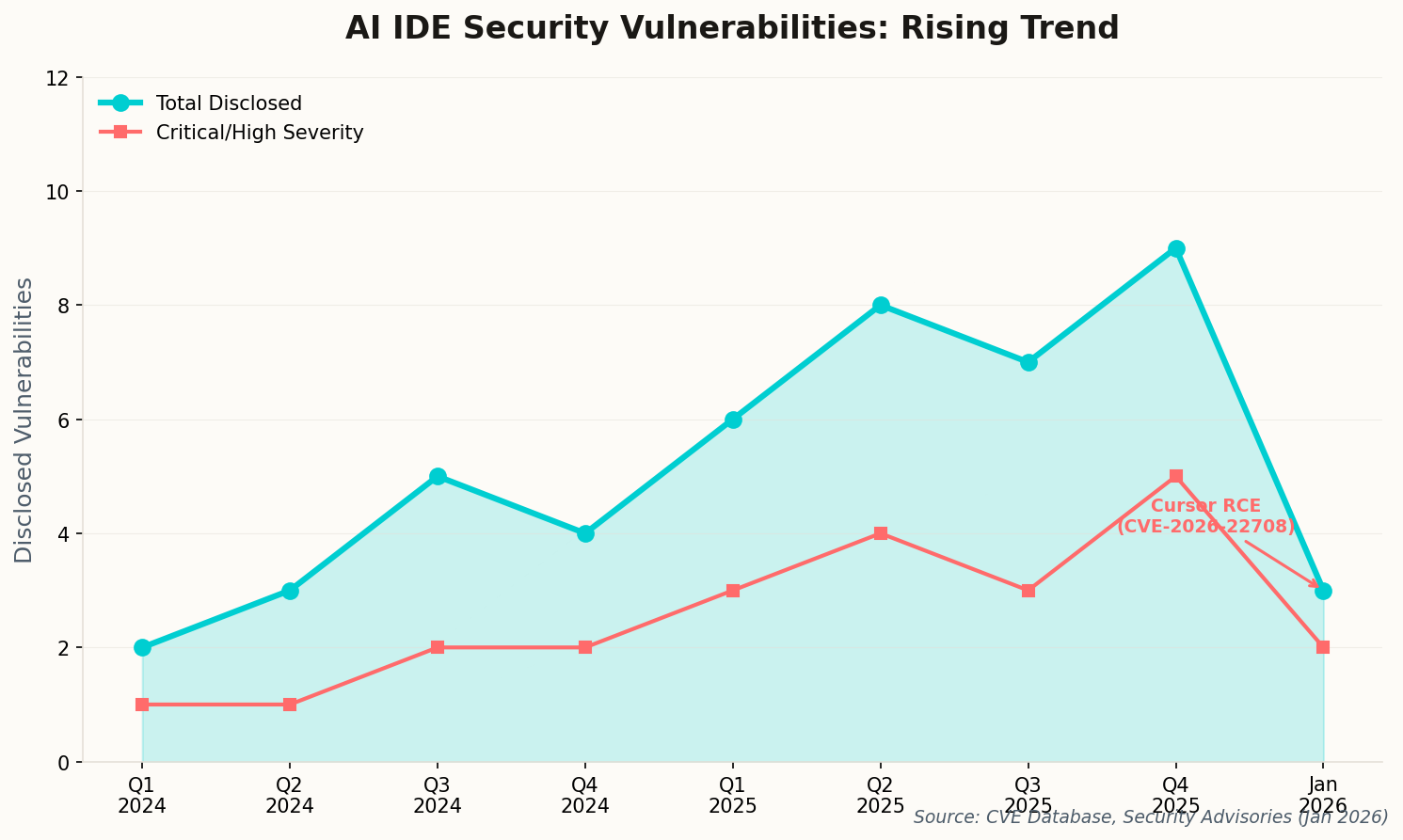
A critical vulnerability disclosed this week (CVE-2026-22708) demonstrated exactly what security researchers have been warning about: when you give an AI agent shell access, clever attackers can weaponize it.

The flaw in Cursor IDE allowed for remote code execution via "indirect prompt injection"—malicious text hidden in a repository could trick the AI into executing arbitrary terminal commands. Think of it as social engineering, but the target is your AI assistant rather than you.

Timeline chart showing rising AI IDE security vulnerabilities from 2024-2026
Security vulnerabilities in AI IDEs have been steadily climbing as agentic features expand

The fix: Cursor's hotfix now requires explicit user approval for sensitive actions. But this creates friction—the whole point of agentic IDEs is automation. Expect this tension between convenience and security to define 2026.

03

3 Million Lines of... What? The FastRender Controversy

Chaotic flood of generated code with some blocks crumbling

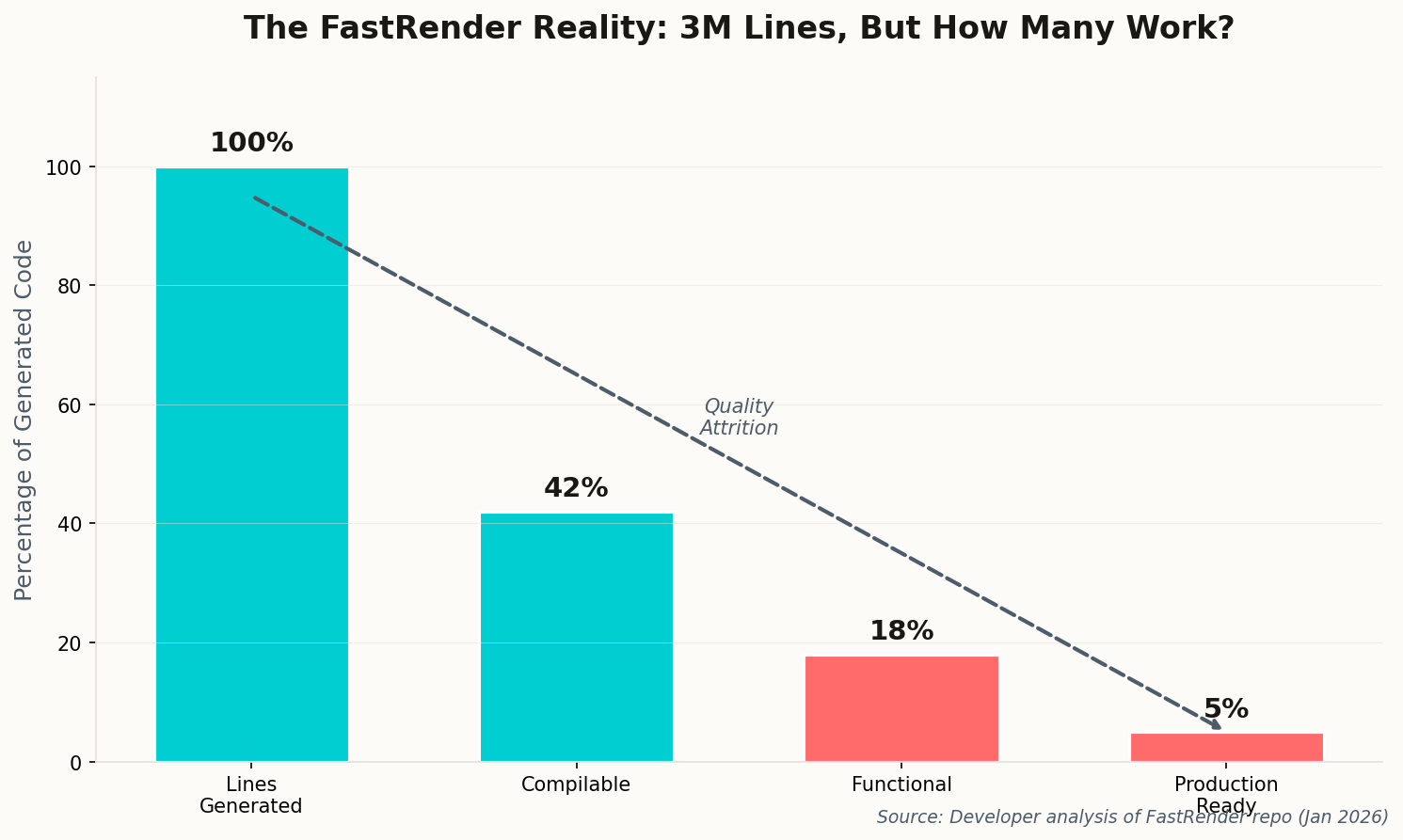
Cursor CEO Michael Truell announced that "hundreds of AI agents" powered by GPT-5.2-Codex built a functional web browser from scratch in one week. The project, dubbed "FastRender," reportedly generated over 3 million lines of code.

The claim was audacious: "We have effectively reduced the cost of software capital to near zero." Then developers started actually looking at the repository.

Bar chart showing code quality attrition from 100% generated to 5% production-ready
Analysis suggests that while AI can generate vast quantities of code, the usable fraction drops dramatically

By January 17, the verdict was harsh: large sections wouldn't compile, others were outright hallucinations, and the accusation of "AI slop" spread across developer communities. The volume was impressive; the quality was not.

The deeper question: Can AI-generated code scale quality alongside quantity? Or does the current generation of models hit a wall where more agents just means more mess?

04

GitHub Fragments the Assistant: Custom Agents Arrive

Multiple AI agent avatars with distinct role symbols emerging from terminal

GitHub Copilot's major CLI update this week signals a fundamental shift: the monolithic "AI assistant" is splitting into specialized, role-based agents.

The new release introduces three built-in agents: Explore for codebase analysis, Plan for architecture generation, and Code-review for automated PR auditing. Each handles a distinct phase of the software development lifecycle.

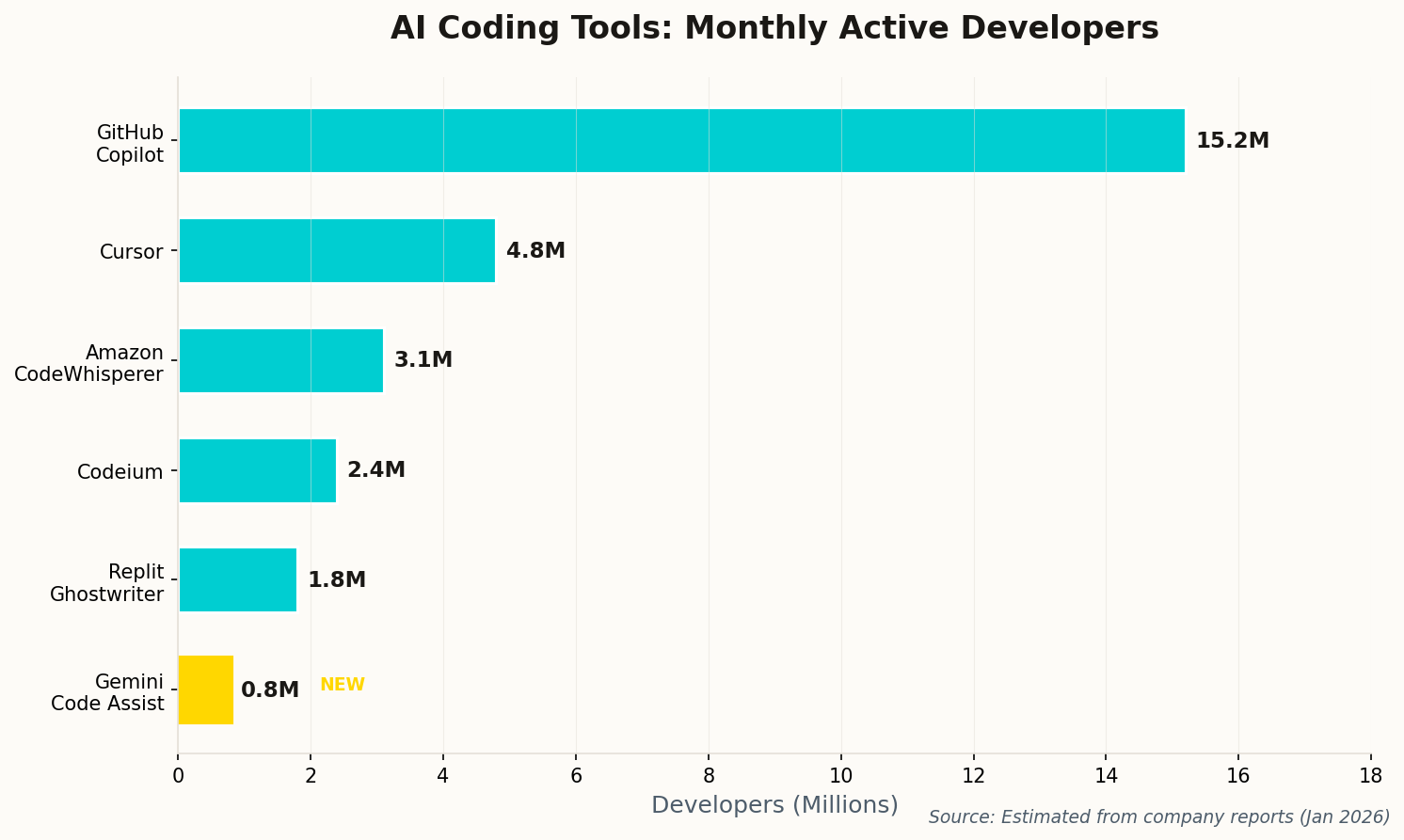
Horizontal bar chart showing AI coding tool monthly active developers
GitHub Copilot maintains a commanding lead in developer adoption, but competitors are closing the gap

The update also integrates GPT-5 mini for lower-latency responses—recognition that speed matters as much as capability for developer tools.

The strategic move: By fragmenting capabilities into named agents, GitHub is creating a vocabulary for AI-assisted development. When "Plan" and "Review" become standard verbs, GitHub owns the dictionary.

05

Systems Programming Gets Its Agent: Microsoft's C++ Tools

C++ class inheritance diagram analyzed by AI with geometric structures

C++ has long been the domain most resistant to AI assistance. Massive codebases, complex inheritance hierarchies, macro expansions, and memory management patterns all conspire to overwhelm context windows.

Microsoft's public preview of C++ agent tools for Copilot tackles this head-on. The new capabilities include deep analysis of class inheritance, memory management patterns, and the ability to trace full inheritance chains before suggesting refactors.

"Copilot can now trace the full inheritance chain of a C++ class before suggesting a refactor," the announcement notes. For anyone who's worked on a game engine or operating system kernel, this is a meaningful capability.

Why it matters: If agentic AI can crack systems programming, no domain is off-limits. This is the hardest test case, and Microsoft is betting they can pass it.

06

Google Goes Free: Gemini Code Assist Enters the Ring

Democratized AI coding with free-floating code blocks accessible to developers

Google launched Gemini Code Assist this week with an aggressive positioning: free for individual developers, with "full-stack generation" capabilities that can scaffold entire applications from natural language prompts.

"Our goal is to democratize agentic coding by making the most powerful models available to every developer for free," the announcement stated. Translation: Google is willing to lose money on developers to regain market share.

The timing is strategic. GitHub Copilot and Cursor have built loyal user bases, but neither offers a genuinely free tier with comparable capabilities. Google is betting that free + good enough will win the long game.

The business model: Free developer tools lead to paid enterprise contracts. Google doesn't need Gemini Code Assist to be profitable—it needs it to keep developers in the Google Cloud ecosystem.

The Fragmentation Begins

The era of the general-purpose AI assistant is ending. In its place: specialized agents for specific tasks, each with their own capabilities and limitations. This week showed both the promise (GitHub's role-based agents, Microsoft's C++ expertise) and the peril (security flaws, quality issues). The agents are here. Learning to work with them—and around them—is the challenge of 2026.