Renewable Energy

The Grid Awakens

This week, clean energy scored wins in courtrooms and across oceans while a quantum leap in solar efficiency hints at what's possible. But policy whiplash in Puerto Rico shows the transition remains precarious.

Listen
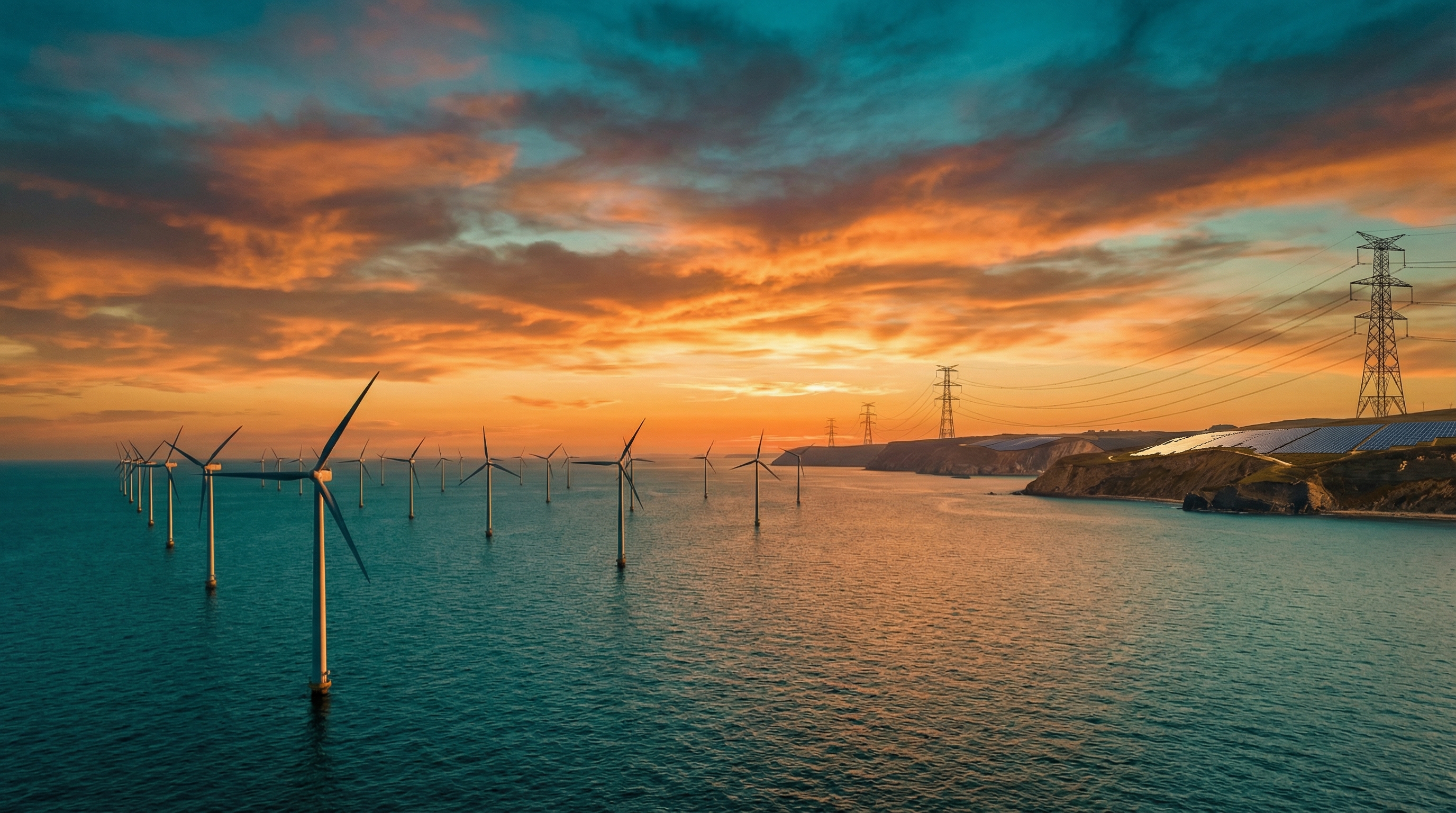
Offshore wind turbines at golden hour with transmission lines stretching toward the horizon
01

Quebec's Hydropower Finally Reaches New England

After years of legal battles, ballot initiatives, and regulatory ping-pong, the New England Clean Energy Connect transmission line is finally live. The 1,200 MW corridor now pumps Hydro-Québec's clean baseload power straight into the New England grid.

This matters because New England has long been the awkward stepchild of American energy policy—dependent on natural gas shipped by tanker, with limited pipeline capacity and expensive wholesale prices. NECEC changes the equation by delivering consistent, dispatchable renewable power that doesn't care whether the wind is blowing or the sun is shining.

The real lesson here isn't about megawatts. It's about persistence. NECEC survived a voter referendum that initially killed it, multiple court challenges, and shifting political winds. If you're building clean energy infrastructure, plan for a decade of opposition—and build coalitions that can outlast it.

02

35% Solar Efficiency Is No Longer a Lab Fantasy

Researchers are now hitting 35% efficiency in commercial-grade photovoltaic panels, up from the 22-25% standard that's defined the market for years. The breakthrough combines advances in perovskite layering with a quantum trick: harvesting waste heat and converting it directly to electricity.

The math is brutal for incumbent fossil fuels. Every percentage point of efficiency improvement compounds across millions of installations. A 35% panel produces roughly 50% more power than a 23% panel from the same footprint. That means rooftops that were marginally viable become obvious investments. It means utility-scale projects need less land. It means the economics that were already tilting toward solar just accelerated.

Pair this with adaptive-geometry wind turbines—blades that reshape themselves to optimize for changing conditions—and you're looking at a generation technology stack that would've seemed science fiction five years ago. The question isn't whether renewables will dominate; it's how fast the old infrastructure becomes stranded assets.

03

The UK Doubles Down: £22 Billion for Offshore Wind

OEUK announced a wave of new offshore wind projects adding 8.4 GW of capacity, backed by over £22 billion in private investment. The UK is making a clear bet: energy security and climate goals are the same goal.

This is what serious industrial policy looks like. While the US debates permitting reform and navigates court challenges, the UK has streamlined offshore wind development into a bankable asset class. Investors aren't betting on subsidies—they're betting on cheap electrons and a government that won't change the rules mid-game.

The strategic calculus is obvious post-Ukraine. The UK watched Europe scramble for LNG tankers and decided never again. Offshore wind doesn't require importing anything but expertise, and that expertise is increasingly homegrown. For countries still debating whether to commit, the UK's trajectory is the answer: go big, go fast, don't look back.

04

Courts Clear the Way for East Coast Offshore Wind

Federal judges lifted suspensions on three major offshore wind projects: Coastal Virginia Offshore Wind, Empire Wind off New York, and Revolution Wind serving Rhode Island and Connecticut. Construction can now resume.

The projects represent gigawatts of clean capacity that had been frozen by legal challenges and administrative reversals. This ruling signals that the courts won't allow policy whiplash to strand projects that cleared every regulatory hurdle. Developers who followed the rules get to build.

But there's a harder truth here: the US offshore wind industry has lost years to uncertainty. Projects that should be generating power are still in legal limbo. Every delay is a delay in emissions reductions, in jobs, in learning-curve improvements that make the next project cheaper. The ruling is a win, but it's a win that shouldn't have been necessary.

05

Puerto Rico Loses $300 Million in Solar Funding

The Department of Energy rescinded over $300 million previously allocated for community solar projects in Puerto Rico. The funding was designed to boost energy resilience for communities still recovering from Hurricane Maria's devastation nearly a decade ago.

This is policy at its cruelest. Puerto Rico's grid remains fragile—blackouts are routine, electricity costs are among the highest in the US, and the island's location makes it a laboratory for what climate change will inflict on vulnerable infrastructure. Distributed solar with battery storage isn't a luxury; it's survival infrastructure.

The decision drew immediate criticism from the EDF and local advocacy groups. But criticism doesn't restore funding. The practical question now: can private capital and local government fill the gap, or does Puerto Rico's energy transition just get pushed back another cycle? For an island that's been waiting too long already, the answer is grim.

Looking Ahead

The renewable energy transition is no longer a question of if—it's a question of how fast and how fairly. This week showed both: technical breakthroughs that make clean energy cheaper every month, and political decisions that can strand progress for years. Watch the permitting battles. Watch the investment flows. That's where the future is being decided.