Higher Ed Policy

The Compliance Maze

University bias response teams face a collision of federal enforcement, court injunctions, and constitutional questions. Here's how institutions are navigating the new landscape—and what DOJ guidance actually requires.

Listen
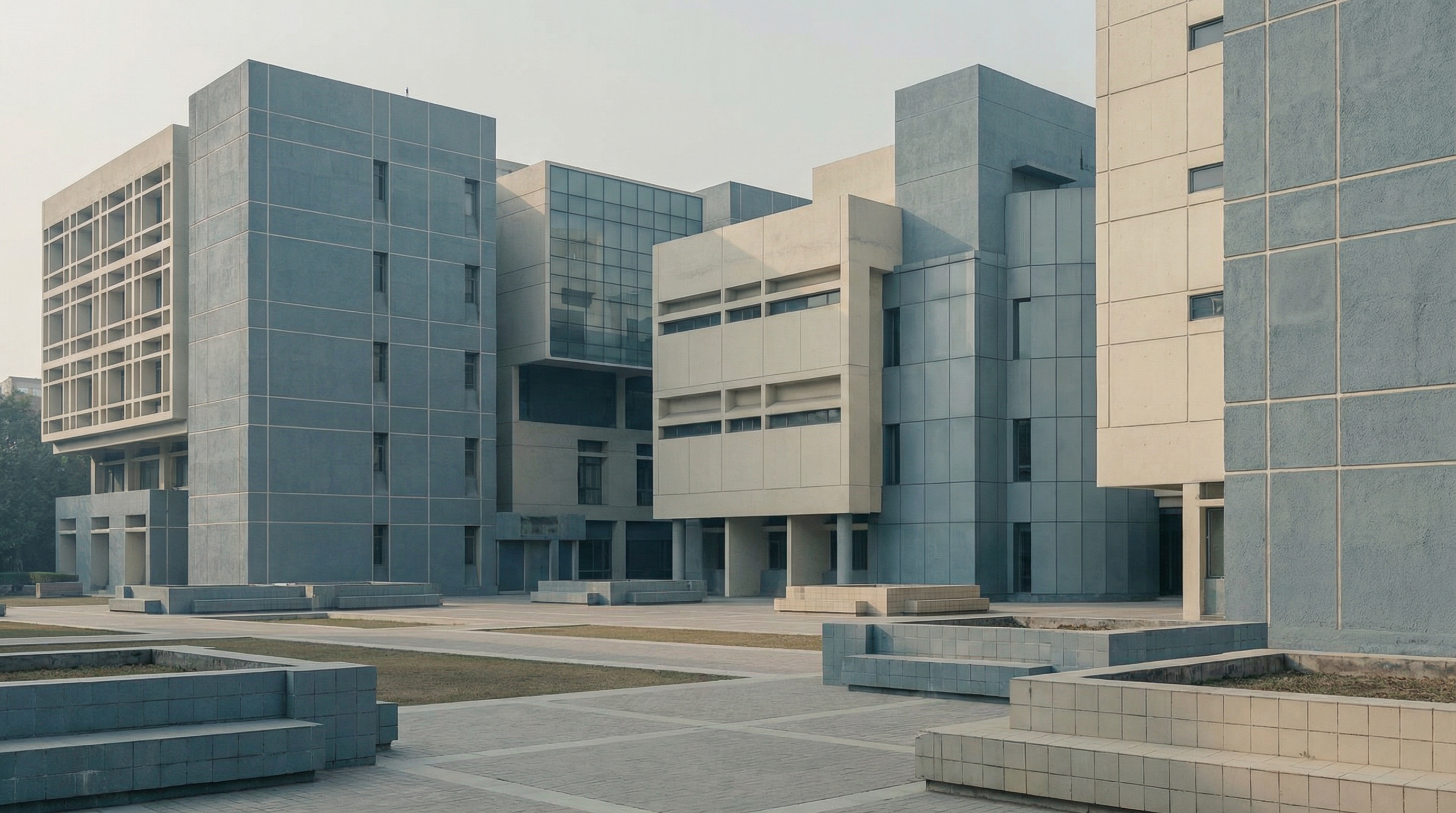
Abstract architectural visualization of modern university campus buildings
01

Bias Reporting Systems Draw DOJ Scrutiny

America First Legal filed a complaint this week asking the Department of Justice to investigate Washington University's bias reporting system—the latest in a pattern of conservative groups targeting university speech infrastructure. The complaint alleges the school operates a "Bias Report and Support System that encourages anonymous reports for perceived 'bias,' including protected speech," which "chills expression and enforces ideological conformity."

The organization is asking DOJ to open a formal investigation, require the university to dismantle DEI-related programs, audit federal funds received since 2021, and potentially suspend future funding until the university certifies compliance with civil rights law. WashU isn't alone: similar complaints have been filed against George Mason University, which is now under its second DOJ investigation.

The legal theory is straightforward: if a bias reporting system collects reports about constitutionally protected speech and triggers administrative responses, it creates a chilling effect that violates the First Amendment at public institutions. At private universities receiving federal funds, the argument pivots to Title VI compliance and the terms of federal contracts.

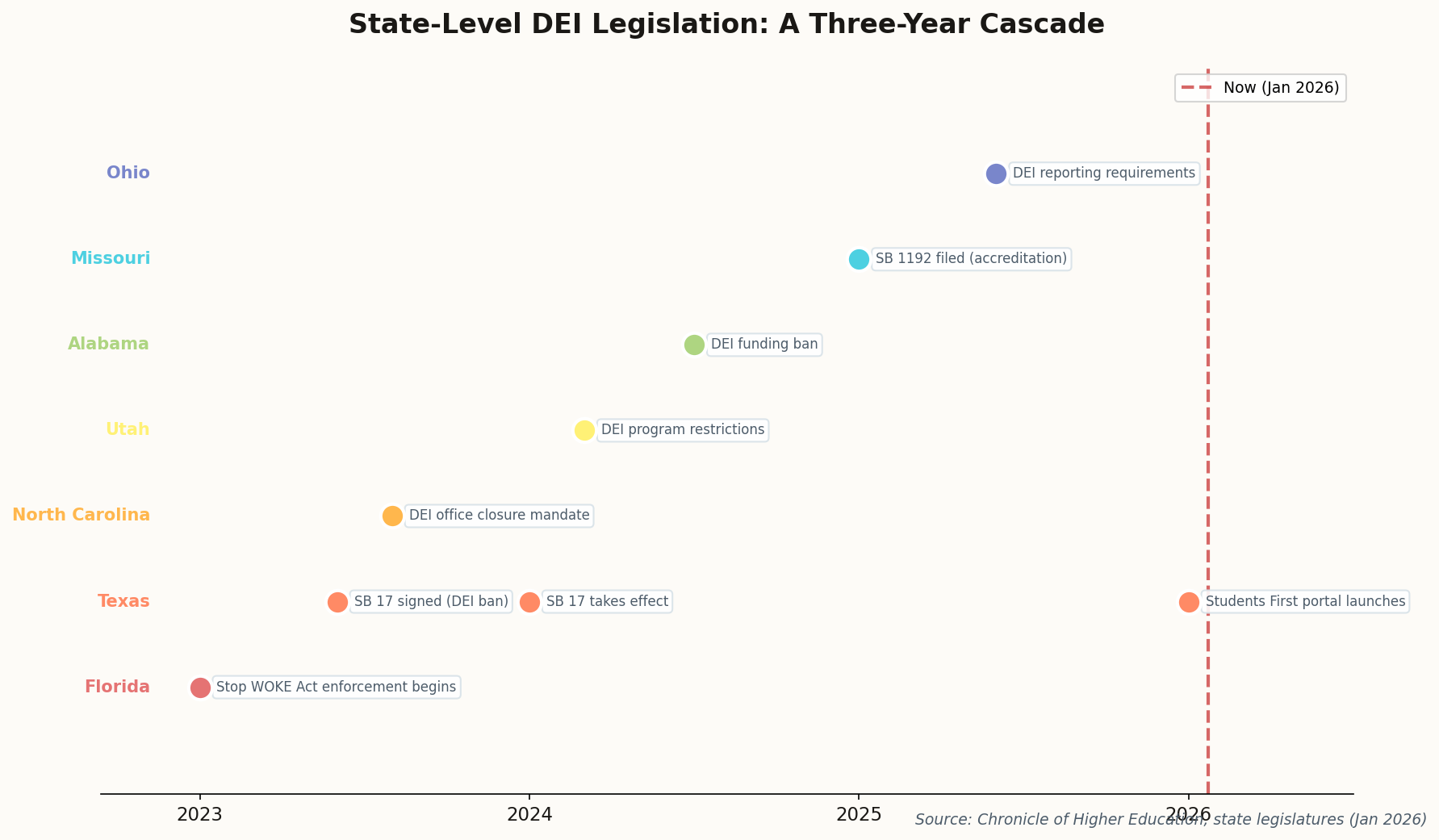
WashU's response: University President Andrew D. Martin announced in May 2025 the formation of a committee to review DEI-related programs. By fall, this became the Inclusive Excellence Advisory Committee (IEAC)—part of a broader pattern of rebranding that has swept higher education.
02

DOJ Eliminates Disparate Impact Under Title VI

On December 9, 2025, the Department of Justice issued a final rule eliminating disparate impact liability from Title VI of the Civil Rights Act of 1964. The change represents a fundamental shift in how federal civil rights law applies to universities and other recipients of federal funding.

Under the previous framework, institutions could face liability not just for intentional discrimination, but for policies that had a disproportionate effect on protected groups—even without discriminatory intent. The new rule limits DOJ investigations to cases alleging purposeful discrimination only. Policies that produce demographic disparities are no longer, by themselves, evidence of a violation.

For bias response teams, the implications are significant. Under the old framework, a system that disproportionately investigated or sanctioned students from particular demographic groups could face disparate impact claims. Under the new framework, only intentional discrimination triggers liability—a much higher bar to clear.

The flip side: While the disparate impact repeal reduces one form of exposure, it doesn't eliminate First Amendment concerns. A bias reporting system that chills protected speech is still constitutionally problematic at public institutions—regardless of whether it produces demographic disparities. The DOJ rule changes what counts as discrimination; it doesn't change what counts as speech suppression.

03

A Year of Whiplash: 2025's Policy Rollercoaster

2025 saw rapid-fire policy changes, court challenges, and reversals that left universities scrambling to understand their obligations. The pace was unprecedented—and the legal landscape remains unsettled heading into 2026.

Timeline showing key DEI policy events in 2025, from EO 14173 in January through disparate impact repeal in December
Key policy events in 2025: Executive orders, agency guidance, and court rulings created a complex compliance landscape. Source: DOJ, DOE, Federal Court Records (2025)

The administration's approach combined executive orders, agency guidance, and enforcement threats. EO 14173 (January 21) directed agencies to end "illegal DEI" programs. Attorney General Pam Bondi's February 5 memorandum announced the DOJ would "investigate, eliminate and penalize illegal DEI" in education. The Department of Education's February 14 Dear Colleague Letter threatened funding loss for institutions using race-based preferences.

But courts pushed back. A federal judge blocked portions of EO 14173 in February, finding it likely violated free speech and was unconstitutionally vague. On April 24, federal courts enjoined the Dear Colleague Letter in separate rulings, finding it exceeded the Department's authority. The certification requirement announced April 3—demanding schools sign affidavits that they don't use "illegal DEI"—was vacated entirely.

What's actually enforceable: As of January 2026, the core constraints are: (1) Title VI still prohibits intentional discrimination in programs receiving federal funds; (2) Students for Fair Admissions v. Harvard bars race-conscious admissions; (3) the December 2025 disparate impact repeal is in effect but faces its own legal challenges. The Dear Colleague Letter and certification requirement are not enforceable due to court injunctions.

04

The Great Rebrand: From "DEI" to "Inclusive Excellence"

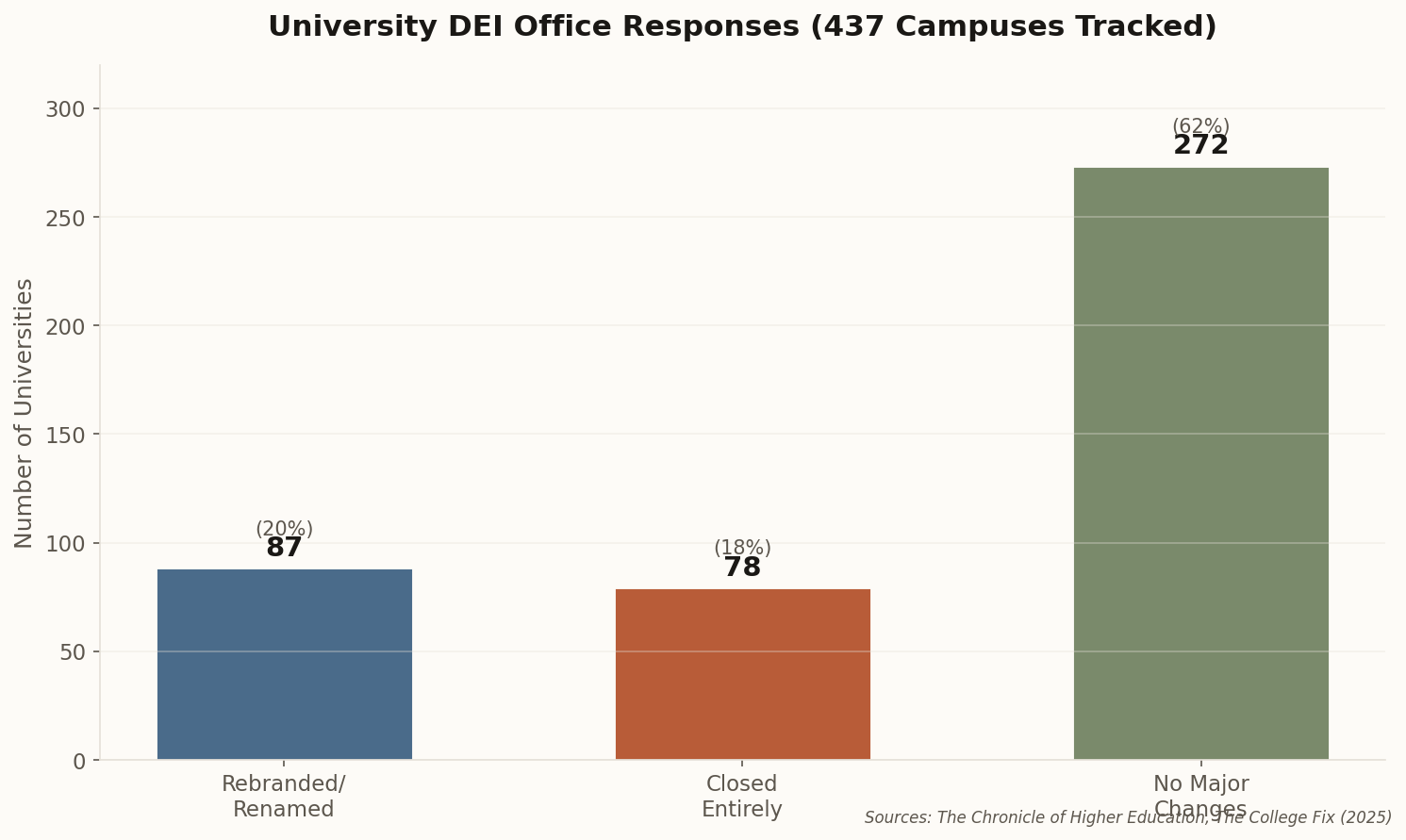
Faced with pressure to eliminate diversity programs, many universities chose a different path: rebrand rather than dismantle. A Chronicle of Higher Education tracker documented changes at 437 campuses. The results reveal a sector in flux.

Bar chart showing 87 universities rebranded DEI offices, 78 closed them, and 272 made no major changes
Of 437 tracked campuses, 87 renamed their DEI offices while keeping similar functions. 78 closed them entirely. The majority made no major changes. Source: The Chronicle, The College Fix (2025)

The new nomenclature is telling. "Diversity, Equity, and Inclusion" offices became "Access and Opportunity" (Kansas State), "Campus Compliance and Civility" (McNeese State), "Access, Compliance, and Community" (George Mason), or simply "Belonging" (multiple institutions). Duke announced "inclusive excellence" principles requiring programs to be "open to all" while still allowing focus on particular identities.

Critics argue the rebranding is cosmetic—a way to maintain DEI functions while avoiding political scrutiny. Supporters counter that it reflects genuine evolution toward legally compliant, broadly accessible programs. The practical reality: many renamed offices retained the same staff, budgets, and core initiatives under different banners.

The compliance calculation: Rebranding reduces visibility but doesn't eliminate legal exposure. If a program with a new name still operates in ways that violate Title VI or the First Amendment, the name change provides no protection. The DOJ has signaled it will look at substance, not labels—making cosmetic rebrands a potentially risky strategy.

05

The Constitutional Question: Bias Teams and Free Speech

The Supreme Court's March 2025 denial of certiorari in Speech First v. Whitten left a constitutional question unresolved: do university bias reporting systems violate the First Amendment? Three circuit courts have found such systems unconstitutional. The Seventh Circuit disagreed. The Supreme Court declined to settle the split.

Justice Clarence Thomas dissented, warning the Court's inaction "now leaves students subject to a 'patchwork of First Amendment rights.'" Approximately 450 U.S. colleges and universities operate bias response teams, according to Speech First research. FIRE (Foundation for Individual Rights and Expression) found that 56% of surveyed four-year institutions have such systems, with 66% of public universities operating them.

The constitutional concern centers on chilling effects. When students are encouraged to anonymously report "bias incidents"—defined broadly to include "microaggressions" and other constitutionally protected speech—and administrators respond with "education" or investigation, the system may suppress legitimate expression even without formal punishment.

What compliant systems look like: Several universities have modified their bias response policies to address First Amendment concerns. The University of Vermont explicitly states that microaggressions are usually protected speech. Alfred University affirms that responses "may include education, dialogue, counter-speech" but not discipline for protected expression. SUNY Brockport acknowledges that "bigoted, racist, or other forms of intolerant speech" are protected but "contrary to our values." FIRE rates such transparent policies as "green light" for free speech.

06

Cutting Through the Noise: What Compliance Actually Requires

Despite the policy turbulence, the actual legal requirements for bias response teams are more defined than the rhetoric suggests. Here's what's prohibited, what's permitted, and what remains contested.

Prohibited: Race-conscious admissions decisions (Students for Fair Admissions). Programs that explicitly exclude or preference participants based on race. Quotas or numerical targets for demographic representation. Intentional discrimination in any program receiving federal funds.

Permitted: "Educational, cultural, or historical observances that celebrate diversity, recognize historical contributions, and promote awareness without engaging in exclusion or discrimination"—explicitly protected under AG Bondi's February memo. Race-neutral programs open to all students. Bias reporting systems that clearly distinguish protected speech from conduct violations and don't trigger punitive responses for constitutionally protected expression.

Contested: Programs that are facially race-neutral but designed with race-conscious goals. The application of disparate impact analysis (now eliminated by DOJ rule, but facing legal challenges). Whether rebranded programs that maintain similar functions satisfy compliance requirements. The scope of "illegal DEI" beyond clear-cut racial preferences.

The practical guidance: Universities can maintain bias response systems that (1) clearly state they don't restrict protected speech, (2) don't trigger disciplinary proceedings for First Amendment-protected expression, (3) are transparent about what triggers investigation versus education, and (4) don't operate as de facto speech police. The question isn't whether to have a system—it's how to design one that respects both civil rights compliance and constitutional speech protections.

The 2026 Outlook

Experts expect continued aggressive enforcement from DOJ, with the Civil Rights Fraud Initiative likely to mature into public lawsuits using the False Claims Act against institutions deemed non-compliant. A trial in State of New York v. Department of Education, where nineteen states challenged the certification requirement, is scheduled for June 4, 2026. Meanwhile, the circuit split on bias response teams remains unresolved, leaving different constitutional rules in different parts of the country. For university administrators, the compliance path requires threading multiple needles: satisfying federal enforcement while avoiding First Amendment liability, maintaining support systems while eliminating race-conscious preferences, and navigating policy changes that may be struck down by courts months later. The only certainty is continued uncertainty.