Photography

Film or Digital? What's a Photographer to Do?

Digital camera shipments hit new lows while film sales quietly climb. Here's what's actually happening in the photography world this January.

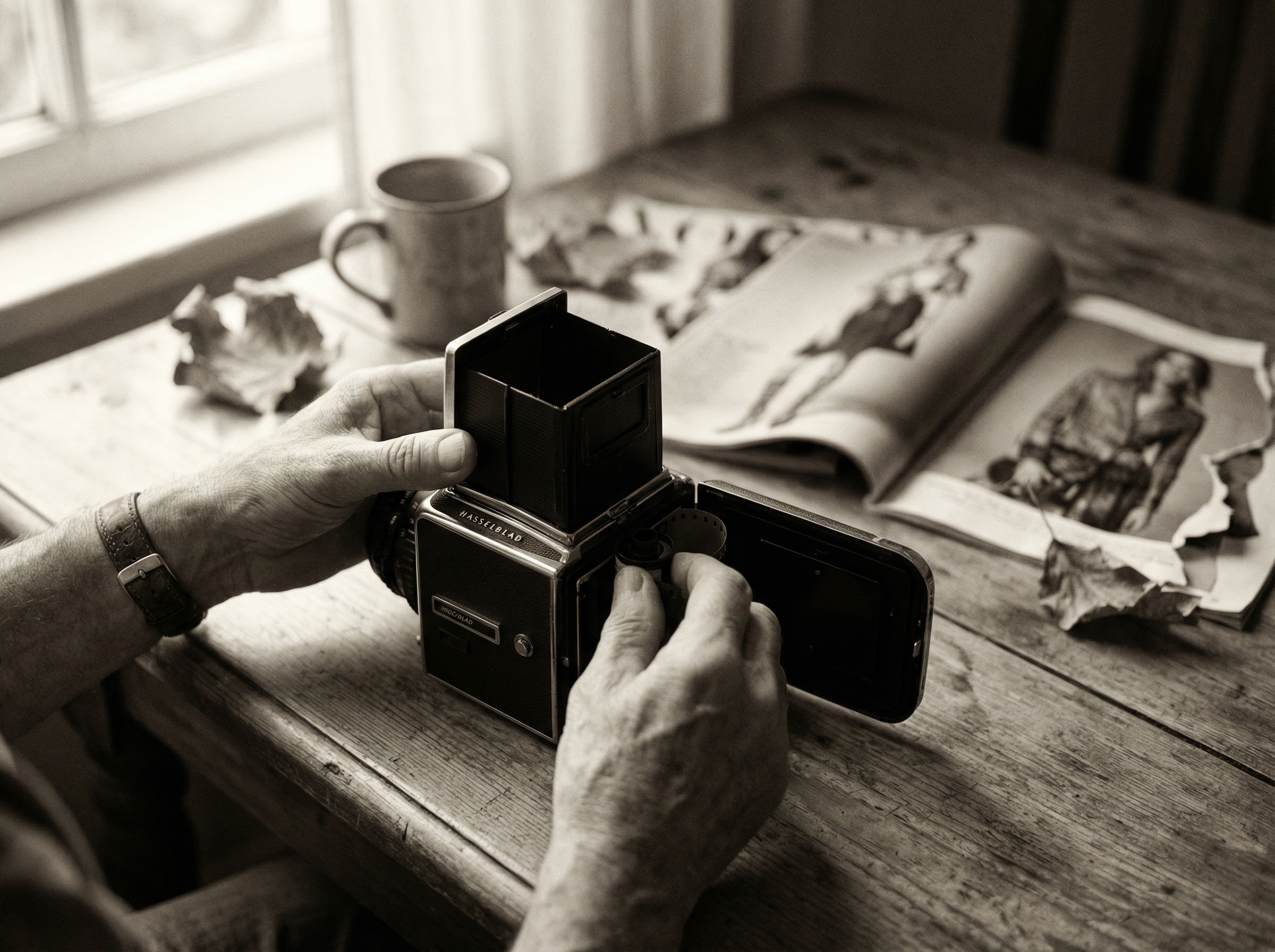
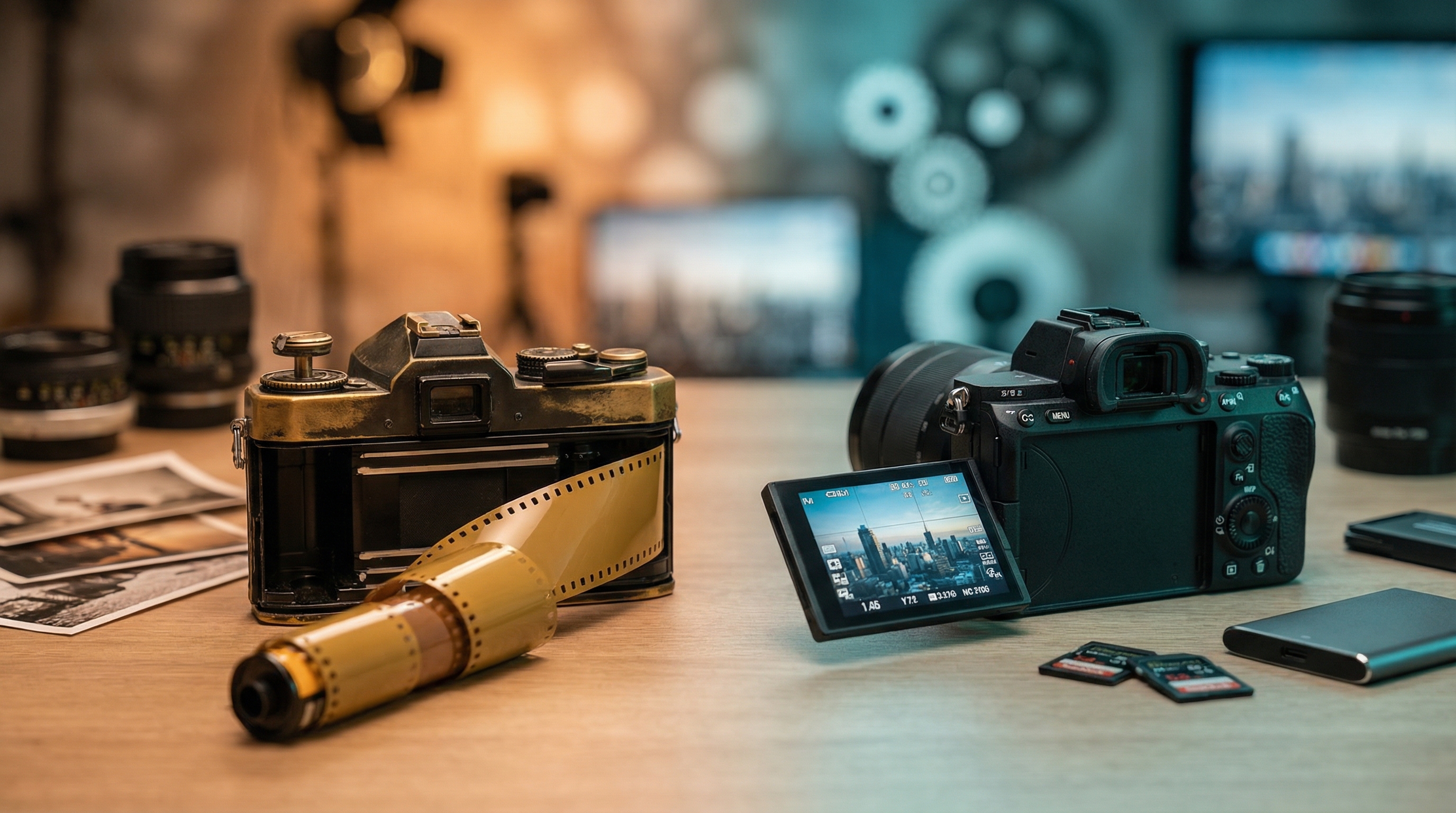
Split composition: vintage film camera meets modern mirrorless digital
Listen to this newsletter
01

The Xtra Atto: Digital Goes Invisible

Ultra-compact Xtra Atto wearable camera

Here's the paradox of modern photography: as film cameras get heavier and more deliberate, digital is racing toward invisibility. The Xtra Atto, launched this week at $299, weighs just 54 grams and clips to your collar like a glorified lapel pin.

The pitch is "capture life without hiding behind a lens"—a direct counterpoint to the increasingly ritualistic act of loading and shooting film. It's got a 1/1.3-inch sensor, shoots 4K, and stores 128GB internally. No viewfinder. No buttons to speak of. Just persistent, ambient capture.

Is this the logical endpoint of digital photography? The camera that disappears entirely into your life? Or is it a reminder of why some photographers are returning to deliberate, friction-full analog processes? Both camps now have their extremes clearly defined.
02

Film Prices Jump Again—Here's Why

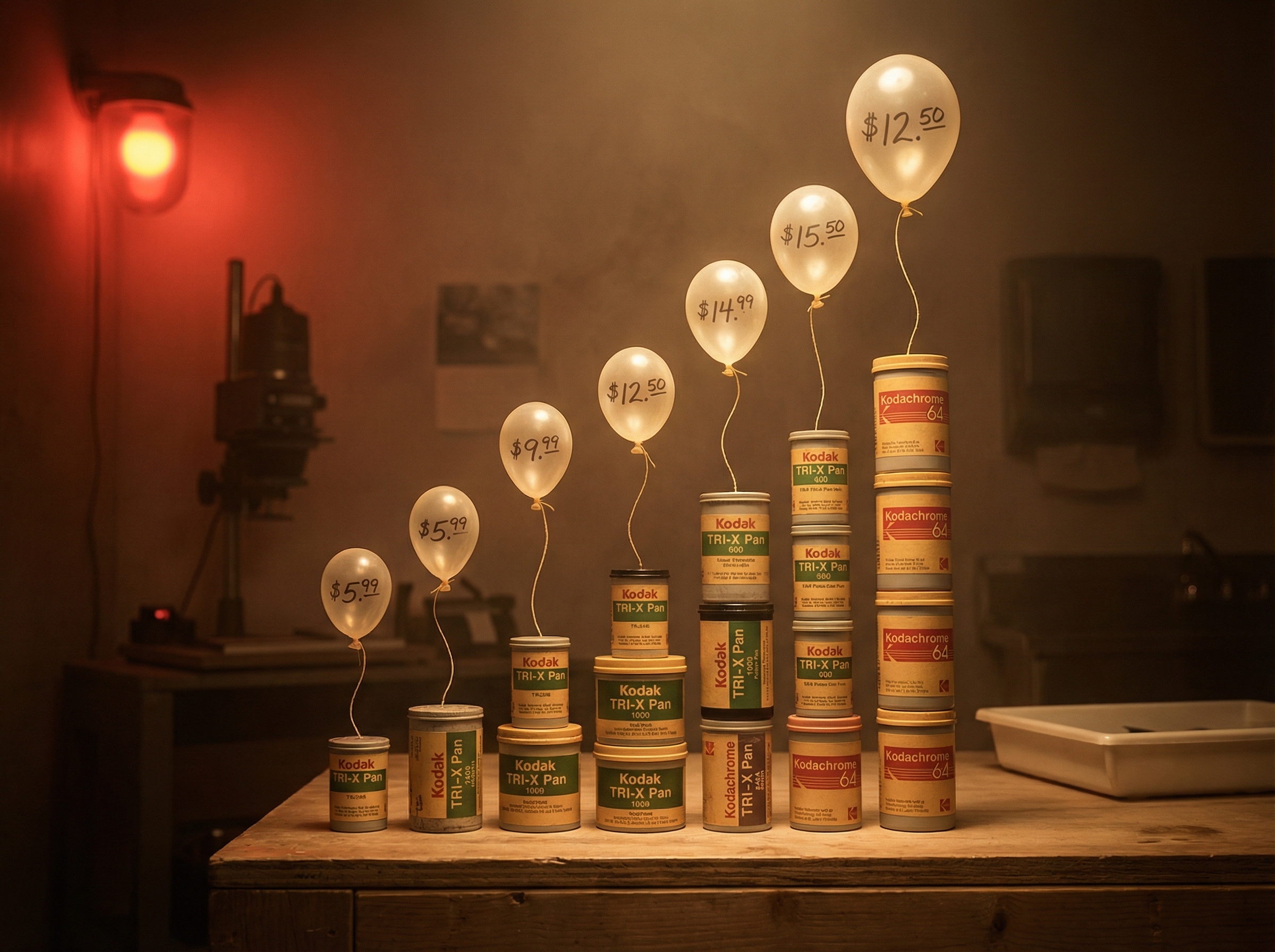
Film rolls with price tags showing rising costs

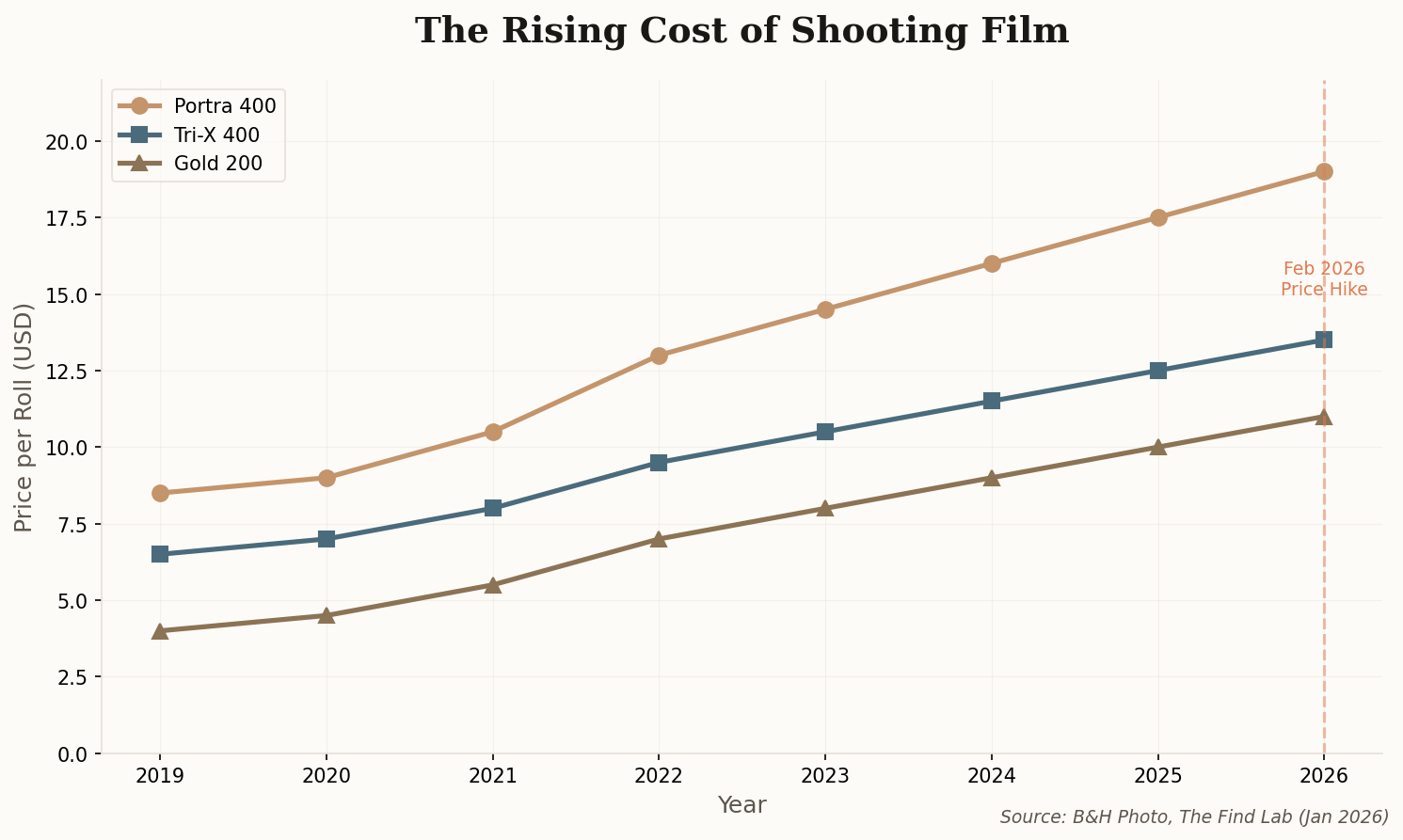
If you're shooting film in 2026, your wallet already knows: prices are up $1-3 per roll starting February 1st. The Find Lab, one of America's largest film processors, announced the hike specifically for Kodak Alaris stocks—Portra, Gold, and Ektachrome.

Chart showing film price trends from 2019-2026
Film prices have more than doubled since 2019. Portra 400 now approaches $19/roll.

The culprit? Rising silver prices, which have surged 40% over the past year. Silver halide crystals are the light-sensitive heart of every frame you shoot. There's no substitute, and there's no way around the commodity markets.

The split is real: Eastman Kodak-branded films (distributed directly by Rochester) remain unaffected—for now. Kodak Alaris stocks, still controlled by Kingswood Capital, bear the full brunt. Same yellow boxes, different economics.

At nearly $19 per roll of Portra 400, plus $15+ for development and scanning, a single roll of color film now costs more than a month of Adobe Photography Plan. The question isn't whether film is "worth it"—it's whether the experience justifies a $35-per-36-frames commitment.

03

Sissi Lu on Why Vogue Still Wants Film

Professional photographer with medium format film camera

Commercial photography runs on reliability. Predictable lighting. Predictable files. Predictable turnaround. So why is photographer Sissi Lu still shooting film for clients like Vogue and SEGA?

"It's about the wabi-sabi," she explains in this week's Analog.Cafe interview. "The perfection in the imperfection that digital often edits out." Her clients pay premium rates specifically because her film work doesn't look like the homogenized output of a retouching pipeline.

The practical realities are intense. Lu created her own "DO NOT X-RAY" protective pouches after one too many airport incidents. She shoots hybrid—digital for the safe shots, film for the hero images. The economics only work because editorial clients are explicitly buying differentiation.

For everyone else wondering if they can "go pro" with film: the answer is yes, but only if your clients are specifically paying for what film uniquely delivers. That's not nostalgia. That's a business model built on irreplicability.

04

A New Lens for Large Format Dreamers

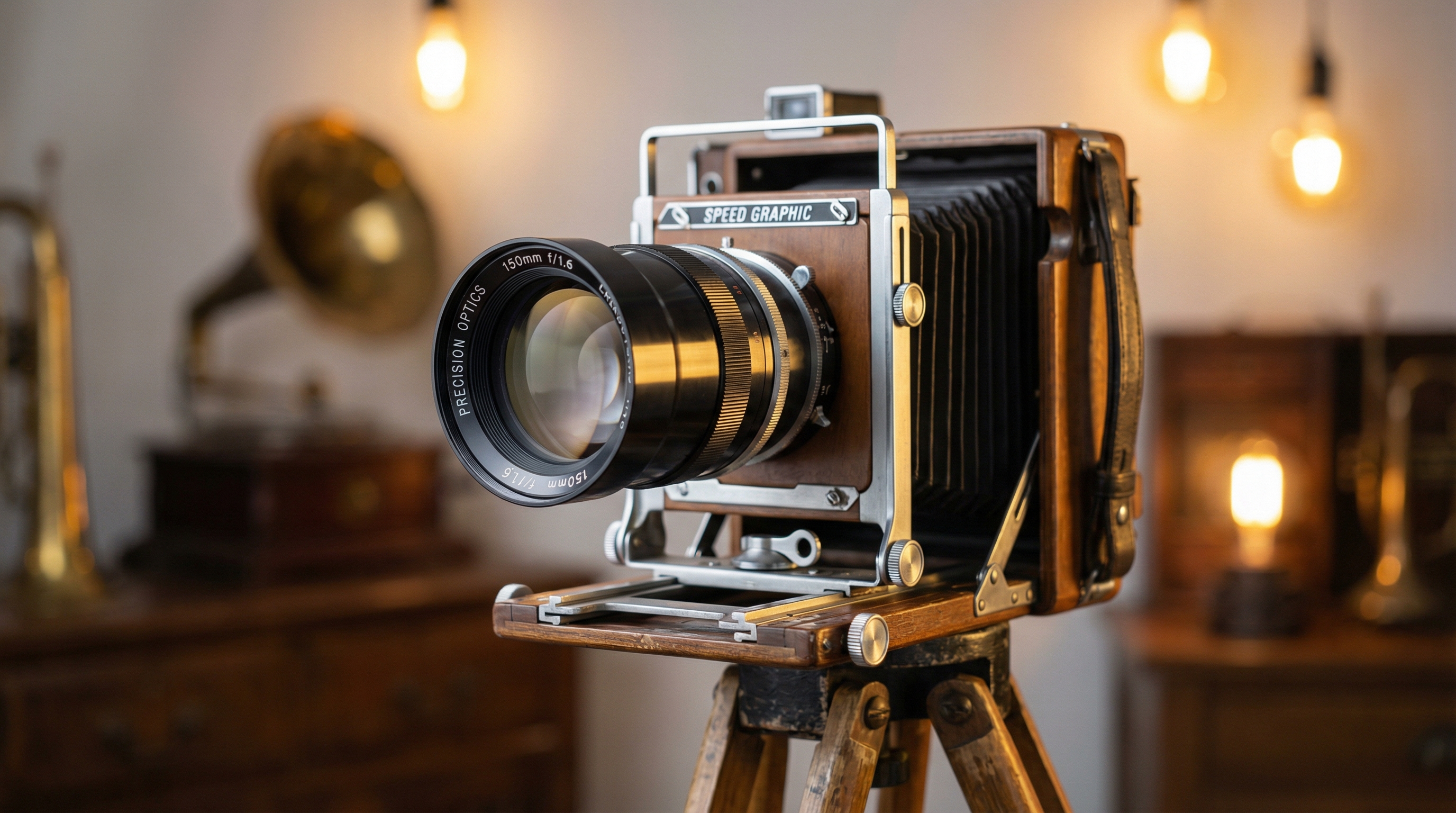
GrafNoct 150mm f/1.6 large format lens

The film revival has a maturity problem. Most of the "analog renaissance" consists of 35mm snapshooters buying Portra for their thrifted point-and-shoots. That's fine. But it's not where serious optical development happens.

This Kickstarter changes the equation. The GrafNoct 150mm f/1.6 VSF is a brand-new lens designed for 4x5 large format cameras—specifically the Graflex Speed Graphic. At f/1.6, it's blindingly fast for a format where f/5.6 is considered wide open. The "Variable Soft Focus" mechanism lets you dial in the dreamy, ethereal look that defined portrait photography a century ago.

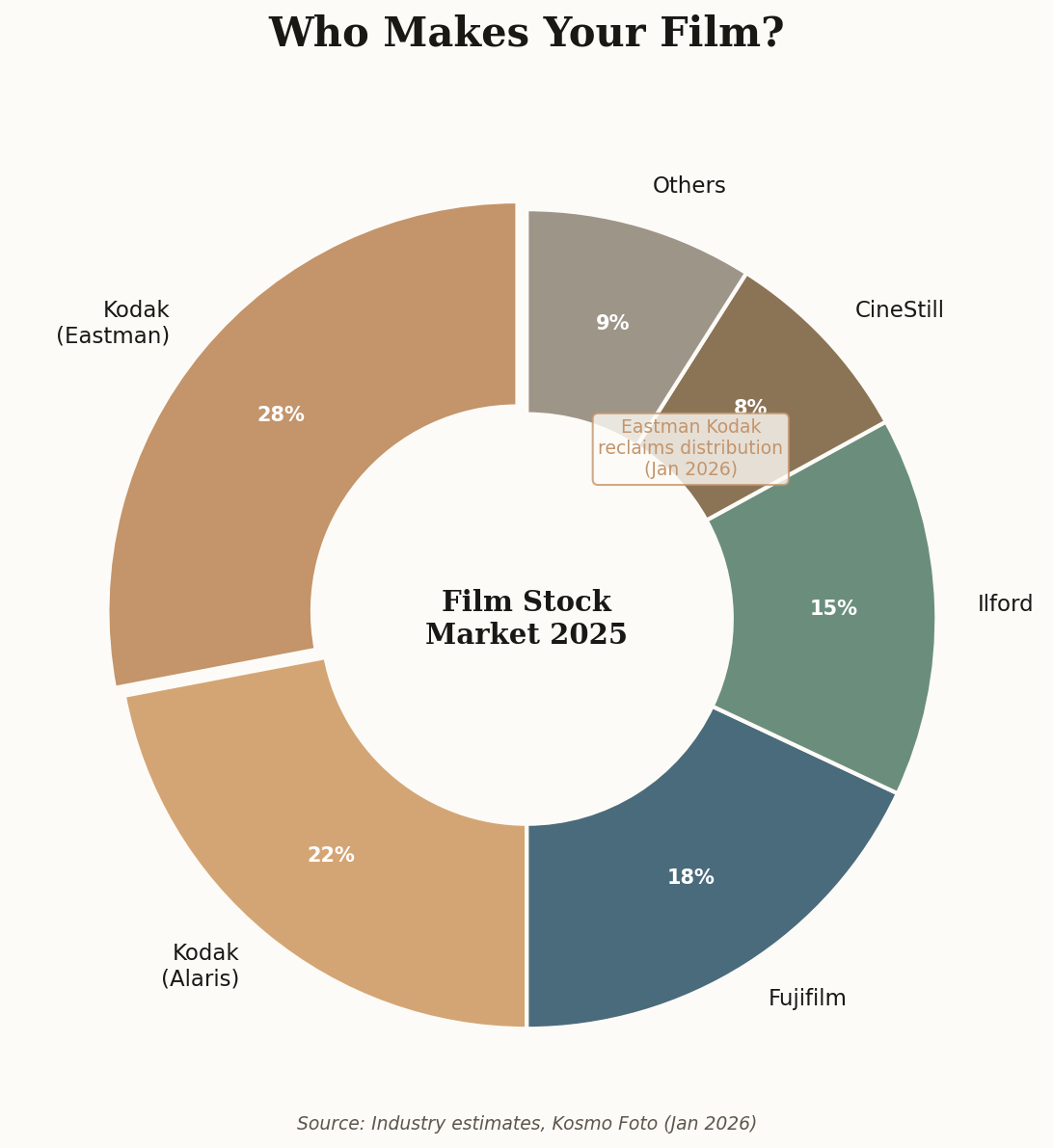
Pie chart showing film manufacturer market share
The film market is consolidating around a few major players, but boutique manufacturers are finding niches.

"Bringing the legendary speed of aero-lenses to modern large format shooters," the campaign promises. It's a reference to WWII aerial reconnaissance optics—massive apertures designed to capture images from miles up, now repurposed for intimate portraiture.

The backers aren't 35mm enthusiasts. They're professionals and serious amateurs investing in a format that Instagram will never understand. That's exactly where the film market needs to go to survive long-term.

05

Eastman Kodak Takes Film Distribution Back In-House

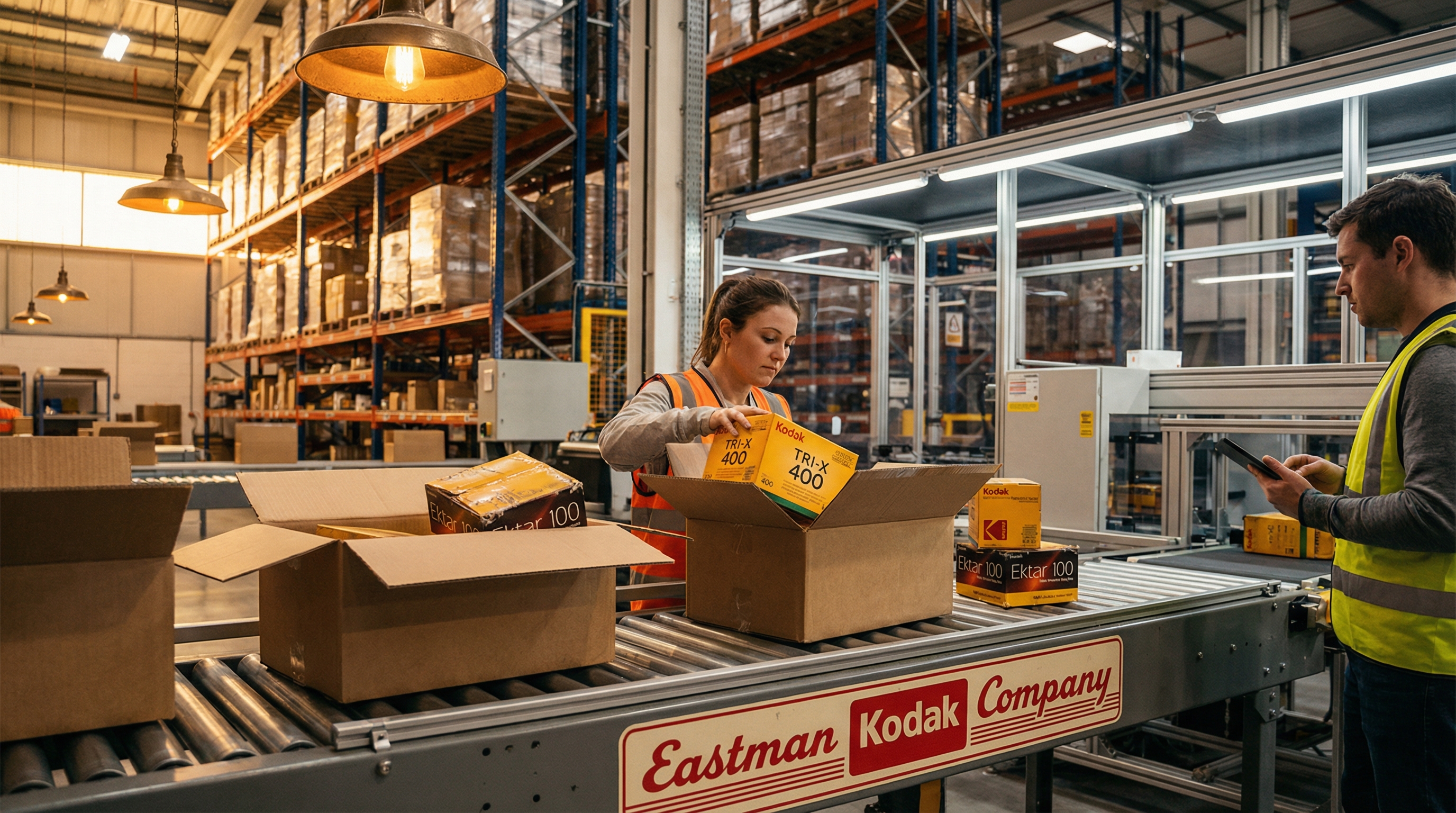
Kodak film boxes being packaged in warehouse

For the first time in over a decade, Eastman Kodak is directly distributing its own film. Ektar 100 and Tri-X 400 are now shipping from Rochester with refreshed packaging—not from the Kodak Alaris/Kingswood Capital pipeline that's handled consumer film since the 2013 bankruptcy split.

Why does this matter? Three reasons. First, supply chain simplification. One fewer corporate entity touching your film means fewer points of failure when demand spikes (see: 2020-2022 shortages). Second, pricing control. Eastman Kodak can now set its own margins without negotiating with a distributor. Third, brand coherence. There's been genuine confusion about which "Kodak" you're buying from.

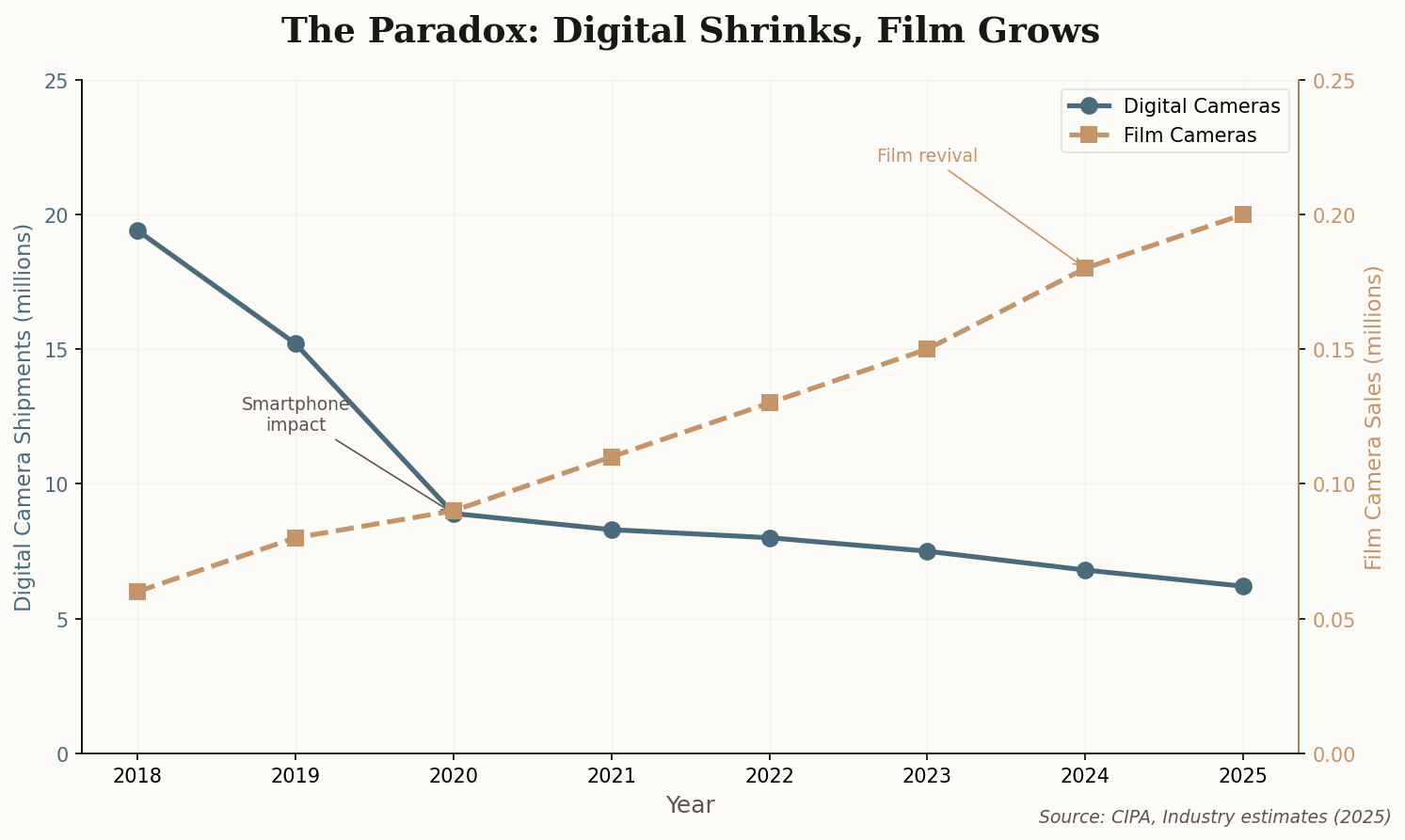
Dual-axis chart showing digital camera decline and film camera growth
The paradox: digital camera shipments continue falling while film camera sales quietly grow.

The question is what happens to Kodak Alaris. They still control Portra, Gold, Ektachrome, and the consumer color film portfolio. If Eastman Kodak's direct distribution proves successful, will they eventually reclaim those stocks too? Watch this space.

06

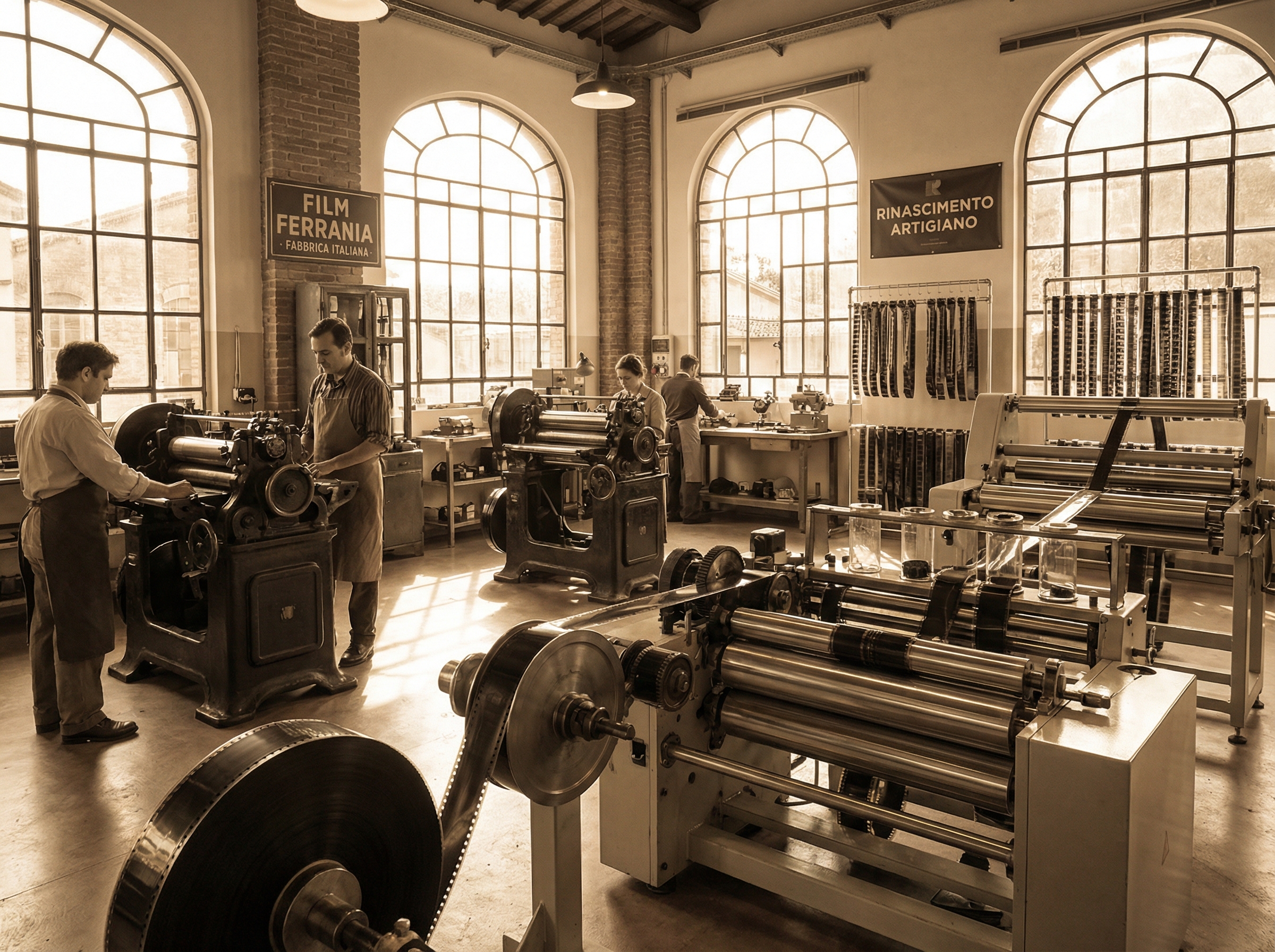
Film Ferrania P33: The Boutique Option Returns

Film Ferrania P33 black and white film roll

Film Ferrania just proved that the Kodak/Ilford duopoly isn't the only game in town. After two years of production hiccups, the Italian manufacturer has shipped a fresh batch of P33—their 160 ISO black-and-white stock with "cinematic" fine grain and medium contrast.

P33 occupies a specific niche: shooters who want something other than Tri-X or HP5, but don't want to mess with esoteric expired stocks from Eastern Europe. The aesthetic is distinct—lower contrast than Kodak, finer grain than Ilford—and the Italian provenance carries genuine cachet.

"Production was out of view due to internal issues that have since been resolved," the company notes. Translation: manufacturing film is brutally difficult, and even dedicated artisanal producers struggle to maintain consistent output. The fact that Ferrania survived and shipped is itself newsworthy.

For the film ecosystem, every boutique manufacturer that remains operational is proof that demand exists beyond the obvious choices. That's the long game for analog photography: diversified supply chains, specialized products, and enough market depth to weather commodity price swings.

The Real Answer: Both

Digital isn't going anywhere, and neither is film. The interesting question isn't which format wins—it's how each evolves to serve the photographers who choose it deliberately. The invisible wearable and the 4x5 Speed Graphic can coexist. Your job is figuring out which tool serves which moment.